When you click on links to various merchants on this site and make a purchase, this can result in this site earning a commission. Affiliate programs and affiliations include, but are not limited to, the eBay Partner Network.
I can't believe how good this drives now. It's too early to call it unplugging part 2 or something but man. I experienced the cleanest, smoothest WOT 2-3 shift since buying the car last year. Usually the boost plays games before/after the shift. Or sometimes you hit it and it doesn't quite feel like full boost, but then full boost comes back after the upshift. That seems to be no more. Hit it off the line a little, no jerking, just smooth MCT engagement. I'm pretty dumbfounded.
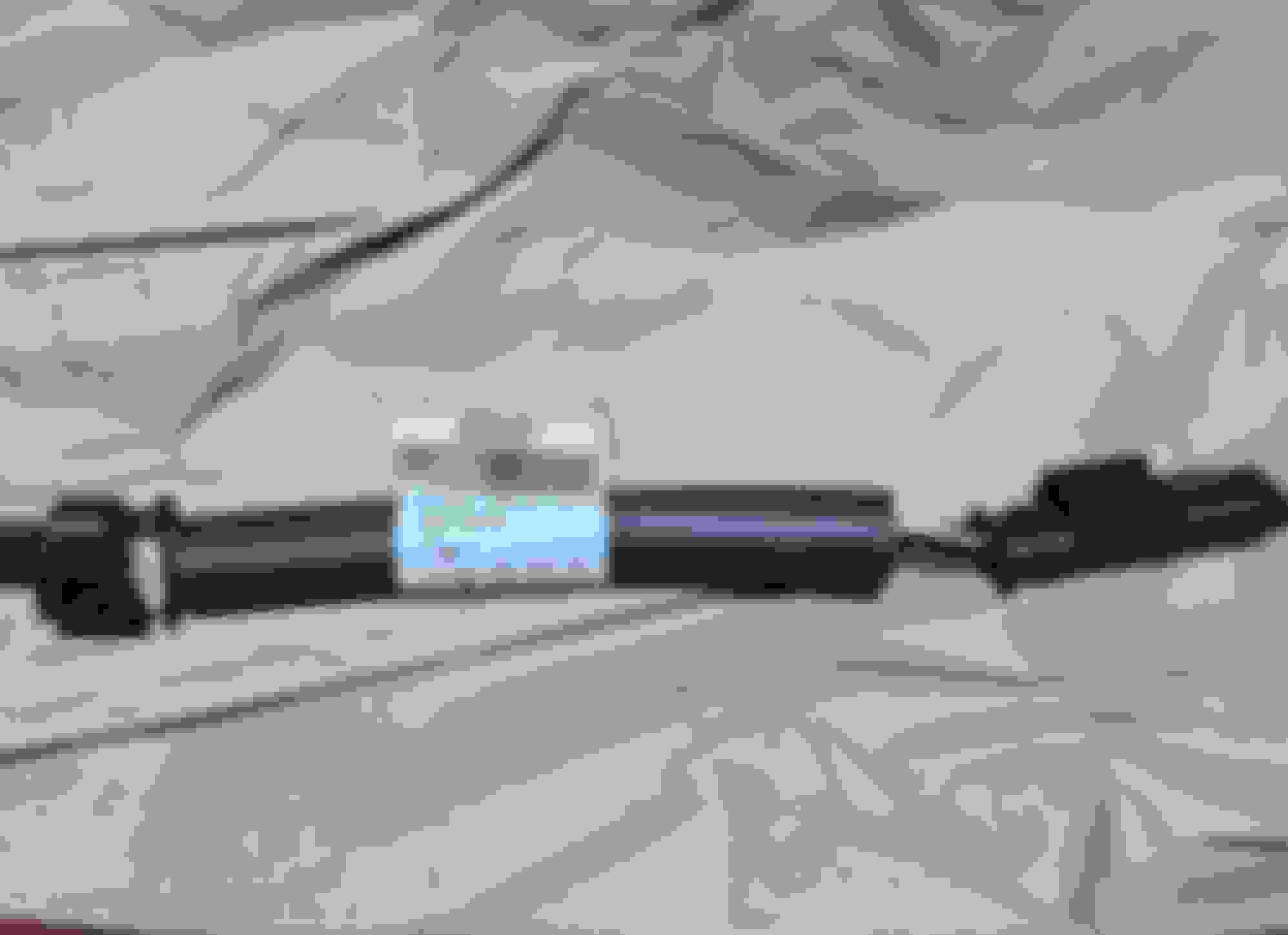
So I was inspired by this post. I bought the breather pipe P/N 212-430-05-29-64. It was $32. Takes 1 minute to install.?
So the w221 m278 engine doesn't have this breather pipe correct because I've YET to find a single part on this car for $32!!! The air in the tires is 10x's that much
Last edited by Ultrakla$$ic; Jun 26, 2024 at 06:30 PM.
So the w221 m278 engine doesn't have this breather pipe correct because I've YET to find a single part on this car for $32!!! The air in the tires is 10x's that much
That part is chassis specific, due to the location of the brake booster.
For my ML the part # is 166-430-20-29. Yours might be 221-430-34-29 ?? (I couldn't see what year S550 you have)
Last edited by jcarsnz; Jun 27, 2024 at 01:28 AM.
Reason: ah, it's a 2012 S550
So I'll give you boost COULD be getting lost if there is a vented state AND the check valve doesn't hold. But as you said, in a purging state, it will happily purge during boost, relying on the check valve. So, if there was a problem with my check valve, I would be pressurizing the canister (and fuel tank???) with intake manifold boost. If this happened regularly enough to actually cause boost loss, I am pretty certain the various evap diagnostics would be unhappy with tank pressure and set a code.
I could simply monitor tank pressure while driving around. There should be a PID for that.
Originally Posted by kevm14
I can't believe how good this drives now. It's too early to call it unplugging part 2 or something but man. I experienced the cleanest, smoothest WOT 2-3 shift since buying the car last year. Usually the boost plays games before/after the shift. Or sometimes you hit it and it doesn't quite feel like full boost, but then full boost comes back after the upshift. That seems to be no more. Hit it off the line a little, no jerking, just smooth MCT engagement. I'm pretty dumbfounded.
If you have the EVAP PID, take a look at it, it will be good to know.
My best improvement is after the oil solenoid defeat and all 4 new oxygen sensors. New oxygen sensors give me more instant engine response than before, in fact its better than
back in 2018 when I first bought the car used, with 10,000KM only. Tranny oil change per 20,000KM or 2 years was another reason my tranny response very fast for a slow by design a 7G+ is.
For EVAP and Oil Vapor aka PCV matters, my system is super healthy. I monitor my crankcase pressure once in a while. Its a good fast way to read PCV system overall health.
You can get a differential gauge to read crankcase pressure, it is a low cost tool.
I am glad the vacuum/PCV hose your replace have made such a difference.
It is not a surprise though, if your M157 engine is standard not tuned, the torque is already so very strong at low RPM.
Lets use the non-performance package graph. Look at the torque from low RPM to a mere 2,500 RPM is already peak 800 Nm.
Too bad we can't see below 1,500 RPM, no data provided.
Under 2,000 RPM is where you probably use the power band most often in a non spirited driving or mild spirited driving.
If zero boost leak or none un-metered air escaping/entering the engine, this RPM region is the driveability region you can feel the most difference because the steep torque rise is 1,500 to 2,500 RPM.
......
My engine is a city tuned engine by MB, it is a family sedan and not a sport sedan.
At a mere 1,400 RPM my torque already peaked at 480 Nm.
And my city being king of creeping traffic jam and even highway is so packed and average speed so slow at 50MPH or slower, my engine is practically living under 1,350 RPM most of the time.
Thus the beauty and health of my current engine response for throttle to tranny modulation is such a wonderful asset.
Pulling WOT 1 to 3rd gear is not a good test for driveability, that is for power. Able to drop to lower gears direct ( example 7th to 4th ) with very light throttle modulation in E tranny mode and super smooth,
while engine is at 1,300 RPM is a thing of beauty and that is a true driveability. for my use case.
Take your time and see what more you can inspect for your engine intake system to have it perform its best.
I assume your car is approx 10 years old now. Them plastic stuff on our engines is getting older, crispier and their o-ring are no more prime and soft.
.
Last edited by S-Prihadi; Jun 27, 2024 at 10:54 AM.
Reason: typo
I doubt it has a check valve because the centrifuge cover is where the check valve/s are.
Also there is no fat part shown to resemble any check valve. https://www.ebay.ca/p/25062986897
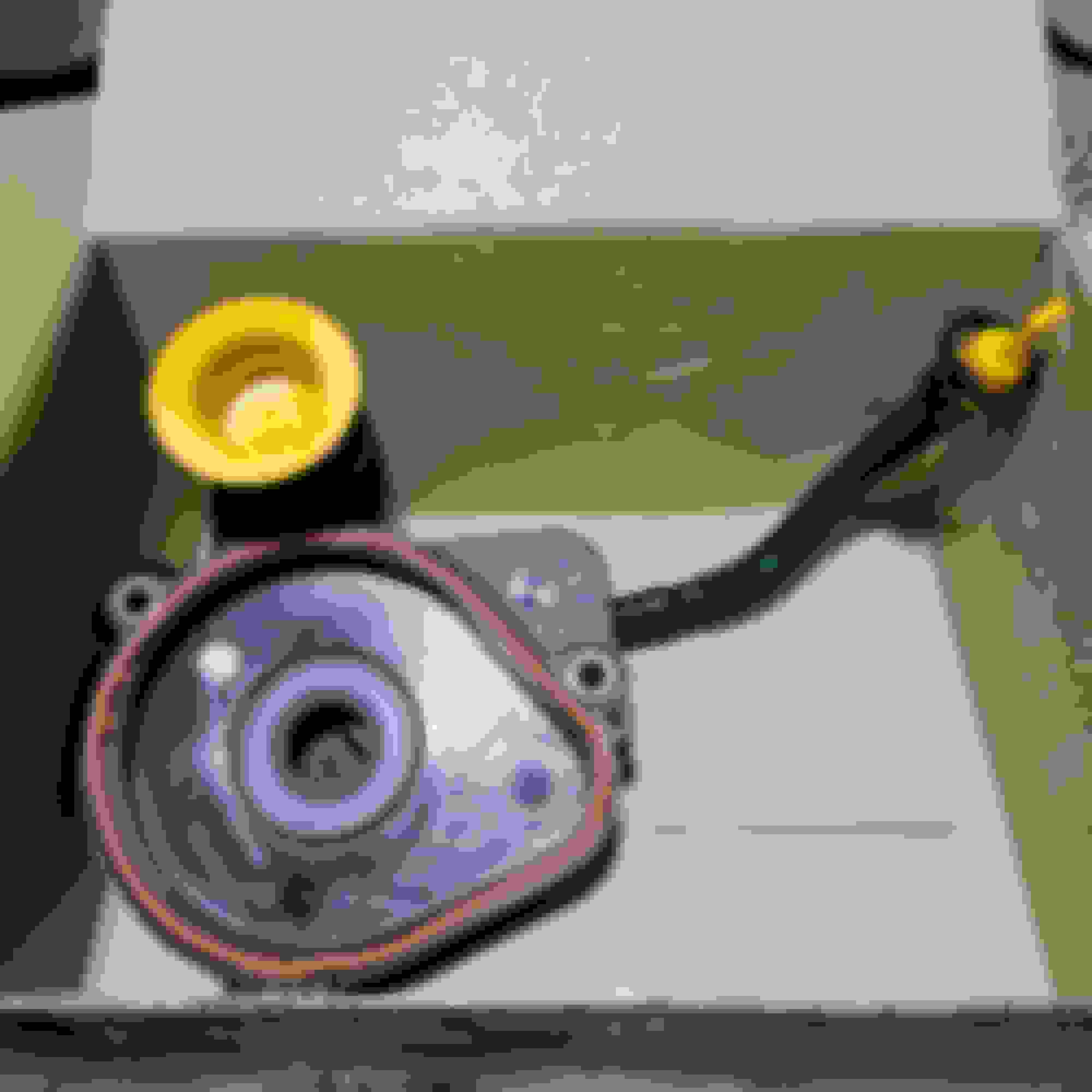
Got me some new parts from FCP Euro to maintain a healthy PCV system for my Benz.
This is going to be used for my oil solenoid to protect the disconnected plugs.
I visually inspected my oil drip pan and housing and the integrity of the rubber seals currently on my car and they all looked fine but I just want to reassure myself by putting on fresh components.
Cuz MERCEDES..
Last edited by Ultrakla$$ic; Jul 8, 2024 at 06:23 PM.
So I might have a boost leak somewhere. Car is only making 9psi in 4th gear and trapping 114 in the 1/4 mile on a s2 tune . Any way to boost leak test this to find out where it could be coming from. What's the procedure in testing?
So I might have a boost leak somewhere. Car is only making 9psi in 4th gear and trapping 114 in the 1/4 mile on a s2 tune . Any way to boost leak test this to find out where it could be coming from. What's the procedure in testing?
have you logged it - iat's, timing, wastegate duty, boost etc when doing a highway pull
have you logged it - iat's, timing, wastegate duty, boost etc when doing a highway pull
No way of logging. Only thing I noticed was iat at staging was at 127,which is high and most likely pulled crap of timing and power by 4th gear, also wondering if my renntech bov is leaking by, maybe has a ripped diphram?
I do see and hear the intercooler pump cycling fluid, highway cruising iat at 69-72, but missing close to 10mph or so is huge
Last edited by Mojo20032004; Jul 10, 2024 at 04:18 PM.
So I might have a boost leak somewhere. Car is only making 9psi in 4th gear and trapping 114 in the 1/4 mile on a s2 tune . Any way to boost leak test this to find out where it could be coming from. What's the procedure in testing?
You need this vacuum/positive pressure hand pump from MityVac
just replaced the original brake vacuum hose dated 2014 (takes less than 2 minutes) and naturally I had to open the old one
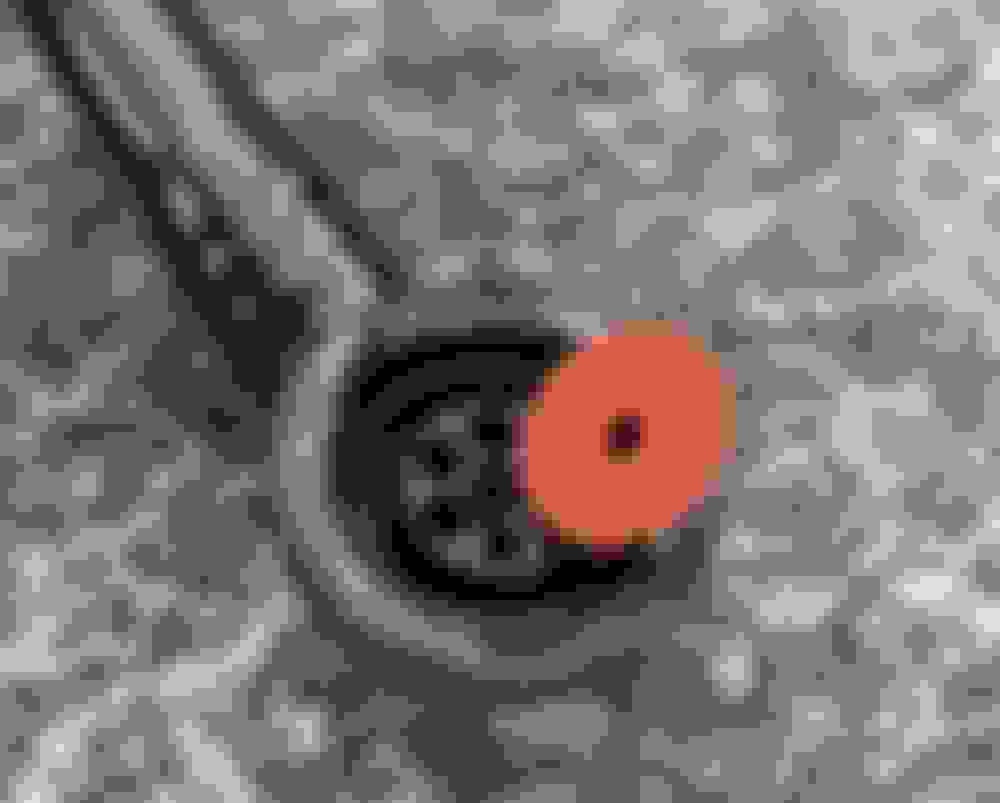
the valve on the end (plugs to vacuum pump) looks "new" to me, the one in the middle is either different or damaged: its not a flat disk, but dish-like AND with dimples. Unless dimples are by design, its a sign of high pressure/wear. Somebody else open yours
It might be placebo, but hesitation and RPMs oscillation on low/medium load between 2k and 3k seems to be gone.. Will be testing more, but unfortunately without "scientific" tools
The 6 dimples are impression made by the 6 holes of the plastic where the red diagram sit on against pressure
By right a healthy diagram should not be distorted to that extend, I mean making those dimples.
When new the red diagram are simple flat piece. Its nice to see the diagram is actually that thick. compared to the one at the vacuum pump for turbo boost solenoid.
Thank you for the tear-down, I like it.
Here is mine, same part as the post before me, 2014 with 37k. Can clearly see the dimples, the other check valve is fine. I ordered a new assembly from fcp euro.
New virgin check valve diagram. No dimples for sure.
.
Funny enough I bought this which is NOT for my engine, simply because I need to cannibalize the fittings. MB stop making the vacuum hose for my brake booster. because my car is Right Hand Drive and E400 ,
of which these two facts made the sales volume so small, MB simply could not be bothered.
just replaced the original brake vacuum hose dated 2014 (takes less than 2 minutes) and naturally I had to open the old one
the valve on the end (plugs to vacuum pump) looks "new" to me, the one in the middle is either different or damaged: its not a flat disk, but dish-like AND with dimples. Unless dimples are by design, its a sign of high pressure/wear. Somebody else open yours
It might be placebo, but hesitation and RPMs oscillation on low/medium load between 2k and 3k seems to be gone.. Will be testing more, but unfortunately without "scientific" tools
Yes that was my result as well. Although I now noticed that my brake vacuum boost goes away after sitting for a few days. I was considering grafting the old end for the vacuum booster to the new hose but I don't feel like it.
Mercedes SLR McLaren 722 S Is Extremely Rare Example Modified by McLaren
Slideshow: A one-of-one U.S.-spec Mercedes-Benz SLR McLaren Roadster became even rarer after a factory-backed transformation at McLaren's headquarters.