A rulebook special from the early ’90s has evolved into one of the most sought-after Mercedes performance cars ever built.
DTM-Bred Icon
The Mercedes-Benz 190E 2.5-16 Evolution II wasn’t built to chase showroom glory, it existed because motorsport rules demanded it. Developed as a homologation special for the Deutsche Tourenwagen Meisterschaft (DTM), it represents a time when manufacturers engineered road cars purely to go racing. Today, that origin story is exactly what makes it so valuable.
Mercedes produced just 502 examples of the Evolution II, a number dictated by homologation requirements rather than market demand. That limited production run has become a defining factor in the car’s modern appeal, with values now stretching well into six figures whenever one surfaces for sale.
A Life Actually Lived
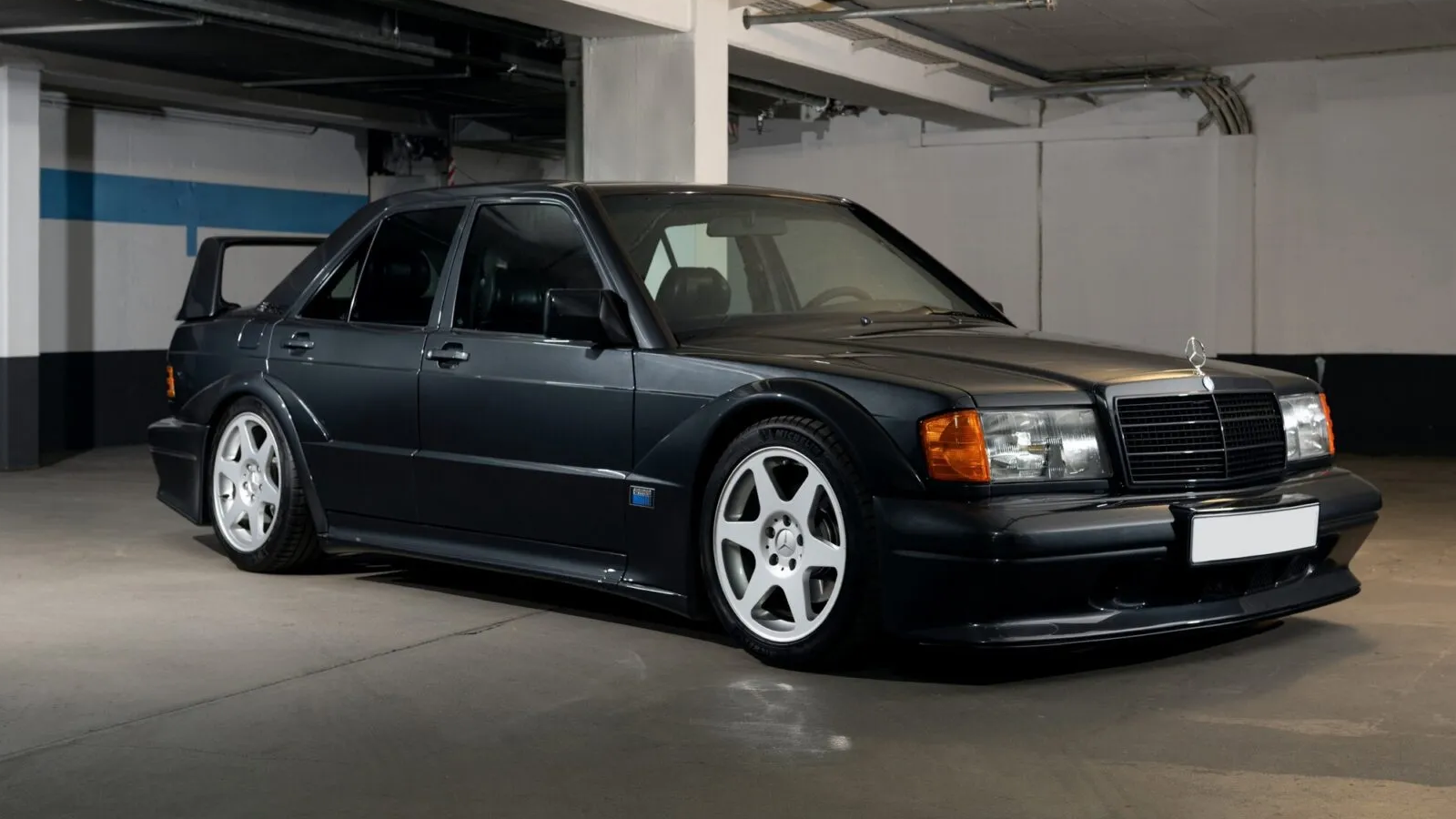
The example heading to auction, chassis number 283, stands out for not being a static collector piece. Delivered new in Switzerland, it accumulated over 79,000 kilometers (49,000 miles) between 1990 and 2006. That kind of usage is unusual for an Evolution II, many of which were tucked away early in life.
Restored, Not Rewritten
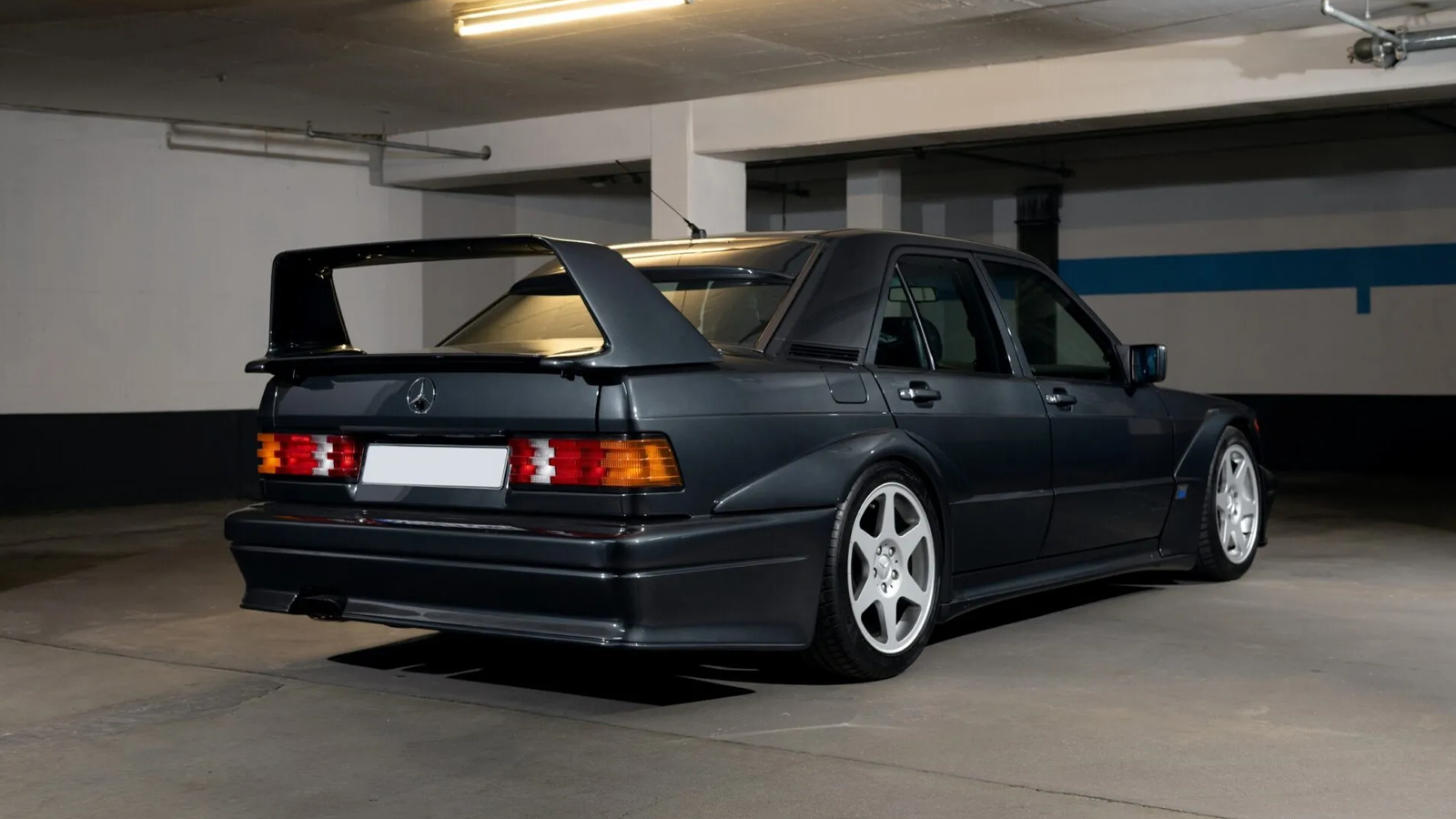
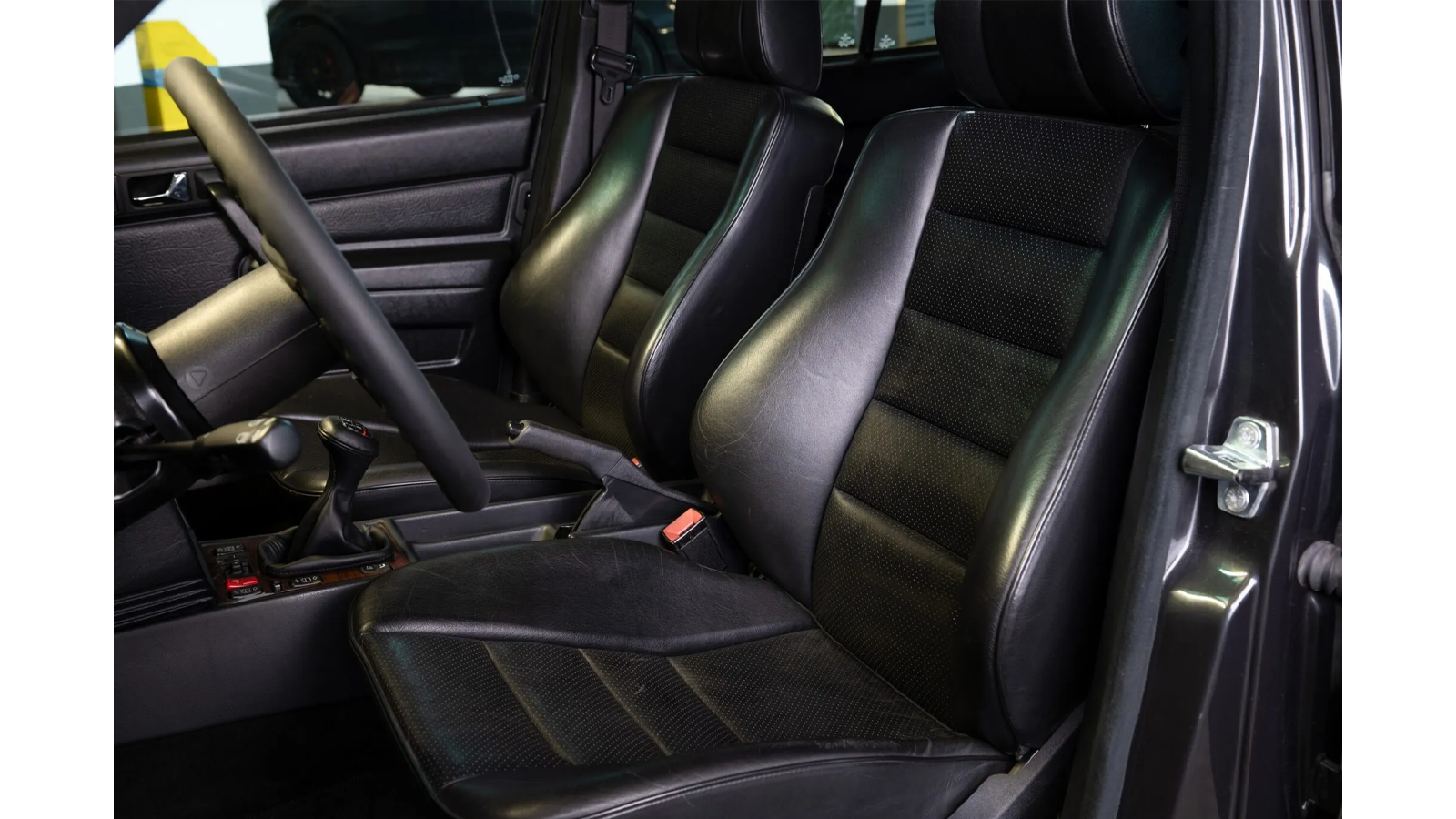
Between 2021 and 2023, the car underwent a comprehensive restoration in Germany. The work included refinishing the body in Blue Black Metallic and refreshing key mechanical components. The engine received new injectors and a revised radiator, while the oil cooler and differential were also overhauled. Importantly, the restoration aimed to preserve originality rather than modernize the car.
Cosworth Engineering
At its core is a 2.5-liter naturally aspirated inline-four developed with Cosworth. It produces 232 horsepower and 181 lb-ft of torque, figures that placed it squarely against rivals like the BMW E30 M3 Evolution II in the period. While modest by today’s standards, the engine’s character and motorsport pedigree remain central to the car’s identity.
Built for the Track First
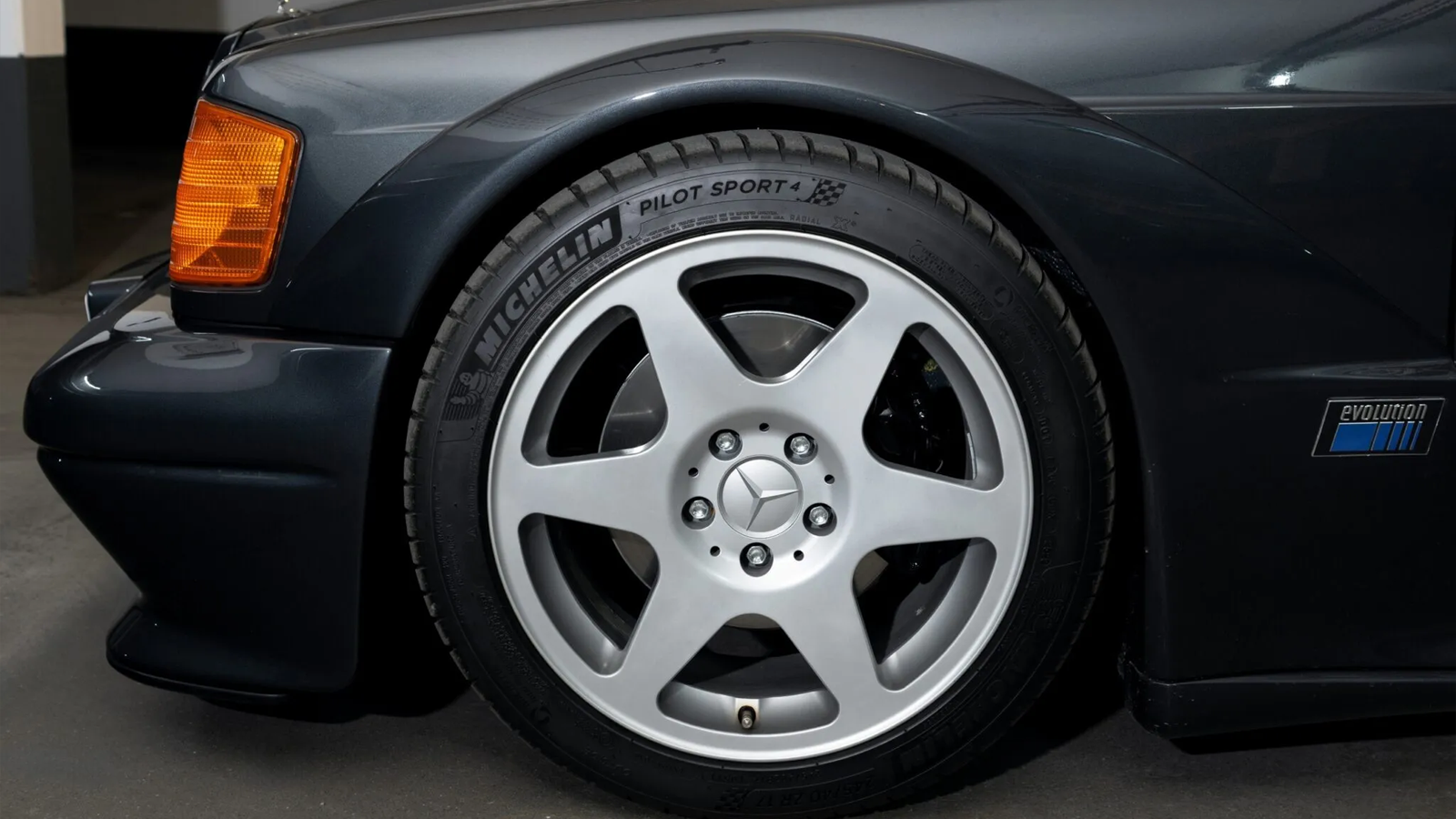
Beyond the engine, the Evolution II was engineered with racing in mind. Adjustable suspension allowed for fine-tuning on different circuits, while its aggressive aerodynamics package, complete with flared arches, a deep front splitter, and a towering adjustable rear wing, was functional, not decorative. The design may look exaggerated, but every element served a purpose on track.
Mileage vs. Value Debate
With just over 80,000 kilometers now on the odometer, this particular car sits outside the ultra-low-mileage examples that typically dominate auctions. Even so, estimates place its value between $305,000 and $410,000. That suggests the market increasingly values provenance and condition alongside mileage, especially for cars with genuine motorsport roots.
A Different Kind of Four-Cylinder Legacy
The Evolution II also serves as a reminder of a very different era for Mercedes performance engineering. Long before modern debates around downsized or hybrid powertrains, this car proved that a four-cylinder engine, when properly developed, could command respect. Its continued appreciation highlights how authenticity and purpose often outlast trends.
From Rulebook to Collectible
What began as a necessity to satisfy racing regulations has taken on a second life as a blue-chip collector car. The Evolution II no longer needs to prove itself on the track; its legacy is already secured. Today, its appeal lies in what it represents, a time when engineering decisions were dictated by competition, not marketing.