
Mansory Goes Nuts, Builds Another Crazy G63 Coupe With Suicide Doors
With relocated pillars, suicide doors, and nearly 1,000 metric horsepower, the Gronos Coupe Evo C pushes the G-Wagen formula well beyond factory intent.




Reinventing the G
Few vehicles are as instantly recognizable as the Mercedes-AMG G 63, and fewer still are as frequently modified. German tuner Mansory has built a reputation for amplifying already high-profile machinery, and its Gronos Coupe Evo C represents one of its most radical interpretations of the G-Class platform.
While not an entirely new concept (the two-door Gronos Coupe has existed in previous iterations), this latest Evo C specification is among the most recent builds. Production is limited to eight units, reinforcing its status as a niche project even within Mansory’s catalog.
Two Doors, Major Surgery
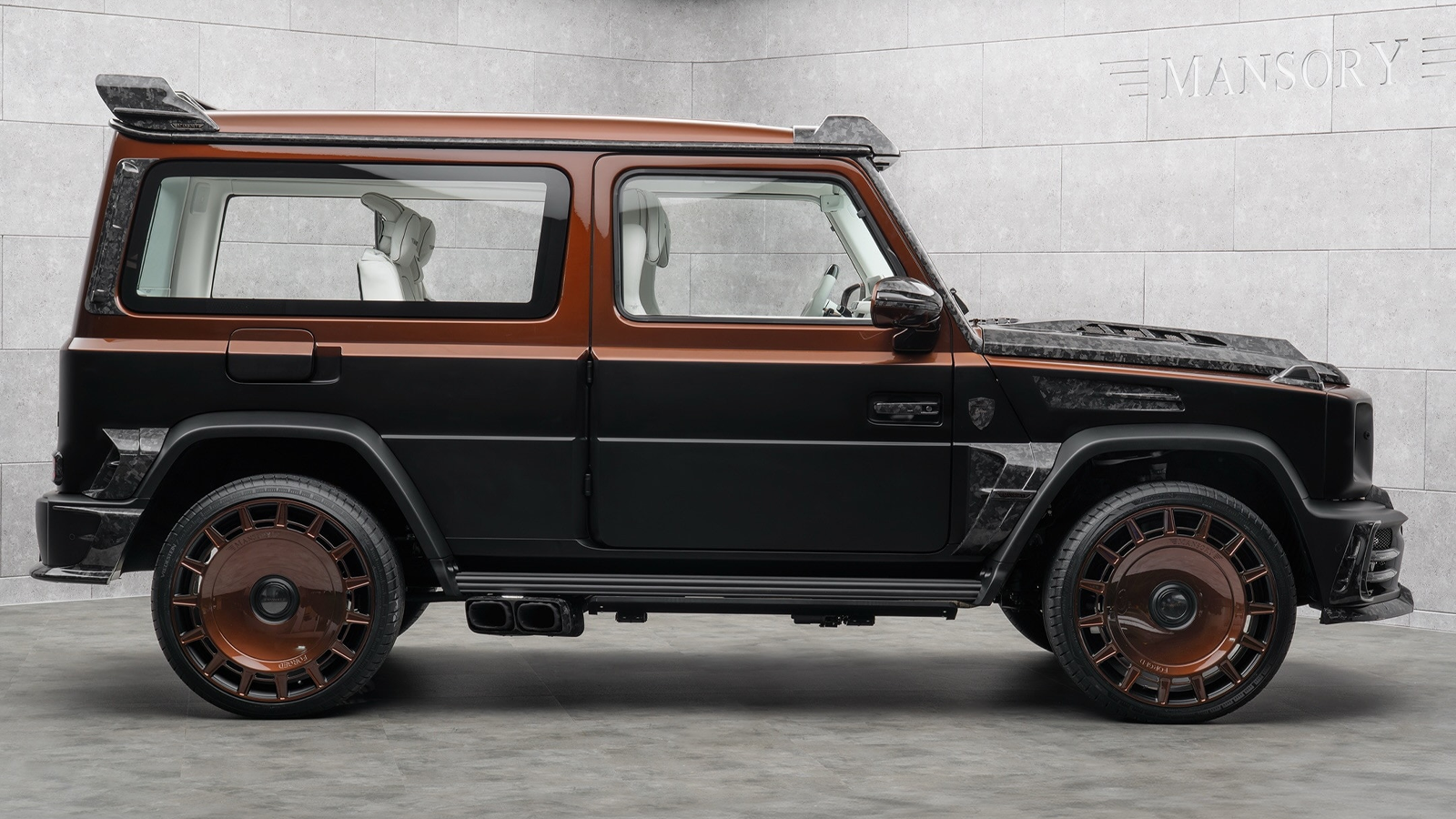
Transforming a four-door G 63 into a two-door coupe involves more than deleting rear doors. Mansory relocated the B-pillars rearward to accommodate significantly longer, rear-hinged “suicide-style” doors. That structural change required reshaping the rear three-quarter panels and enlarging the rear side windows to maintain visual balance.
The result alters the G-Class profile dramatically. The upright, military-derived silhouette remains intact, but the proportions shift toward something closer to a high-riding grand tourer than a traditional SUV.
Copper and Carbon
This particular example adopts a copper-toned exterior finish contrasted by satin black accents and extensive forged carbon fiber components. The bodywork is heavily reworked: widened fender flares, new side skirts, revised mirror caps, and updated trim across the front fenders all contribute to a more aggressive stance.
Up front, a redesigned bumper integrates additional daytime running lights and a prominent lower apron. A custom grille and sculpted hood further differentiate it from the standard G 63. At the rear, the Evo C avoids the tuner’s newer dual-taillight theme but adds a revised bumper, fresh trim elements on the tailgate and pillars, and an oversized rear wing that leaves little ambiguity about its intent. Large aftermarket wheels complete the exterior transformation, while Mansory branding is visible throughout the bodywork.
Retaining Practicality—Sort Of
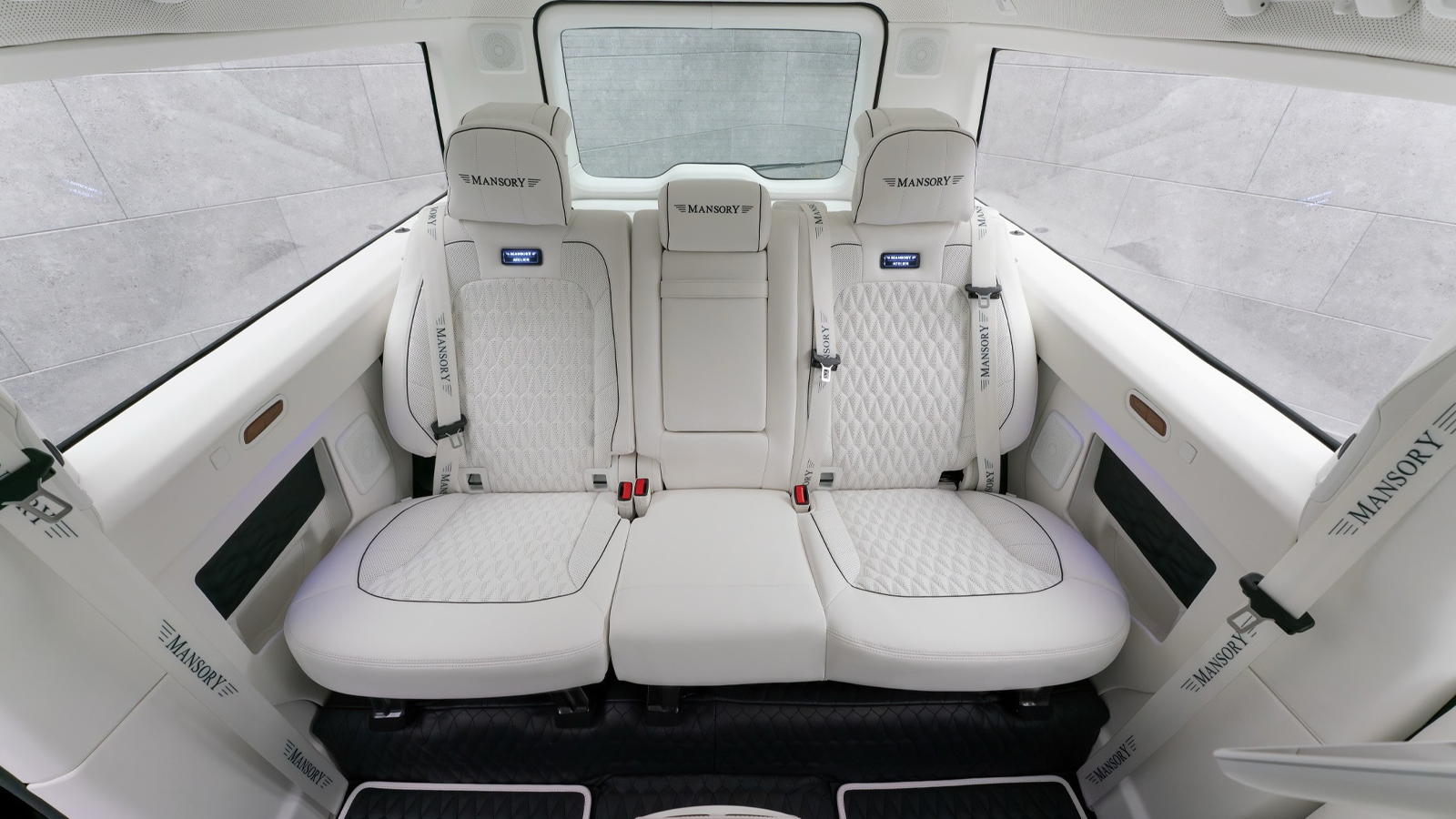
Unlike some earlier two-door conversions that replaced the rear bench with individual captain’s chairs, this Gronos Coupe Evo C keeps a three-passenger rear seat. That decision preserves a degree of practicality, even if the overall package is anything but subtle.
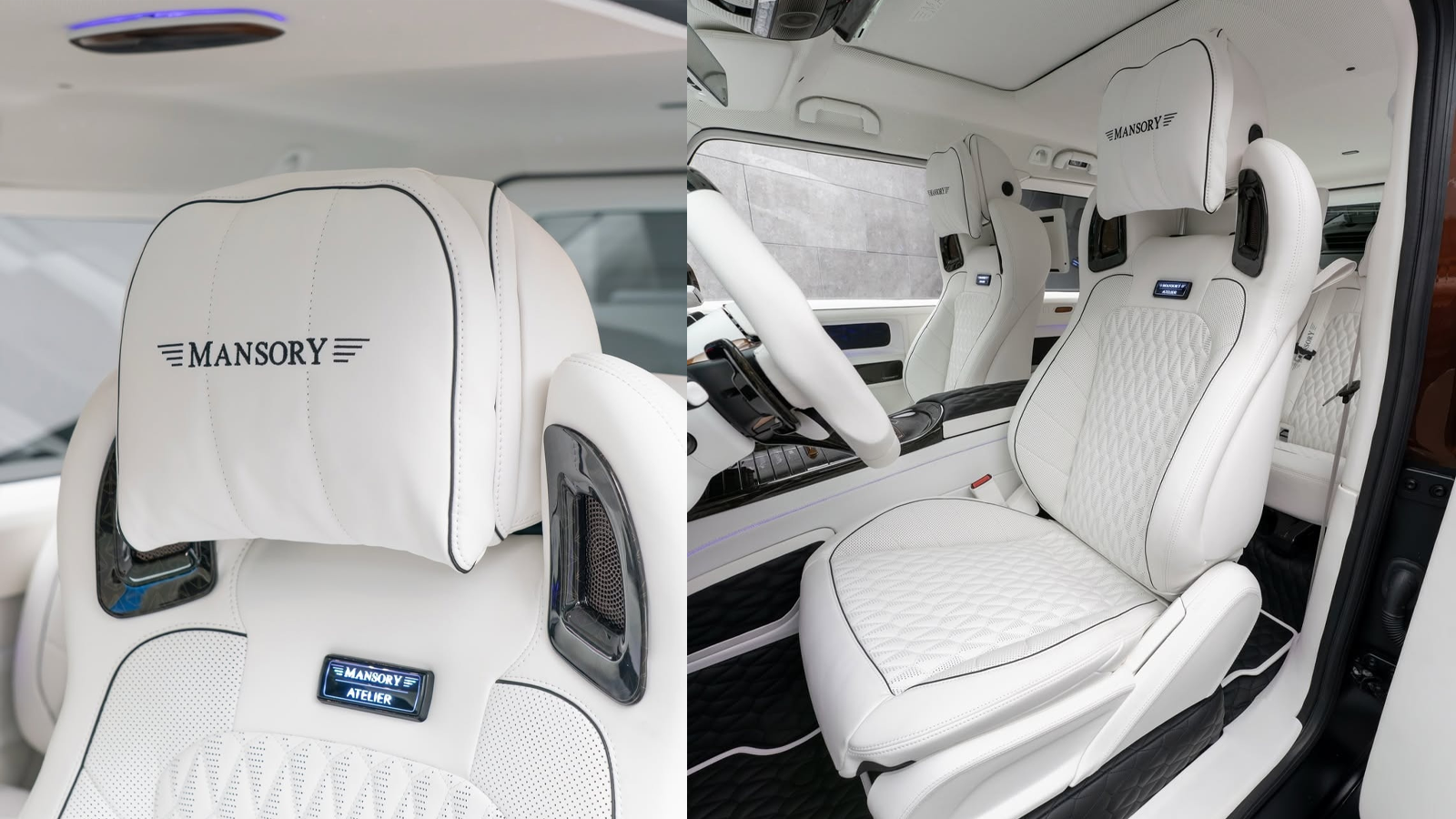
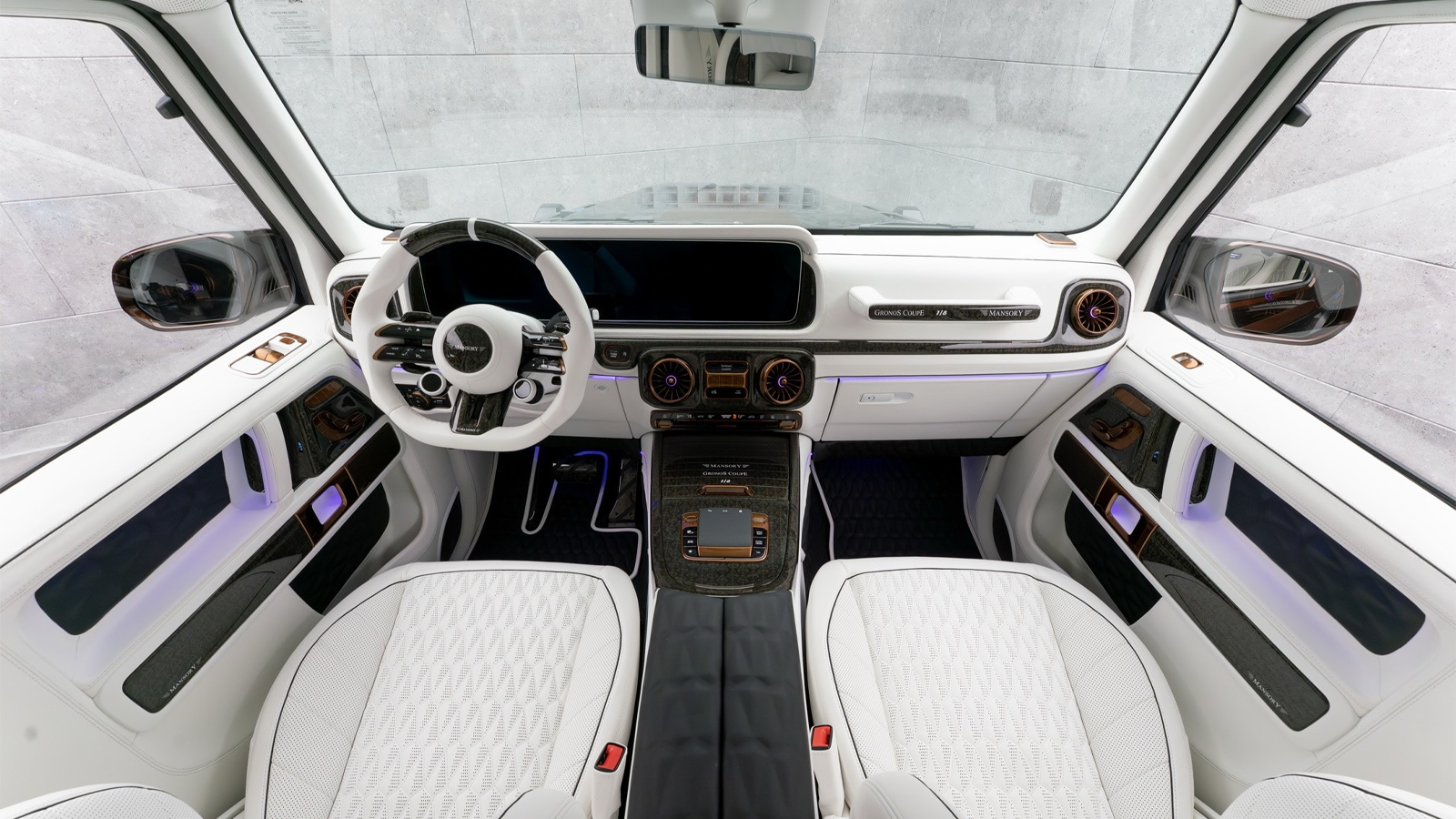
The cabin is extensively retrimmed in white leather covering most surfaces. Black piping and contrast accents break up the light interior theme. Mansory logos appear on headrests, seatbelts, treadplates, floor mats, and the steering wheel, while a starlight-style headliner adds a familiar ultra-luxury touch.
966 Horsepower
Beneath the sculpted hood lies AMG’s 4.0-liter twin-turbocharged V8, substantially reworked. Mansory claims an output of 980 metric horsepower, equivalent to 966 brake horsepower (721 kW), and 922 lb-ft (1,250 Nm) of torque.
For context, the stock G 63 produces 577 horsepower (430 kW) and 627 lb-ft (850 Nm). The increase is significant, representing gains of nearly 390 horsepower and almost 300 lb-ft over factory specification. According to Mansory, the Gronos Coupe Evo C accelerates from 0 to 62 mph (100 km/h) in 3.3 seconds and reaches a top speed of 174 mph (280 km/h). Those figures place it in the realm of modern supercars, albeit in a body style originally conceived as a utilitarian off-roader.
Beyond Subtlety
The Gronos Coupe Evo C does not attempt restraint. Its widened stance, unconventional door configuration, and near-four-figure horsepower output ensure it stands apart, even in markets where modified G-Wagens are common.
Whether that transformation enhances or detracts from the character of the G 63 depends largely on personal taste. What is clear is that Mansory’s latest build represents one of the most technically and visually extensive reinterpretations of AMG’s flagship SUV, produced in extremely limited numbers and engineered to push the platform far beyond its original brief.