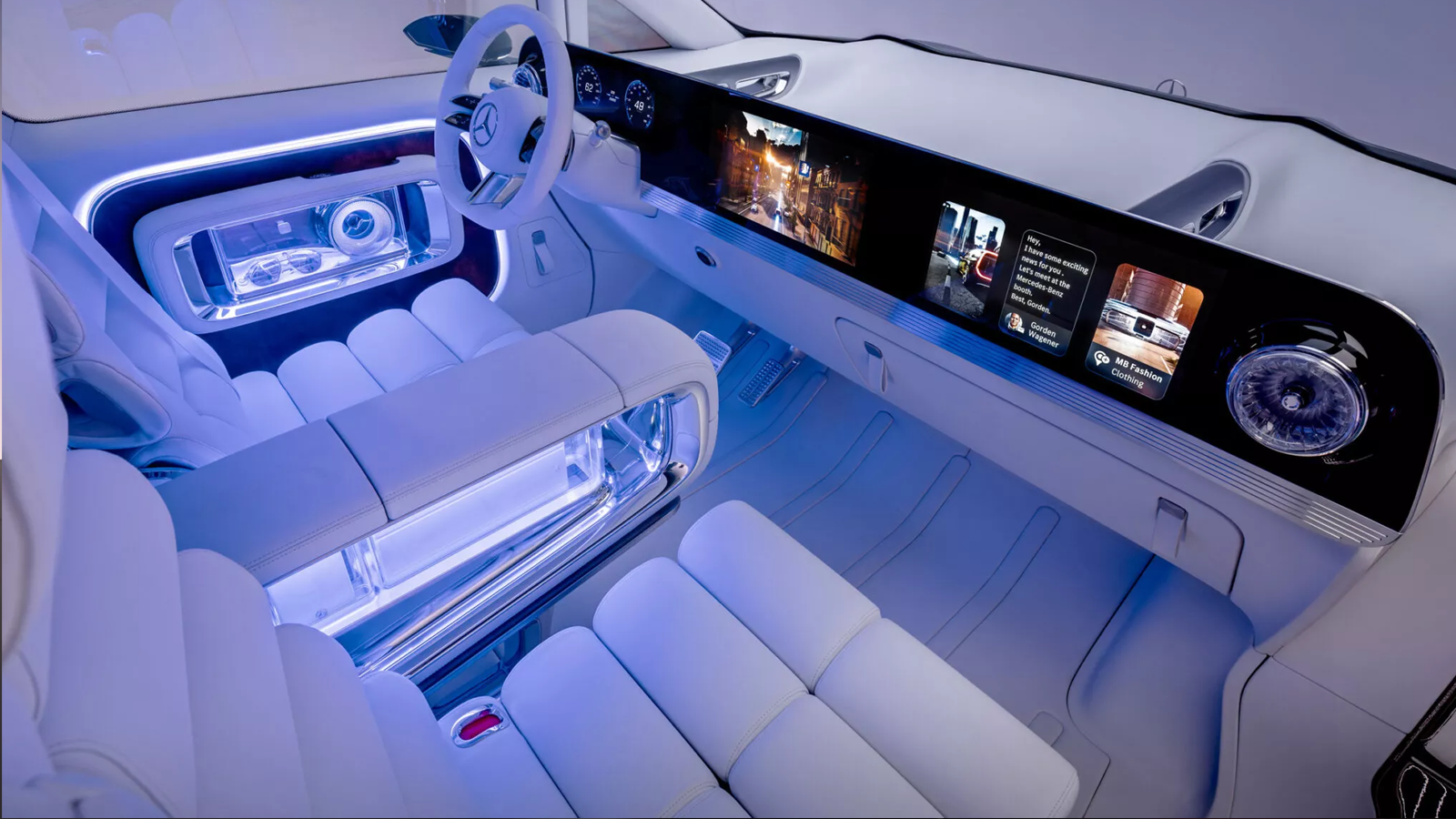
Built on the VAN.EA platform, the Vision V previews an opulent, chauffeur-driven EV that may soon outshine luxury sedans.
Mercedes Vision V: A Radical Reboot of the Minivan
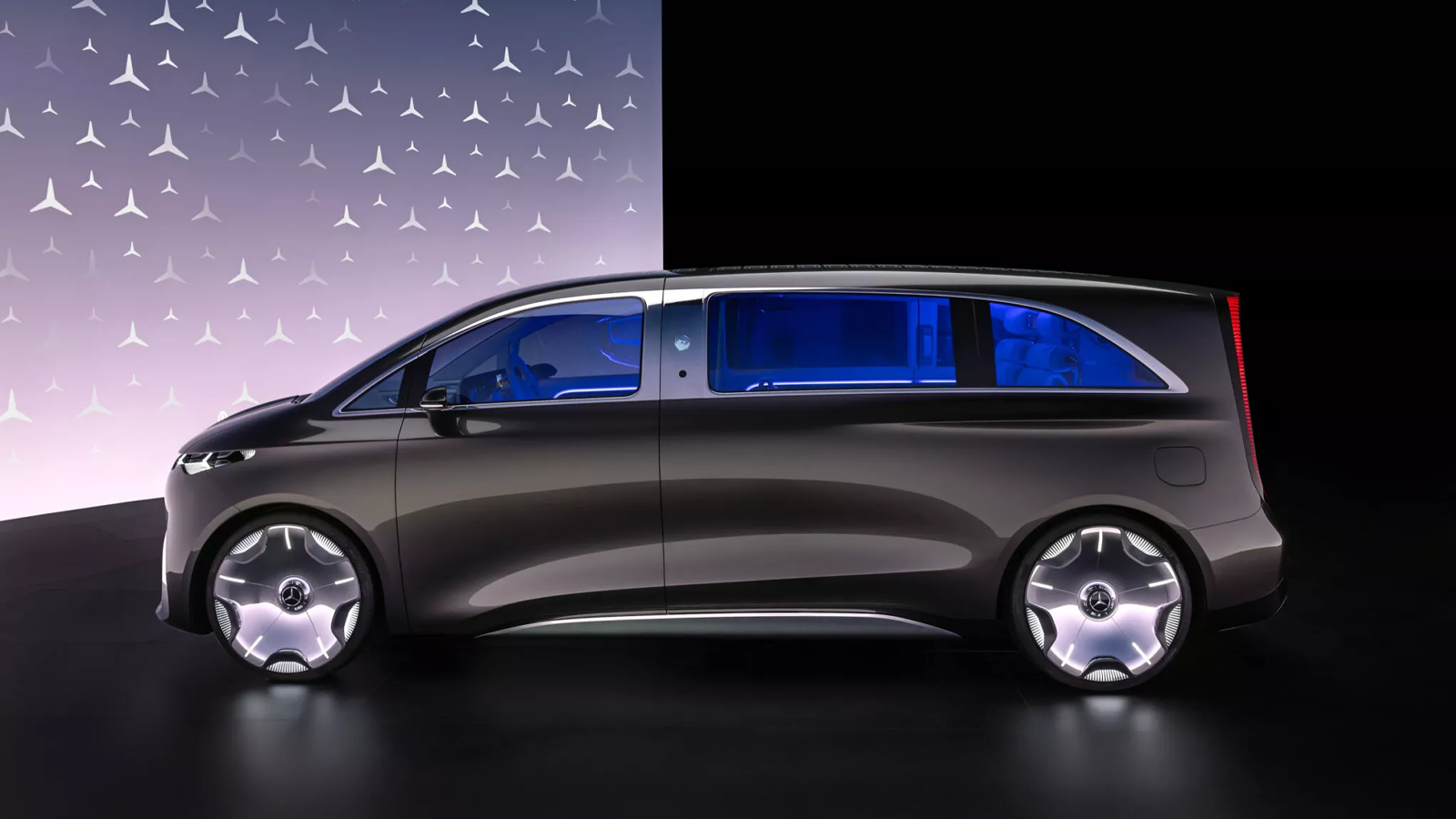
Mercedes-Benz’s Vision V is no ordinary concept van—it’s a calculated strike into a new segment of electric, chauffeur-driven luxury transport. Designed with the Chinese and North American markets in mind, it blends cutting-edge technology with lavish interior comforts typically reserved for top-tier limousines. Though executives bristle at the term “minivan,” this is unmistakably a space-maximized vehicle, just one far more decadent than anything traditionally seen in the segment.
Engineering the VAN.EA Future
The Vision V rides on the purpose-built VAN.EA (Van Electric Architecture), Mercedes’ modular EV platform for luxury and commercial vans alike. This architecture accommodates single- and dual-motor setups, operates on 800-volt electrical systems, and targets a driving range of up to 311 miles (500 km). Most notably, it supports a flat-floor layout by placing the main motor at the front, while dual-motor versions use a smaller secondary motor in the rear. Mercedes has also prepared a combustion-compatible variant, VAN.CA, for future hybrids, though these carry compromises like a raised floor.
Design: Far from Frumpy
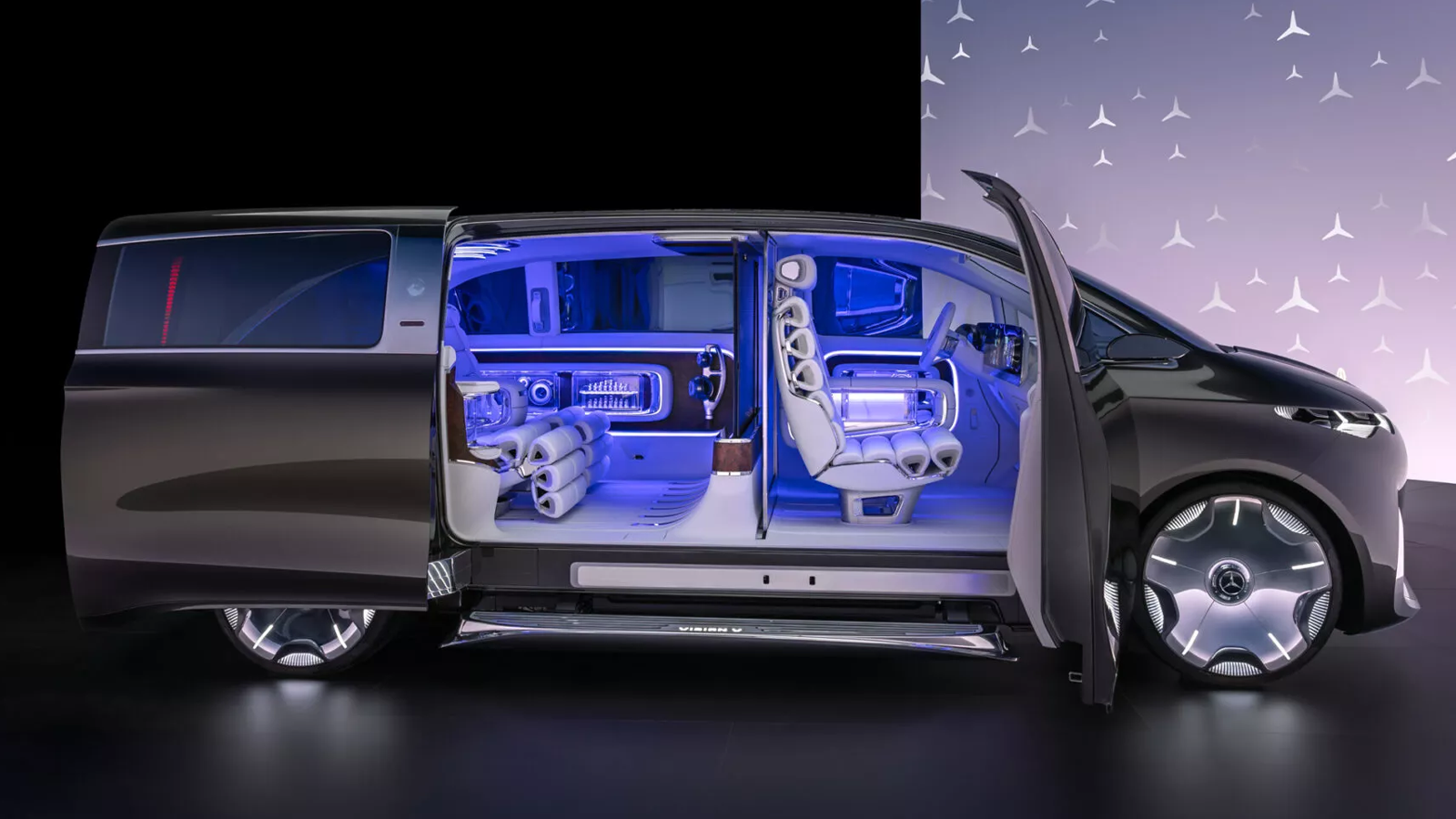
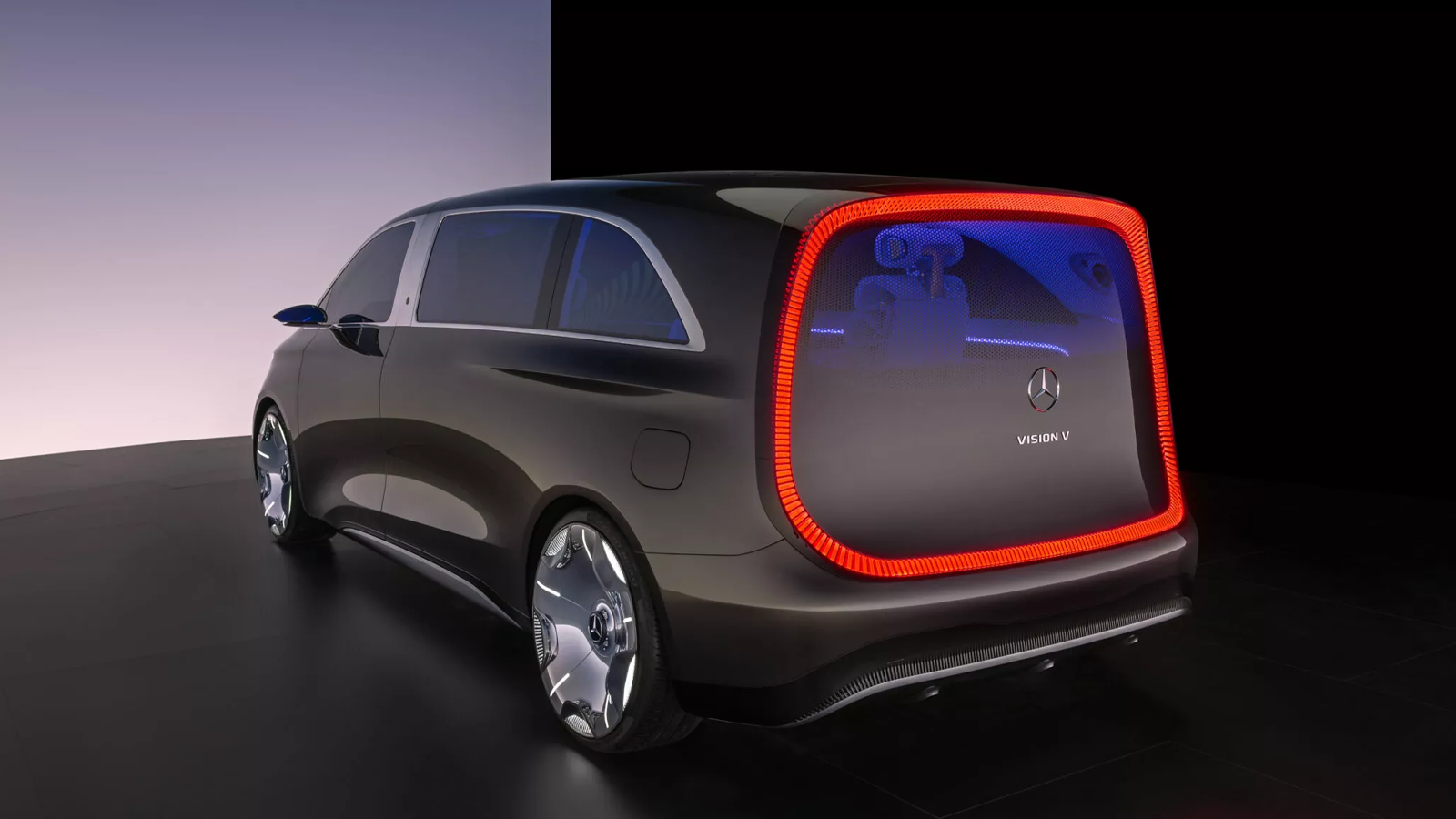
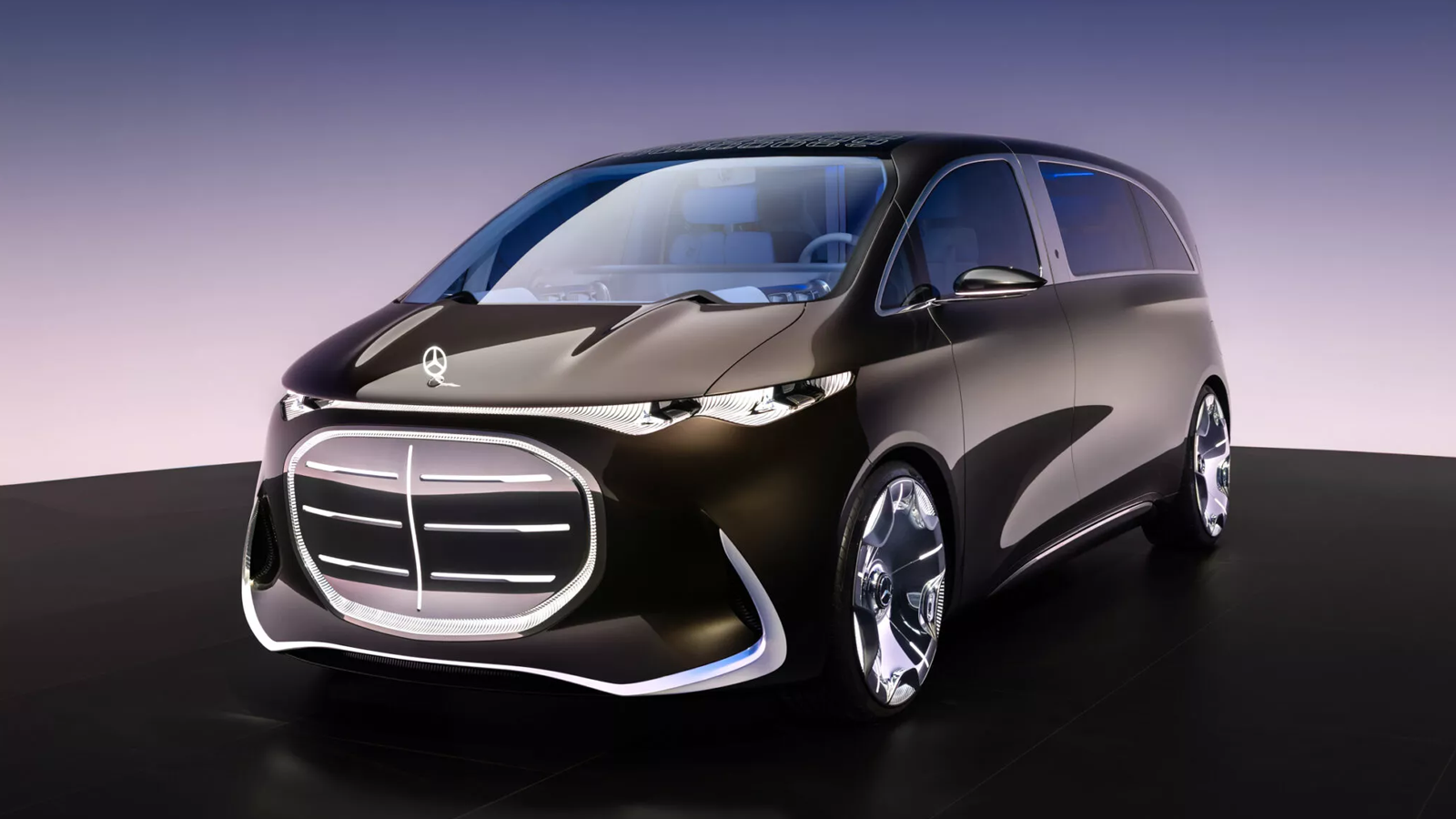
Externally, the Vision V takes clear steps to distance itself from the “family hauler” look. It features illuminated, spokeless wheels, a wraparound taillight design composed of 450+ LED segments, and a dramatic LED grille that welcomes passengers with a custom light show. The Mercedes star sits boldly on the hood—an intentional callback to the brand’s flagship sedans. The overall silhouette remains upright and boxy for maximum interior volume but is softened by a gently curved roofline, intricate surfacing, and a coupe-like rear window kink.
A Lounge on Wheels
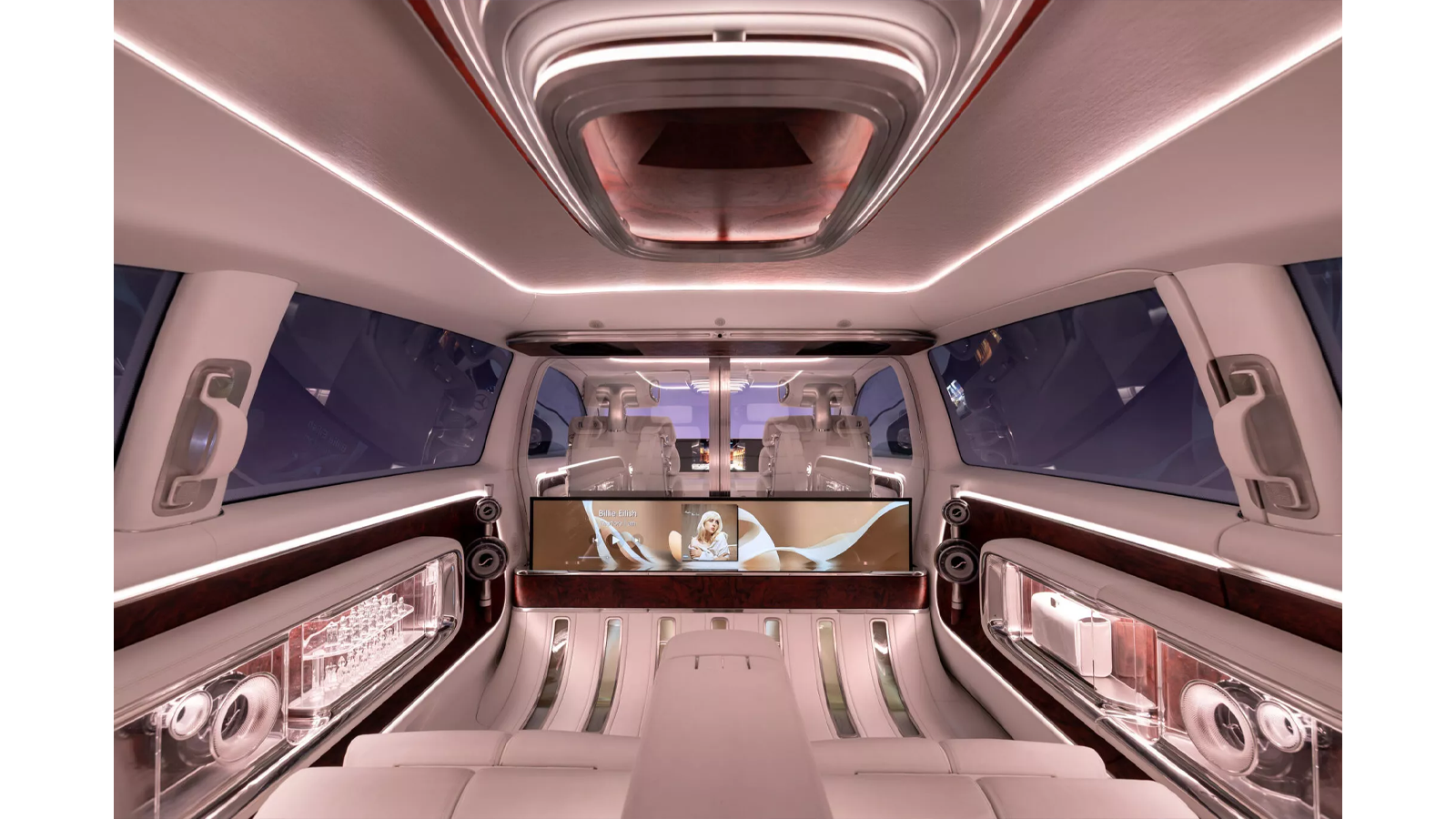
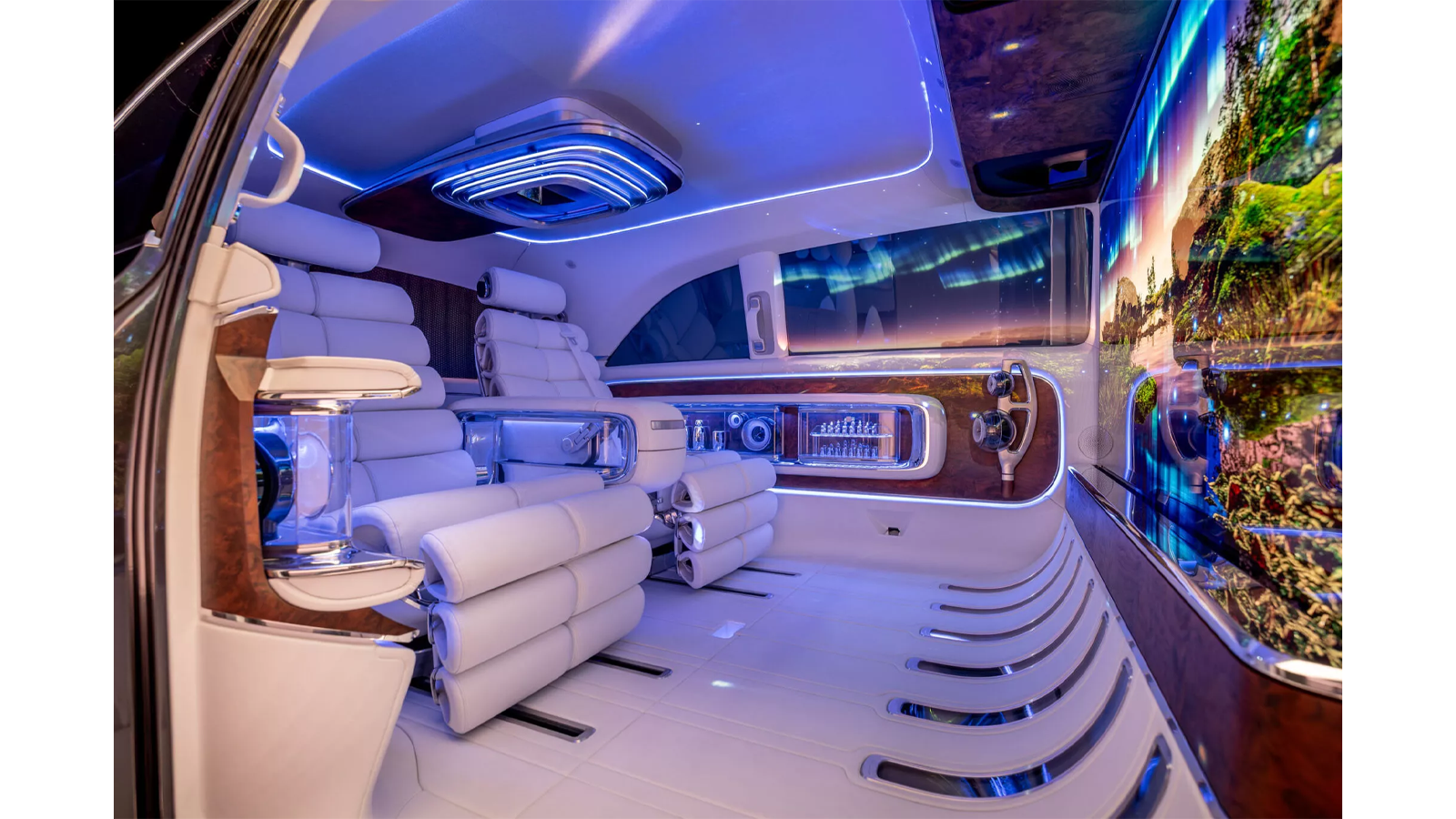
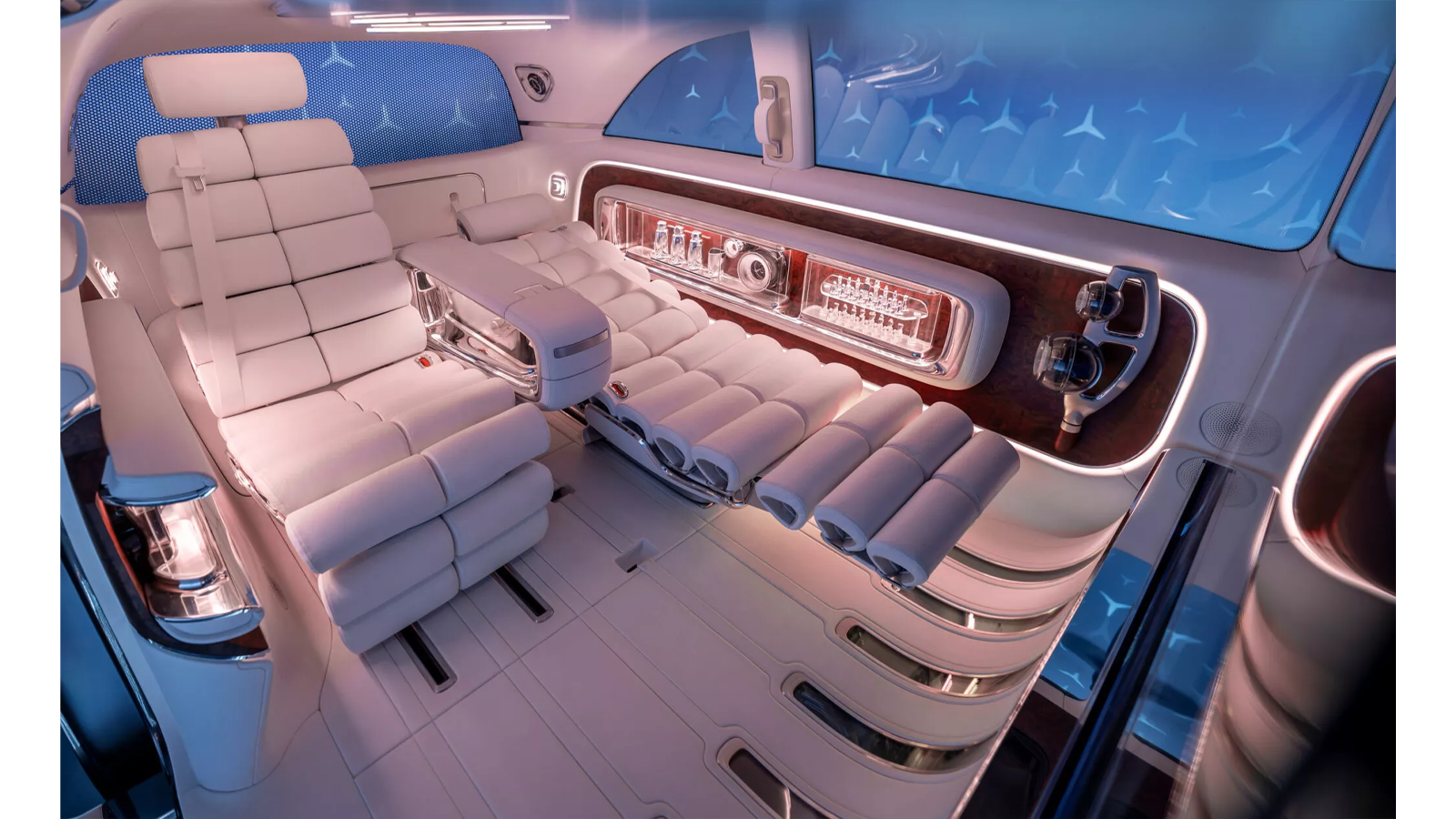
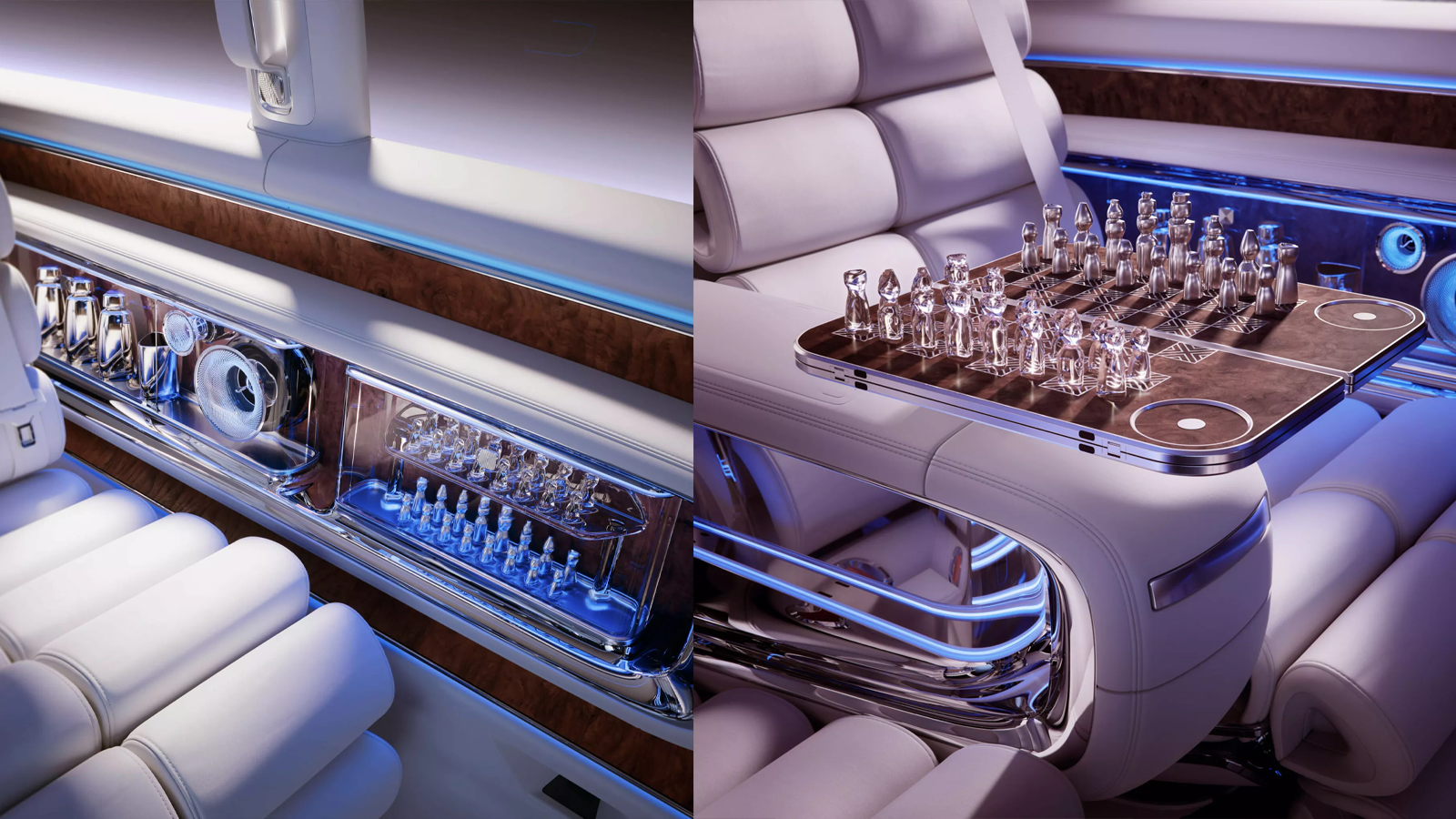
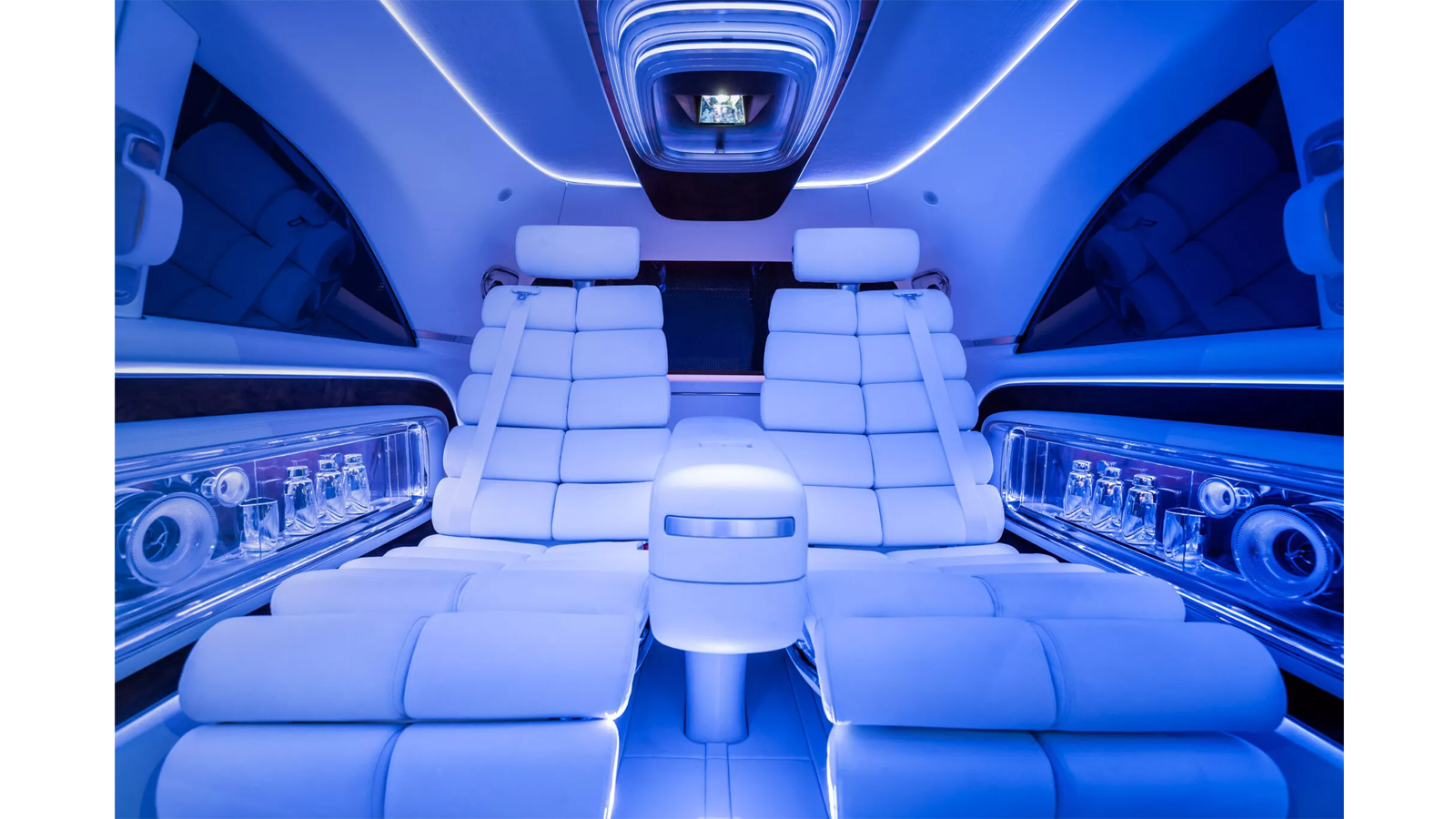
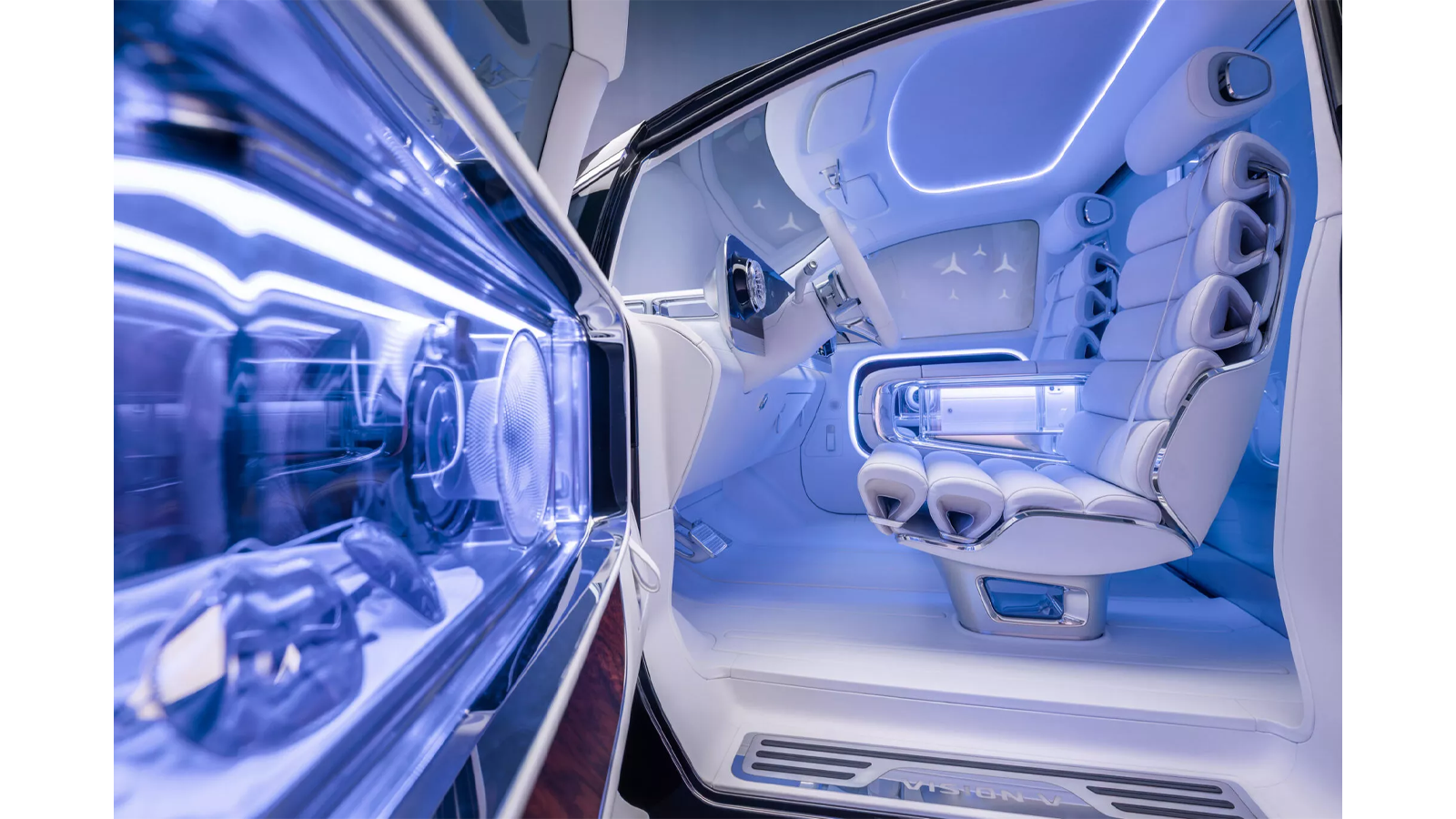
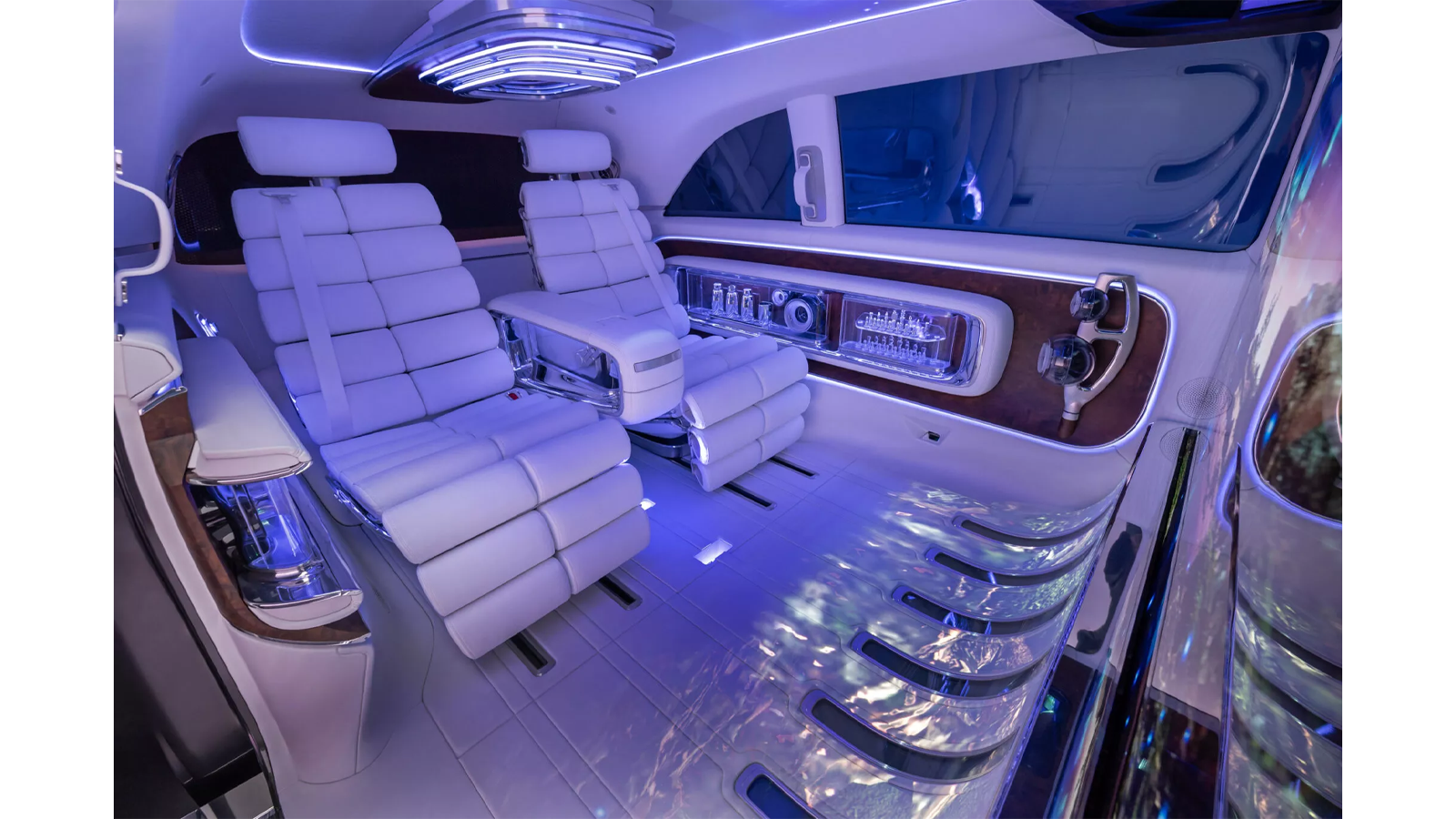
Inside, Mercedes refers to the Vision V as a "private lounge." Rear passengers are treated to first-class seats clad in white Nappa leather and silk, which recline nearly flat. These seats sit atop polished aluminum bases and pair with an adaptive center console and multifunctional footrests. Hidden within the side walls are display cabinets for storing personal items like handbags or sunglasses.
Center of Attention
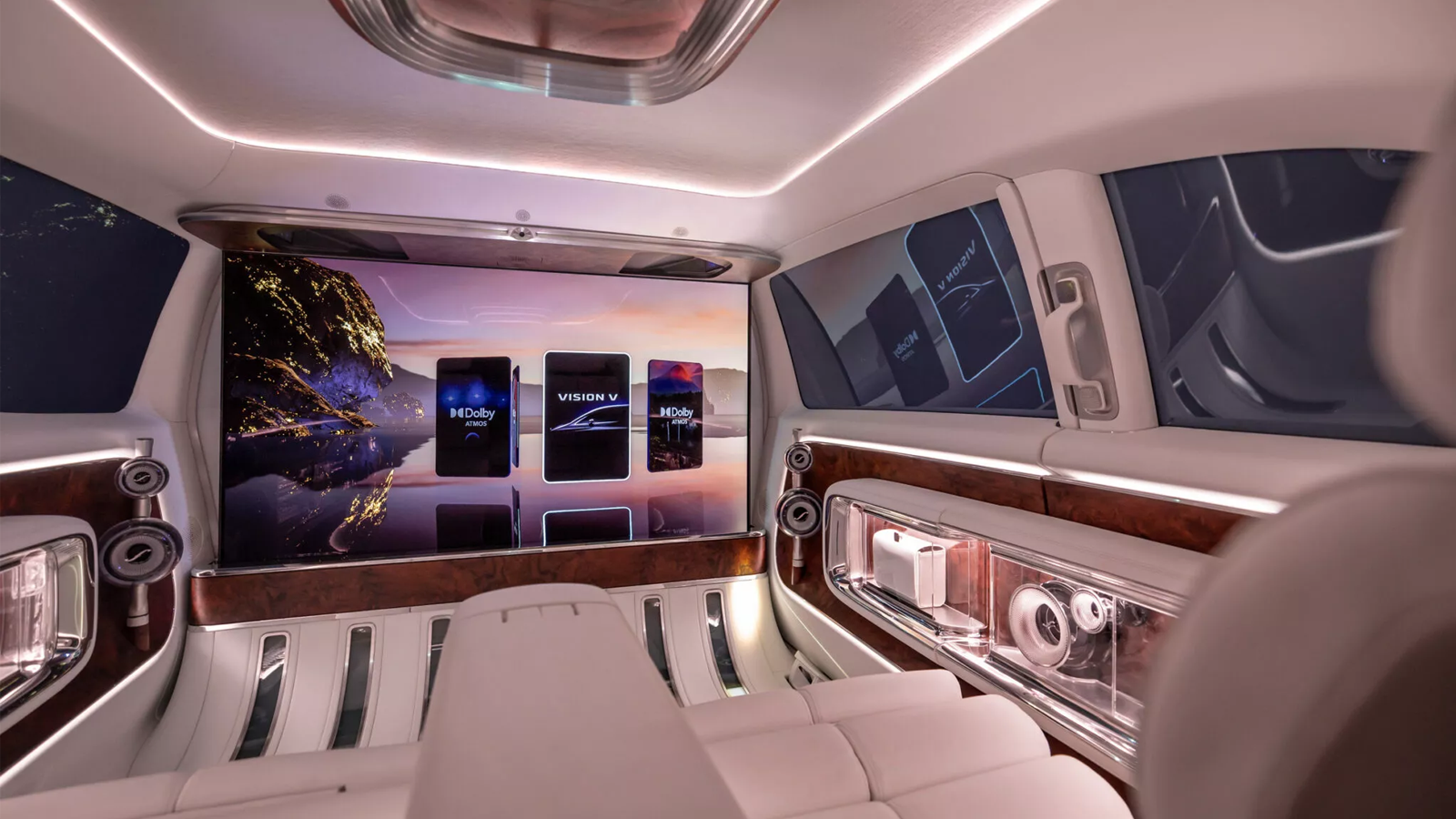
The centerpiece of the cabin is a retractable 65-inch 4K projection screen powered by seven projectors. This setup, in concert with 42 speakers and ambient lighting that responds to the audio, creates an immersive environment that can be customized for movies, games, virtual shopping, video calls, or even karaoke.
Glass That Thinks
Mercedes has equipped the Vision V with switchable smart glass for the side windows, partition, and panoramic roof. Passengers can adjust opacity or set custom patterns, enabling privacy and ambience without physical blinds or curtains. The partition between front and rear cabins can be turned opaque on command, isolating the rear lounge from the driver when needed.
More Than Just Entertainment
While the tech-forward cabin boasts gaming and multimedia, it also serves practical business needs. Passengers can use the system for video conferencing, receive curated updates from a digital assistant, or call up a 3D navigation interface that overlays real-world views with augmented reality. According to Ola Källenius, CEO of Mercedes-Benz, “It is the redefinition of space in a passenger vehicle and a reimagination of rear seat luxury.”
Production Plans and Market Strategy
The Vision V previews two upcoming production models: the VLS and VLE, both launching in 2026. These will be offered initially as EVs, with hybrids to follow. Mercedes plans to release them in China, North America, and Europe, focusing first on high-spec variants. While both commercial and private-use vans will share the VAN.EA base, their design and features will differ significantly. Production will likely be split between China and another yet-undisclosed region.
Strategic Timing and Global Priorities
The Shanghai debut of the Vision V was no accident. In China, aftermarket luxury conversions of Mercedes vans are already booming, and the Vision V is designed to offer a factory-finished alternative. Mercedes aims to capture that demand directly. The U.S. is expected to be the second-largest market for these high-end vans, which may cost more than an S-Class.
Looking Ahead
While Mercedes has not confirmed a Maybach version, the Vision V already flirts with that level of excess. Future models may include variants with long-wheelbase options, air suspension, rear-wheel steering, and what’s rumored to be the largest panoramic roof on any production vehicle. Though it’s still a concept, the Vision V’s production derivatives are set to challenge assumptions about what a luxury vehicle can look like—and who it’s designed for.
Click through for more photos of the Vision V--->
>>Join the conversation about this concept right here on MBWorld.org
For help with your maintenance and repair projects, please visit our How-to section in the forum.
Mercedes Vision V Concept
Mercedes Vision V Concept
Mercedes Vision V Concept
Mercedes Vision V Concept
Mercedes Vision V Concept