With Art Deco styling, solar paint, and neuromorphic computing, Mercedes’ Vision Iconic concept explores how classic luxury might look in an electric, self-driving future.
A Glimpse Into Mercedes’ Next Era
The Mercedes Vision Iconic EV is less about production readiness and more about reinterpreting history. Unveiled as a design study, the concept hints at how Mercedes intends to balance its century-old luxury identity with the demands of an electric, automated age. The company says the show car aims to “stand out in a sea of sameness,” an implicit critique of the uniform styling common among many modern EVs.
Classic Proportions
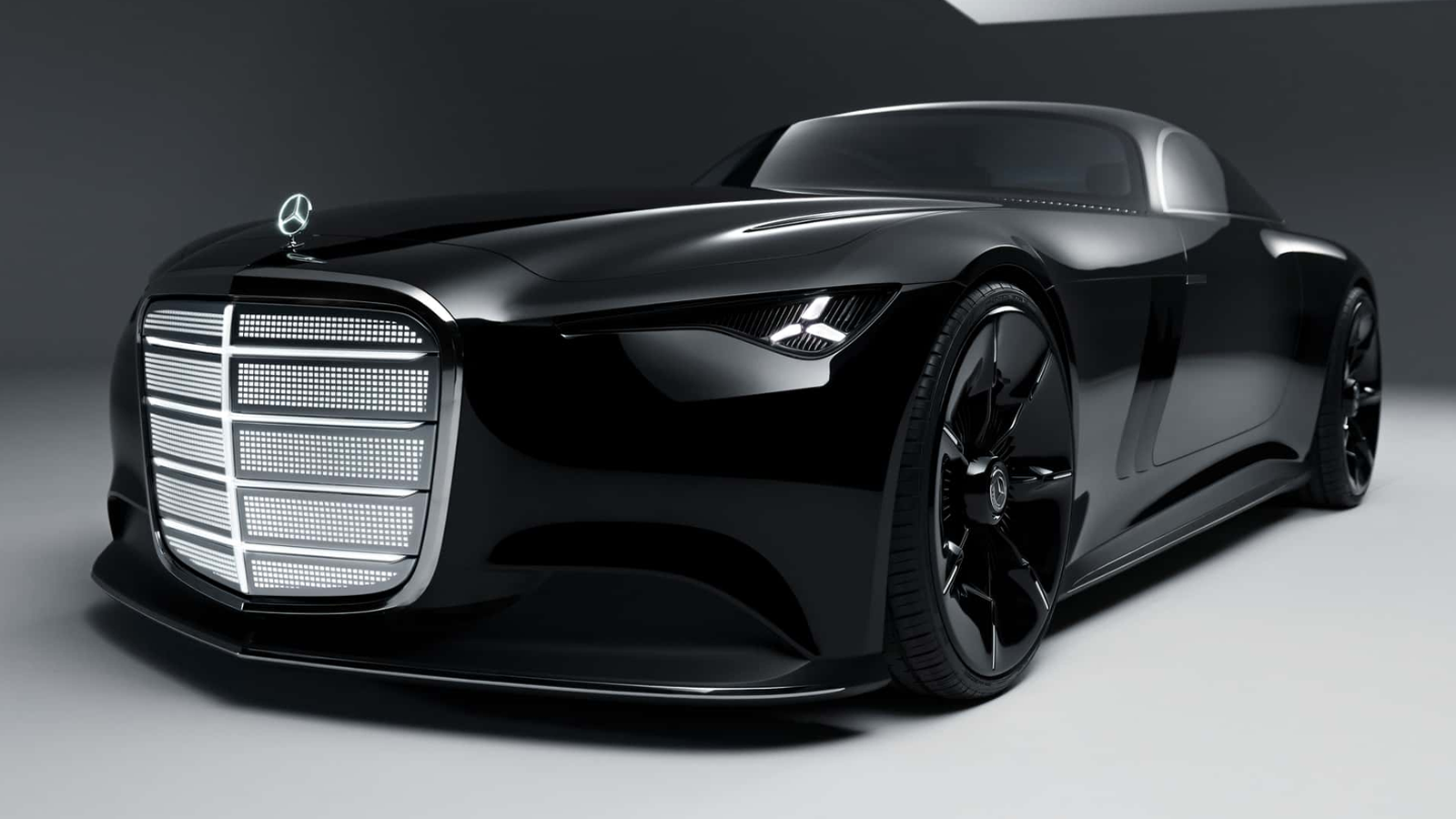
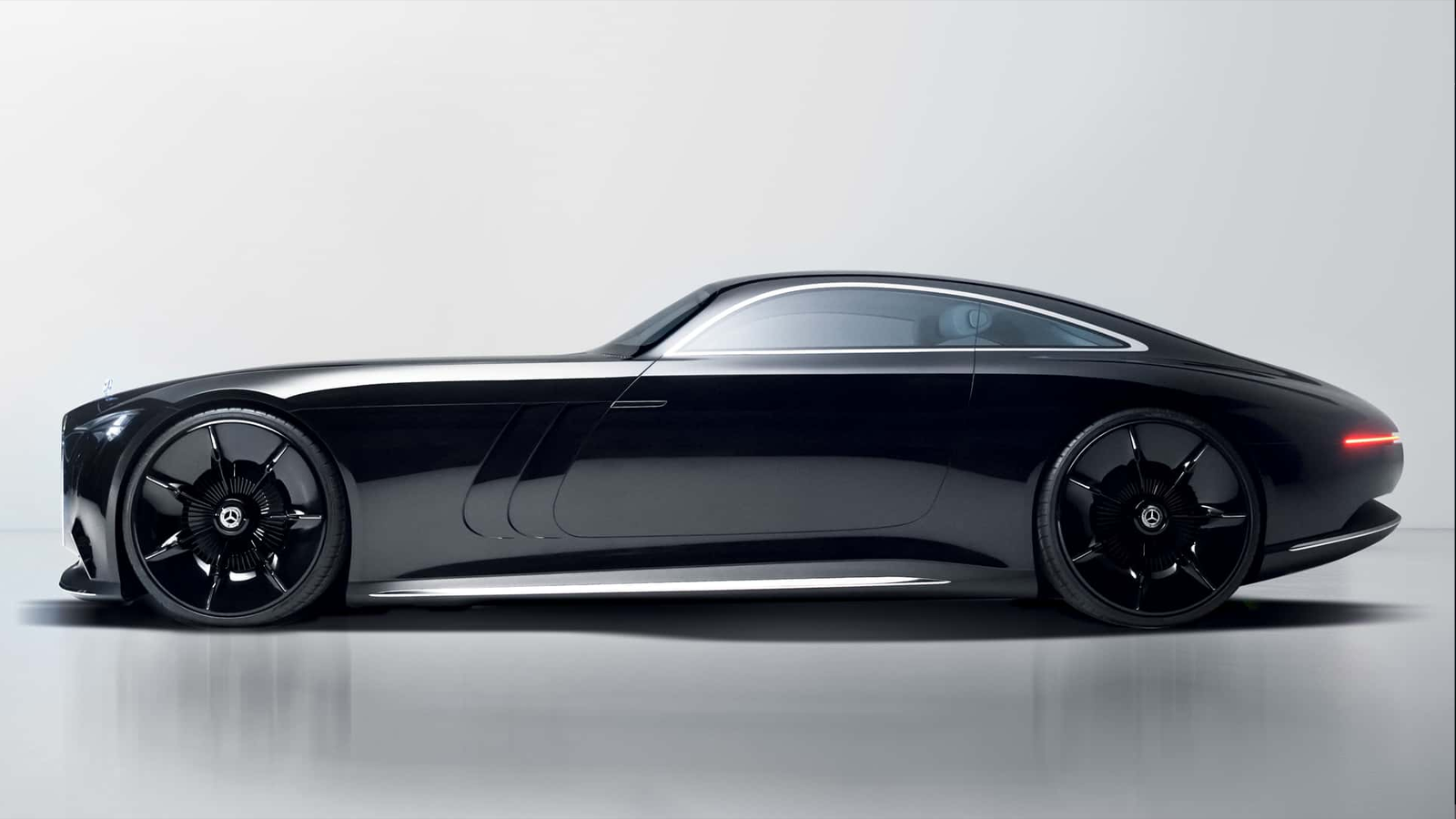
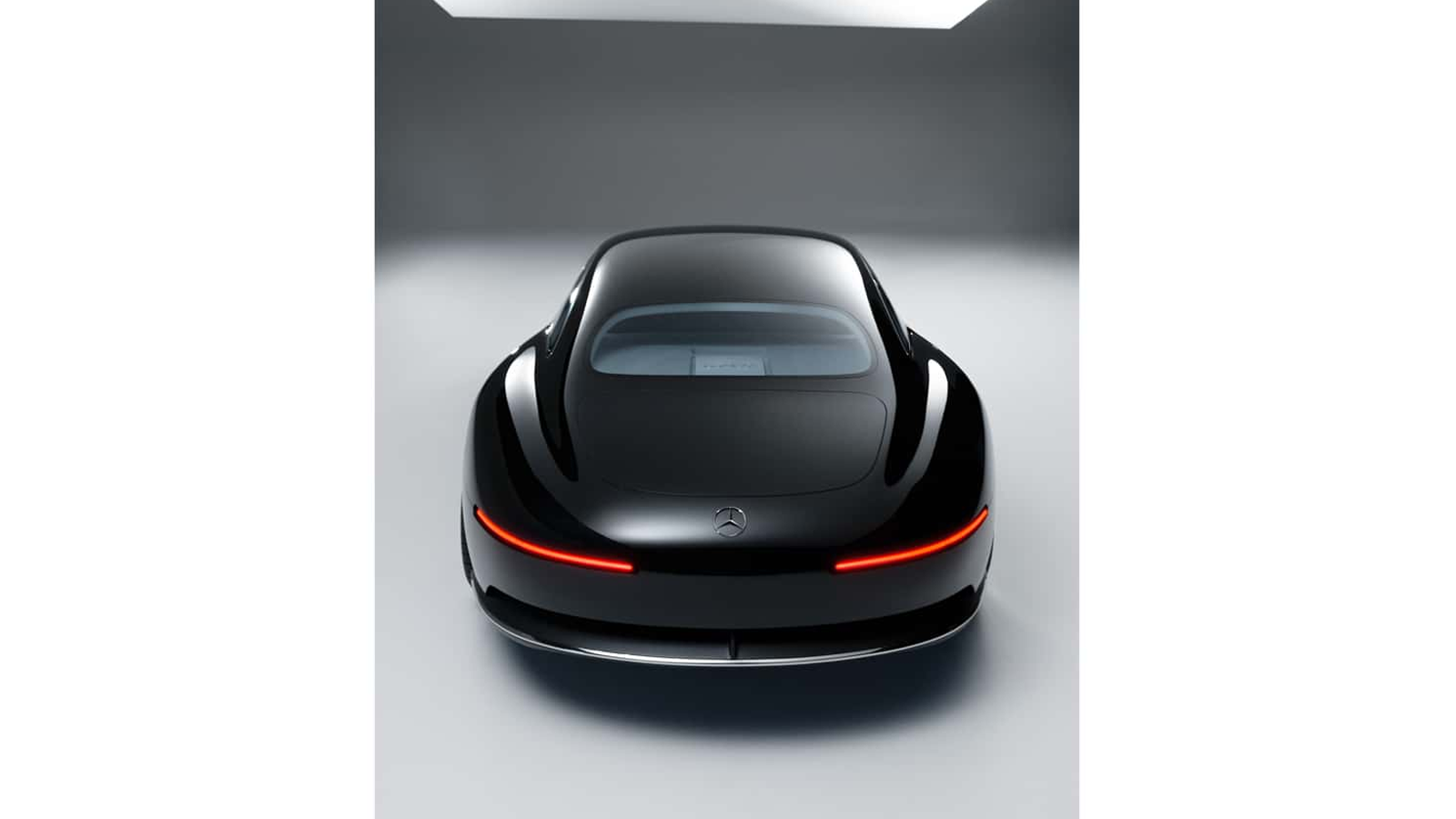
At first glance, the Vision Iconic’s proportions evoke prewar opulence, with long fenders and a tapering tail reminiscent of the 1938 540K Autobahn Kurier. The coupe’s form borrows from several Mercedes legends, the 300 SL, 600 Pullman, and W108/W111 sedans, yet integrates them into a single futuristic silhouette. Chief designer Gorden Wagener described the car as “a sculpture in motion, a homage to timeless elegance, and a statement for the future.”
Reinventing the Grille
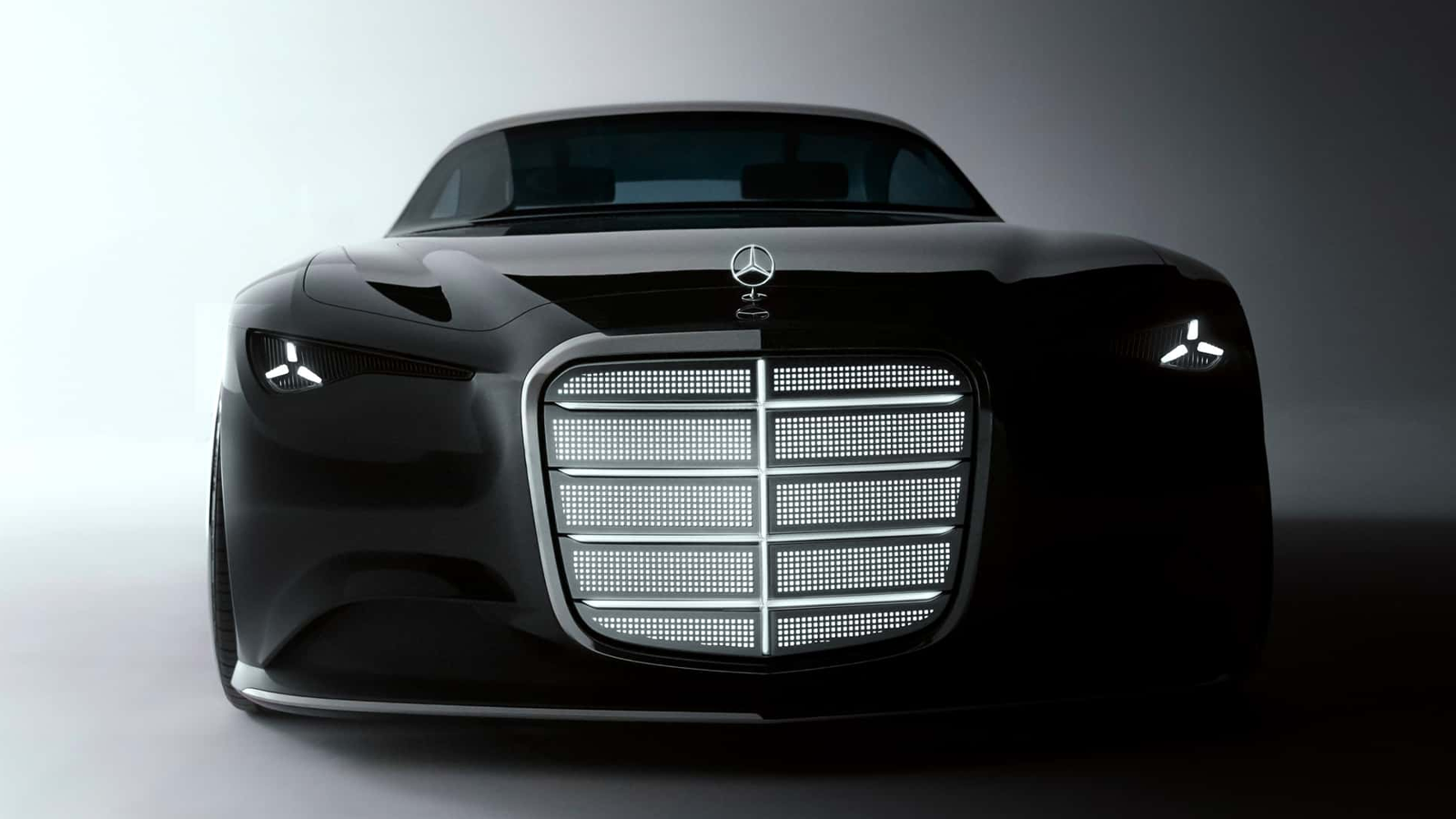
The Vision Iconic debuts Mercedes’ latest interpretation of its grille, a bold evolution of the pixelated face first seen on the new GLC. On this concept, the feature is both an homage and a reinvention: framed in chrome, filled with a smoked-glass lattice, and outlined by contour lighting. While exaggerated in scale, it’s intended to look more luxurious than garish, with its illuminated upright star serving as a centerpiece.
New Design Language
Mercedes intends this new design language to reconnect with traditional cues of prestige. The grille’s upright form and ornamentation echo Mercedes’ Golden Era sedans, but its lighting elements clearly belong to the EV age. This hybrid of heritage and futurism will reportedly appear, at least in toned-down form, on upcoming models like the next S-Class EV.
Art Deco Revival Inside
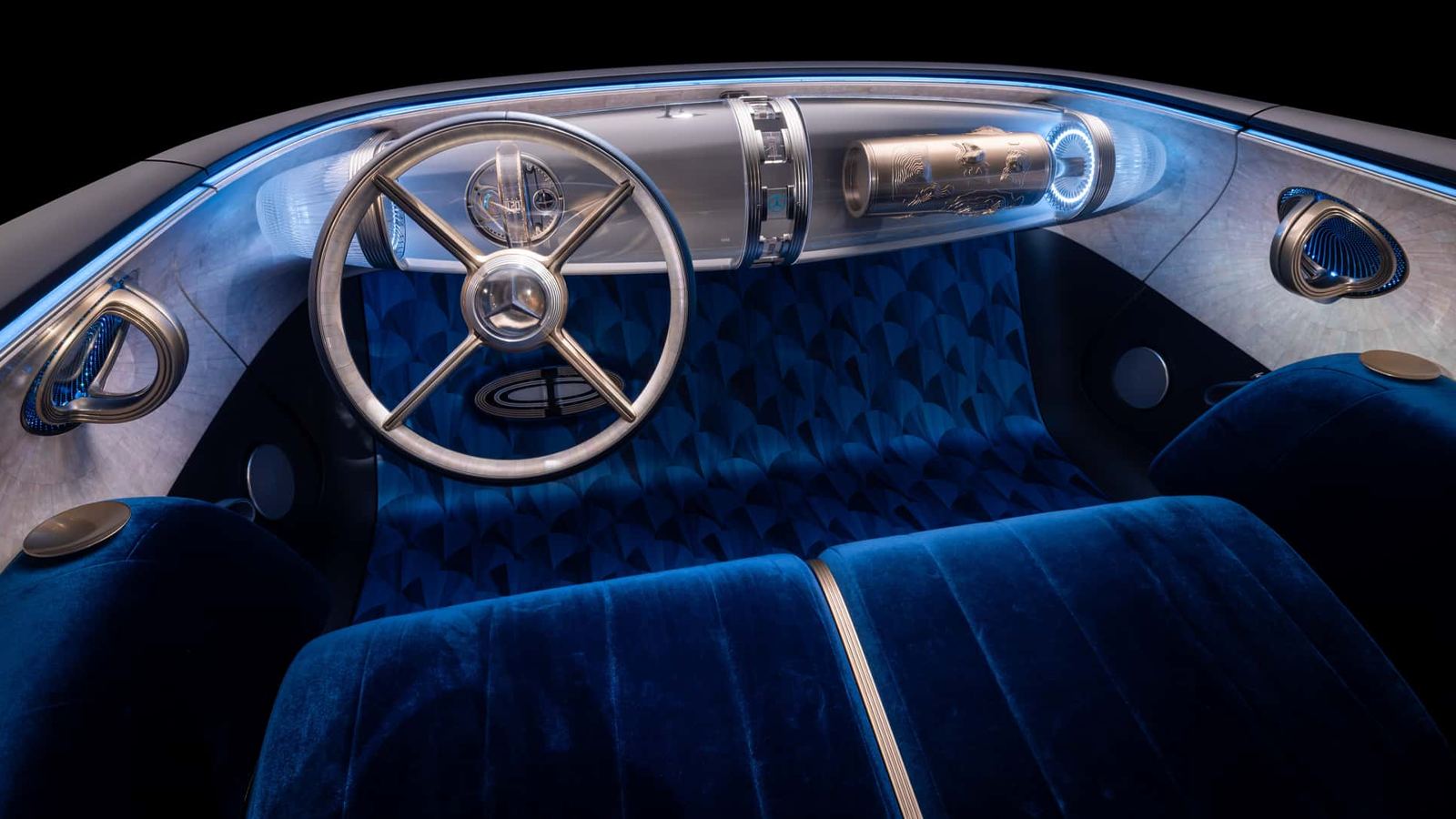
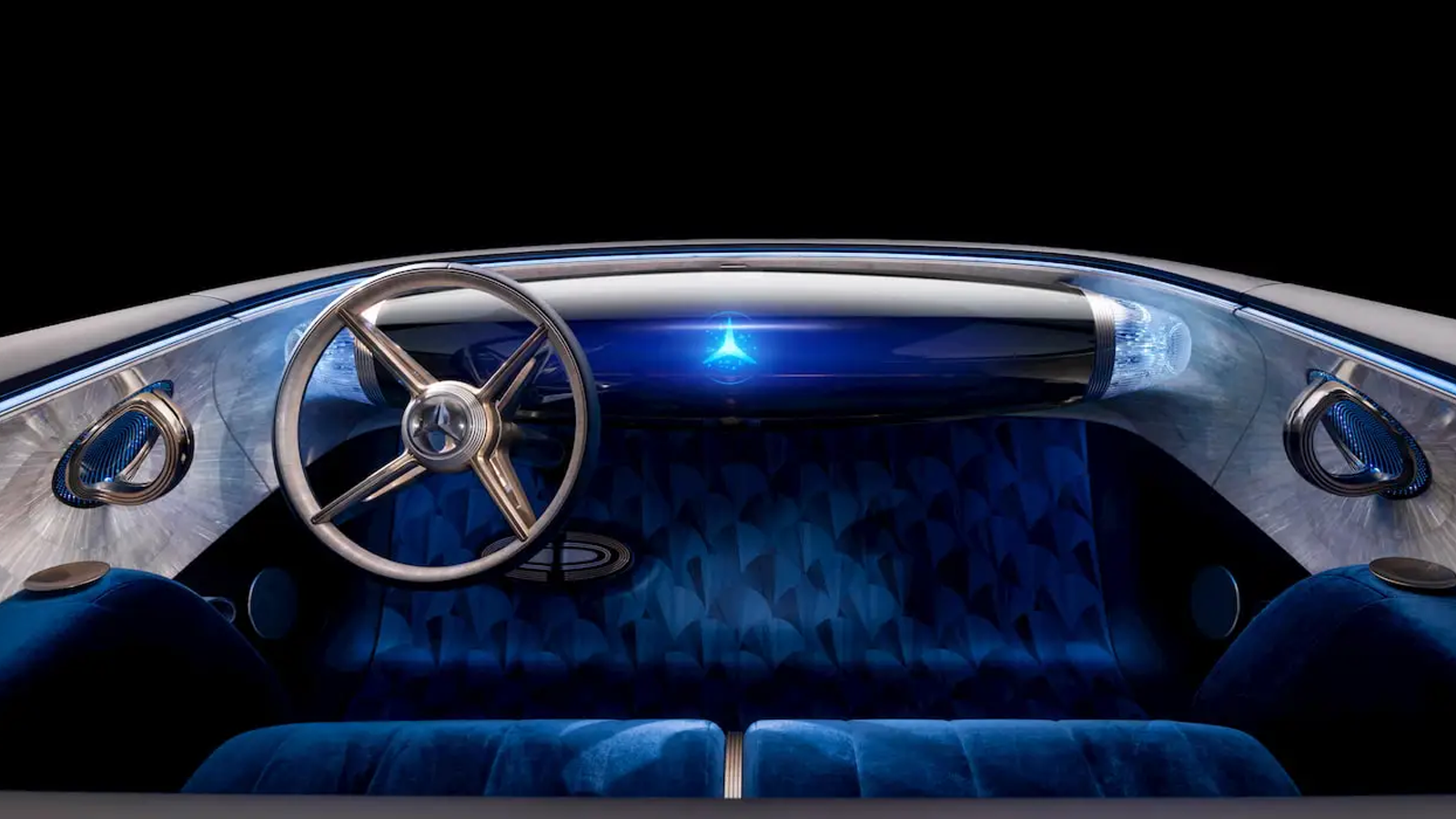
Inside, Mercedes leans fully into Art Deco opulence. The interior’s focal point is the “Zeppelin,” a floating glass dashboard that stretches across the cabin, coming alive when the doors open. One of its four circular displays doubles as the Mercedes star, functioning as an AI assistant that interacts with the occupants. The four-spoke steering wheel, oversized and minimal, evokes both classic steering yokes and nautical design.
Material choices reinforce the theme of modern craftsmanship meeting early-20th-century luxury. The bench seat is upholstered in blue velvet, while the floor uses blue straw marquetry, a decorative woodcraft technique revived from the 1920s. The result is a lounge-like space that merges nostalgia with digital sophistication.
Technology Beneath the Sculpture
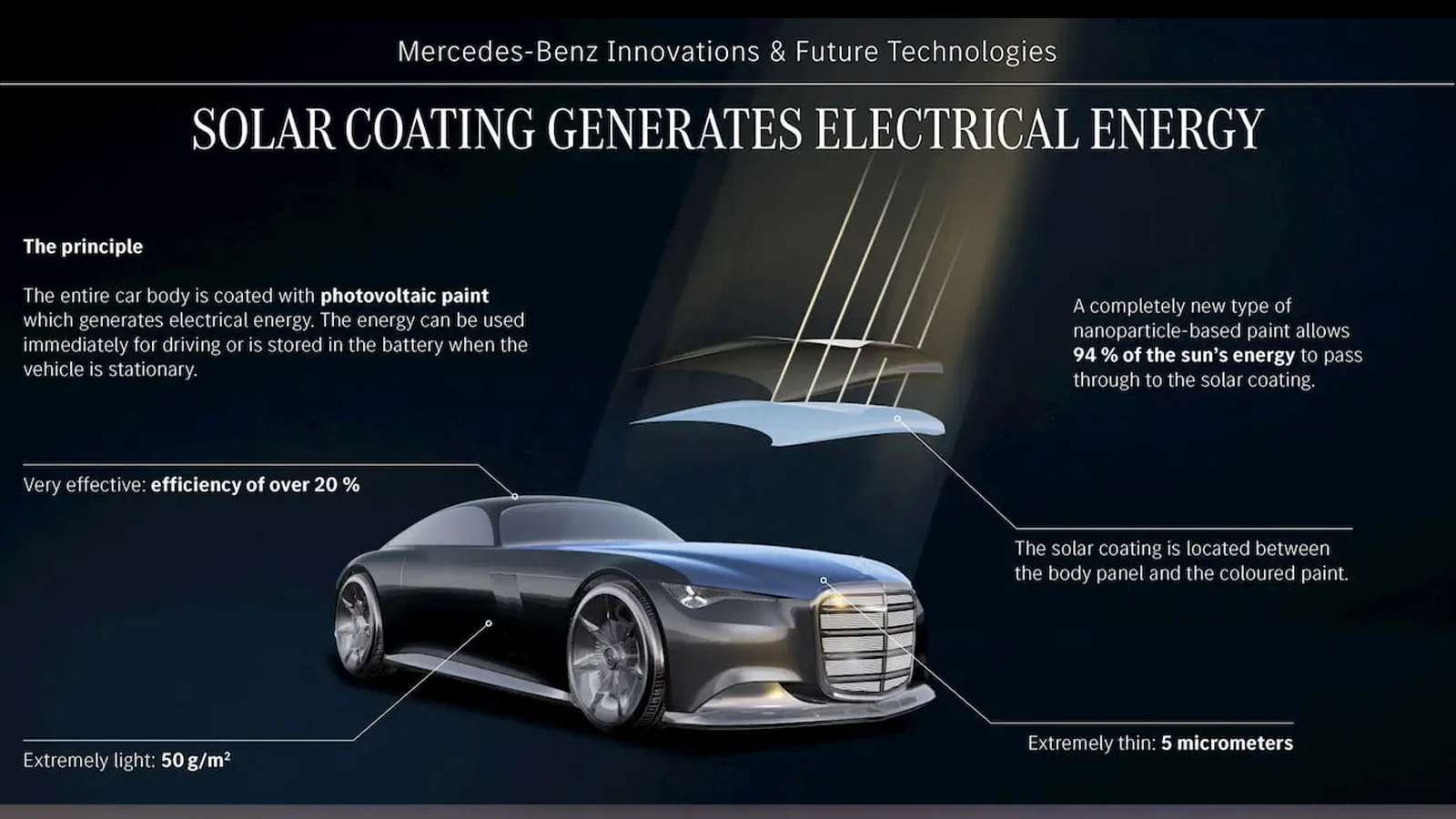
Though Mercedes has not shared drivetrain details, the Vision Iconic is fully electric and equipped with steer-by-wire and rear-axle steering for greater agility. The body itself incorporates Solar Paint, which uses embedded photovoltaic cells to harvest sunlight. Mercedes claims a vehicle with about 11 square meters of solar surface area—roughly that of a midsize SUV, could generate enough energy for up to 12,000 kilometers (7,450 miles) of additional range annually under ideal conditions. The coating is recyclable and avoids the use of rare earth materials or silicon, reflecting a more sustainable approach to EV design.
A New Type of Intelligence
Underneath the aesthetic experimentation lies a technological ambition. The Vision Iconic features neuromorphic computing, a hardware design modeled after the human brain. Mercedes says this approach could cut energy use for data processing in autonomous systems by up to 90%, improving how the car recognizes traffic signs, other vehicles, and road conditions.
The concept offers Level 2 driver assistance, but on highways, it can engage Level 4 autonomous driving, allowing full self-operation. Mercedes describes this capability as a way to “give customers back time,” emphasizing how automation could redefine the experience of luxury mobility.
The Future in Concept Form
For now, the Vision Iconic remains a showpiece, unlikely to reach production as-is. Still, many of its ideas, the illuminated grille, Art Deco cues, and solar-integrated bodywork, preview the direction of Mercedes’ upcoming EV lineup.
Visually, it’s as striking as it is unconventional, part sculpture, part experiment, and wholly committed to bridging eras. Whether it becomes a touchstone for the brand or a design curiosity, the Vision Iconic reaffirms that Mercedes still sees style and technology as inseparable parts of its identity.