
How Does Mercedes’ Formula 1 Compression Trick Work, Exactly?

It May be Machiavellian, But is Mercedes’ Formula 1 Trick Legit?
Mercedes has turned the Formula 1 world on tilt with its cunning and revolutionary engine compression trick. Said to deliver a double-digit horsepower advantage it has rivals crying foul as controversy reigns. But how does it work?
They say you cannot keep a secret in Formula 1, even if that secret lies deep inside your engine. But the gist of it is that Mercedes engineers discovered a few loopholes in the new for 2026 rules. The real challenge however came in exploiting them. And it goes something like this.
While previously free, F1 engine makers are limited to a sixteen-to-one compression ratio for the new generation of engines from 2026. Albeit way beyond normal production car ratios, this was implemented to prevent another costly F1 arms race.

The Rods Expand–the Block Does Not.
The change came along with a reduced fuel load and new lower energy density carbon-neutral e-fuels. Which makes higher compression an even greater advantage than before. Knowing this, Mercedes conducted intensive research around enhancing compression. And with some success, it seems.
The crux of the matter lies in that the Formula 1 compression ratio is not measured by sensors during engine operation, but statically. The FIA simply compares the ratio in volume in the cylinder between the piston’s bottom and top dead centers, at ambient temperature.
That compression ratios can vary when the engine operates, was either not considered, or deliberately ignored when the rules were laid. Now Mercedes has allegedly exploited those minor operational compression discrepancies to up its new engine’s ratio to 18 to one. Which translates to a 30 to 40 HP advantage. And a few tenths of a second a lap.
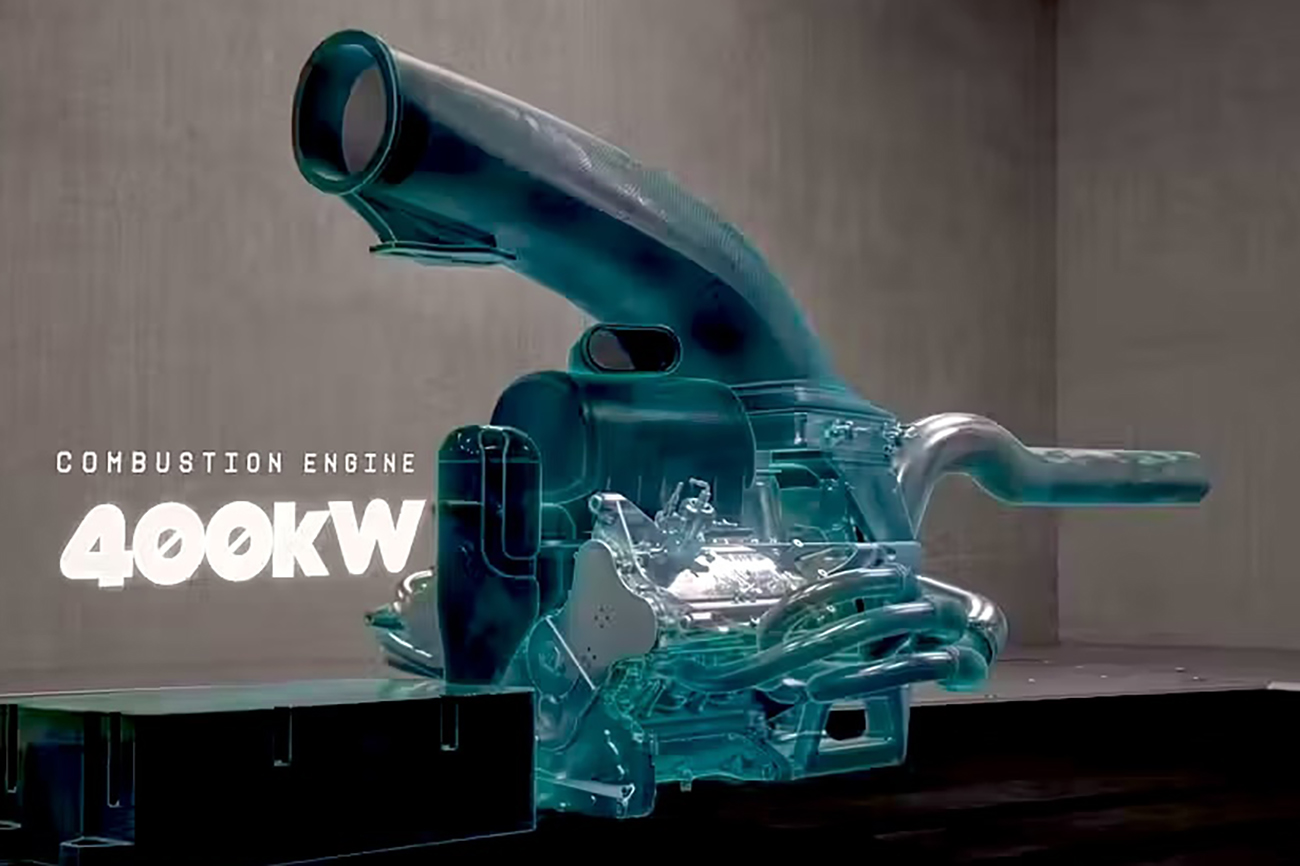
Mixing Metals Makes Compression
But how, exactly, does it work? Well, different materials and components may behave differently under heat and/or pressure. Thanks to their differing coefficients of expansion. To that end, it is likely that Mercedes’ new F1 connecting rods are made of low carbon, but high chromium and nickel austenitic stainless steel.
Which means that the conrods enjoy a high coefficient of expansion, but the engine block uses a different alloy that expands less. So the conrods expand when hot in a cylinder bore volume that’s designed remain as tight as possible. That means one thing. A higher compression ratio….
Mercedes would also likely use 3D printed pistons crafted to deliver most specific expansion properties to assist in the process of diminishing the size of the compressed chamber for maximum compression. But all that would only achieve a ratio of about 17:1. So what else have they done?

Closing a Pocket Increases Compression More
It is suggested that Mercedes engineers may have also linked a tiny pocket of about a cubic centimeter to the combustion chamber, via a very thin channel located near the pre-chamber spark plug at the very top of the cylinder. In a static test, this volume would fill as the piston rises.
The narrow channel however closes in operational reciprocating conditions. To leave a smaller chamber volume and that critical extra hike in compression ratio. While the expansion trick may well be within the regulations, the channel voodoo may not be. Leaving consternation all round.
Red Bull-Ford’s new engine allegedly also uses s Machiavellian deeds to increase its compression ratios, but it may be behind on development. Mercedes team boss Toto Wolff is however adamant that that there was open contact with the FIA throughout his engine’s design and development. He insists his engine is fully compliant.
Let the games begin!
Photos: Mercedes
You must be logged in to post a comment.