
Mercedes Uses Pink Noise As a Safety Feature–And It’s Super Cool
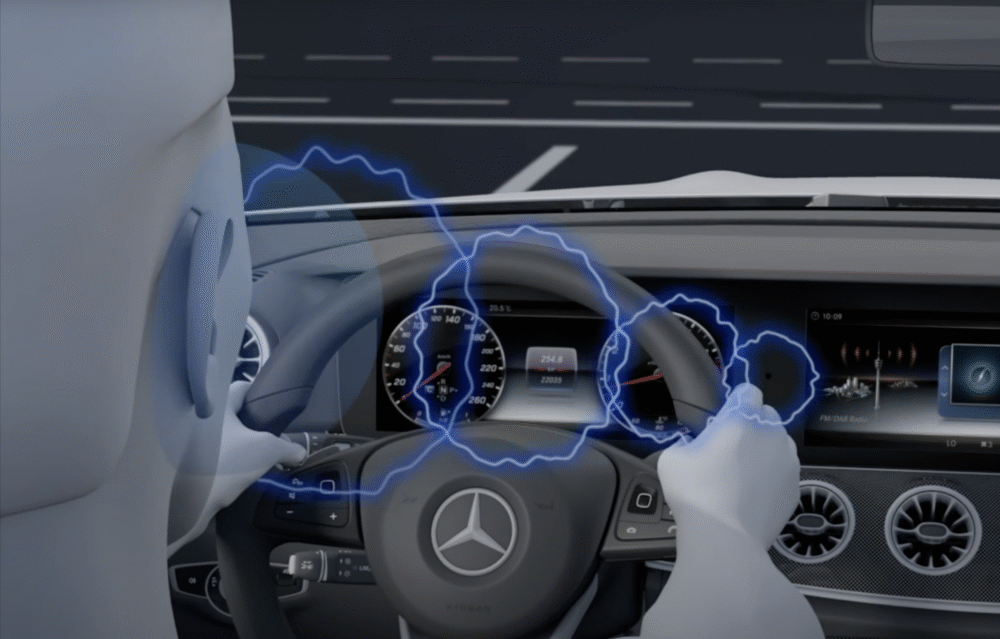
Your body might like airbags, but your eardrums really don’t. Mercedes wants pink noise to fix that.
Airbags are quite literally an engineering nightmare. You see, with the advent of airbags, immeasurable lives have been saved. This is good. However when broken down an analyzed, things look interesting. People’s lives are saved by the concept of an explosion erupting directly at their face. Mercedes engineers are using pink noise to take the edge off that bang.
As we know, airbags are necessary in order to protect people. But the tradeoffs are quite high as noted by Hackaday. Sound waves from the explosion are quite damaging to the ears. But this is where pink noise comes in.

Warning: we’re gonna get nerdy here for a second. If one were to look at human anatomy, they would see that the bits inside the ear are intricate and delicate. Too big of a blast, and they break. But when treated with a loud noise, the stapedius muscle contracts. This lessens the vibrations transferred from the ear drum to the cochlea. It’s a reactive move, however. So an airbag going off is still going to be a rather uncomfortable experience.
This is where pink noise steps in. Cars can now preemptively predict a crash. They can tighten seat belts and raise seat-backs and so forth. What Mercedes does with pink noise is plays it through the audio system just prior to an airbag deployment. This give the ear a moment to “brace” for the impact of the airbag sound wave.
It’s not a perfect system, however. The ear’s ability to react is relatively slow, so it may or may not make a substantial difference. But if it makes any difference at all, Mercedes feels it is worth the effort. After all, you’ve already gone through enough being in a crash, getting your bell rung by an air bag. At least you can escape from the brief stupor with hearing in tact.
If you ever thought that the days of over-engineered Mercedes are long gone, well think again. This just proved that the folks over in Sindelfingen take obsessive levels of safety into account. The cool part? This technology has been around for almost a decade. As it first debuted in 2017. How cool is that?
Join the MB World forums now!

You must be logged in to post a comment.