When you click on links to various merchants on this site and make a purchase, this can result in this site earning a commission. Affiliate programs and affiliations include, but are not limited to, the eBay Partner Network.
240,000 KM in what kind of condition ?
Ideal ? Moderate ? Moderate severe ? Severe ?
Use factor of severe or 400% worse for my environment = 240K / 4 = 60,000KM
^Good info above, but just needing to add a minor but important detail here. Many of us live in N. America so this is relevant to many. Because of the high sulphur content in our fuel, the ultra lean burn high compression ratio mode that DI engines run in Europe, cannot run here. In layman's terms, it's why the same DI motor in Europe can be much more fuel efficient, MPG wise, versus the same engine in N. America. This also means that there are several phases of an engine's performance that forces the engine to run richer than it should. This means that fuel dilution is more pronounced here in N. America with DI engines as while the engine could be more fuel efficient and less blowby would occur with less fuel injected for combustion, it cannot enter this mode due to the sulphur content in our fuel.
That is why doing a UOA is so important here, and that reading results is taken with a grain of salt because reading a great UOA of the same engine in Europe, as an example, means nothing!
Keep it till it dies:
I stick to 5 000km, buy cars cash and keep them till something really serious break meaning the end of it also for me a car is not an investment, no returns, so far I cut my losses this way.So far I had no serious break, but one never knows. My Mazda 300 000Km plus still starts with half a turn if I choke it right, engine clean. Is so easy to change the oil(sucktion) & filters no excuse for me. I'm not concern about the oil life claimed.
If you lease, dont bother at all, you'LL be however forced to do the services.
If you buy on credit, but don't intend to keep it out of gurantee, don't bother either much, just do the services as indicated.
If you a secondhand buyer, be waiky and informed, do oil & fluid sample test on complicated expensive cars also, just my opinion.
Last edited by Moto_Guzzi; Sep 1, 2018 at 10:18 AM.
^Good info above, but just needing to add a minor but important detail here. Many of us live in N. America so this is relevant to many. Because of the high sulphur content in our fuel, the ultra lean burn high compression ratio mode that DI engines run in Europe, cannot run here. In layman's terms, it's why the same DI motor in Europe can be much more fuel efficient, MPG wise, versus the same engine in N. America. This also means that there are several phases of an engine's performance that forces the engine to run richer than it should. This means that fuel dilution is more pronounced here in N. America with DI engines as while the engine could be more fuel efficient and less blowby would occur with less fuel injected for combustion, it cannot enter this mode due to the sulphur content in our fuel.
That is why doing a UOA is so important here, and that reading results is taken with a grain of salt because reading a great UOA of the same engine in Europe, as an example, means nothing!
GASOLINE
Don't feel bad, 30ppm average to max 80ppm sulfur in US gasoline Tier 2 is not bad.
By Jan 2017, USA Tier 3 is 10 ppm sulfur content for gasoline easily available....correct ? https://stillwaterassociates.com/tie...fur-standards/
This is how bad my country fuel is Euro 2 piece of shi*t, but in mid 2019 we will supposedly ( supposedly means under 50% chance ) jump to Euro4 standard but the 50ppm sulfur one , not the 10ppm one,....but not entire country wide.
So, 50ppm sulfur in gasoline, is NO better than USA Tier 2 of the 30ppm average. https://www.transportpolicy.net/stan...-and-gasoline/
Don't get a heart attack when you see 2,500PPM sulfur in our subsidized diesel fuel.
DIESEL
At the least USA has been getting ultra low sulfur diesel for a long time now. My country is still at 300ppm sulfur lowest last year, this year we have 50ppm one , at some cities only.
Before 2013 we ONLY have 2,500ppm sulfur ones. In fact not all of my cities today have 300ppm one, let alone 50ppm one, but in all cities we do have the 2,500ppm one.
GASOLINE
Don't feel bad, 30ppm average to max 80ppm sulfur in US gasoline Tier 2 is not bad.
By Jan 2017, USA Tier 3 is 10 ppm sulfur content for gasoline easily available....correct ? https://stillwaterassociates.com/tie...fur-standards/
This is how bad my country fuel is Euro 2 piece of shi*t, but in mid 2019 we will supposedly ( supposedly means under 50% chance ) jump to Euro4 standard but the 50ppm sulfur one , not the 10ppm one,....but not entire country wide.
So, 50ppm sulfur in gasoline, is NO better than USA Tier 2 of the 30ppm average. https://www.transportpolicy.net/stan...-and-gasoline/
Don't get a heart attack when you see 2,500PPM sulfur in our subsidized diesel fuel.
DIESEL
At the least USA has been getting ultra low sulfur diesel for a long time now. My country is still at 300ppm sulfur lowest last year, this year we have 50ppm one , at some cities only.
Before 2013 we ONLY have 2,500ppm sulfur ones. In fact not all of my cities today have 300ppm one, let alone 50ppm one, but in all cities we do have the 2,500ppm one.
.
Thank you. Your post set off a bunch of follow up questions and now am investigating if the M276 DELA engine now utilizes stratified injection due to the decreased sulphur content. I have not been following this topic since ditching DI but am now interested as I'm in the market for a W222. Really cool stuff, thank you for sharing.
New oil intervals for cars are just getting absurd. They don't care for the engine life after warranty, the engineers know that very well and they want the less maintenance possible during the warranty period for maximum profit. Not to mention they are making all the fluids like differential oils, transmission and engine oil as thin as possible because short term efficiency is more profitable for them then long term component life. You thin out the fluids so they don't protect against wear for the long term and you also increase the interval to change them ?I mean give me a break. If a car has under 100 000km, changing the synthetic oil every 7000-8000km should be the limit, anything over that you are creating deposites in the crank case. After 100 000km, stick too 5000km if you plan on keeping the car and you're car will last easily 300 000km+.
Last edited by W204Motorsports; Sep 1, 2018 at 05:32 PM.
New oil intervals for cars are just getting absurd. They don't care for the engine life after warranty, the engineers know that very well and they want the less maintenance possible during the warranty period for maximum profit. Not to mention they are making all the fluids like differential oils, transmission and engine oil as thin as possible because short term efficiency is more profitable for them then long term component life. You thin out the fluids so they don't protect against wear for the long term and you also increase the interval to change them ? ive me a break. If a car has under 100 000km, changing the synthetic oil every 7000-8000km should be the limit, anything over that you are creating deposites in the crank case. After 100 000km, stick too 5000km if you plan on keeping the car and you're car will last easily 300 000km+.
Precisely why I'm sticking to the 229.5 oil spec. Any engine that calls for the new 229.8? Iirc...
No way
Not buying it. It's trading longevity for. 8mpg or whatever and if I stick to the 259.5 I void warranty.
Penguin, do get the W222 it would be a very nice car in terms of ride comfort and if it is a S450 ,it will be the same M276 DELA 30 engine like mine but with 362HP instead of 333HP mine is.
If 362HP, it is still a 6.1 second car the W222 2,200kg weight, not bad.
I agree with ltwargssf on the oil deposit thingy if oil is used for high mileage. My cars engines are super clean when torn a part. Since the mid 1980s I used to own 3 Toyotas which all 3 have at least 100,000KM.
Normal wear and tear ...yes but within limits for the kind of crazy high rev driving I did on them when the traffic was much less back then. I could always do red line RPM in 1st and 2nd gear all the time.
Same 5,000KM oil change back then.
Engine combustion management is getting better and better today, I agree, but no combustion is 100% perfect, there will always be traces of carbon deposit, no way around it.
Our engine oil is the cleaner of all the by-product of combustion, our oil oxidized as it touches the metals in our engine and all the contamination produced as by-product of combustion,
as piston blow-by do and still exist.
For me, at 5,000KM oil change its cost is low enough and worth it for the protection and cleanliness I am getting.
I see things this way :
01. Engine combustion management is getting better today ... YES.
02. Engines getting more powerful today based on it its cubic capacity... YES.
03. Engines now often uses turbocharger to gain power while staying small or smaller displacement ... YES.
To me no 02 and 03 means the oil works harder. Even if the oil get better, it has to work harder today.
E class W214 3 liter engine , 24 valve M104 of the 1990s produced 228HP without catalytic eating its power.
W212 of 2014, my engine M276 DELA 30 , produced 333HP with Euro4 catalytic unit.
So let say 120HP increase to make it equal in catalytic parasitic loss.
Sure my engine has nanoslide coating on its liner yada yada
Whatever mechanical improvement made to these engines, the bigger need is to accommodate the higher stress it is enduring for its higher power output based on the same 3 liter displacement.
Will today M276 DELA 30 live longer than M104 3 liter if we can test them side by side in a 100% similar controlled environment ? Probably, but I would not believe it will be significant.
My simple thinking is this way, M104 engine per piston must endure combustion explosion converting to kinetic energy of spinning the crankshaft equal to 228HP / 6 = 38 HP per piston.
M276 DELA 30 must endure 333HP / 6 = 55.5 HP per piston , 46% more work.
The connecting rod, the bearing on the crankshaft and what not, will experience that 46% extra work load.
Why would I extend an oil service life, knowing it has to do more work today ?
I take what ever improvement Mobil 1 0W-40 of today ( if any ) and cleaner combustion of M276 DELA30 as safety buffer for the extra load the engine oil has to endure.
https://www.jsae.or.jp/en/publicatio...ne_engines.pdf
Go to page 9 of the PDF Fig. 19, the exhaust passage from the cylinder head to the turbocharger was drastically shortened to reduce capacity and ensure response.
This measure also helps to transfer exhaust energy efficiently into turbine work. As a result, the maximum turbine temperature reaches 1,050℃.
This engine also uses the same piezo injector direct injection system as the BlueDirect series. As a result, the E400 achieves low fuel consumption
of 7.5 liters/100 km and a maximum power of 245 kW.
Sure, the turbo oil gallery housing is water cooled, but the turbo bearing and the oil bathing those bearings has to endure crazy temperature for a while as it flows to cool and lubricate the bearings.
Oil degrade fast when exposed to such heat.
Due to being turbocharged alone, I will never extend the oil service life beyond 5,000KM for pre-caution sake, in my environment, because it is the cheapest maintenance I can do at approx 3.8 cents US$ per kilometer.
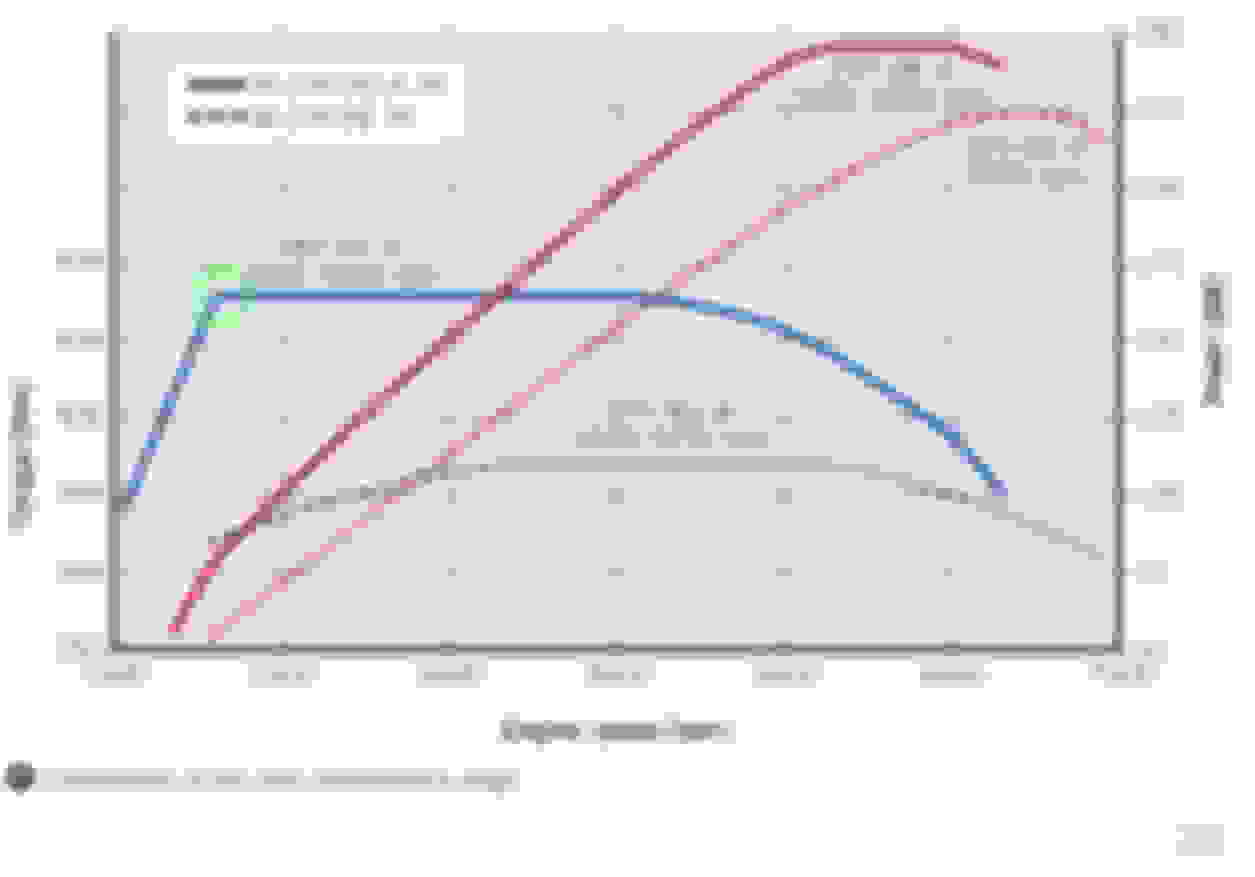
If you see the M276 DE LA 30 torque chart, at 1,600 RPM it already achieved its peak torque.
Source : http://115.112.66.136/Employee_Infor...de_2013_06.pdf page 18 of the PDF.
So this turbo is what I call comfort-efficiency turbo and not the typical performance turbo which starts to kicks in at 3,500 RPM and all the way to red line.
This also means M276 turbo works a lot and often, without needing us to be heavy footed on the accelerator pedal. So my oil work very hard in this case even when engine is at 2,000 RPM.
Penguin, do get the W222 it would be a very nice car in terms of ride comfort and if it is a S450 ,it will be the same M276 DELA 30 engine like mine but with 362HP instead of 333HP mine is.
If 362HP, it is still a 6.1 second car the W222 2,200kg weight, not bad.
I agree with ltwargssf on the oil deposit thingy if oil is used for high mileage. My cars engines are super clean when torn a part. Since the mid 1980s I used to own 3 Toyotas which all 3 have at least 100,000KM.
Normal wear and tear ...yes but within limits for the kind of crazy high rev driving I did on them when the traffic was much less back then. I could always do red line RPM in 1st and 2nd gear all the time.
Same 5,000KM oil change back then.
Engine combustion management is getting better and better today, I agree, but no combustion is 100% perfect, there will always be traces of carbon deposit, no way around it.
Our engine oil is the cleaner of all the by-product of combustion, our oil oxidized as it touches the metals in our engine and all the contamination produced as by-product of combustion,
as piston blow-by do and still exist.
For me, at 5,000KM oil change its cost is low enough and worth it for the protection and cleanliness I am getting.
I see things this way :
01. Engine combustion management is getting better today ... YES.
02. Engines getting more powerful today based on it its cubic capacity... YES.
03. Engines now often uses turbocharger to gain power while staying small or smaller displacement ... YES.
To me no 02 and 03 means the oil works harder. Even if the oil get better, it has to work harder today.
E class W214 3 liter engine , 24 valve M104 of the 1990s produced 228HP without catalytic eating its power.
W212 of 2014, my engine M276 DELA 30 , produced 333HP with Euro4 catalytic unit.
So let say 120HP increase to make it equal in catalytic parasitic loss.
Sure my engine has nanoslide coating on its liner yada yada
Whatever mechanical improvement made to these engines, the bigger need is to accommodate the higher stress it is enduring for its higher power output based on the same 3 liter displacement.
Will today M276 DELA 30 live longer than M104 3 liter if we can test them side by side in a 100% similar controlled environment ? Probably, but I would not believe it will be significant.
My simple thinking is this way, M104 engine per piston must endure combustion explosion converting to kinetic energy of spinning the crankshaft equal to 228HP / 6 = 38 HP per piston.
M276 DELA 30 must endure 333HP / 6 = 55.5 HP per piston , 46% more work.
The connecting rod, the bearing on the crankshaft and what not, will experience that 46% extra work load.
Why would I extend an oil service life, knowing it has to do more work today ?
I take what ever improvement Mobil 1 0W-40 of today ( if any ) and cleaner combustion of M276 DELA30 as safety buffer for the extra load the engine oil has to endure.
https://www.jsae.or.jp/en/publicatio...ne_engines.pdf
Go to page 9 of the PDF Fig. 19, the exhaust passage from the cylinder head to the turbocharger was drastically shortened to reduce capacity and ensure response.
This measure also helps to transfer exhaust energy efficiently into turbine work. As a result, the maximum turbine temperature reaches 1,050℃.
This engine also uses the same piezo injector direct injection system as the BlueDirect series. As a result, the E400 achieves low fuel consumption
of 7.5 liters/100 km and a maximum power of 245 kW.
Sure, the turbo oil gallery housing is water cooled, but the turbo bearing and the oil bathing those bearings has to endure crazy temperature for a while as it flows to cool and lubricate the bearings.
Oil degrade fast when exposed to such heat.
Due to being turbocharged alone, I will never extend the oil service life beyond 5,000KM for pre-caution sake, in my environment, because it is the cheapest maintenance I can do at approx 3.8 cents US$ per kilometer.
If you see the M276 DE LA 30 torque chart, at 1,600 RPM it already achieved its peak torque.
Source : http://115.112.66.136/Employee_Infor...de_2013_06.pdf page 18 of the PDF.
So this turbo is what I call comfort-efficiency turbo and not the typical performance turbo which starts to kicks in at 3,500 RPM and all the way to red line.
This also means M276 turbo works a lot and often, without needing us to be heavy footed on the accelerator pedal. So my oil work very hard in this case even when engine is at 2,000 RPM.
I think I am very old school...
.
Firstly, I must say, most of my knowledge about direct injection, fuel content, fuel dilution, blowby, carbon buildup is nearly 8 years old, and nearly nobody has added to my knowledge on this topic as most people just look at their pretty cars and enjoy them. Unfortunately, I am also very old school, and as an engineer, I like to know every little detail, and analysis by paralysis (as someone here wrote last week) is something that does cause me grief.
I wholeheartedly agree about your comments here. The oil is working harder than ever, although I would qualify that before I start doing 5,000km (I understand your fuel and such is much less refined but I get your line of thinking) OCI, I'll do a few UOAs first, and of course, I will report back on my findings as it's applicable for so many.
A couple M276 DELA 30 things stood out to me, as did the early M276 engines. There's a BUNCH of plastic parts in those engines. MB said it was for "weight savings", but seriously? It goes from -35'C to 40'c where I live...plastic scares me. Also, on that engine there's only 1 oil separator for 6 cylinders (on the M278 there's 2 for 8 cylinders), and on the M272 6 cylinder (e.g. our W204s, I believe there's 2). That scares me, especially since the 276 is a DI motor.
Oh, and the M272 had like a 8 quart sump capacity, and that drops on the M276 motor to around 6. So the latter motor has DI, turbocharging etc etc, AND a drop in oil sump? For sure, early oil changes are d efinite on that motor!
I wholeheartedly agree with your thought process, and sincerely appreciate the knowledge you are providing to me, and others on this forum!
I was so pleased to read the EA839 motor in the new A8 finally has a built in oil separator and finally seems to be the first Audi engine that is well thought out. Unfortunately my short perusal on the B9 S4 forum (which has that motor) has given me plenty of bad news, including a bunch of seized motors at 10,000km. Well f***, I guess I am stuck with the W222 (not that that is truly a bad problem)
Mobil 1 here US$19.xx per 1 liter. I use .xx because my currency fluctuates big time this year and I must speak of US$ to the general audience, so for flexibility sake .xx it is then.
Hi P,
The plastic part of M276 DELA 30 is not that bad/much in critical area.
As for such cold winter in your place I don't know the negative effect towards plastic ( me tropical guy ), but I worry on the heat part.
The biggest plastic below is the cosmetic engine cover and the twin breathing air filter box and final air intake elephant trunk shape.
The middle big plastic engine cover with MB logo supposedly direct cool air to the square engine computer module on top of the V bank
Mark green, middle part of engine like an elephant trunk is the main air intake after the aftercooler. Aftercooler uses plastic for its top part and bottom part. Mark in red I prefer if possible aluminum for oil filter housing, instead of plastic.
Blue line is the route for fresh air via air filter element to turbo intake side. The red dotted zone at air filter box is AFTER air filter element, which this assy sits well above the turbo, but long run I do worry air filter box will get brittle and crack. Since the hottest region of the air filter box is AFTER the filter element, if the plastic get brittle and crack and bits and pieces get sucked directly by the turbo... probably the turbine blade will chip off. Yellow is the radiating heat from the turbo. Yes it has heat shield but it is metallic and it is screwed to the turbo discharge hot side. I think metallic heat shield without much air velocity, as in car in bad traffic creeping slowly, is not as good as those made from non-metal turbo heat shield, like this one : https://www.heatshieldproducts.com/a...o-heat-shields . The small short black hose I marked red is coolant hose for turbo oil gallery cooling. I think I will use heat shield on that one soon. That is very close to a hot turbo and if that short hose burst due to accelerated aging cause by excessive heat, it will warp the engine. Overheating caused by coolant loss is fatal, often the overheat sensor tip get air dry and no more immersed in liquid, so it may not even sense overheating.
I don't know how good/powerful is this engine's electric fan air flow if up to the turbo region, as behind the engine is the firewall, so air has to move down under the car. If at speed I am sure venturi effect by engine bay bottom cover can help hot air exit the engine bay from underneath the car.....but in bumper to bumper traffic I only have the electric fan assistance.
Right side photo is from https://mbworld.org/forums/c450-c43-...v6-thread.html
The engine seen from underneath the car, with and without its protective cover. Blue line is the assumed hot air escaping the engine bay.
I will need to heat shield the positive cable of the alternator. This is risky long term
This big plastic is only cosmetic and air flow "director" to the engine computer. This engine computer I worry long term, because supposedly it is rated continous 90C and intermittent 120Celcius. Read it somewhere.
EDIT/ADD 1 : this engine takes 6.5 liters of engine oil, including for the engine oil filter cavity.
EDIT/ADD 2 : This engine has two coolant recovery bottle, so two circuits. The small translucent one on 2nd photo, left of the elephant trunk air intake is for the aftercooler and it uses electric pump located hidden at the bumper, near the main radiator bottom. The other one is the usual big black top coolant recovery bottle.
You see how productive it become when you mentioned PLASTIC worries you. I get to dig up my photo file and see "more" things.
I am like you, I always try to see what will/can fail ..... in this instance its heat I worry
I once had a pair of Cat V-12 marine diesel called 3412 of 1995 under my management in 2001 to 2004. Its ECM died of overheating was one issue, have replaced them on both engines,
but one other issue was intermittent. It was later found that the engine being electronic control it is sensitive to low voltage. When wires get hot electrical resistance goes up.
So the port/left engine will shut down on its own when its cable assy routed to somewhere at the V bank got overheated . The cable is intact, no damage on its jacket....bloody hell.
There was no fault code registered when engine suddenly died.
Took weeks to track it down as getting a marine engine hot is expensive at 400 liters per hour fuel consumption for this yacht at 1,350 HP x 2 and the cable assy only started to act up
after 4+ hours of engine running loaded, cant do high speed idle, it wont get hot enough.... must run the yacht for 4+ hours and 1,600 liters.
.
Last edited by S-Prihadi; Sep 3, 2018 at 04:44 AM.
I have to thank you again for making me hand itchy-itchy .... Thank U
I took a closer look at the coolant hoses, left and right turbo.
MB did use extra heat shield for right side turbo because that side has coolant hose closer to turbo than the left side turbo.
What I do not like is, why not MB beef up the hose ?..... and don't use EPDM ( max 140 celcius, usually 125C ) at such potentially very hot area but instead use silicone hose with 200C rating.
I have to thank you again for making me hand itchy-itchy .... Thank U
I took a closer look at the coolant hoses, left and right turbo.
MB did use extra heat shield for right side turbo because that side has coolant hose closer to turbo than the left side turbo.
What I do not like is, why not MB beef up the hose ?..... and don't use EPDM ( max 140 celcius, usually 125C ) at such potentially very hot area but instead use silicone hose with 200C rating.
So thinking out loud here. Years ago my dad had a X5 that he bought used, and the car was maybe 6 years old, and he was replacing a silicone hose or 10 a month. They all dried out and disintegrated. I don't know if this is the reason or if things have changed, but that may be why.
Also on my 204, there are a ton of plastic lines here and there, and credit due where credit is due, the ones that are meant to deal with high temperatures have not cracked yet. I've managed to crack the thing on top of the grill that snaps into the air intake hoses, (Twice, grr), but that's probably my fault too....
I seem to recall in the M276 DELA 30, certain pulleys are plastic now too. Now THAT freaks me out a bit
Silicone hose is very popular in marine exhaust system, due to its flexibility and quality for wet exhaust system. Super steam mix with exhaust gas. Expensive though but worth it.
Above is 2,000+ hours of use in 10 years.
When I see a turbo glowing red under a car hood, I worry.
Mercedes SLR McLaren 722 S Is Extremely Rare Example Modified by McLaren
Slideshow: A one-of-one U.S.-spec Mercedes-Benz SLR McLaren Roadster became even rarer after a factory-backed transformation at McLaren's headquarters.



















 ), but I worry on the heat part.


