




Test Lab Redflags Factory Coolant

Banned
Joined: Jul 2013
Posts: 2,811
Likes: 7
C63 AMG
Critical to the discussion
If you do a fuid exchange
Chemically flush system to remove any deposits/scaling
Flush with clear water
Then fill

MBWorld Fanatic!


Joined: Feb 2010
Posts: 5,649
Likes: 484
2012 C63;1971 280SE 3.5(Sold);2023 EQS 450 SUV 4 Matic (Wife's)
The 325.1 spec is for older cars and is semi clear in color. It does not meet the 15 year or 240,000km service interval spec required for our cars. If you use this coolant you will have a significantly shortened coolant service life.
The 325.0 spec is for our cars and is blue in color. This coolant meets the 15 year or 240,000 km service interval.
The 325.0 spec is for our cars and is blue in color. This coolant meets the 15 year or 240,000 km service interval.
MBWorld Fanatic!


Joined: Mar 2006
Posts: 4,278
Likes: 377
From: San Jose area
'19 E63S sedan
Oddly, MB doesn't even list a 325.1 page.
http://bevo.mercedes-benz.com/bevolisten/325.0_en.html
Is this a very old spec?
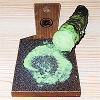
Just found this picture. Two bottles. Same part number. One says 325.1 and the other 325.0. Go figure.

http://bevo.mercedes-benz.com/bevolisten/325.0_en.html
Is this a very old spec?
Just found this picture. Two bottles. Same part number. One says 325.1 and the other 325.0. Go figure.
Last edited by whoover; Jun 7, 2014 at 07:40 PM.
Banned
Joined: Jul 2013
Posts: 2,811
Likes: 7
C63 AMG
General coolant info
Ratio
Water quality (pH, hardness, TDS, etc)
They state tap water will usually suffice
If not within spec distolled, etc
http://bevo.mercedes-benz.com/d/d/en/Spec_310_1.pdf
Our tds was approaching 500 mg/l due to frac 'ing
Since they have been using alternate methods to dumping it into the river it has decreased to 250 range
Injection wells
Reuse
Shipping it out of state
The MB spec < 160
Ratio
Water quality (pH, hardness, TDS, etc)
They state tap water will usually suffice
If not within spec distolled, etc
http://bevo.mercedes-benz.com/d/d/en/Spec_310_1.pdf
Our tds was approaching 500 mg/l due to frac 'ing
Since they have been using alternate methods to dumping it into the river it has decreased to 250 range
Injection wells
Reuse
Shipping it out of state
The MB spec < 160
MBWorld Fanatic!
Joined: Mar 2006
Posts: 4,278
Likes: 377
From: San Jose area
'19 E63S sedan
General coolant info
Ratio
Water quality (pH, hardness, TDS, etc)
They state tap water will usually suffice
If not within spec distolled, etc
http://bevo.mercedes-benz.com/d/d/en/Spec_310_1.pdf
Our tds was approaching 500 mg/l due to frac 'ing
Since they have been using alternate methods to dumping it into the river it has decreased to 250 range
Injection wells
Reuse
Shipping it out of state
The MB spec < 160
Ratio
Water quality (pH, hardness, TDS, etc)
They state tap water will usually suffice
If not within spec distolled, etc
http://bevo.mercedes-benz.com/d/d/en/Spec_310_1.pdf
Our tds was approaching 500 mg/l due to frac 'ing
Since they have been using alternate methods to dumping it into the river it has decreased to 250 range
Injection wells
Reuse
Shipping it out of state
The MB spec < 160
The conversion to US hardness is a bit more complicated. Total dissolved solids is not really pertinent. Their hardness spec, 15 "German degrees" of hardness is measured in units of 10 mg/L as CaO. American hardness is measured in units of ppm as CaCO3. So you have to convert for the different molecular weights of the calcium compound used as the index. The conversion factor is just short of 18 ppm per German degree.
http://en.wikipedia.org/wiki/Hard_water
So the MB spec converts to about 270 ppm total hardness as we measure it. This is moderate, but San Jose tap water will exceed this when they draw from wells, as opposed to buying runoff from the Sierra snowpack. The MB
chloride limit can be exceeded too:
http://www.sjwater.com/files/documen...r_Quality.pdf/
I wouldn't chance it with our tap water, which is only moderately hard. Distilled water is cheap compared to the cost of antifreeze anyway, so why even worry about it?
Banned
Joined: Jul 2013
Posts: 2,811
Likes: 7
C63 AMG
The MB spec gives a limit for TDS (<160 mg/l)
They must feel it pertinent
Primarily sulfides and chlorides both highly corrosive
Hence the warnig against sea or brackish water
I agree
Why worry about any of it
The coolant is formulated to combat deposits/scaling, primarily calcium related
Not so much for corrosion related to sulfides/chlorides
But none of it is really an issue
Tap water is fine
Distilled water is fine
The chloride spec of <80 mg/l is low
Exceeded regularly in my area
Also 1 deg H = 7.147 mg/l Ca2+
So wouldn't 15 deg H ~ 107 mg/l Ca2+ ???
They give the equivilent concentration for magnesium too
Take your pick since hardness is usuaaly defined as the sum
Conversion on wiki 1 mg/l = 0.056 degH
15 degH ~ 267 mg/l
The same wiki classifies very hard as >10 degH
Mb allows up to 15
They must feel it pertinent
Primarily sulfides and chlorides both highly corrosive
Hence the warnig against sea or brackish water
I agree
Why worry about any of it
The coolant is formulated to combat deposits/scaling, primarily calcium related
Not so much for corrosion related to sulfides/chlorides
But none of it is really an issue
Tap water is fine
Distilled water is fine
The chloride spec of <80 mg/l is low
Exceeded regularly in my area
Also 1 deg H = 7.147 mg/l Ca2+
So wouldn't 15 deg H ~ 107 mg/l Ca2+ ???
They give the equivilent concentration for magnesium too
Take your pick since hardness is usuaaly defined as the sum
Conversion on wiki 1 mg/l = 0.056 degH
15 degH ~ 267 mg/l
The same wiki classifies very hard as >10 degH
Mb allows up to 15
Last edited by Ingenieur; Jun 7, 2014 at 08:58 PM.
MBWorld Fanatic!
Joined: Mar 2006
Posts: 4,278
Likes: 377
From: San Jose area
'19 E63S sedan
Banned
Joined: Jul 2013
Posts: 2,811
Likes: 7
C63 AMG
Chlorides and sulfates
Industry standard
Although there are other components
In most cases (involving water) they are well over 90% of the total
Mb allows total of 160 mg/l and a max of 80 for the chloride component/portion
In fact they list the 160 as the sum of sulfates + chlorides
Last edited by Ingenieur; Jun 7, 2014 at 09:06 PM.
MB World Stories
The Best of Mercedes & AMG

Manual Mercedes? 6 Times Sindelfingen Let Drivers Have All The Fun
Verdad Gallardo
Mercedes SLR McLaren 722 S Is Extremely Rare Example Modified by McLaren
Verdad Gallardo
8 Classic Boxy Mercedes Designs That Have Aged Like Fine Wine
Verdad Gallardo
Flawlessly Restored Mercedes 190E Evo II Heads to Auction
Verdad Gallardo
Electric Mercedes C-Class Unveiled: 11 Things You Need to Know
Verdad Gallardo
Mercedes EQS Gets A Major Update: Everything You Need to Know
Verdad Gallardo
5 Underrated Mercedes-Benz Models That Don't Get the Love They Deserve
Verdad Gallardo
Mercedes 300D Has Pushed Well Past 1 Million Miles and It Ain't Stopping
Verdad Gallardo
10 Most Reliable Mercedes-Benz Models You Can Buy Used
Verdad Gallardo
MBWorld Fanatic!
Joined: Mar 2006
Posts: 4,278
Likes: 377
From: San Jose area
'19 E63S sedan
They are the primary components
Chlorides and sulfates
Industry standard
Although there are other components
In most cases (involving water) they are well over 90% of the total
Mb allows total of 160 mg/l and a max of 80 for the chloride component/portion
In fact they list the 160 as the sum of sulfates + chlorides
Chlorides and sulfates
Industry standard
Although there are other components
In most cases (involving water) they are well over 90% of the total
Mb allows total of 160 mg/l and a max of 80 for the chloride component/portion
In fact they list the 160 as the sum of sulfates + chlorides
Even if chloride and sulfate are the most important anions in the sample (which they're not), the cations probably represent more of the TDS ppm. I would suggest a refresher for your cert.
Banned
Joined: Jul 2013
Posts: 2,811
Likes: 7
C63 AMG
MBWorld Fanatic!
Joined: Mar 2006
Posts: 4,278
Likes: 377
From: San Jose area
'19 E63S sedan
The various alternative units represent an equivalent mass of calcium oxide (CaO) or calcium carbonate (CaCO3) that, when dissolved in a unit volume of pure water, would result in the same total molar concentration of Mg2+ and Ca2+. The different conversion factors arise from the fact that equivalent masses of calcium oxide and calcium carbonates differ, and that different mass and volume units are used.
That's why the conversion factor from German degrees to US ppm is 17.85. It includes the adjustment for the molecular weights of the two different index compounds. Sorry if I wasn't clear earlier.
Banned
Joined: Jul 2013
Posts: 2,811
Likes: 7
C63 AMG
I'll go with the MB guidance document
Almost all tap water will comply
And their guidelines are probably conservative
After all making it a shorter interval would make them money as some would use the dealer for this work
No matter how converted the hardness should be fine as will the tds (sulfates and chlorides)
They have rated the mixture for 15 years and 150 k miles ( reduced for our cars?)
Either way not a concern
I'm guessing velocity and coolant chemistry is sufficient to keep it dissolved
This water is also diluted 1:1
Seeing the actual op lab results would clarify a lot of this
I have no idea why people are sweating this ?
Almost all tap water will comply
And their guidelines are probably conservative
After all making it a shorter interval would make them money as some would use the dealer for this work
No matter how converted the hardness should be fine as will the tds (sulfates and chlorides)
They have rated the mixture for 15 years and 150 k miles ( reduced for our cars?)
Either way not a concern
I'm guessing velocity and coolant chemistry is sufficient to keep it dissolved
This water is also diluted 1:1
Seeing the actual op lab results would clarify a lot of this
I have no idea why people are sweating this ?
MBWorld Fanatic!
Joined: Oct 2007
Posts: 2,299
Likes: 380
From: Texas
10 C six trizzle
The 325.1 spec is for older cars and is semi clear in color. It does not meet the 15 year or 240,000km service interval spec required for our cars. If you use this coolant you will have a significantly shortened coolant service life.
The 325.0 spec is for our cars and is blue in color. This coolant meets the 15 year or 240,000 km service interval.
The 325.0 spec is for our cars and is blue in color. This coolant meets the 15 year or 240,000 km service interval.

Yes blue is the good stuff 15yr, Clear is the 3yr crap. new cars are going to red stuff, which isnt compatible with all the others. recommended not to be mixed at all but if mixed must be less than 10% of the other in the system or serious damage will occur. not sure why or what but most of the time the germans know what they are talking about.


Thread Starter
Senior Member
Joined: Jul 2011
Posts: 344
Likes: 5
From: Battle Ground WA
C63AMG, NIssan NX2000, Pontiac Fiero GT
Well thanks to the chemists who finally (almost) are stimulated to provide constructive discussion. Mort, 325.0-only about 2-3 mixed cups coolant went in, but ARGGH, the local MB dealer should staff up...the very few times I have visited I was given misinfo on what LSD lube to use, and sold the wrong antifreeze. That was while driving a rental car during a check lite anomaly of 2 wks. Nice staff , but....
I will gladly post the report but cannot due to a problem with the "magage attachment " function. If someone wants to host via email and into this thread let me know and I will send it.
BTW I do not die by such "lab reports," especially since the lab caters to big rig fleets and construction equipment. I got a little queasy when the report was delayed because the coolant type (MB spec and PN) did not register in their system. I think they proceeded on defaults at first when the printed report stated "unknown" for car model (understandable as they only had 300 ad 500 in their data base,),and antifreeze. They use a service called "Horizon" which is actually pretty good once I explained to a rep what my concern was and asked why they stated "unknown" for info I had provided. The service is not the lab, but I did get a fully fleshed out retype. That means that a (possibe) viable source may be developed for C63 owners. I had a hard time finding any lab who
would deal with a private party. After finding this source it appears that the same labs are used by various companies. The labs are spaced geographically (4-6?). Subject lab in Salt Lake. When I called Horizon I used the "similar to" Zerex G-05 which seemed to register there. Finally chemists please explain that color is meaningless nowadays.
There is a fairly well know test for one aspect of coolant quality. Voltage test . The test allegedly gives a measure of "specific conductance" measured in "micro siemens." This is converted by Prestone in a tutorial to DC and AC voltage. With a VOM set on 2 V DC place one probe into the coolant reservoir (cold) and the other ground (engine hardware.) I got 250 mV with ignition key off, 175 mV with key on (engine not run either test). I did not do the AC test.Reading above 400 mV is cause for concern (flush and drain) Anyway the lab report stated specific conductance at 3800 which falls within the "normal range" specified by Prestone at 1000-6500. Values above 6500 may reflect dissimilar metals carrlying an electrical current (electrolysis ). FYI
I will gladly post the report but cannot due to a problem with the "magage attachment " function. If someone wants to host via email and into this thread let me know and I will send it.
BTW I do not die by such "lab reports," especially since the lab caters to big rig fleets and construction equipment. I got a little queasy when the report was delayed because the coolant type (MB spec and PN) did not register in their system. I think they proceeded on defaults at first when the printed report stated "unknown" for car model (understandable as they only had 300 ad 500 in their data base,),and antifreeze. They use a service called "Horizon" which is actually pretty good once I explained to a rep what my concern was and asked why they stated "unknown" for info I had provided. The service is not the lab, but I did get a fully fleshed out retype. That means that a (possibe) viable source may be developed for C63 owners. I had a hard time finding any lab who
would deal with a private party. After finding this source it appears that the same labs are used by various companies. The labs are spaced geographically (4-6?). Subject lab in Salt Lake. When I called Horizon I used the "similar to" Zerex G-05 which seemed to register there. Finally chemists please explain that color is meaningless nowadays.
There is a fairly well know test for one aspect of coolant quality. Voltage test . The test allegedly gives a measure of "specific conductance" measured in "micro siemens." This is converted by Prestone in a tutorial to DC and AC voltage. With a VOM set on 2 V DC place one probe into the coolant reservoir (cold) and the other ground (engine hardware.) I got 250 mV with ignition key off, 175 mV with key on (engine not run either test). I did not do the AC test.Reading above 400 mV is cause for concern (flush and drain) Anyway the lab report stated specific conductance at 3800 which falls within the "normal range" specified by Prestone at 1000-6500. Values above 6500 may reflect dissimilar metals carrlying an electrical current (electrolysis ). FYI
Last edited by motoman; Jun 8, 2014 at 08:30 PM. Reason: Add DC voltage reading.
MBWorld Fanatic!
Joined: Mar 2006
Posts: 4,278
Likes: 377
From: San Jose area
'19 E63S sedan
If you recall, the MB limit for hardness of the water is 15 German degrees, which is about 270 ppm total hardness as American labs report it. In a 50% mix, assuming the anti-freeze contains no calcium or magnesium, the mix would have up to 135 ppm and still be in spec. Your level is considerably below that. I have no idea why the ASTM spec they cite is so much more conservative than MB, but by the published data that Ingenieur linked to, you have nothing to worry about.
Banned
Joined: Jul 2013
Posts: 2,811
Likes: 7
C63 AMG
The adtm standard applies to purified water (distilled, osmosis, etc)
Not raw filtered water
The guidelines are 2 to 4 mmol/l for drinking water
Not sure what the converts to in mg/l concentration
Imo your coolant is fine and not an issue
Your pre-diluted water hardness is at most
100/43 x 135 mg/l ~ 300, mb spec is less than 270 or so
But this includes the ingredients of the coolant also
The base water is much lower
Not raw filtered water
The guidelines are 2 to 4 mmol/l for drinking water
Not sure what the converts to in mg/l concentration
Imo your coolant is fine and not an issue
Your pre-diluted water hardness is at most
100/43 x 135 mg/l ~ 300, mb spec is less than 270 or so
But this includes the ingredients of the coolant also
The base water is much lower
Last edited by Ingenieur; Jun 11, 2014 at 09:03 PM.
Thread Starter
Senior Member
Joined: Jul 2011
Posts: 344
Likes: 5
From: Battle Ground WA
C63AMG, NIssan NX2000, Pontiac Fiero GT
Thanks for the reassurance and somewhat strange it is that the lab redflagged a (seemingly ) non issue. Perhaps a habit reaction by the lab guy who fears scale build up on diesel engines. This is kind of barrendipity as indeed I was looking for a trend of acidity related to corrosion of headbolts. The only unclarified issue from the report is the 7.9 pH which, to many is fine , and many others a corrosive trend. Somewhere I read fresh Zerex @50-50 is pH 8.7. The lab offered more and refined tests, but I am not sure it would be productive. In the diesel world nitrites and molybdenum come up big as protectors of iron (as in steel headbolt ??), but apparently not present in the G-05 (MB 325)? Is this low level failure related to a perfect storm of ? low coolant, marginal pH, track temperatures, etc?
Thread Starter
Senior Member
Joined: Jul 2011
Posts: 344
Likes: 5
From: Battle Ground WA
C63AMG, NIssan NX2000, Pontiac Fiero GT
An ad insertion with MB picture suggests that Japan has a solution to heavy metal contamination, but seems remote with tsunamis and atomic generating plants. So the mystery continues.
Last edited by motoman; Jun 15, 2014 at 02:44 PM.


