Greetings all,
I am in the process of replacing the head gaskets on my M156 engine with 110k miles. Before I began, the engine ran smoothly and had no abnormal sounds except for the dreaded camshaft adjuster rattle only during the first 2 seconds on cold startup likely due to worn pins and/or lockplates. I will assess that later.
With all the valvetrain covers off, I rotated the crankshaft pulley to 40 degrees and confirmed that the camshaft adjusters' part numbers were pointing upwards. On the passenger bank, the camshaft adjuster timing tool for the magnetic sprocket on the front fits perfectly with no play. On the driver bank, it has some play and does not insert fully into one of the dowel pins; I can only insert it in one dowel pin at a time or else it pops off on the opposite one. So I rotated the crankshaft pulley 720 degrees and checked again. Now, the tool fits perfectly on the driver bank and does not insert at all on the passenger bank, although it is very close!
The camshaft front locking tool fits on both sides in both situations. On the contrary, the camshaft rear locking tool (aka the straight edge) does not fit on both sides in both situations. I fear that the tool I purchased—proudly made in China—has a stricter tolerance or is a bit too thick to fit, although it is straight. The camshaft grooves appear to be oriented straight as well and are definitely not upside down. I ordered a different timing tool kit to compare but must wait for it to arrive.
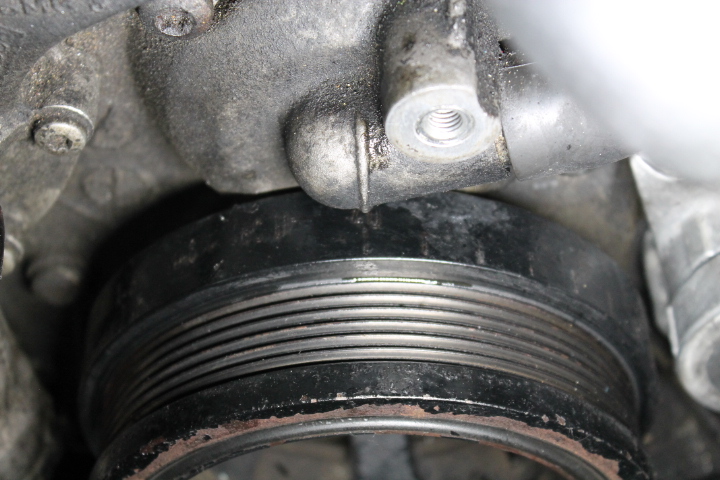
Again, I have only removed the covers, I have not yet disturbed any valvetrain components. This is where my crankshaft pulley is:
I have the following questions:
1) Is the timing off despite having no engine codes and no rough idling/driving?
2) Is the rear camshaft straight edge tool truly necessary for disassembly? Would I be incorrect in disassembling without that tool, and then simply ensuring they slide on when assembling so long as the crankshaft pulley remains at 40 degrees?
3) I have read that there is potentially 1 degree of deviation. Perhaps at 39 or 41 degrees everything may lock into place perfectly or would allow the straight edge to fit. But as a follow-up to my second question, would I be incorrect in proceeding with disassembly and then assembling at 40 degrees with all the locking tools fitting? This way, I can attempt to reduce the deviation.
4) Is it normal for oil to spurt out of the engine and making hissing, pressure-relieving sounds as I rotate the crankshaft pulley?
I appreciate any and all advice, thank you in advance!!
I am in the process of replacing the head gaskets on my M156 engine with 110k miles. Before I began, the engine ran smoothly and had no abnormal sounds except for the dreaded camshaft adjuster rattle only during the first 2 seconds on cold startup likely due to worn pins and/or lockplates. I will assess that later.
With all the valvetrain covers off, I rotated the crankshaft pulley to 40 degrees and confirmed that the camshaft adjusters' part numbers were pointing upwards. On the passenger bank, the camshaft adjuster timing tool for the magnetic sprocket on the front fits perfectly with no play. On the driver bank, it has some play and does not insert fully into one of the dowel pins; I can only insert it in one dowel pin at a time or else it pops off on the opposite one. So I rotated the crankshaft pulley 720 degrees and checked again. Now, the tool fits perfectly on the driver bank and does not insert at all on the passenger bank, although it is very close!
The camshaft front locking tool fits on both sides in both situations. On the contrary, the camshaft rear locking tool (aka the straight edge) does not fit on both sides in both situations. I fear that the tool I purchased—proudly made in China—has a stricter tolerance or is a bit too thick to fit, although it is straight. The camshaft grooves appear to be oriented straight as well and are definitely not upside down. I ordered a different timing tool kit to compare but must wait for it to arrive.
Again, I have only removed the covers, I have not yet disturbed any valvetrain components. This is where my crankshaft pulley is:
I have the following questions:
1) Is the timing off despite having no engine codes and no rough idling/driving?
2) Is the rear camshaft straight edge tool truly necessary for disassembly? Would I be incorrect in disassembling without that tool, and then simply ensuring they slide on when assembling so long as the crankshaft pulley remains at 40 degrees?
3) I have read that there is potentially 1 degree of deviation. Perhaps at 39 or 41 degrees everything may lock into place perfectly or would allow the straight edge to fit. But as a follow-up to my second question, would I be incorrect in proceeding with disassembly and then assembling at 40 degrees with all the locking tools fitting? This way, I can attempt to reduce the deviation.
4) Is it normal for oil to spurt out of the engine and making hissing, pressure-relieving sounds as I rotate the crankshaft pulley?
I appreciate any and all advice, thank you in advance!!
I think I figured out the answers to some of my questions. The way Tasos does the job, it looks like he needs both camshaft locking tools on the front and rear to lock the camshaft while loosening the 18 mm bolt and removing the adjusters. Then, he removes the tools. He does not use the front magnetic sprocket timing tool for disassembly, but obviously it is necessary for assembly.
The rear straight edge tool can be fitted by rotating/counterholding the camshafts slightly with a 27.5 mm wrench, it does not always go in cleanly without some wiggling. Tasos fits it on the intake first and then the exhaust. Only then does he use the front locking tool. He notes that the camshafts are completely safe to rotate in any position so long as the crankshaft pulley remains at 40 degrees. That gives me significant peace of mind.
I thought that I understood how setting the timing works but it seems I completely missed the whole point of the tools when it came to be my turn to do the job. I will attempt to fit that rear locking tool next weekend when I have the time and then proceed with disassembly if all goes well. Or if there is no interest, I can stop with the self-bumps/updates!
I still have no clue about those hissing sounds and oil spurts, I do not hear it when Tasos rotates the crankshaft pulley or maybe there was too much background noise... So if anyone could provide input on that, it would be much appreciated.
The rear straight edge tool can be fitted by rotating/counterholding the camshafts slightly with a 27.5 mm wrench, it does not always go in cleanly without some wiggling. Tasos fits it on the intake first and then the exhaust. Only then does he use the front locking tool. He notes that the camshafts are completely safe to rotate in any position so long as the crankshaft pulley remains at 40 degrees. That gives me significant peace of mind.
I thought that I understood how setting the timing works but it seems I completely missed the whole point of the tools when it came to be my turn to do the job. I will attempt to fit that rear locking tool next weekend when I have the time and then proceed with disassembly if all goes well. Or if there is no interest, I can stop with the self-bumps/updates!
I still have no clue about those hissing sounds and oil spurts, I do not hear it when Tasos rotates the crankshaft pulley or maybe there was too much background noise... So if anyone could provide input on that, it would be much appreciated.

Newbie
I am in the process of doing the exact same thing right now.
I only have one tool, and started with the driver side. The rear straight edge tool fit perfectly and the front locking tool "fit" with some oil on the tool and wiggling it in. This is the case for both sides. I had to do a few "engine turns" to make it fit however. It also felt to me that the tool was "too thick" to fir in the rear of the camshaft but it actually meant that the camshaft is off by a bit. Keep in mind you can also move the individual camshafts with a 27 wrench such that the tool fits nicely while still on 40deg on the pulley (sounds like you already did this). This is especially helpful if your camshaft adjuster is bad. Remember that if the pin is not locked, the camshaft is not in the right place. I simply wiggled the "bad" camshaft around with my 27 wrench until the tools fit perfectly.
4) Haha I am glad you mentioned this, since this is exactly the sound my engine was making as well while turning and I was like "WTF". I think that's normal? Maybe left over fuel in the piston splashing around as well.
Darek
I only have one tool, and started with the driver side. The rear straight edge tool fit perfectly and the front locking tool "fit" with some oil on the tool and wiggling it in. This is the case for both sides. I had to do a few "engine turns" to make it fit however. It also felt to me that the tool was "too thick" to fir in the rear of the camshaft but it actually meant that the camshaft is off by a bit. Keep in mind you can also move the individual camshafts with a 27 wrench such that the tool fits nicely while still on 40deg on the pulley (sounds like you already did this). This is especially helpful if your camshaft adjuster is bad. Remember that if the pin is not locked, the camshaft is not in the right place. I simply wiggled the "bad" camshaft around with my 27 wrench until the tools fit perfectly.
4) Haha I am glad you mentioned this, since this is exactly the sound my engine was making as well while turning and I was like "WTF". I think that's normal? Maybe left over fuel in the piston splashing around as well.
Darek

Member
There are a few of us jumping on this project this summer it seems. Please by all means bump this all you want. I'm sure many of us have same questions and can be another great source to reference.
Yes, I tried getting some red assembly lube at FCP and they were sold out so it seems the weekend mechanics are all opening up their engines!
After realizing I was supposed to wiggle the cams slightly into place, the timing tools all fit in perfectly and disassembly went very quickly and smoothly. Having had this experience, I can confidently say doing the one-at-a-time method really only takes a few hours although obviously not the first time around! Too bad I'm not out of the woods yet since I still have to pull the head.
My final hurdle is on the exhaust. I decided to remove the exhaust manifold along with the head by taking off the two flange bolts on both sides immediately downstream. Getting access is a pain and my bolts are rusted on tight. I've been soaking them with Kroil until the weekend when I'll attempt to break them loose.
I have been documenting everything and I hope to post a detailed record of the entire process just so I can give something back to the community. That is, if I can get this exhaust off
After realizing I was supposed to wiggle the cams slightly into place, the timing tools all fit in perfectly and disassembly went very quickly and smoothly. Having had this experience, I can confidently say doing the one-at-a-time method really only takes a few hours although obviously not the first time around! Too bad I'm not out of the woods yet since I still have to pull the head.
My final hurdle is on the exhaust. I decided to remove the exhaust manifold along with the head by taking off the two flange bolts on both sides immediately downstream. Getting access is a pain and my bolts are rusted on tight. I've been soaking them with Kroil until the weekend when I'll attempt to break them loose.
I have been documenting everything and I hope to post a detailed record of the entire process just so I can give something back to the community. That is, if I can get this exhaust off

go team
Senior Member
close


Dec 23, 2025
- Join DateJul 2017
- Posts:486
-
iTrader Positive Feedback0
-
iTrader Feedback Score(0)
- Vehicle(s) I drive2012 C63, GL63, 1989 300CE
-
Likes:148
-
Liked:125 Times in 92 Posts
You can lock both banks using one tool. Move either the front bridge or the rear flat bar, one on each side of the bank. Work on the side where the flat bar is so you can work on locking the adjusters.
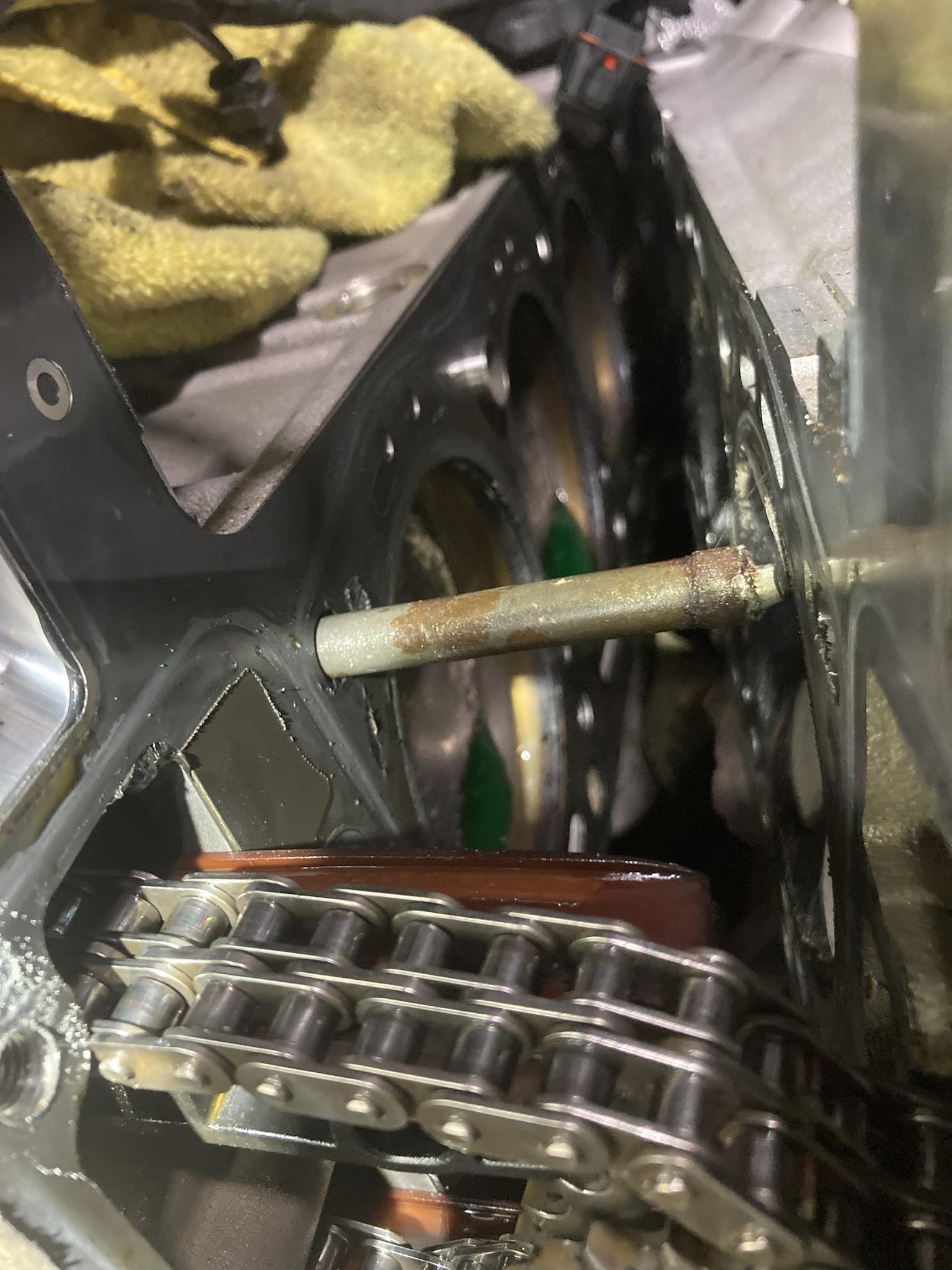
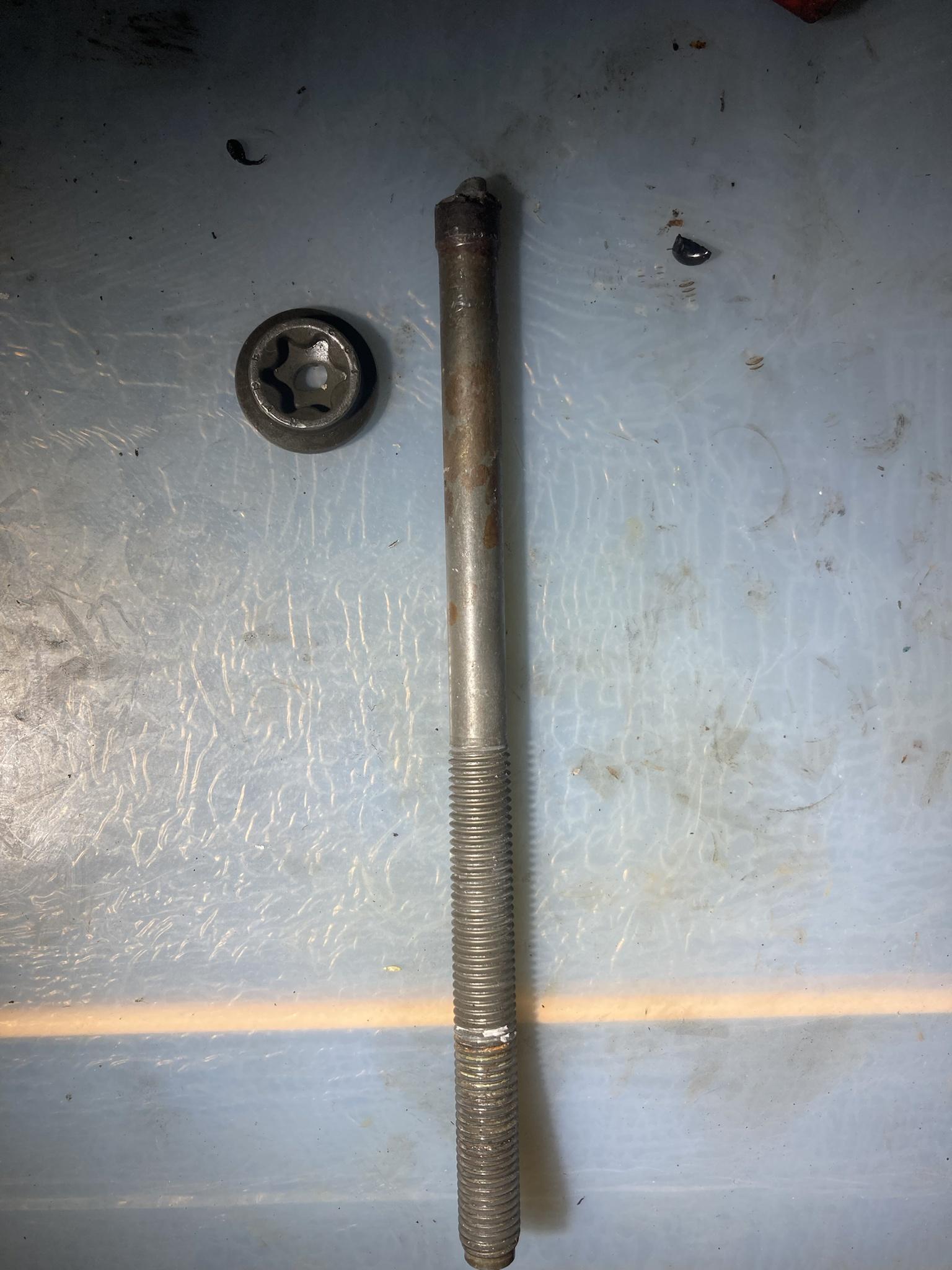
Both heads are now off and I did not have to pull the engine out! Passenger side disassembly was smooth, but the driver side was a pain due to incredibly seized exhaust bolts on the flange and a broken head bolt by cylinder 5 intake side. Luckily, it was in the best spot possible as I still had enough clearance! It also helped that I have an ML so it probably has a bigger engine bay. I plan to make a post detailing parts and the entire process over by the ML63 forums once everything is cleaned and reassembled. I have no clue on how to clean, so any advice there would be appreciated.
The rest of the bolt came out easily with pliers since there was no more clamping force being applied to it after breaking. If I did not have the clearance to take off the head, I wonder if I could still lift it off enough to expose the bolt shank and then use pliers to thread the bolt out with the head still attached? Anyway, not Tasos-approved but I really did not want to pull the engine.