


19" in the rear, 18" up front


Thread Starter
Senior Member
Joined: Mar 2007
Posts: 285
Likes: 0
frankenstein 2001 CLK 430
19" in the rear, 18" up front
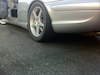
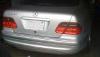
i was wondering if i can put 19" in the rear, 18" up front, i have seen this done on the crossfires and corvettes and was wondering if it upsets the esp , i really need better traction for the rears and the only 10" ~ 10.5" rims i am finding are 19" and i am really scared of the 19" setup due to performance reasons, people tell me that it can add a full second for my 0 to 60  so maybe doing a compromise will not affect that much???
so maybe doing a compromise will not affect that much???


Member
Joined: Dec 2008
Posts: 104
Likes: 0
From: Los Angeles, CA
Daily Drivers: 2019 Tesla Model 3+, 2017 Alfa Romeo Giulia TI, + a few non-street legal race cars
I'm still learning about the particulars of MBZ road cars but I have a strong background in race car dynamics and racing. Some things do not change despite the brand of cars... physics is physics.
What I know is that all things being equal (no change in suspension, no change in tire profile, etc), running a larger diameter rear wheel will indeed change the handling dynamics of your car. In racing, we sometimes lower or raise the corners of the car to affect or neutralize the handling characteristics of the vehicle (among many other things such as static tire presures, swaybar settings, shock dampener bound/rebound, and much more).
When you run a taller rear tire, you're in affect, raising the rear ride height of the car. Without making any other adjustments, your back end would be more likely to fishtail under hard cornering. It's a pretty simple concept if you think of the basic theory that weight equals grip. However, if your suspension is worn out or if you're running a stock setup (stock spring/shock rates, stock bushings), you may also experience some corner entry understeer as your suspension loses it's geometry under all that added weight. Under spirited driving conditions, this could result in a very nervous car with erratic handling.
As for your acceleration, it all depends on your tire circumference. By running a 19" wheel, you could potentially run a "taller" tire, meaning that it covers more distance per revolution. Running a taller tire could potentially improve your gas mileage, and if your engine had the power, it could increase your top speed. But your acceleration will suffer as it takes more effort to turn each revolution of the tire now. Think of your 10-speed bicycle as an example. When you ride in a small gear (small chainring in the front and large gear in the rear), it is easier to accelerate from a dead stop. But once you get going, you shift to a taller gear (larger chainring in front and small gear in rear). The same concept applies to a car, so when you run a larger circumference tire, it's like running a taller gear on your 10-speed bicycle. Naturally your speedometer would read off too if you run a different circumference tire (unless you have it re-calibrated). Many people prefer the aftermarket appearance of a larger diameter wheel but they don't want to suffer the drawbacks I just listed above. That's why you usually see larger diameter aftermarket wheels with very low profile tires to maintain the same tire circumference. Tire shops refer to this as "Plus Sizing".
Cars that you listed run different diameter tires from the factory because they were properly engineered to do so.
If you're concerned about more traction, I would focus on your tires first. You might want to find a better type of tire than what you're running. You also might want to play with tire pressures as well (lower or raise front to rear one psi at a time). 9" of tire is plenty for most road cars (remember that Nascar stockcars run 10" tires with 800+hp).
Hope you found this more informative than a bunch of boring race car engineering... I tried to keep the lingo to a minimum.
What I know is that all things being equal (no change in suspension, no change in tire profile, etc), running a larger diameter rear wheel will indeed change the handling dynamics of your car. In racing, we sometimes lower or raise the corners of the car to affect or neutralize the handling characteristics of the vehicle (among many other things such as static tire presures, swaybar settings, shock dampener bound/rebound, and much more).
When you run a taller rear tire, you're in affect, raising the rear ride height of the car. Without making any other adjustments, your back end would be more likely to fishtail under hard cornering. It's a pretty simple concept if you think of the basic theory that weight equals grip. However, if your suspension is worn out or if you're running a stock setup (stock spring/shock rates, stock bushings), you may also experience some corner entry understeer as your suspension loses it's geometry under all that added weight. Under spirited driving conditions, this could result in a very nervous car with erratic handling.
As for your acceleration, it all depends on your tire circumference. By running a 19" wheel, you could potentially run a "taller" tire, meaning that it covers more distance per revolution. Running a taller tire could potentially improve your gas mileage, and if your engine had the power, it could increase your top speed. But your acceleration will suffer as it takes more effort to turn each revolution of the tire now. Think of your 10-speed bicycle as an example. When you ride in a small gear (small chainring in the front and large gear in the rear), it is easier to accelerate from a dead stop. But once you get going, you shift to a taller gear (larger chainring in front and small gear in rear). The same concept applies to a car, so when you run a larger circumference tire, it's like running a taller gear on your 10-speed bicycle. Naturally your speedometer would read off too if you run a different circumference tire (unless you have it re-calibrated). Many people prefer the aftermarket appearance of a larger diameter wheel but they don't want to suffer the drawbacks I just listed above. That's why you usually see larger diameter aftermarket wheels with very low profile tires to maintain the same tire circumference. Tire shops refer to this as "Plus Sizing".
Cars that you listed run different diameter tires from the factory because they were properly engineered to do so.
If you're concerned about more traction, I would focus on your tires first. You might want to find a better type of tire than what you're running. You also might want to play with tire pressures as well (lower or raise front to rear one psi at a time). 9" of tire is plenty for most road cars (remember that Nascar stockcars run 10" tires with 800+hp).
Hope you found this more informative than a bunch of boring race car engineering... I tried to keep the lingo to a minimum.
Thread Starter
Senior Member
Joined: Mar 2007
Posts: 285
Likes: 0
frankenstein 2001 CLK 430
I'm still learning about the particulars of MBZ road cars but I have a strong background in race car dynamics and racing. Some things do not change despite the brand of cars... physics is physics.
What I know is that all things being equal (no change in suspension, no change in tire profile, etc), running a larger diameter rear wheel will indeed change the handling dynamics of your car. In racing, we sometimes lower or raise the corners of the car to affect or neutralize the handling characteristics of the vehicle (among many other things such as static tire presures, swaybar settings, shock dampener bound/rebound, and much more).
When you run a taller rear tire, you're in affect, raising the rear ride height of the car. Without making any other adjustments, your back end would be more likely to fishtail under hard cornering. It's a pretty simple concept if you think of the basic theory that weight equals grip. However, if your suspension is worn out or if you're running a stock setup (stock spring/shock rates, stock bushings), you may also experience some corner entry understeer as your suspension loses it's geometry under all that added weight. Under spirited driving conditions, this could result in a very nervous car with erratic handling.
As for your acceleration, it all depends on your tire circumference. By running a 19" wheel, you could potentially run a "taller" tire, meaning that it covers more distance per revolution. Running a taller tire could potentially improve your gas mileage, and if your engine had the power, it could increase your top speed. But your acceleration will suffer as it takes more effort to turn each revolution of the tire now. Think of your 10-speed bicycle as an example. When you ride in a small gear (small chainring in the front and large gear in the rear), it is easier to accelerate from a dead stop. But once you get going, you shift to a taller gear (larger chainring in front and small gear in rear). The same concept applies to a car, so when you run a larger circumference tire, it's like running a taller gear on your 10-speed bicycle. Naturally your speedometer would read off too if you run a different circumference tire (unless you have it re-calibrated). Many people prefer the aftermarket appearance of a larger diameter wheel but they don't want to suffer the drawbacks I just listed above. That's why you usually see larger diameter aftermarket wheels with very low profile tires to maintain the same tire circumference. Tire shops refer to this as "Plus Sizing".
Cars that you listed run different diameter tires from the factory because they were properly engineered to do so.
If you're concerned about more traction, I would focus on your tires first. You might want to find a better type of tire than what you're running. You also might want to play with tire pressures as well (lower or raise front to rear one psi at a time). 9" of tire is plenty for most road cars (remember that Nascar stockcars run 10" tires with 800+hp).
Hope you found this more informative than a bunch of boring race car engineering... I tried to keep the lingo to a minimum.
What I know is that all things being equal (no change in suspension, no change in tire profile, etc), running a larger diameter rear wheel will indeed change the handling dynamics of your car. In racing, we sometimes lower or raise the corners of the car to affect or neutralize the handling characteristics of the vehicle (among many other things such as static tire presures, swaybar settings, shock dampener bound/rebound, and much more).
When you run a taller rear tire, you're in affect, raising the rear ride height of the car. Without making any other adjustments, your back end would be more likely to fishtail under hard cornering. It's a pretty simple concept if you think of the basic theory that weight equals grip. However, if your suspension is worn out or if you're running a stock setup (stock spring/shock rates, stock bushings), you may also experience some corner entry understeer as your suspension loses it's geometry under all that added weight. Under spirited driving conditions, this could result in a very nervous car with erratic handling.
As for your acceleration, it all depends on your tire circumference. By running a 19" wheel, you could potentially run a "taller" tire, meaning that it covers more distance per revolution. Running a taller tire could potentially improve your gas mileage, and if your engine had the power, it could increase your top speed. But your acceleration will suffer as it takes more effort to turn each revolution of the tire now. Think of your 10-speed bicycle as an example. When you ride in a small gear (small chainring in the front and large gear in the rear), it is easier to accelerate from a dead stop. But once you get going, you shift to a taller gear (larger chainring in front and small gear in rear). The same concept applies to a car, so when you run a larger circumference tire, it's like running a taller gear on your 10-speed bicycle. Naturally your speedometer would read off too if you run a different circumference tire (unless you have it re-calibrated). Many people prefer the aftermarket appearance of a larger diameter wheel but they don't want to suffer the drawbacks I just listed above. That's why you usually see larger diameter aftermarket wheels with very low profile tires to maintain the same tire circumference. Tire shops refer to this as "Plus Sizing".
Cars that you listed run different diameter tires from the factory because they were properly engineered to do so.
If you're concerned about more traction, I would focus on your tires first. You might want to find a better type of tire than what you're running. You also might want to play with tire pressures as well (lower or raise front to rear one psi at a time). 9" of tire is plenty for most road cars (remember that Nascar stockcars run 10" tires with 800+hp).
Hope you found this more informative than a bunch of boring race car engineering... I tried to keep the lingo to a minimum.


Super Member
Joined: Mar 2006
Posts: 528
Likes: 0
From: living in Paris, France and San Diego ...
2002 CLK 55 AMG Coupé
The ESP will be a good little nanny if you put on conventional tires = 30 series on your rear 19s. The staggered diameters were chosen by AMG for the CLK DTM. Lotus is also using 18s and 19s on their upcoming Euvora coupe. Not sure why designers would choose to go this way for handling purposes - but no doubt it looks cool!
Last edited by neilbo75; Apr 20, 2009 at 07:27 PM.














