When you click on links to various merchants on this site and make a purchase, this can result in this site earning a commission. Affiliate programs and affiliations include, but are not limited to, the eBay Partner Network.
It is a self-locking bolt, and also, it must only be tightened with the weight of the vehicle on it. Otherwise, it capture the busing at the wrong angle and will damage it.
When you tighten that bolt you must hold the head of the bolt. There are two types of bolts used on control arms. If it is the round bolt used in the center position of the oblong slot in the bushing you may be OK, but if it is an adjustable style bolt that has flutes along it's side those slots/flutes fit into a finger within the bushing and if you tighten the bolt without holding the head of the bolt you could possible shear off the finger in the bushing. As you tighten the bolt without holding the head it could rotate and thus shear off the finger on the bushing. Also some after market control arms DO NOT met specs and the finger inside the bushing is not long enough to properly fit into the flute of the adjustable bolt; nor would it hold the "round" type center bolt in its proper place and thus the control arm will move inward and outward as you drive. Also a sheared bushing finger caused by not holding the head of the bolt while tightening will allow the arm to move inward and outward as you drive.
That is not an adjustable bolt because it has no slot in it. It is a regular round bolt. As long it is torqued correctly it cannot move while driving. The little ears inside are just for initial placement before tightening. Once placed, the bolts holds it tight. If the bolt is not in the proper place because the ears have sheared off then your wheels will be out of alignment. If your camber and caster are good, then you are OK so long as the bolt is tight.
And I guess I'll add that while it is true you should hold the head of the slotted bolts to avoid shearing off the fingers or ears, the round bolt like that one does not matter. You may need to hold the head to keep it from spinning while you tighten the nut, but not for any other reason.
"The little ears inside are just for initial placement before tightening. Once placed, the bolts holds it tight. "
I will respectfully disagree. The ears do contribute to the stability of the control arm while driving. If the ears are damaged then the control arm can and probably will move, thus loosing proper alignment. If torque alone could hold the control arm in it's proper place why have the ears at all? No ears would make alignment much easier as the tech could simple slid the control arm in position to the desired camber/caster and tighten to torque. I believe MB put those ears in there for a reason other than making it difficult to set up the alignment. Why would they go to the trouble of manufacturing special fluted bolts if a round bolt would work for any adjustable range?
I agree with you that MB's three-position bolt system is pretty crude since it does not allow for fine tuning, but those little ears do not do anything once things are tightened up. First, think about the the fact that the bolts must be tightened with the arms in normal driving position. That's because the bolts are torqued so tight that the arm cannot move, and you will shred the bushings if you torque in the wrong position. Second, your theory would mean there is some movement in the arm while driving - ears or no ears - think of all the noises that would make. Third, if those big bolts torqued down tight are not able to keep the arm from moving, how could those tiny little aluminum ears possibly resist a force the bolts could not? They would be worn to nothing in no time if they were actually doing work. Also, if they did serve a structural purpose, then they are poorly designed for that because they are not even on opposite sides of the fluted bolts where they would have the most holding power - they are only about a third of the way around so the fluted bolt could easily pop off under any amount of real stress. They do nothing except to hold the bolt in place during installation.
Another thing about the ears - there is a 3rd party "fluted" bolt you can get that does allow for some fine adjustment of camber. The bolt is made so the flutes sit against on set of ears, and then you rotate it to get some fine adjustment. Once torqued in place, it sits still and holds its lateral position. I believe this pretty much shows that, as Yidney states, the ears don't maintain the position of the bolt - the torque does.
Having said that, you should not need camber adjustment unless there has been some front end damage. If camber is off, it's likely because the bushing is worn and not maintaining proper geometry. Replacing the bushing (usually as part of replacing the entire torque strut) is the proper repair.
Yes - ex-factory there is no Front Camber and Caster or Rear Camber, only Front and Rear Toe adjustment - all good if car is at showroom height!
You can purchase the inaccurate one offset position bolts. But these only offer a minimal .3 of one degree (1/8" - 3mm).
But to cater for costly premature edge tire wear a result of wheel squat brought about by high mileage, load carrying, altering height or travelling on high cambered roads, fitting wide profile tires / wheels or simply having "ongoing" adjustment capability for curb knock damage. . . .
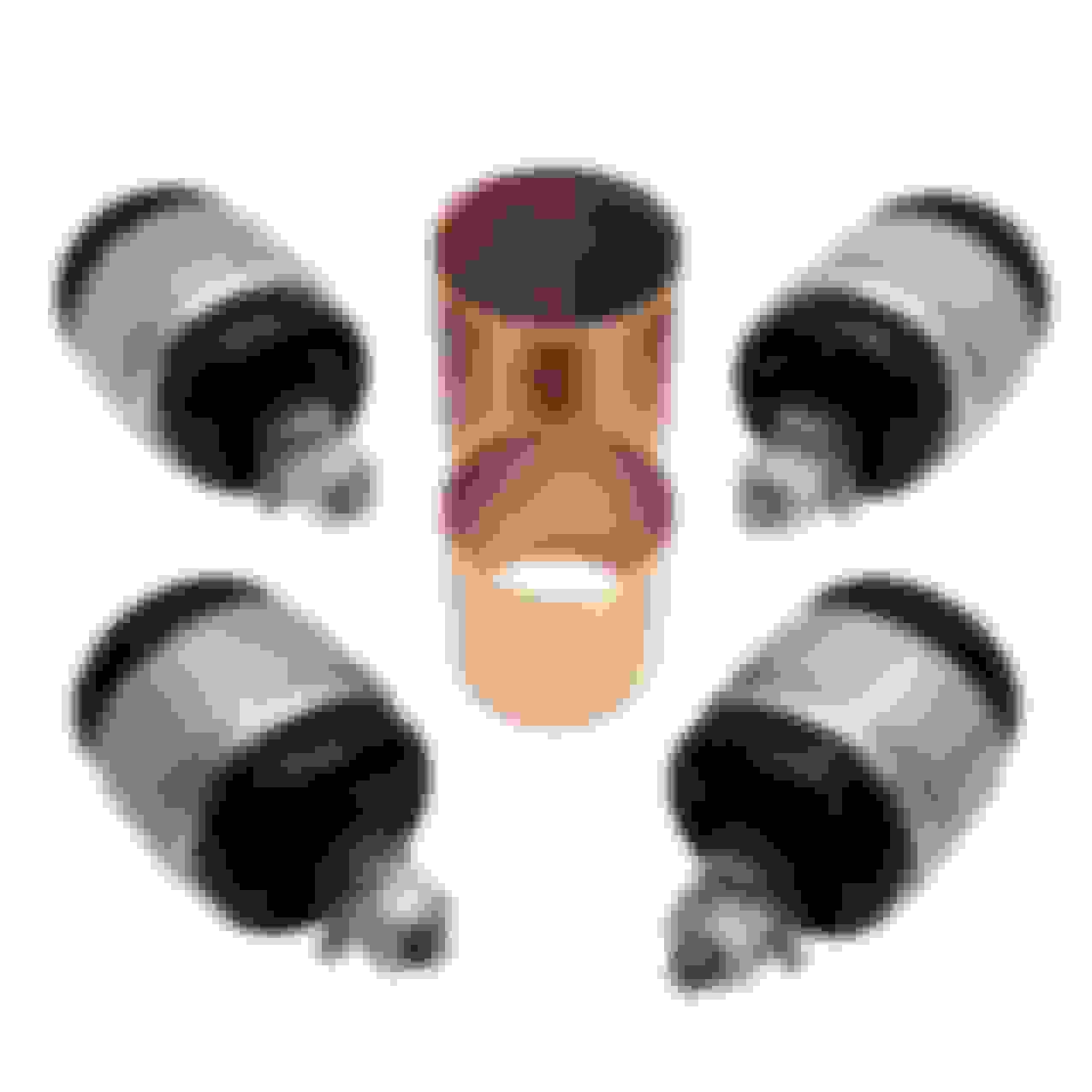
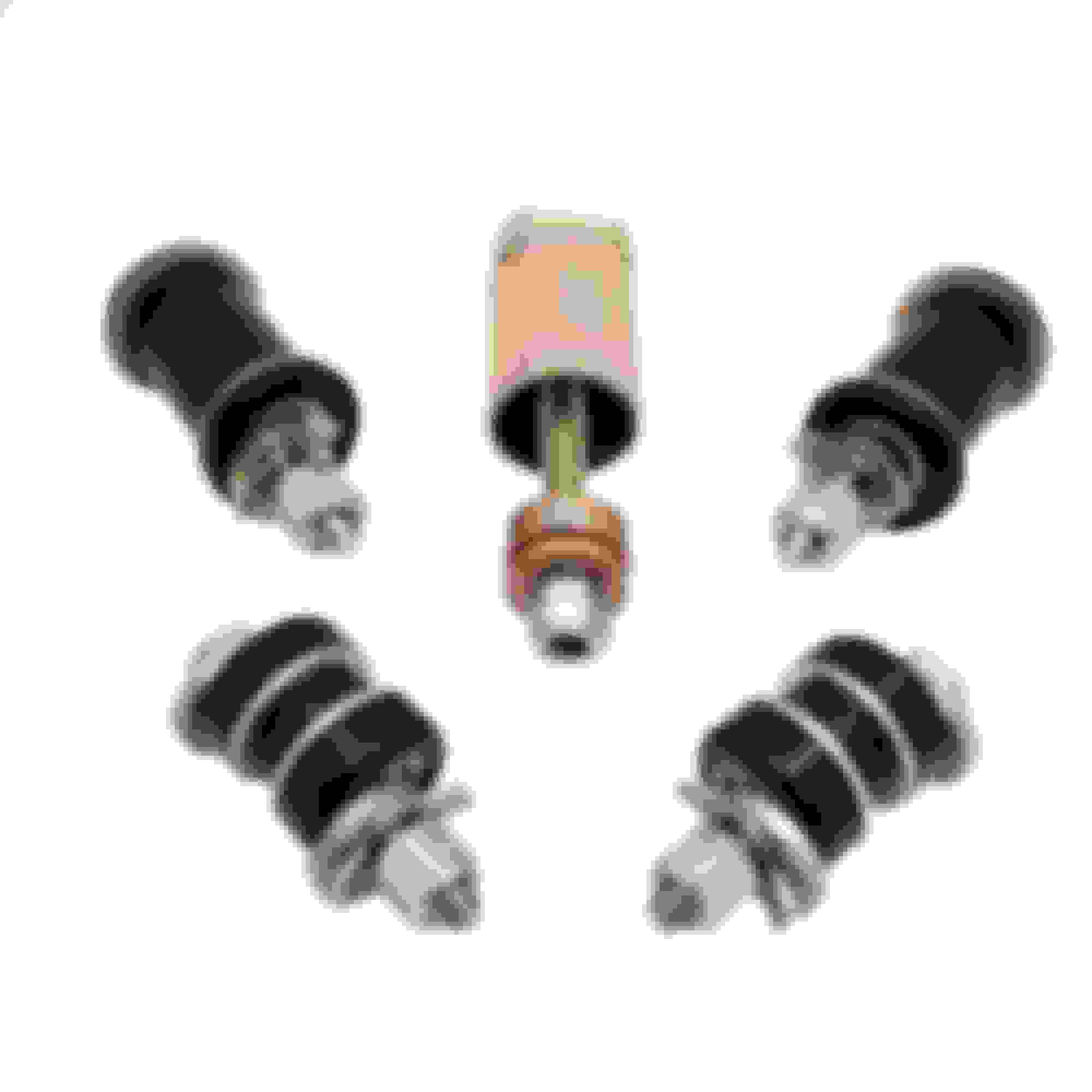
We saw the need therefore to design, manufacture Front Camber and Caster adjustable bushes which provide up to 4 times the adjustment range of these "one position bolts".
The patented design allows "precise single wrench adjustment" - accurately (under load - direct on alignment rack). Similar system for the rear providing Camber adjustment for the first time and also doubling Rear Toe adjustment range to compensate for the new rear Camber facility.
Bonus is these Front and Rear bushes at the same time replace the highest wearing suspension bushings. Includes instruction and bush extraction / insertion tubes.
CAMBER - Allows to actually change the tire contact angle resolving costly, premature edge tire wear, improving traction / understeer / oversteer (TOE only alters wheel direction).
CASTER - Correctly resolves steering pull, increases steering response. With better turn in and high speed directional control, along with improved anti dive / lift under brake and acceleration.
W209 Front kit Camber and Caster P/N 502216 K $480-
Note: Black Series C209 "Strut" Front suspension - also manufactured in addition are "replacement top strut mounts" precisely Camber and Caster adjustable
Stage 2 - Street / Race P/N 502616-2L $545-
Stage 3 - Full Race P/N 502616-3L $545-
Rear kit Camber and extra Toe
6/2004-2009 (51mm O.D. Lower Inner Bush) P/N 501926 J $380-
2001-5/2004 (33mm O.D. Lower Inner Bush) P/N 502026 H $320-
Delivery USA / Canada $40 1 kit or $50 Front and Rear
Also manufactured for the Rear - "12" replacement performance bushings for the 6 separate / multi link control arms. Dramatically improving rear end stability / traction especially when applying power, lane changing / overtaking. Included are bush extraction / insertion tubes.
P/N 501528 K $480-
I think these are the OEM bolts as I don't recall any new ones coming with the Lemfordner arms.
My Indy installed the arms and when he was done, the car was in bad need of alignment (steering wheel was at 1030 instead of 1200 and the ESP light was on) presumably because I had had it previously aligned with unknown bad bushings.
Took it to my tire shop and they aligned it.
My question is - would the alignment process involve loosening this nut/bolt (in which case the tire shop was at fault for not re-tightening) or would the alignment process not involve this nut/bolt, in which case it was the Indy at fault for not tightening it during installation of the control arms.??
When I had the car on a jack and the wheel off, (and the nut was found to be loose) there was a surprising amount of movement perpendicular to the axis of the bolt, almost as if the ID of the bushing was much greater than the OD of the bolt - is that normal?
First, go find my thread from August or early Sept called something like MB camber bolts - how they work. The pics I posted will help you. You are correct that the new bushings will cause the need for an alignment. I doubt your indy left the bolt loose because that would mean two people missed it. Technically the alignment should not require that bolt to be loosened, but you had a tire shop do it so they might not know that. It does not need to be loosened because without adjustable bolts of some kind, the only thing that can really be set is toe. If you have a lot of slop in the arm now at that bolt, then here is my guess: The alignment guy loosened the bolt, realized it accomplished nothing, and forgot to tighten it back up. At that point the weight of your car was not being born by the tight bolt, but by the little aluminum ears in my pictures pressing on the bolt. Would not take long to shear them off and now the bolt can move in the oval hole.
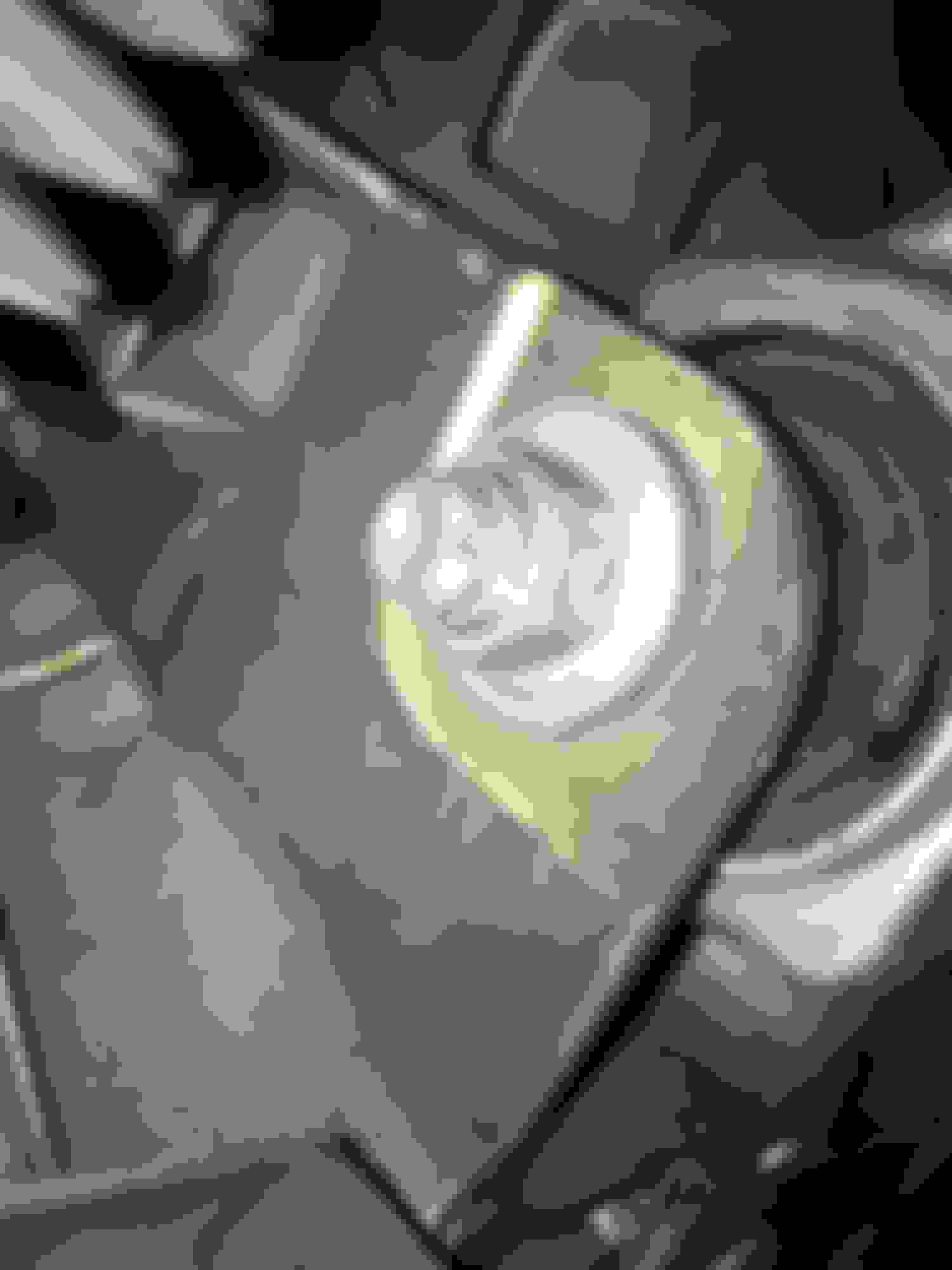
So, as I didn't purchase the fluted bolts, and I don't see the flutes in my nut photo, nor do I recall them when I was feeling around the bolt (looking for some sort of hole for a cotter-pin - thinking that the sort-of castelled nut needed to be retained) I would assume that they are the OEM bolts and the little tabs have been broken off.
So my options would be
1. Replace that particular arm (or bushing), or
2. Hope that the current torque on the nut/bolt is sufficient to stop it moving within the hole
My concern is that when I discovered the loose bolt, I simply tightened it up (while it was on jack-stands) in whatever position the bolt happened to be in the hole, not realizing that the car should be on the ground. I then took it to my indy to get the torque checked on it, and all the others. He put it on a lift and proceeded to check torques and proclaimed them OK, which would make me think that he was unaware of the "on the ground" procedure also.
I may just replace it myself.
as an aside, I took the car to the tire place for the alignment as the Indy said that he can't do them. The tire place charges $$double to do an alignment on a MB/BMW etc. as they are "more complex", but it sounds like that is robbery for a system that has about the same adjustments as a chevy
Yes, you have the original smooth bolts. I can tell that from your pics. But your issues are slightly different than you say. First you do not need to "hope" that the bolt can hold the arm in place. It will. As I said above in this thread, those little ears have nothing to do with holding the arm in place once tight. Nothing. The issue is not whether it will move, but whether it was tightened in the correct place. If the ears sheared off when it was loose, and the arm slid on the bolt, then it is probably not in the correct spot. That does not necessarily mean you need to replace the arm. First, get the alignment checked. If it's good, then you are good (with my caveat below). If it's off, it can still be aligned if the guy can figure out a way to jack the arm into the correct position before tightening the bolt. The caveat is that you mentioned you tightened it on jack stands. I can't remember if you also said you jacked up the wheel so it was in a normal driving position or if the wheel was hanging down. If the latter, the bushings will fail quickly, so it needs to be re-loosened and tightened even if the alignment is spot on.
And the car does not have to be "on the ground" - so long as the wheel is in normal position. I use ramps. Others use jack stands but also jack up the wheel.
The caveat is that you mentioned you tightened it on jack stands. I can't remember if you also said you jacked up the wheel so it was in a normal driving position or if the wheel was hanging down. If the latter, the bushings will fail quickly, so it needs to be re-loosened and tightened even if the alignment is spot on.
And the car does not have to be "on the ground" - so long as the wheel is in normal position. I use ramps. Others use jack stands but also jack up the wheel.
I tightened it, and the Indy checked it, with the wheel hanging down.
I'll get the alignment checked and then get it on ramps to retighten.
You have it backwards. The fact that you tightened it with the wheel hanging is unrelated to whether the arm moved because the ears sheared off. The arm would move no matter what if the ears were gone because the bolt was loose and the weight of the car wants to push and pull on the arm. So if you get the alignment checked, and then loosen the bolt, the arm may move again and there goes the alignment you just had checked. So you need to loosen and re-tighten first, or else explain the whole problem to the alignment guy and let him to it. If your indy did all four arms, and tightened them all with the wheels hanging, you need (a) a new indy, and (b) somebody to do it right before all your new bushings are ruined. Then check the alignment. Tightening the bolts with the wheels hanging means when you let the car down into it's normal position the rubber bushings are being twisted - like they are twisted momentarily when you drive over a large bump and compress the suspension. Except they are twisted all the time - even while parked. And then when you hit a bump, you are twisting them more than they were ever meant to be, so they rip.
I was thinking much the same last night after my previous post.
I cannot confirm how my indy originally tightened the nuts (wheels supported or not) as I wasn't there. I only saw how he checked them. So I am now suspicious as to how he originally tightened them.
I will loosen & re-tighten all 4 myself, on ramps, and the get the alignment checked.
Just one more thing. When you have it on ramps, stick your head right under the suspect bolt and look straight up at it and the bushing. If the bolt is not passing through the center of the bushing, it's pretty obvious.
One more thing to point out - unless camber bolts are used, then an alignment cannot adjust the camber. New control arms should put everything back in proper camber and caster unless there has been frame damage, and then you may need the special bolts.
Without the special bolts, the only alignment adjustment that can be made is toe, and that is only adjusted by the tie rods. Worn control arm bushings can affect toe, so replacing them means you do need an alignment. Maybe an alignment was done with worn control arm bushings, so the new ones threw it off on toe.
I dunno Rodney, I have two camber bolts to correct excess negative camber that these cars seem to have, and I have no suspicion it ever had any frame damage. The posts are innumerable about these cars pulling right and having excess inner tire wear, and the camber bolts cured both. In fact it cured it so well that I think my front tires may never wear out. I need my third set of rears, and the fronts are great.
Just thinking about how the front suspension is assembled, there are three points of contact - thrust arm, torque strut and shock. If you replace the thrust arm and torque strut, and the frame (actually, the front axle carrier) has not moved due to damage, then the only other factor would be the shock. I guess if it or its bushings are worn, then it could affect camber. I think a lot of shop erroneously install camber adjustment bolts when the real problem is work control arm bushings.
I finally got the car up on ramps to loosen and re tighten the LCA bolt/nut, but with the access/tool I had I was unable to generate enough torque to loosen it.I guess my indy tightened them down well.
However I did notice this:
yes, fluted bolt !!!! I must have taken the earlier photo before I tightened it and while tightening it, the bolt turned.
Looking back through the PO receipts I saw that the camber/caster kit was actually installed in 2007, which I did not know before.
So now, I am not sure what is going on. The indy must have re-installed the fluted bolt but whenever it was loose it has broken the tabs off.
I think I might take it to the alignment show and have them loosen and retighten, assuming they know how to do it correctly.
That does not look like a photo of the same bolt in your original picture. But whether the ears have been sheared off depends on where the bolt was placed. A fluted bolt can be put in the center position and used just like a smooth bolt. Is that bolt off center in the bushing? Whether you still actually need fluted bolts depends on the alignment. New bushings can change the arm position quite a bit. The rubber bushings are under so much stress that the rubber gets stretched on one side and compressed on the other. When I took out my old arms the hole in the bushings were visibly off center in relation to the bore in the arm the bushing is in.
Mercedes SLR McLaren 722 S Is Extremely Rare Example Modified by McLaren
Slideshow: A one-of-one U.S.-spec Mercedes-Benz SLR McLaren Roadster became even rarer after a factory-backed transformation at McLaren's headquarters.