




Availability of diesel #2 or B5

MBWorld Fanatic!
Joined: Nov 2007
Posts: 1,425
Likes: 2
From: Minnesota
2015 Ram 2500, former 2013 GL350, 2007 GL450
Just a quick update, Minnesota has a mandate. There is no tax advantage, it just keeps these Minnesota farmers wealthy from $10 bushel corn and soybeans. The mandate is only during the summer months and has yet to be enacted due to some issues with measuring it's content, labeling, etc. Summer of 2014 is the earliest it could get implemented.

Thread Starter
Senior Member
Joined: Aug 2013
Posts: 255
Likes: 8
GL350
What I wonder about diesel prices is why they don't always go up or down with the price of gasoline. In general, gas and diesel prices move in the same direction. But, in my observation in Arizona, there are plenty of instances where the price of gas is going up and the price of diesel is constant or even going down. The opposite is sometimes true, as well. There are even times when diesel is the same price or less than regular unleaded. Most of the time, diesel is more, of course, but not always.
There are no doubt ordinary market factors that go into it and if someone knows (as opposed to taking a wild guess) why, I'd like to hear the explanation.
There are no doubt ordinary market factors that go into it and if someone knows (as opposed to taking a wild guess) why, I'd like to hear the explanation.

Out Of Control!!


Joined: Aug 2010
Posts: 12,516
Likes: 628
From: Charlotte NC area
2019 WS222 S450 4-Matic / 2007 W211 E350 4Matic (Sold) / 2008 X164 GL320 CDI

Senior Member
Joined: Aug 2009
Posts: 361
Likes: 1
From: Maryland
2014 GLK250 BlueTEC, 2012 BMW 335is Conv.
In other words, people drive to the beach in the summer and drive to see Grandma for Thanksgiving and drive the kids to football practice only in the fall, etc. Meanwhile, food has to be delivered to grocery stores on the same routes every day and UPS has trucks running on the same routes every day and buses run on the same routes every day, etc.

Member
Joined: Sep 2010
Posts: 134
Likes: 1
2006 E320 CDI 235 hp 420 ft tq
Don't forget that the US exports diesel to the EU,
Company's pass along the cost of the higher diesel to consumers , a hidden TAX ???
Also there is a .12 cent more tax than gasoline on diesel by the US gov.
We can be happy that we can go over 700 mile on a tank of fuel and our motors will last longer , O mine is better to drive than a gasser when chipped !!!!
Company's pass along the cost of the higher diesel to consumers , a hidden TAX ???
Also there is a .12 cent more tax than gasoline on diesel by the US gov.
We can be happy that we can go over 700 mile on a tank of fuel and our motors will last longer , O mine is better to drive than a gasser when chipped !!!!

Junior Member
Joined: Oct 2013
Posts: 19
Likes: 0
2014 GLK Blutec
I read somewhere that Mercedes has discontinued selling diesels in Illinois. If you look at the pictures that MB shows concerning using biodiesel >B5, it would scare you to use much B20. I also read that Colorado is now a B20 state. Not sure if that is correct.
Member
Joined: Sep 2010
Posts: 134
Likes: 1
2006 E320 CDI 235 hp 420 ft tq
Mercedes Benz of Orland Park IL has the GLK Blutec 2014.
Yes Bio Diesel will melt hoses in the fuel system and the injection system, it cost more to get the parts that are not affected by Bio diesel
Yes Bio Diesel will melt hoses in the fuel system and the injection system, it cost more to get the parts that are not affected by Bio diesel
Thread Starter
Senior Member
Joined: Aug 2013
Posts: 255
Likes: 8
GL350
And I recently found diesel #2 readily available in California, so add that to the list.
Last edited by Dog hauler; Oct 29, 2013 at 03:20 PM.
MB World Stories
The Best of Mercedes & AMG

Manual Mercedes? 6 Times Sindelfingen Let Drivers Have All The Fun
Verdad Gallardo
Mercedes SLR McLaren 722 S Is Extremely Rare Example Modified by McLaren
Verdad Gallardo
8 Classic Boxy Mercedes Designs That Have Aged Like Fine Wine
Verdad Gallardo
Flawlessly Restored Mercedes 190E Evo II Heads to Auction
Verdad Gallardo
Electric Mercedes C-Class Unveiled: 11 Things You Need to Know
Verdad Gallardo
Mercedes EQS Gets A Major Update: Everything You Need to Know
Verdad Gallardo
5 Underrated Mercedes-Benz Models That Don't Get the Love They Deserve
Verdad Gallardo
Mercedes 300D Has Pushed Well Past 1 Million Miles and It Ain't Stopping
Verdad Gallardo
10 Most Reliable Mercedes-Benz Models You Can Buy Used
Verdad Gallardo
Super Member
Joined: Dec 2007
Posts: 898
Likes: 9
From: Woodstock, IL
His 2019 RAM Cummins Turbo Diesel Laramie; Her's 2007 ML320 CDI P3; Mine BMW R1200R
Everyone sells B10+
This thread is funny. Reminds me of me in 2007 when I first plunked down near 60 grand for my brand new ML320CDI, and had to teach the dealers that B5 is all that was allowed. (Also no dealer had 229.51 oil either.) Spent years on the internet trying to make sure I didn't void anything or make a mistake.
Now my ML has 138000 miles, been fueled up 95% of the time in IL where I live every 600+ miles, and get this... NEVER HAD A FUEL RELATED ISSUE. Once I was deep in corn farm territory and filled up with B50. That was the smoothest the engine ever ran for that tank. And it's not "french fry oil".
Bottom line is it doesn't matter. But no worries, you will find that out 130000 miles from now, or take the word of the original pioneers on this forum who went through a much steeper learning curve. Or the thousands of TDI drivers out there.
Also, when your vehicles were delivered, I am sure the tank was full. Ask the dealer where they filled it, go there and ask the store clerk for the diesel fuel invoice. Dollars to donuts it says B20. (Unless you live in TX.) Reason? The IRS gives fuel stations that sell B10 or higher a serious tax break. And pretty much most States do not have mandates to post the Bio content on the pump so you don't know what your pumping.
Just enjoy the ride and spend your time trying to beat my mileage.
Now my ML has 138000 miles, been fueled up 95% of the time in IL where I live every 600+ miles, and get this... NEVER HAD A FUEL RELATED ISSUE. Once I was deep in corn farm territory and filled up with B50. That was the smoothest the engine ever ran for that tank. And it's not "french fry oil".
Bottom line is it doesn't matter. But no worries, you will find that out 130000 miles from now, or take the word of the original pioneers on this forum who went through a much steeper learning curve. Or the thousands of TDI drivers out there.
Also, when your vehicles were delivered, I am sure the tank was full. Ask the dealer where they filled it, go there and ask the store clerk for the diesel fuel invoice. Dollars to donuts it says B20. (Unless you live in TX.) Reason? The IRS gives fuel stations that sell B10 or higher a serious tax break. And pretty much most States do not have mandates to post the Bio content on the pump so you don't know what your pumping.
Just enjoy the ride and spend your time trying to beat my mileage.

Member
Joined: Apr 2013
Posts: 76
Likes: 0
None
Future E350 Bluetec owner here (hopefully) chiming in.....kind of a long post but I feel it's worthy of one's time.....
I've been doing a lot of research on this issue since first inquiring about the diesel early in 2012. I had walked into Northbrook Mercedes (IL) and without realizing it wiped the smile clean off of the young salesman's face when I told him I was there to test drive a diesel. Yes, it's true that dealers are no longer ordering Bluetecs for their lots - they're only ordering cars that customers order and put deposits down on. The reason being is that Mercedes now requires buyers to sign a form essentially releasing Mercedes from any liabaility or responsibility in covering engine damage via the warranty should the damage be the result from >B5 useage. The service techs now have the ability to sample and test the sludge that has a tendancy to build up in the DPF for high biodiesel concentration. The repair (from what I've read) is a $4,000-$5,000 tear down and cleaning of the DPF as well as other fuel-system related parts. Mercedes has since published a brochure discussing what to look for in diesel pump stickers, as well as what diesel to avoid. While not very mechanically inclined, my understanding is that one can reduce the chance of future problems by increasing their oil-change intervals (ie: change oil say every 4k miles rather than 7k or 10k miles, or whatever the heck the owner's manual says to do). It has something to do with biodiesel causing a buildup of water in the oil, resulting in more oil/water in the crankcase). Does that last part make any sense...???
But what may be even more important to the OP - my various searches brought me to the Chicago 2009 TDI Owners: Non-Biodiesel Support Group on the Volkswagon TDI forum. It's made up of a bunch of TDI owners who have literally banded together to update a thread dedictated solely to the finding and listing of fuel stations whose diesel pumps have the proper green diesel sticker - the same sticker that Mercedes says to look for in their brochure (see link above). I just happen to live within 2-3 miles of two stations that sell pure diesel, so for me it looks as if I'm okay. I would imagine that so long as one does a little bit of research first (including calling a couple truck stops before taking their trip and inquiring about pure diesel vs. biodiesel), they'll be fine.
I've been doing a lot of research on this issue since first inquiring about the diesel early in 2012. I had walked into Northbrook Mercedes (IL) and without realizing it wiped the smile clean off of the young salesman's face when I told him I was there to test drive a diesel. Yes, it's true that dealers are no longer ordering Bluetecs for their lots - they're only ordering cars that customers order and put deposits down on. The reason being is that Mercedes now requires buyers to sign a form essentially releasing Mercedes from any liabaility or responsibility in covering engine damage via the warranty should the damage be the result from >B5 useage. The service techs now have the ability to sample and test the sludge that has a tendancy to build up in the DPF for high biodiesel concentration. The repair (from what I've read) is a $4,000-$5,000 tear down and cleaning of the DPF as well as other fuel-system related parts. Mercedes has since published a brochure discussing what to look for in diesel pump stickers, as well as what diesel to avoid. While not very mechanically inclined, my understanding is that one can reduce the chance of future problems by increasing their oil-change intervals (ie: change oil say every 4k miles rather than 7k or 10k miles, or whatever the heck the owner's manual says to do). It has something to do with biodiesel causing a buildup of water in the oil, resulting in more oil/water in the crankcase). Does that last part make any sense...???
But what may be even more important to the OP - my various searches brought me to the Chicago 2009 TDI Owners: Non-Biodiesel Support Group on the Volkswagon TDI forum. It's made up of a bunch of TDI owners who have literally banded together to update a thread dedictated solely to the finding and listing of fuel stations whose diesel pumps have the proper green diesel sticker - the same sticker that Mercedes says to look for in their brochure (see link above). I just happen to live within 2-3 miles of two stations that sell pure diesel, so for me it looks as if I'm okay. I would imagine that so long as one does a little bit of research first (including calling a couple truck stops before taking their trip and inquiring about pure diesel vs. biodiesel), they'll be fine.
Last edited by lbgottlieb; Nov 7, 2013 at 10:48 AM.
Out Of Control!!
Joined: Aug 2010
Posts: 12,516
Likes: 628
From: Charlotte NC area
2019 WS222 S450 4-Matic / 2007 W211 E350 4Matic (Sold) / 2008 X164 GL320 CDI
I just talked to a service advisor at Hoffman MB yesterday about this.
He said that the CDIs don't show any problems, and even the Bluetec are fine with regular maintenance.
The way he said it, it seemed that with the new Bluetecs being OKed for sale in IL, they are offering the same level of support to "properly" (dealer) maintained earlier Bluetecs.
Of course that is far from offering a guaranty things would be covered, but I have a out of warrantee CDI, so it did not come up.
He said that the CDIs don't show any problems, and even the Bluetec are fine with regular maintenance.
The way he said it, it seemed that with the new Bluetecs being OKed for sale in IL, they are offering the same level of support to "properly" (dealer) maintained earlier Bluetecs.
Of course that is far from offering a guaranty things would be covered, but I have a out of warrantee CDI, so it did not come up.
Last edited by N_Jay; Feb 22, 2014 at 06:11 PM.

Junior Member
Joined: Oct 2013
Posts: 59
Likes: 1
From: Raleigh NC
2014 GL350 , 2010 Accord V6, 40' Monaco Dynasty RV, 1971 VW Convertable
I usually by fuel for the RV at Loves I 95 in VA. They carry B 10 in all locations according to there web site. That kind of surprised me.
Junior Member
Joined: Oct 2013
Posts: 59
Likes: 1
From: Raleigh NC
2014 GL350 , 2010 Accord V6, 40' Monaco Dynasty RV, 1971 VW Convertable
Wilco/Hess Here in NC and maybe elsewhere carries ONLY B20 or B15 in some 30 stations
only
Im finding BP/Amoco carries D #2 and B5.
only
Im finding BP/Amoco carries D #2 and B5.

Junior Member
Joined: Oct 2013
Posts: 70
Likes: 0
From: Mn
2006 ML 350 sold, 2014 Bluetec "Rudy"
I just looked at MBUSA website under owners, it looks like a new attitude from Mercedes about Il B20. Read it yourself, but basically they are saying they are selling diesels in IL and you should ck your oil level if using B20 most of time, use right oil and stay on maintenance schedule. Should help all of us feel better.
Super Member
Joined: Dec 2007
Posts: 898
Likes: 9
From: Woodstock, IL
His 2019 RAM Cummins Turbo Diesel Laramie; Her's 2007 ML320 CDI P3; Mine BMW R1200R
So, MB has come around...
Just to add to this, the green sticker is required by Fed law to be on every retail diesel pump. ULSD is the law of the highway.
The blue bio mass sticker is up to the station to display. Several stations in IL don't have the bio mass sticker.
And the real kicker, look carefully at the pump of the name brand stations and you may see another sticker that says "The fuel dispensed by this pump is NOT a ..XXX.. branded product."
Best advise from an IL resident with a CDI since new, buy diesel from a station that SELLS A LOT OF FUEL. That way you get fresher stock as they constantly refill the storage tanks.
Just to add to this, the green sticker is required by Fed law to be on every retail diesel pump. ULSD is the law of the highway.
The blue bio mass sticker is up to the station to display. Several stations in IL don't have the bio mass sticker.
And the real kicker, look carefully at the pump of the name brand stations and you may see another sticker that says "The fuel dispensed by this pump is NOT a ..XXX.. branded product."
Best advise from an IL resident with a CDI since new, buy diesel from a station that SELLS A LOT OF FUEL. That way you get fresher stock as they constantly refill the storage tanks.
Thread Starter
Senior Member
Joined: Aug 2013
Posts: 255
Likes: 8
GL350
Was originally looking for a link to the above comment but I found it after a while. Link can be found here.
Thread Starter
Senior Member
Joined: Aug 2013
Posts: 255
Likes: 8
GL350
I turns out that Texas is another state where B5 or less can be a bit tricky to find. I was recently on a trip to Austin along I-10 and many of the stations were greater than B5 up to B20. Some stations had B5. I didn't see any diesel no. 2.

Member
Joined: Oct 2012
Posts: 140
Likes: 4
From: California
2010 GL350, 2005 BMW X5 4.8is, 2015 BMW 328d
A majority of the Diesel here in CA is B5, because blending straight diesel with biodiesel is cheaper overall. B100 costs about $2.67 homebrewed and adding it to straight ULSD for a blend of 5% increases lubricity, decreases carbon, and sulfur compounds. Because biodiesel attracts water, it cleans up the water and algae from the tank. I usually see the occasional post citing additives in diesel, but that situation is not common, because diesel does not need additives. The only time additives are needed is when winter temps call for viscosity improvers. Nationally, individual states have designated cetane minimums for each region and anything above 40 will ignite.
Senior Member
Joined: Jan 2011
Posts: 422
Likes: 52
From: McDade, Texas
W211 e320 CDI
Ok, this may seem stupid so let me preface. I use diesel fuels in some of my ground based jet engines like an APU and and an RC JFS450 motor, I have acquaintances who use diesel in Pratt and Whitney PT6 powered crop dusters instead of Jet A, obviously the latter is not kosher with the FAA so that's enough about that, there is no harm to come from it at low altitudes since gelling in tropical heat isn't an issue. Power output is slightly lower on the PT6 but when you have a massive surplus of power it's pretty much a non issue for cowboy pilots. Let's just say diesel and JetA are very, very similar fuels.
I have access to the pumps at my local airport where I keep my little Cessna, no questions asked. My car is well out of warranty and fairly modified, 06' e320 CDI. JetA is as pure a fuel as you are going to find and not that much more expensive than diesel where I live. Obviously the question is has anyone ever tried it in a CDI or TD, CRD or TDI and what results can be expected? I suspect it will run basically same as stock, but if I'm playing pioneer I would prefer to avoid the arrows if you know what I mean. Has anyone ever tried it?
Before the flame suit goes on, I know most will think its dumb and potentially expensive, pointless, illegal or whatever? Just asking, I know it's been done, I'm just curious the results.
I have access to the pumps at my local airport where I keep my little Cessna, no questions asked. My car is well out of warranty and fairly modified, 06' e320 CDI. JetA is as pure a fuel as you are going to find and not that much more expensive than diesel where I live. Obviously the question is has anyone ever tried it in a CDI or TD, CRD or TDI and what results can be expected? I suspect it will run basically same as stock, but if I'm playing pioneer I would prefer to avoid the arrows if you know what I mean. Has anyone ever tried it?
Before the flame suit goes on, I know most will think its dumb and potentially expensive, pointless, illegal or whatever? Just asking, I know it's been done, I'm just curious the results.
Out Of Control!!
Joined: Aug 2010
Posts: 12,516
Likes: 628
From: Charlotte NC area
2019 WS222 S450 4-Matic / 2007 W211 E350 4Matic (Sold) / 2008 X164 GL320 CDI
I also do not know where JET-A fall in terms of sulfur content, not in terms of pollution standards but if it will produce any exhaust components that are incompatible with our exhaust catalysts and filter systems.
Anyone know better?
Senior Member
Joined: Jan 2011
Posts: 422
Likes: 52
From: McDade, Texas
W211 e320 CDI
Late model Cessna motors are TDI in some models, Theibert (a disaster) and others have played with aero TDI and DeltaHawk TSDI are all Jet-A burning turbo diesel motors though not common rail with possibly one or two exceptions. Just to prove it has been done and is viable even if possibly not with a CDI motor.
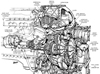
Here are a few pics of my turbine toys just to clear up any BS factor noses might be sniffing out there, I'm dead serious about trying it unless I can be learned as to why it is a really bad idea! While not common rail pressures these motors are all 250-400+ psi fuel rail pressure and have pumps that make ours look free. The first set is my APU centrifugal compressor motor, good for between 90-150 shaft bhp but at at a 12k shaft speed and 48k full power rpm on the turbine shaft:

Looking into the hot side while spinning:

Proud papa...day one after delivery...

An actually cheap medium sized timed out turbomecca turboprop, NLAZ, only so much room and time, was not any good at making thrust anyway

The baby of the family, the JFS450, centrifugal compressor and exducer, basically a prototype cruise missile motor which didn't make required thrust and was then down converted to RC model levels, roughly 50-60 lbs thrust.

What can I say, wee bit eccentric and love playing with motors, especially motors that seem like a black art to many.
Here are a few pics of my turbine toys just to clear up any BS factor noses might be sniffing out there, I'm dead serious about trying it unless I can be learned as to why it is a really bad idea! While not common rail pressures these motors are all 250-400+ psi fuel rail pressure and have pumps that make ours look free. The first set is my APU centrifugal compressor motor, good for between 90-150 shaft bhp but at at a 12k shaft speed and 48k full power rpm on the turbine shaft:
Looking into the hot side while spinning:
Proud papa...day one after delivery...
An actually cheap medium sized timed out turbomecca turboprop, NLAZ, only so much room and time, was not any good at making thrust anyway
The baby of the family, the JFS450, centrifugal compressor and exducer, basically a prototype cruise missile motor which didn't make required thrust and was then down converted to RC model levels, roughly 50-60 lbs thrust.
What can I say, wee bit eccentric and love playing with motors, especially motors that seem like a black art to many.
MBWorld Fanatic!
Joined: Mar 2008
Posts: 3,714
Likes: 56
From: 1 hours drive north of Sydney Australia
2007 W204 220CDI Classic Sedan
From :- Wiki http://en.wikipedia.org/wiki/Jet_fuel
Piston engine use[edit]
Jet fuel is very similar to diesel fuel, and in some cases, may be burned in diesel engines. The possibility of environmental legislation banning the use of leaded avgas, and the lack of a replacement fuel with similar performance, has left aircraft designers and pilot's organizations searching for alternative engines for use in small aircraft.[27] As a result, a few aircraft engine manufacturers, most notably Thielert and Austro Engine, have begun offering aircraft diesel engines which run on jet fuel. This technology has potential to simplify airport logistics by reducing the number of fuel types required. Jet fuel is available in most places in the world, whereas avgas is only widely available in a few countries which have a large number of general aviation aircraft. A diesel engine may also potentially be more environmentally friendly and fuel-efficient than an avgas engine. However, very few diesel aircraft engines have been certified by aviation authorities. Diesel aircraft engines are uncommon today, even though opposed-piston aviation diesel powerplants such as the Junkers Jumo 205 family had been used during the Second World War.
Jet fuel is often used in ground support vehicles at airports, instead of diesel. The United States military makes heavy use of JP-8, for instance. However, jet fuel tends to have poor lubricating ability in comparison to diesel, thereby increasing wear on fuel pumps and other related engine parts.[citation needed] Civilian vehicles tend to disallow its use, or require that an additive be mixed with the jet fuel to restore its lubricity. Since jet fuel is also significantly more expensive than diesel, some critics[who?] consider using jet fuel in ground vehicles as wasteful.
Piston engine use[edit]
Jet fuel is very similar to diesel fuel, and in some cases, may be burned in diesel engines. The possibility of environmental legislation banning the use of leaded avgas, and the lack of a replacement fuel with similar performance, has left aircraft designers and pilot's organizations searching for alternative engines for use in small aircraft.[27] As a result, a few aircraft engine manufacturers, most notably Thielert and Austro Engine, have begun offering aircraft diesel engines which run on jet fuel. This technology has potential to simplify airport logistics by reducing the number of fuel types required. Jet fuel is available in most places in the world, whereas avgas is only widely available in a few countries which have a large number of general aviation aircraft. A diesel engine may also potentially be more environmentally friendly and fuel-efficient than an avgas engine. However, very few diesel aircraft engines have been certified by aviation authorities. Diesel aircraft engines are uncommon today, even though opposed-piston aviation diesel powerplants such as the Junkers Jumo 205 family had been used during the Second World War.
Jet fuel is often used in ground support vehicles at airports, instead of diesel. The United States military makes heavy use of JP-8, for instance. However, jet fuel tends to have poor lubricating ability in comparison to diesel, thereby increasing wear on fuel pumps and other related engine parts.[citation needed] Civilian vehicles tend to disallow its use, or require that an additive be mixed with the jet fuel to restore its lubricity. Since jet fuel is also significantly more expensive than diesel, some critics[who?] consider using jet fuel in ground vehicles as wasteful.
Senior Member
Joined: Jan 2011
Posts: 422
Likes: 52
From: McDade, Texas
W211 e320 CDI
Duly noted points, I'd read the Wikipedia article prior but have only limited faith in it. While our military has the budget to replace pumps and injectors daily I do not. Interestingly my Jet-A pump has an options menu after swiping your card and inputting N number, anti gelling for cold/high altitude and a couple others...I'll have to snap a screen shot next time I'm filling up a drum out at local field?


