






E350 nitrous quarter mile

Thread Starter
Newbie
Joined: Dec 2010
Posts: 9
Likes: 0
From: Denver
14 e550
E350 nitrous quarter mile
Hey guys. I've got an 07 e350 sport that I took to the track a few weeks ago. It ran a best of 14.6 @ 94 mph. I have since built a custom air intake and added a small dry shot of nitrous. I will be going back to the track tonight to test out the individual gains, if any, and I will post them later.
Just doing this for the 350 guys who always get told to buy a 55 and because I've never seen it done.
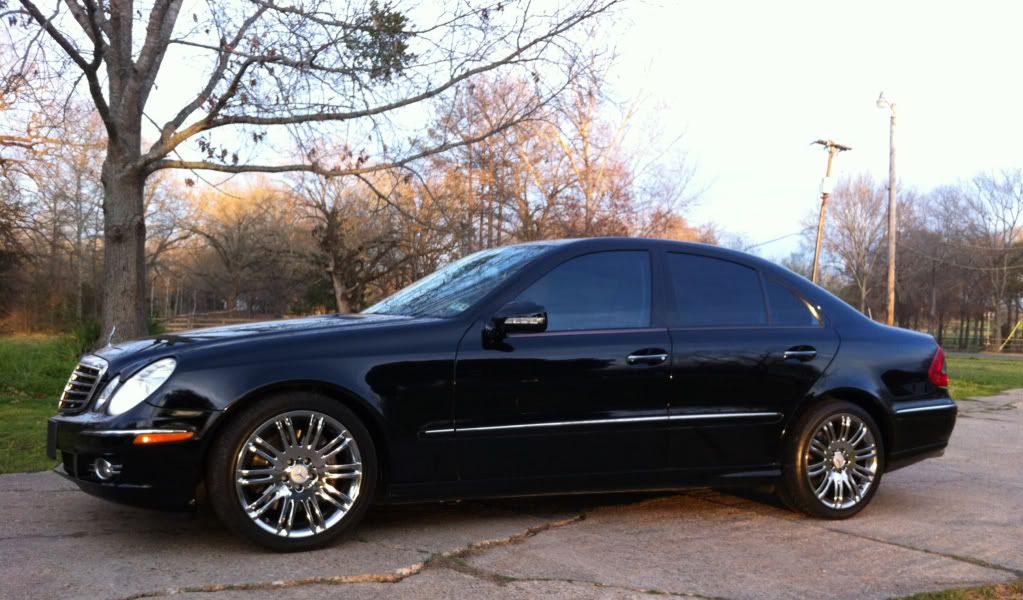
Just doing this for the 350 guys who always get told to buy a 55 and because I've never seen it done.

Junior Member
Joined: Dec 2010
Posts: 57
Likes: 1
From: WMSBG, VA
1991 F-150, 1976 912E, 2006 E500 Wagon
Doesn't nitrous require the addition of additional fuel?
My memories of this stuff are from _Hot Rod_ of several decades ago, but I seem to remember that the nitrous kits of that era always required an additional fuel plate to inject gas just after the stock carbeurator. The oxygen from the nitrous oxide makes it possible for the additional gasoline to burn properly, but the power comes from the additional gas, I think.
Last edited by Ichabod; Mar 27, 2012 at 02:52 PM.

Member
Joined: Jan 2012
Posts: 244
Likes: 4
From: PA, USA
2004 E320 4matic Sedan
Fuel trim?
I am not at all knowledgable on this, but I wonder where the information to provide more fuel will enter the computation and get acted on .
i.e. What are doing do to get the injectors to provide more fuel?
Your NOx injection is downstream of the MAF, I suppose? So the MAF is not going to give a hint on this extra "air", and nice cold NOx would probably confuse it anyway.
Won't you mostly just create a very lean burn for a few seconds, (extracting maybe more HP from the completely burned fuel, sure.) I don't know how quickly the short-term fuel trim will adapt, using the O2 sensors in the exhaust to prompt that, in order to increase the injector dwell.
Again, I don't know what I am talking, I am just wonderin' how the ECM is supposed to know that more fuel can be burned.
i.e. What are doing do to get the injectors to provide more fuel?
Your NOx injection is downstream of the MAF, I suppose? So the MAF is not going to give a hint on this extra "air", and nice cold NOx would probably confuse it anyway.
Won't you mostly just create a very lean burn for a few seconds, (extracting maybe more HP from the completely burned fuel, sure.) I don't know how quickly the short-term fuel trim will adapt, using the O2 sensors in the exhaust to prompt that, in order to increase the injector dwell.
Again, I don't know what I am talking, I am just wonderin' how the ECM is supposed to know that more fuel can be burned.
Trending Topics

Junior Member
Joined: Apr 2012
Posts: 15
Likes: 0
From: Texas
2007 W211 E350 Saloon, 2003 BMW E46 M3 Cabrio
I added a wet nitrous kit to my BMW M3 and gained 100HP... I have thought about doing the same to my Merc E350 but I dont see how a dry kit would benefit the OP. He should be going with a wet kit to spray the fuel and nitrous together after the MAF and be careful of any nitrous backfires...
Last edited by MPOWERD; Apr 1, 2012 at 01:45 PM.
MB World Stories
The Best of Mercedes & AMG

8 Oddball Mercedes Ideas That Actually Made it to Production
Verdad Gallardo
Dubai Tuner Gives the Mercedes G-Class An Entirely New Look
Verdad Gallardo
Six Gift Ideas Your AMG Loving Dad or Grad Will Cherish

7 Craziest Things AMG Gas Ever Built
Verdad Gallardo
New Electric Mercedes-AMG GT 4-Door Coupe Unveiled: 10 Things You Need to Know
Verdad Gallardo
6 Mercedes Models That Did NOT Age Well (But Are Somehow Still Cool)
Verdad Gallardo
Manual Mercedes? 6 Times Sindelfingen Let Drivers Have All The Fun
Verdad Gallardo
Mercedes SLR McLaren 722 S Is Extremely Rare Example Modified by McLaren
Verdad Gallardo
8 Classic Boxy Mercedes Designs That Have Aged Like Fine Wine
Verdad Gallardo
Junior Member
Joined: Nov 2009
Posts: 71
Likes: 2
E320
why even bother risking crating some damage. IF u wanted extra 100hp you should of gone with E55 or E63  . lets not forget that used engine will be at least 5k for this car. lets face it we bought this cars because of comfort level not because of 1/4 miles time. Thats just my 2 cents in this subject
. lets not forget that used engine will be at least 5k for this car. lets face it we bought this cars because of comfort level not because of 1/4 miles time. Thats just my 2 cents in this subject

Junior Member
Joined: Apr 2012
Posts: 15
Likes: 0
From: Texas
2007 W211 E350 Saloon, 2003 BMW E46 M3 Cabrio
why even bother risking crating some damage. IF u wanted extra 100hp you should of gone with E55 or E63 . lets not forget that used engine will be at least 5k for this car. lets face it we bought this cars because of comfort level not because of 1/4 miles time. Thats just my 2 cents in this subject
. lets not forget that used engine will be at least 5k for this car. lets face it we bought this cars because of comfort level not because of 1/4 miles time. Thats just my 2 cents in this subjectTo each his own.
And it's spelled CREATING... not crating (as in boxing up).
Junior Member
Joined: Nov 2009
Posts: 71
Likes: 2
E320

For your information mr smarty pants, this is a forum and people leave their opinions, if you not interested in other people opinion then unsubscribe from this forum and lock your self in house and ask your mom to bring you some milk. Otherwise keep your mouth ..... and mind your own business


Member
Joined: Nov 2011
Posts: 118
Likes: 5
From: Ohio
2006 E320 CDI
For your information mr smarty pants, this is a forum and people leave their opinions, if you not interested in other people opinion then unsubscribe from this forum and lock your self in house and ask your mom to bring you some milk. Otherwise keep your mouth ..... and mind your own business
Gentlemen, Please try to keep your cool

Don't be crating problems

This is a forum and people leave their opinions
 , no matter how immaturely formed, poorly stated or even if they have forgotten a .....
  along way.
You can even subscribe if your name is Mr. Smarty Pants?!

And, haris12, lets leave out the name calling.
I mean you got that mom thing going and all...

Cheers


MBWorld Fanatic!
Joined: Aug 2011
Posts: 3,184
Likes: 16
From: Highlands Ranch, Colorado
2014 BMW M235i
@OP I am actually interested in this though, the funny thing is your E350 at sea level runs the same quarter mile time (at a slower trap speed) as my E550 at 6000ft of elevation lol. I wonder how much you'll pick up, but if the install is fine, you should be safe. Interesting idea.

Super Member
Joined: May 2009
Posts: 673
Likes: 27
From: Frederick
2000 ML320, 2005 E320 CDI
I wish he had posted info too. I have a diesel...but its fun to know what these motors can take.
Read about a CDI motor, stockish (with custom griddle, new turbo and piping) making 500+hp.
Also learned that not only are there transmission specialty places out there for us, they are making 1500hp ready versions. (NAG1 that is)
Read about a CDI motor, stockish (with custom griddle, new turbo and piping) making 500+hp.
Also learned that not only are there transmission specialty places out there for us, they are making 1500hp ready versions. (NAG1 that is)
MBWorld Fanatic!
Joined: Aug 2011
Posts: 3,184
Likes: 16
From: Highlands Ranch, Colorado
2014 BMW M235i
Holy hell, wow. I'm not surprised though, a friend of mine in a tuned 335i raced a CDI off the line the other night and it took him a whiiile to catch up, which I was utterly surprised about. I thought it was an intentionally misbadged E55 or something, but upon further inspection at the next stop light it clearly wasn't. I'm curious what the guy had done, I mean... I'm sure the CDI makes plenty of torque off the line which would explain why it launches so hard, but that was impressive nonetheless.




Newbie
Joined: Jul 2017
Posts: 13
Likes: 2
From: kenton, Ohio
2002 E320 w210
why even bother risking crating some damage. IF u wanted extra 100hp you should of gone with E55 or E63 . lets not forget that used engine will be at least 5k for this car. lets face it we bought this cars because of comfort level not because of 1/4 miles time. Thats just my 2 cents in this subject
. lets not forget that used engine will be at least 5k for this car. lets face it we bought this cars because of comfort level not because of 1/4 miles time. Thats just my 2 cents in this subjectNitrus is not only for the dragstrip. When using nitrous at a Dragstrip is when the detrimental effects of nitrous on engines come into play. The engine damaging effects of NOS and engine damage usually happens between 0-20 mph or "the launch" is when the NOS can damage the engine with backfires do to lack of fuel (leaning the engine out), and usually from gunho inexperienced drivers.
Now, for safe operation of NOS the engine should be running at 3000 rpm or higher in order for enough fuel to allow a gain without running lean. Now NOS would be a great safe helper on the highway cruising 75-80 mph and some A** hole comes up in a Vette, let the battle begin (I race vettes too). A dry fogger kit of 35-55 HP, would help without damaging the engine because at those rpm's from driving 75-80mph your pretty much running the max fuel feed that the nitrus needs to function safely, especially after the pedal goes to the floor and dropped to 4th gear.
Our American E320's are electronically governed to do no more than 160mph. This means we are not even approaching overworking of the engine. Keeping that in mind a small shot of NOS, the engine can handle. Especially our overly built V6's in the e320's
Any engine can fail at anytime with or without NOS.
There are many reasons people buy these cars.
Any stock engine can handle up to a 100 shot without any extra modification.
Nothing wrong with having fun, is there?
One other note for diesel engine owners. For diesel engines NOS is not the ticket. Propane is what should be used for a diesel engines as propane is the NOS equivalent. Propane injection systems in diesel engine increases available horsepower by 20 to 25 percent while reducing overall fuel consumption. Pumping propane into a diesel engine works because diesel fuel generally does not burn completely in the combustion chamber. Another trick for diesel engines is pumping water into the cylinders, water won't compress and will raise the compression building torque. I'm not into diesel so that's just the jist of it.
Last edited by Kevin Burns; Apr 1, 2020 at 04:52 PM.

MBWorld Fanatic!
Joined: Jan 2016
Posts: 2,761
Likes: 891
From: In the Shadow of the Tetons
2013 ML350 Bluetec
The advantage of water injection on diesels is that water expands considerably when it turns to steam (about 1700:1 at 1ATM). Pretty sure this is where the extra compression comes from. Mind your head (gaskets). What you said about propane is pretty much accurate.
Edit: Best Zombie Thread EVah in the Coronavirus stay at home.
Edit: Best Zombie Thread EVah in the Coronavirus stay at home.
Last edited by rapidoxidation; Apr 1, 2020 at 06:30 PM.
Newbie
Joined: Jul 2017
Posts: 13
Likes: 2
From: kenton, Ohio
2002 E320 w210
The advantage of water injection on diesels is that water expands considerably when it turns to steam (about 1700:1 at 1ATM). Pretty sure this is where the extra compression comes from. Mind your head (gaskets). What you said about propane is pretty much accurate.
Edit: Best Zombie Thread EVah in the Coronavirus stay at home.
Edit: Best Zombie Thread EVah in the Coronavirus stay at home.
I didn't want to write an academic article, steam has nothing to do with why compression ratios are raised when inducing water into an engine. Your the one who brought up steam, not me. Steam in the internal combustion engine is simply a byproduct of heat, and is also why I say water. In all actuality steam has no power gain whatsoever in an engine except to cool the fuel/air charge. Here is why and how water works in an engine.
Water injection/addition is that it increases a fuel’s octane rating, which means that the fuel is more resistant to auto-ignition. Auto-ignition occurs at high pressures and temperatures, and causes engine knock. Knock is when the explosion takes place BEFORE full compression "This is why it is called PRE-IGNITION" so the compression ratio is lower because the fuel is burned before full compression.
Now being you want to talk about steam Ill teach you how steam cools the air charge. Yes water does turn to steam which is a gas. As the water vaporizes/turns into steam, it pulls the heat from the air charge out with it during the vapor process thus cooling the fuel/air charge. Can also be used in both Diesel and gasoline engines but diesel engines require more water than a gas engine does.
Now, engines with a high compression ratio (Diesels and Gasoline) require fuels with a high octane rating, in order to avoid knock (Pre Ignition). Water turns to steam during the vaporization of water into steam, the action draws the heat from the air charge while the cooler air charge cools the fuel. Cooling the fuel/air charge results in higher compression ratios that result in increased power output and efficiency. Being diesel fuel is relatively low octane, injecting water into the fuel that is being compressed in the cylinder is how the compression is raised. Because of the cooling properties of water mixed into the fuel/air charge, instead of pre ignition/knock, your cooling the fuel/air charge to avoid pre-ignition/knock and allowing it to fully compress "Raised compression" v's lower compression from knock" and regain the full compression (Raised compression) of the fuel/air charge.
Before you come on here trying to sound intelligent maybe know what the heck your even talking about.
Some of us design and build engines for automobile manufactures. Maybe you should mind your head gaskets.
Like I said, I didn't want to write an article on diesel engines and only put that "Water injection" up to steer the diesel guys in another performance direction to research themselves, and you with idiotic steam and compression is surely not the right direction at all, as steam was, and is, irrelevant. It's irrelevant because one can't stop the vaporization of water into steam so we just say water, because steam is water in a gaseous state. But one should know what steam actually does in an engine before saying anything. Living in make believe? STEAM LOL Steam in an internal combustion engine has no physical power gain like in a steam locomotive.
Go polish your wheels and ceramic your paint, I'm sure that will yield a performance gain in your mind. Leave the performance to us who actually know what is going on.
Funny your a super member, hmmm people must look up to you and trust what your saying. Today they all just learned you literally know nothing and make sh*t up as you go.
The one post from someone you have no clue who I am, except my title says newbie, turns out this newbie forgot more than you'll ever know.
Who do you think you are to tell anyone if they are right or wrong? I quote: "What you said about propane is pretty much accurate" Pretty much accurate? No pal it's dead on accurate. As propane will yield a greater gain than NOS, NOS can be used in a diesel engine but with way less of a gain compared to propane. So I had no reason to mention NOS and a diesel engine.
Have a good day.
Last edited by Kevin Burns; Apr 1, 2020 at 11:00 PM.
MBWorld Fanatic!
Joined: Jan 2016
Posts: 2,761
Likes: 891
From: In the Shadow of the Tetons
2013 ML350 Bluetec
Your so wrong. And you have the gall to say "What you said about propane is pretty much accurate". Who do you think you are?
I didn't want to write an academic article, steam has nothing to do with why compression ratios are raised when inducing water into an engine. Your the one who brought up steam, not me. Steam in the internal combustion engine is simply a byproduct of heat, and is also why I say water. In all actuality steam has no power gain whatsoever in an engine except to cool the fuel/air charge. Here is why and how water works in an engine.
Water injection/addition is that it increases a fuel’s octane rating, which means that the fuel is more resistant to auto-ignition. Auto-ignition occurs at high pressures and temperatures, and causes engine knock. Knock is when the explosion takes place BEFORE full compression "This is why it is called PRE-IGNITION" so the compression ratio is lower because the fuel is burned before full compression.
Now being you want to talk about steam Ill teach you how steam cools the air charge. Yes water does turn to steam which is a gas. As the water vaporizes/turns into steam, it pulls the heat from the air charge out with it during the vapor process thus cooling the fuel/air charge. Can also be used in both Diesel and gasoline engines but diesel engines require more water than a gas engine does.
Now, engines with a high compression ratio (Diesels and Gasoline) require fuels with a high octane rating, in order to avoid knock (Pre Ignition). Water turns to steam during the vaporization of water into steam, the action draws the heat from the air charge while the cooler air charge cools the fuel. Cooling the fuel/air charge results in higher compression ratios that result in increased power output and efficiency. Being diesel fuel is relatively low octane, injecting water into the fuel that is being compressed in the cylinder is how the compression is raised. Because of the cooling properties of water mixed into the fuel/air charge, instead of pre ignition/knock, your cooling the fuel/air charge to avoid pre-ignition/knock and allowing it to fully compress "Raised compression" v's lower compression from knock" and regain the full compression (Raised compression) of the fuel/air charge.
Before you come on here trying to sound intelligent maybe know what the heck your even talking about.
Some of us design and build engines for automobile manufactures. Maybe you should mind your head gaskets.
Like I said, I didn't want to write an article on diesel engines and only put that "Water injection" up to steer the diesel guys in another performance direction to research themselves, and you with idiotic steam and compression is surely not the right direction at all, as steam was, and is, irrelevant. It's irrelevant because one can't stop the vaporization of water into steam so we just say water, because steam is water in a gaseous state. But one should know what steam actually does in an engine before saying anything. Living in make believe? STEAM LOL Steam in an internal combustion engine has no physical power gain like in a steam locomotive.
Go polish your wheels and ceramic your paint, I'm sure that will yield a performance gain in your mind. Leave the performance to us who actually know what is going on.
Funny your a super member, hmmm people must look up to you and trust what your saying. Today they all just learned you literally know nothing and make sh*t up as you go.
The one post from someone you have no clue who I am, except my title says newbie, turns out this newbie forgot more than you'll ever know.
Who do you think you are to tell anyone if they are right or wrong? I quote: "What you said about propane is pretty much accurate" Pretty much accurate? No pal it's dead on accurate. As propane will yield a greater gain than NOS, NOS can be used in a diesel engine but with way less of a gain compared to propane. So I had no reason to mention NOS and a diesel engine.
Have a good day.
I didn't want to write an academic article, steam has nothing to do with why compression ratios are raised when inducing water into an engine. Your the one who brought up steam, not me. Steam in the internal combustion engine is simply a byproduct of heat, and is also why I say water. In all actuality steam has no power gain whatsoever in an engine except to cool the fuel/air charge. Here is why and how water works in an engine.
Water injection/addition is that it increases a fuel’s octane rating, which means that the fuel is more resistant to auto-ignition. Auto-ignition occurs at high pressures and temperatures, and causes engine knock. Knock is when the explosion takes place BEFORE full compression "This is why it is called PRE-IGNITION" so the compression ratio is lower because the fuel is burned before full compression.
Now being you want to talk about steam Ill teach you how steam cools the air charge. Yes water does turn to steam which is a gas. As the water vaporizes/turns into steam, it pulls the heat from the air charge out with it during the vapor process thus cooling the fuel/air charge. Can also be used in both Diesel and gasoline engines but diesel engines require more water than a gas engine does.
Now, engines with a high compression ratio (Diesels and Gasoline) require fuels with a high octane rating, in order to avoid knock (Pre Ignition). Water turns to steam during the vaporization of water into steam, the action draws the heat from the air charge while the cooler air charge cools the fuel. Cooling the fuel/air charge results in higher compression ratios that result in increased power output and efficiency. Being diesel fuel is relatively low octane, injecting water into the fuel that is being compressed in the cylinder is how the compression is raised. Because of the cooling properties of water mixed into the fuel/air charge, instead of pre ignition/knock, your cooling the fuel/air charge to avoid pre-ignition/knock and allowing it to fully compress "Raised compression" v's lower compression from knock" and regain the full compression (Raised compression) of the fuel/air charge.
Before you come on here trying to sound intelligent maybe know what the heck your even talking about.
Some of us design and build engines for automobile manufactures. Maybe you should mind your head gaskets.
Like I said, I didn't want to write an article on diesel engines and only put that "Water injection" up to steer the diesel guys in another performance direction to research themselves, and you with idiotic steam and compression is surely not the right direction at all, as steam was, and is, irrelevant. It's irrelevant because one can't stop the vaporization of water into steam so we just say water, because steam is water in a gaseous state. But one should know what steam actually does in an engine before saying anything. Living in make believe? STEAM LOL Steam in an internal combustion engine has no physical power gain like in a steam locomotive.
Go polish your wheels and ceramic your paint, I'm sure that will yield a performance gain in your mind. Leave the performance to us who actually know what is going on.
Funny your a super member, hmmm people must look up to you and trust what your saying. Today they all just learned you literally know nothing and make sh*t up as you go.
The one post from someone you have no clue who I am, except my title says newbie, turns out this newbie forgot more than you'll ever know.
Who do you think you are to tell anyone if they are right or wrong? I quote: "What you said about propane is pretty much accurate" Pretty much accurate? No pal it's dead on accurate. As propane will yield a greater gain than NOS, NOS can be used in a diesel engine but with way less of a gain compared to propane. So I had no reason to mention NOS and a diesel engine.
Have a good day.
Oh, and... Cetane.
Cheers.
Last edited by rapidoxidation; Apr 2, 2020 at 10:10 AM.


