





Any regrets?

Newbie
Joined: Apr 2010
Posts: 6
Likes: 0
From: Bluffton,SC
2020 GLC300
living in Texas I ordered mine with the standard sun roof,picked it up last week and I am glad that I didnt get the pano option. am very happy with the choices I made. P2,countour seat,sport,Black with ash interior and the AMG wheels chromed.

MBWorld Fanatic!


Joined: Jul 2009
Posts: 1,915
Likes: 262
From: Ontario,Canada
...24 GLE53
Maybe the pano roof is not the best option for extreme climates that you can experience in the American southwest. In those climates the regular sunroof probably is the best choice. In my case I love the pano roof with the power mesh headliner.With the headliner closed it lets light in but keeps the sun out. It certainly brightens up a car with a black interior. I think MB is trying to cater to a larger base by offering two choices. BMW's new F10 offers only the regular sunroof wich was a factor in my wife ordering the 2011 W212.

Super Member
Joined: Feb 2010
Posts: 640
Likes: 6
2015 GL450
At ISO 200 and shutterspeed 1/200 (irrelevant except for setting the scale), I got the following aperture measurements:
Sunroof open: f/16-1/10 (the good old sunny f/16 rule -- this lets you know the meter was in the sun and it was a bright, sunny, cloudless day)
Sunroof closed/mesh open: f/5.6-1/10. This is slightly more light than I would get by standing in the open shade on my front stoop. It is 1/8 of the light gotten when the sunroof is open.
Sunroof closed/mesh closed: f/1.4-8/10. This is approximately 1/8 of the light gotten with the sunroof closed. It is approximately equal to the amount of light I get sitting at my kitchen table with the sun almost directly over the house (so no direct light through the windows).
Edit: The light meter was, of course, at the same position for each measurement.
Edit again: So the sunroof closed/mesh closed blocks approximately 1/64 of the light. The sunny f/16 rule is fairly universal (the Southwest won't get twice as much light for instance), so this is a good guide for most everybody.
I thought the mesh would bug me too, but I am quite comfortable with it.
Last edited by ttoE550; May 4, 2010 at 11:22 AM.

MBWorld Fanatic!

Joined: Aug 2005
Posts: 3,087
Likes: 59
From: Los Angeles
2009 SL550 Roadster Diamond White, 2008 CLK550 Coupe Obsidian Black
the thing i miss about the regular sunroof is that i can tip open the sunroof while still having the cover closed (since it has ducts to let air through) that way to let air flow through sunroof but still not let sun in vs with the pano, even if i want to tip open the sunroof, the covers have to be completely open. but man, it looks so nice from the outside though and i guess you can always just tint the glass area a little more.

Member
Joined: Nov 2009
Posts: 127
Likes: 0
From: TN
2010 E350
I don't have the old pano car, but I have the mesh one. And I have a light meter.
At ISO 200 and shutterspeed 1/200 (irrelevant except for setting the scale), I got the following aperture measurements:
Sunroof open: f/16-1/10 (the good old sunny f/16 rule -- this lets you know the meter was in the sun and it was a bright, sunny, cloudless day)
Sunroof closed/mesh open: f/5.6-1/10. This is slightly more light than I would get by standing in the open shade on my front stoop. It is 1/8 of the light gotten when the sunroof is open.
Sunroof closed/mesh closed: f/1.4-8/10. This is approximately 1/8 of the light gotten with the sunroof closed. It is approximately equal to the amount of light I get sitting at my kitchen table with the sun almost directly over the house (so no direct light through the windows).
Edit: The light meter was, of course, at the same position for each measurement.
Edit again: So the sunroof closed/mesh closed blocks approximately 1/64 of the light. The sunny f/16 rule is fairly universal (the Southwest won't get twice as much light for instance), so this is a good guide for most everybody.
I thought the mesh would bug me too, but I am quite comfortable with it.
At ISO 200 and shutterspeed 1/200 (irrelevant except for setting the scale), I got the following aperture measurements:
Sunroof open: f/16-1/10 (the good old sunny f/16 rule -- this lets you know the meter was in the sun and it was a bright, sunny, cloudless day)
Sunroof closed/mesh open: f/5.6-1/10. This is slightly more light than I would get by standing in the open shade on my front stoop. It is 1/8 of the light gotten when the sunroof is open.
Sunroof closed/mesh closed: f/1.4-8/10. This is approximately 1/8 of the light gotten with the sunroof closed. It is approximately equal to the amount of light I get sitting at my kitchen table with the sun almost directly over the house (so no direct light through the windows).
Edit: The light meter was, of course, at the same position for each measurement.
Edit again: So the sunroof closed/mesh closed blocks approximately 1/64 of the light. The sunny f/16 rule is fairly universal (the Southwest won't get twice as much light for instance), so this is a good guide for most everybody.
I thought the mesh would bug me too, but I am quite comfortable with it.

the thing i miss about the regular sunroof is that i can tip open the sunroof while still having the cover closed (since it has ducts to let air through) that way to let air flow through sunroof but still not let sun in vs with the pano, even if i want to tip open the sunroof, the covers have to be completely open. but man, it looks so nice from the outside though and i guess you can always just tint the glass area a little more.
Super Member
Joined: Feb 2010
Posts: 640
Likes: 6
2015 GL450
Ppffft...I can't talk today. The sunroof/mesh lets through only 1/64 of the light, which isn't much. Looking at it more closely, it seems to have some sparkly stuff dispersed throughout the mesh, which could reflect (and thus block) quite a bit of light. I personally say it's nicely engineered.
MB World Stories
The Best of Mercedes & AMG

Dubai Tuner Gives the Mercedes G-Class An Entirely New Look
Verdad Gallardo
Six Gift Ideas Your AMG Loving Dad or Grad Will Cherish

7 Craziest Things AMG Gas Ever Built
Verdad Gallardo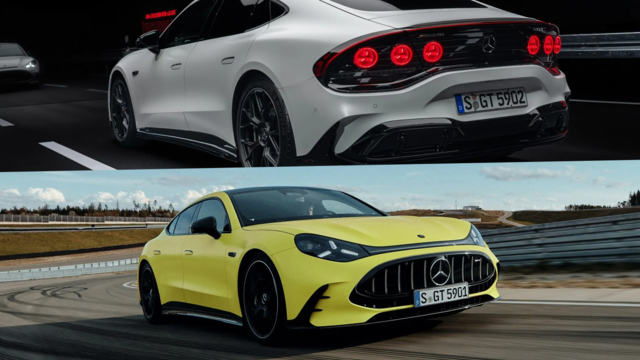
New Electric Mercedes-AMG GT 4-Door Coupe Unveiled: 10 Things You Need to Know
Verdad Gallardo
6 Mercedes Models That Did NOT Age Well (But Are Somehow Still Cool)
Verdad Gallardo
Manual Mercedes? 6 Times Sindelfingen Let Drivers Have All The Fun
Verdad Gallardo
Mercedes SLR McLaren 722 S Is Extremely Rare Example Modified by McLaren
Verdad Gallardo
8 Classic Boxy Mercedes Designs That Have Aged Like Fine Wine
Verdad Gallardo
Flawlessly Restored Mercedes 190E Evo II Heads to Auction
Verdad Gallardo
Newbie
Joined: May 2010
Posts: 13
Likes: 0
IS 350
I've been wrestling with going with a panoramic roof on a 2011 W212, but I have some concerns (3): Besides letting in a "bit" (not sure how much) more sunlight, (1) is there a difference in the rigidity (in other words does it affect cornering/handling) of the W212 with pano versus without? Also, (2) in colder climates or vice versa is the vehicle cooler or warmer with the pano roof than without? (3) Is there a weight savings in going with a panoramic roof over the regular variant?
Contrary to what I've read on Lexus and BMW forums, I really like the looks (from all angles) of the W212. In all honesty, it took the rear a minute to grow on me. Overall, I believe that the design will stand the test of time. However, I am somewhat skeptical of purchasing a vehicle with a feature (panoramic roof) that I have no control over, mesh covering aside.
Contrary to what I've read on Lexus and BMW forums, I really like the looks (from all angles) of the W212. In all honesty, it took the rear a minute to grow on me. Overall, I believe that the design will stand the test of time. However, I am somewhat skeptical of purchasing a vehicle with a feature (panoramic roof) that I have no control over, mesh covering aside.
Out Of Control!!
Joined: Jun 2008
Posts: 10,557
Likes: 24
From: Earth
Porsche Macan S SportDesign / Ex M-B's: 11 & 10 & 06 E350's, 02 S500
It definitely sacrifices some structural rigidity, and with that, I'd say it'll sacrifice a bit in the safety dept. If something would ever happen that would really put the safety cage to test.
Also, they're prone to some squeeking and creaking, especially over time. I would assume Pano actually adds weight actually, pretty sure of that.
The price we pay for vanity.
On a plus note, if anything were to ever happen to damage or dent your roof, Pano would be ideal, as it won't really scratch, and won't dent, and replacing it is probably a better situation than having to repaint a roof, etc. Also, you don't have to wax it.
Also, they're prone to some squeeking and creaking, especially over time. I would assume Pano actually adds weight actually, pretty sure of that.
The price we pay for vanity.
On a plus note, if anything were to ever happen to damage or dent your roof, Pano would be ideal, as it won't really scratch, and won't dent, and replacing it is probably a better situation than having to repaint a roof, etc. Also, you don't have to wax it.
Super Member
Joined: Feb 2010
Posts: 640
Likes: 6
2015 GL450
It definitely sacrifices some structural rigidity, and with that, I'd say it'll sacrifice a bit in the safety dept. If something would ever happen that would really put the safety cage to test.
Also, they're prone to some squeeking and creaking, especially over time. I would assume Pano actually adds weight actually, pretty sure of that.
Also, they're prone to some squeeking and creaking, especially over time. I would assume Pano actually adds weight actually, pretty sure of that.
I'm not sure the pano automatically reduces structural rigidity. Your statement might indeed be correct for the w212, especially if you have information I do not, but absent that information, the relationship seems more complex.
First, as the pano likely adds weight, the supports for the roof likely need to be made stronger to support that weight, as well as the pano structure itself. It would seem to me that the supports could ultimately be less, the same, or more rigid than on a non-pano, depending on the design.
Second, the frame for the pano could contribute to structural rigidity.
Third, glass is, as I understand it, more rigid than steel. Maybe not reinforced steel, but I don't know. Glass is less able to bend (the definition of more rigid) but is more brittle.
I remember some years ago when the Porsche Targa (big pano roof) that it did not suffer any loss of rigidity compared to the coupe -- but it did add a bit of weight. Apples to oranges considering what is needed to support the pano.
In a rollover, I don't know what I would prefer, especially if the (perhaps) stronger roof supports were supporting the car instead of the roof...
I do agree about the added weight and the potential for squeaks.

MBWorld Fanatic!
Joined: Sep 2008
Posts: 4,336
Likes: 8
Porsche 991S, Cayenne S, 1972 BMW 3.0CS E9 Coupe
fwiw, current MB panorama roofs are a combo of plastic and single layer glass (a glass plastic composite.) More strength and rigidity with much lighter weight. Dupont makes the material called Spallshield and introduced it in the S back in 2005. http://www2.dupont.com/SafetyGlass/e...s_sunroof.html
There's been a lot of new polycarbonate type technology going on with panorama roofs (since they seem to be popular and are increasing in use by manufacturers.) The Mercedes GL sun roofs are made of Makrolon from Bayer AG. http://www.stockholders-newsletter-q...bayvision.aspx
p.s. the very early Porsche Targas were notorious for having twisted out frames over time (trust me, I had one.) There wasn't enough rigidity (reinforced undercarriage like you see with convertibles), and without a steel roof the frames would twist and the car became pretty squirrely after you got into 60k + miles. Of course, that's all changed now.
There's been a lot of new polycarbonate type technology going on with panorama roofs (since they seem to be popular and are increasing in use by manufacturers.) The Mercedes GL sun roofs are made of Makrolon from Bayer AG. http://www.stockholders-newsletter-q...bayvision.aspx
p.s. the very early Porsche Targas were notorious for having twisted out frames over time (trust me, I had one.) There wasn't enough rigidity (reinforced undercarriage like you see with convertibles), and without a steel roof the frames would twist and the car became pretty squirrely after you got into 60k + miles. Of course, that's all changed now.
Last edited by 220S; May 6, 2010 at 02:19 AM.
MBWorld Fanatic!
Joined: Jul 2009
Posts: 1,915
Likes: 262
From: Ontario,Canada
...24 GLE53
It definitely sacrifices some structural rigidity, and with that, I'd say it'll sacrifice a bit in the safety dept. If something would ever happen that would really put the safety cage to test.
Also, they're prone to some squeeking and creaking, especially over time. I would assume Pano actually adds weight actually, pretty sure of that.
The price we pay for vanity.
On a plus note, if anything were to ever happen to damage or dent your roof, Pano would be ideal, as it won't really scratch, and won't dent, and replacing it is probably a better situation than having to repaint a roof, etc. Also, you don't have to wax it.
Also, they're prone to some squeeking and creaking, especially over time. I would assume Pano actually adds weight actually, pretty sure of that.
The price we pay for vanity.
On a plus note, if anything were to ever happen to damage or dent your roof, Pano would be ideal, as it won't really scratch, and won't dent, and replacing it is probably a better situation than having to repaint a roof, etc. Also, you don't have to wax it.
On what research do you base your claim re: rigidity and safety?
Last edited by petee1997; May 6, 2010 at 10:27 AM.
Out Of Control!!
Joined: Jun 2008
Posts: 10,557
Likes: 24
From: Earth
Porsche Macan S SportDesign / Ex M-B's: 11 & 10 & 06 E350's, 02 S500
Are you saying a Pano car is more rigid than a fixed roof? I don't have any facts to back up my claim, but I'm basing it on theory really, I would be shocked (and impressed) if a Pano car was more, or even equally as rigid, as a fixed roof car. I just know that, if the unfortunate occurrence of a car getting smashed from each side (i.e sandwiched) were to happen, I'd think a fixed roof car would fare better than a Pano car. ?
Also, I know the 212 is much more rigid than a 211, but I'm speaking of a Pano car VS a fixed roof of the same car.
Also, I know the 212 is much more rigid than a 211, but I'm speaking of a Pano car VS a fixed roof of the same car.
MBWorld Fanatic!
Joined: Aug 2005
Posts: 3,087
Likes: 59
From: Los Angeles
2009 SL550 Roadster Diamond White, 2008 CLK550 Coupe Obsidian Black
kind of o/t, but i think the w212 pano has the auto close feature for the blind and the glass. can u guys confirm? if so, that's really great since my w211 will only auto open, i have to hold it to close the glass/blind. really annoying to pay for the option that makes it less convenient than the standard feature.
Super Member
Joined: Feb 2010
Posts: 640
Likes: 6
2015 GL450
kind of o/t, but i think the w212 pano has the auto close feature for the blind and the glass. can u guys confirm? if so, that's really great since my w211 will only auto open, i have to hold it to close the glass/blind. really annoying to pay for the option that makes it less convenient than the standard feature.

MBWorld Fanatic!
Joined: Aug 2005
Posts: 3,087
Likes: 59
From: Los Angeles
2009 SL550 Roadster Diamond White, 2008 CLK550 Coupe Obsidian Black
that's a big plus. mine i have to hold it to close the glass. then release and hold it again to close the blind. i heard the computer module can be upgraded or something, but nice to see they improved that feature.
MBWorld Fanatic!
Joined: Sep 2008
Posts: 4,336
Likes: 8
Porsche 991S, Cayenne S, 1972 BMW 3.0CS E9 Coupe
It seems like the factors to roof safety are threefold:
1) the strength of the pillars
2) the distance from the occupant's head to the bottom of the roof (more space, the better)
3) center of gravity of the vehicle (SUVs are the main concern here, sedans not so much)
There are new standards for roof safety now. Here are the new standards: http://www.nhtsa.gov/cars/rules/ruli...PRM-to-FR.html
The IIHS will be testing roof safety in their 2010 tests. Here are some videos. If you notice it's the A and B pillars that are keeping the roof from caving in. That steel plate is pushing in on the A pillar. The roof steel itself seems to play a much smaller part. I think the argument for a panoramic roof would be the strength of the composite used (it's not glass, it's a plastic/glass composite; see my link to Dupont and Bayer in my above post.) After all, carbon fiber is extremely strong and used as body panels in a lot of super exotics.
If the pillars are strong enough in relation to the car's weight, and the roof material is strong enough not to break out and allow the occupant to be ejected (as with the Dupont product used by Mercedes) then it should be fine. I'd even argue that with a panorama roof, you won't get any metal deforming down onto your head. The pillars hold up and the laminated roof doesn't shatter or crush you.
http://www.youtube.com/watch?v=APgPS...eature=related
http://www.youtube.com/watch?v=Oupio...eature=channel
fwiw, the Volvo XC90 SUV is an industry standard in roof safety. It has super stiff pillars. http://www.youtube.com/watch?v=CqNITUm3WA8
In the end we could all just install roll cages and wear helmets.
1) the strength of the pillars
2) the distance from the occupant's head to the bottom of the roof (more space, the better)
3) center of gravity of the vehicle (SUVs are the main concern here, sedans not so much)
There are new standards for roof safety now. Here are the new standards: http://www.nhtsa.gov/cars/rules/ruli...PRM-to-FR.html
The IIHS will be testing roof safety in their 2010 tests. Here are some videos. If you notice it's the A and B pillars that are keeping the roof from caving in. That steel plate is pushing in on the A pillar. The roof steel itself seems to play a much smaller part. I think the argument for a panoramic roof would be the strength of the composite used (it's not glass, it's a plastic/glass composite; see my link to Dupont and Bayer in my above post.) After all, carbon fiber is extremely strong and used as body panels in a lot of super exotics.
If the pillars are strong enough in relation to the car's weight, and the roof material is strong enough not to break out and allow the occupant to be ejected (as with the Dupont product used by Mercedes) then it should be fine. I'd even argue that with a panorama roof, you won't get any metal deforming down onto your head. The pillars hold up and the laminated roof doesn't shatter or crush you.
http://www.youtube.com/watch?v=APgPS...eature=related
http://www.youtube.com/watch?v=Oupio...eature=channel
fwiw, the Volvo XC90 SUV is an industry standard in roof safety. It has super stiff pillars. http://www.youtube.com/watch?v=CqNITUm3WA8
In the end we could all just install roll cages and wear helmets.
Out Of Control!!
Joined: Jun 2008
Posts: 10,557
Likes: 24
From: Earth
Porsche Macan S SportDesign / Ex M-B's: 11 & 10 & 06 E350's, 02 S500
Nice info ^^. I've been following the Roof Tests by the IIHS actually, and was happy to see that the Chevy Malibu fared so well.
I wonder what the new E-Class would post up for lbs. force withstood, I'd assume it should be one of the, if not the strongest available, seeing as to how M-B says the amount of High Strength Steel used throughout the car not only sets an automotive record, but also it uses the latest and greatest, of which I remember them claiming using "Steels that weren't even available or engineered just two years prior".
I wonder what the new E-Class would post up for lbs. force withstood, I'd assume it should be one of the, if not the strongest available, seeing as to how M-B says the amount of High Strength Steel used throughout the car not only sets an automotive record, but also it uses the latest and greatest, of which I remember them claiming using "Steels that weren't even available or engineered just two years prior".
Out Of Control!!
Joined: Jun 2008
Posts: 10,557
Likes: 24
From: Earth
Porsche Macan S SportDesign / Ex M-B's: 11 & 10 & 06 E350's, 02 S500
I wonder if there are any images of a Pano car after a rollover, or a hard side crash. I'm curious to know how that material would actually crush when pushed to the limit.

Super Member
Joined: Dec 2003
Posts: 663
Likes: 6
Interesting topic indeed and the research is impressive. As far as safety, I have a hard time thinking MB would install the Pano roof if it were less safe. Just makes no sense to me but perhaps I'm not bright enough to understand the arguments.
Out Of Control!!
Joined: Jun 2008
Posts: 10,557
Likes: 24
From: Earth
Porsche Macan S SportDesign / Ex M-B's: 11 & 10 & 06 E350's, 02 S500
I feel the same ^^. If there's one place I truly trust M-B in, it's Safety. Even if it (Pano) does sacrifice a little, I'm sure they put tons of effort to get it on par with, or as close to possibly on par with, the strength of a fixed roof. Not to mention I'd assume they put lots of Engineering strength into assuring that it is not "unsafe" in any way.
However, still, the squeeks and creaks speak for themselves. If the body is flexing, that's due to lack of rigidity. Which is where my questions become more relevant.
I know my W211 feels more flexy and flimsy than I'd wish for already (a solid car, but with an M-B, my expectations are high, i.e I expect a bull-dog/tank like ride), I don't think I'd be able to deal with any additions to that. The 212's added rigidity will probably help.
However, still, the squeeks and creaks speak for themselves. If the body is flexing, that's due to lack of rigidity. Which is where my questions become more relevant.
I know my W211 feels more flexy and flimsy than I'd wish for already (a solid car, but with an M-B, my expectations are high, i.e I expect a bull-dog/tank like ride), I don't think I'd be able to deal with any additions to that. The 212's added rigidity will probably help.


