






Warped Front Rotors 2011 E550

Super Member
Joined: Apr 2007
Posts: 561
Likes: 2
From: New Mexico
2014 E350, 2012 SL550
The automatic does it conservatively for the sake of comfort. Doing it by hand with the paddles allows you to downshift sooner than the auto would making it less comfortable and more jerky, not necessarily harmful to the transmission.
Have you ever noticed that the MB cruise control downshifts quite abruptly if you are going downhill and start to exceed the set speed?
I don't know, but I suspect the transmission wouldn't let you "paddle-down" to a gear that would be destructive to itself.
Regards,
Don

Out Of Control!!
Joined: Jun 2008
Posts: 10,557
Likes: 24
From: Earth
Porsche Macan S SportDesign / Ex M-B's: 11 & 10 & 06 E350's, 02 S500
I hate how the CC does it so abruptly, though I understand that it's to hold the set speed at any cost.
I usually let the CC go if I know it's going to downshift hard or brake hard to match speed, then re-engage when it gets to the new appropriate speed.
I usually let the CC go if I know it's going to downshift hard or brake hard to match speed, then re-engage when it gets to the new appropriate speed.

Thread Starter
MBWorld Fanatic!


Joined: Feb 2007
Posts: 2,550
Likes: 745
From: Cary, NC
2024 AMG EQE SUV , 2021 E63S Wagon - gone, 2018 E63S Sedan - gone
You folks with the pulsating brakes, did you also have excessive brake dusting on the wheels as well? I ask as it seems MB has changed the compound of the pads on recent models. Previously, wheels would be brown in a day, whereas, since I've had the E350 BT, over 4k miles, they stay clean, not much iron is hitting the wheels either (seen using Sonax wheel cleaner, it stays "green"). Just curious if the older pads did not absorb heat as well, causing the excess deposits on the rotors.
Runout can be caused by poor metallurgy. That would lead to high and low spots. The fact that some people have reported pulsating brakes at very low mileage is more an indication of poor finishing by the vendor rather than improper use of the brakes.

Senior Member
Joined: Nov 2011
Posts: 333
Likes: 1
From: Sacramento, CA
E350 BT
There were NO obvious deposits on the rotors. I do not race my E550. Also, this is a luxury configuration and not the sport. All E550 have drilled front rotors. The brake pads were just fine (they don't give off much dust either, BTW).
Runout can be caused by poor metallurgy. That would lead to high and low spots. The fact that some people have reported pulsating brakes at very low mileage is more an indication of poor finishing by the vendor rather than improper use of the brakes.
Runout can be caused by poor metallurgy. That would lead to high and low spots. The fact that some people have reported pulsating brakes at very low mileage is more an indication of poor finishing by the vendor rather than improper use of the brakes.

Super Member
Joined: Jan 2011
Posts: 597
Likes: 24
From: Nashville
2017 S550 Iridium / Black Nappa, 2015 GL 550 Paladium Silver
I had mine done 2000 miles ago and wondering if the replacement is a permanent fix or I will be back to see the dealer at 20k? Have any of you with earlier failures had the problem reoccur?
Thread Starter
MBWorld Fanatic!
Joined: Feb 2007
Posts: 2,550
Likes: 745
From: Cary, NC
2024 AMG EQE SUV , 2021 E63S Wagon - gone, 2018 E63S Sedan - gone
MB World Stories
The Best of Mercedes & AMG

7 Craziest Things AMG Gas Ever Built
Verdad Gallardo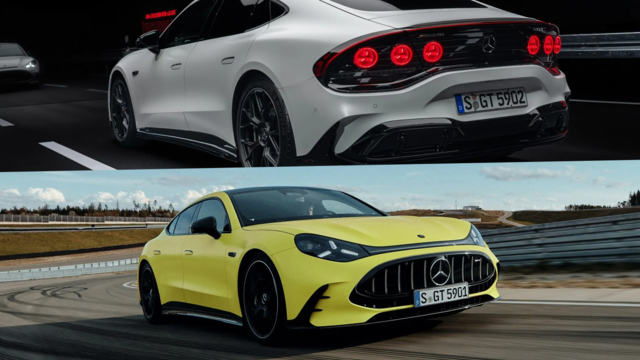
New Electric Mercedes-AMG GT 4-Door Coupe Unveiled: 10 Things You Need to Know
Verdad Gallardo
6 Mercedes Models That Did NOT Age Well (But Are Somehow Still Cool)
Verdad Gallardo
Manual Mercedes? 6 Times Sindelfingen Let Drivers Have All The Fun
Verdad Gallardo
Mercedes SLR McLaren 722 S Is Extremely Rare Example Modified by McLaren
Verdad Gallardo
8 Classic Boxy Mercedes Designs That Have Aged Like Fine Wine
Verdad Gallardo
Flawlessly Restored Mercedes 190E Evo II Heads to Auction
Verdad Gallardo
Electric Mercedes C-Class Unveiled: 11 Things You Need to Know
Verdad Gallardo
Mercedes EQS Gets A Major Update: Everything You Need to Know
Verdad Gallardo
MBWorld Fanatic!
Joined: Jan 2011
Posts: 1,747
Likes: 20
From: Central Pennsylvania
2012 S350 Bluetec 4Matic, Diamond White, P2
I use the paddle shifters often when descending a steep long grade. The transmission is designed to provide engine braking. I have never had transmission issues doing this in any vehicle I have owned. I do not subscribe to this being dangerous or harmful. It is necessary function that works as intended for driving in mountainous conditions. These cars really do not need to be babied.

Member
Joined: Sep 2011
Posts: 117
Likes: 1
From: Montgomery, Alabama
2011 E-350
I agree 100% with using the transmission to slow you down prior to braking. I grew up in the trucking business prior to joining the USAF. As a result, everything I originally learned about driving, I learned from professional truckers, including my Dad.
Today, I still drive the way I was taught in the early 60's, regardless if I'm drving an automatic or a manual transmission. Most of my cars have been manuals, simply because I like changing gears. The Vette still has the original ceramic pads I installed the weekafter I bought the car. It now has over 40,000 miles, and visual inspection shows no noticeable pad wear at all, because I use the transmission to slow the vehicle first.
I was involved in a similar thread on the Silverado forum two years ago. Some guys were saying, using the automatic to slow the truck was hard on the transmission. I use my automatic to slow my Silverado all the time. I am usuallly driving somewhat spiritedly and it helps on break wear and fade.
I used the paddle shifters to slow my wife's Ml350 when she had it and I now use the paddle shifters to slow the E350. I have always done it and will always do it, I have never had any transmission issues and have never changed break pads on any new vehicle I have ever owned. I have owned 65 vehciles and 36 of those have been new.
We did change the pads on the ML350 at about 35,000 miles beause my wife drives like Parnelli Jones and uses nothing but the brakes. (She got a speeding ticket coming home from work one afternoon, clocked at 92 mph.) She drove it 95% of the time. That was too heavy of a vehicle to drive like she did, concerning brake wear.
Today, I still drive the way I was taught in the early 60's, regardless if I'm drving an automatic or a manual transmission. Most of my cars have been manuals, simply because I like changing gears. The Vette still has the original ceramic pads I installed the weekafter I bought the car. It now has over 40,000 miles, and visual inspection shows no noticeable pad wear at all, because I use the transmission to slow the vehicle first.
I was involved in a similar thread on the Silverado forum two years ago. Some guys were saying, using the automatic to slow the truck was hard on the transmission. I use my automatic to slow my Silverado all the time. I am usuallly driving somewhat spiritedly and it helps on break wear and fade.
I used the paddle shifters to slow my wife's Ml350 when she had it and I now use the paddle shifters to slow the E350. I have always done it and will always do it, I have never had any transmission issues and have never changed break pads on any new vehicle I have ever owned. I have owned 65 vehciles and 36 of those have been new.
We did change the pads on the ML350 at about 35,000 miles beause my wife drives like Parnelli Jones and uses nothing but the brakes. (She got a speeding ticket coming home from work one afternoon, clocked at 92 mph.) She drove it 95% of the time. That was too heavy of a vehicle to drive like she did, concerning brake wear.

MBWorld Fanatic!
Joined: Dec 2009
Posts: 1,121
Likes: 12
From: Connecticut
2018 BMW 540d
Yikes,now I'm concerned.Like you most of my miles (80+%) are Interstate miles so brakes are the last thing I'd think of at 10K...20K..maybe even 50K miles.What *is* "runout" any way.Never heard of it.What are the symptoms of "runout"?
MBWorld Fanatic!
Joined: Dec 2009
Posts: 1,121
Likes: 12
From: Connecticut
2018 BMW 540d
We did change the pads on the ML350 at about 35,000 miles beause my wife drives like Parnelli Jones and uses nothing but the brakes. (She got a speeding ticket coming home from work one afternoon, clocked at 92 mph.) She drove it 95% of the time. That was too heavy of a vehicle to drive like she did, concerning brake wear.
Senior Member
Joined: Nov 2011
Posts: 333
Likes: 1
From: Sacramento, CA
E350 BT
High and low spots on the rotors, measured with a micrometer, even small amounts will cause pulsating.

 .
.

Super Member
Joined: Jun 2011
Posts: 576
Likes: 8
From: Placitas, NM
E550
Senior Member
Joined: Nov 2011
Posts: 333
Likes: 1
From: Sacramento, CA
E350 BT

Newbie
Joined: May 2012
Posts: 1
Likes: 0
From: Atlanta Georgia
2010 e550
E550 brake problem
There is definitely a problem with the E550 brakes but Mercedes so far will not admit it. My rotors were warped at 9000 miles. The dealership replaced them free of charge, however the problem reoccurred at 20,000. This time the deal ship told me that I must be riding the brakes, doing panic stops or a lot of mountain driving and refused to fix the problem. I am a very conservative driver and none of this occurred. Further more this is my third e series and I never had an issue before. I called Mercedes and while they were nice they called the dealership and then backed them up. When I told them that there had been many problems reported, they said they only go by their engineering department and not blogs. The dealership also said that both front wheels were bent and that may be a contributing factor but would not consider that the brakes overheating might have caused this as well once again accusing me of being an abusive driver. The new e550 is a very nice car but Mercedes needs to own up to this problem.
Senior Member
Joined: Nov 2011
Posts: 333
Likes: 1
From: Sacramento, CA
E350 BT
There is definitely a problem with the E550 brakes but Mercedes so far will not admit it. My rotors were warped at 9000 miles. The dealership replaced them free of charge, however the problem reoccurred at 20,000. This time the deal ship told me that I must be riding the brakes, doing panic stops or a lot of mountain driving and refused to fix the problem. I am a very conservative driver and none of this occurred. Further more this is my third e series and I never had an issue before. I called Mercedes and while they were nice they called the dealership and then backed them up. When I told them that there had been many problems reported, they said they only go by their engineering department and not blogs. The dealership also said that both front wheels were bent and that may be a contributing factor but would not consider that the brakes overheating might have caused this as well once again accusing me of being an abusive driver. The new e550 is a very nice car but Mercedes needs to own up to this problem.
Super Member
Joined: Jun 2011
Posts: 576
Likes: 8
From: Placitas, NM
E550
I, too, am a VERY conservative driver. NEVER ride the brakes --- my left foot has never left the floor since I had a stick shift in the 70s! I NEVER have panic stops, and had done some mountain driving, during which on long grades I dropped down a gear to take the load off the brakes. In other words, I absolutely do not abuse brakes --- but I don't abuse transmissions, either.
In my case of severe "pulsing" at 9100 miles with even moderate braking, the dealership did what the book tells them to do --- they measured runout on all the rotors -- .005" in front, .004" in rear. (The pads were at 10mm.) The dealer replaced all four rotors and all sets of pads. They then put 10 miles on the car testing and seating the brakes.
(They DID imply, however, that had I reached 10,000 miles, they would not had covered the repair. After some discussion, they modified that to 12,000 miles.)
I am now at 18,500 miles and things are great. Let's hope I don't have your experience at 20,000 miles!!! I have another 3,000 mile trip planned next week, which includes mountain west driving. If I end up with pulsing after that, and MB refuses warranty service, then the car goes to an independant shop for measurement, and then my attorney and MB will have a little talk. Frankly, this car has been an absolute disaster as far as reliability is concerned --- brakes, Airmatic, transmission, rear seats, IPOD connection failure.
The trick for the THEORY about the problem being deposits, not warping, is to measure the runout just outside the area where the pads lie. If you see it there, the problem is the rotor warping, not some deposit supposedly .005" thick laid down by the pads.
In my case of severe "pulsing" at 9100 miles with even moderate braking, the dealership did what the book tells them to do --- they measured runout on all the rotors -- .005" in front, .004" in rear. (The pads were at 10mm.) The dealer replaced all four rotors and all sets of pads. They then put 10 miles on the car testing and seating the brakes.
(They DID imply, however, that had I reached 10,000 miles, they would not had covered the repair. After some discussion, they modified that to 12,000 miles.)
I am now at 18,500 miles and things are great. Let's hope I don't have your experience at 20,000 miles!!! I have another 3,000 mile trip planned next week, which includes mountain west driving. If I end up with pulsing after that, and MB refuses warranty service, then the car goes to an independant shop for measurement, and then my attorney and MB will have a little talk. Frankly, this car has been an absolute disaster as far as reliability is concerned --- brakes, Airmatic, transmission, rear seats, IPOD connection failure.
The trick for the THEORY about the problem being deposits, not warping, is to measure the runout just outside the area where the pads lie. If you see it there, the problem is the rotor warping, not some deposit supposedly .005" thick laid down by the pads.

Member
Joined: Apr 2010
Posts: 77
Likes: 0
From: Los Angeles
2010 E550 Sedan Sport
Had my rotors changed due to pulsating (34k miles). They didn't cover it. They did cover a leak (rear differential) under warranty at the same time. I brought up this thread and related reports, but with my mileage and SD modded height, i didnt push too hard since they're still honoring my warranty. $600 and change for pads/rotors/labor at my dealer fyi.
My commute is 40 mins to an hour (each way) of stop and go traffic. (L.A.)
My commute is 40 mins to an hour (each way) of stop and go traffic. (L.A.)

Junior Member
Joined: May 2010
Posts: 20
Likes: 0
E550 4Matic 2011
The pulsating brakes have been the only real problem with my E550. Started at about 8k miles - I went to the dealer with about 15k but they would not replace under warranty. Now I have 31k miles and the pulsating upon stopping is awful. For such an expensive car they should take care of something like this under warranty.

MBWorld Fanatic!
Joined: Jun 2009
Posts: 1,300
Likes: 127
2020 G63, 2021 E450 All-Terrain Wagon
The pulsating brakes have been the only real problem with my E550. Started at about 8k miles - I went to the dealer with about 15k but they would not replace under warranty. Now I have 31k miles and the pulsating upon stopping is awful. For such an expensive car they should take care of something like this under warranty.


MBWorld Fanatic!
Joined: Nov 2001
Posts: 5,640
Likes: 11
From: GMT -8 hours
Mercedes-Benz
transmissions get damaged by heat. Downshifting often to slow the car down cause heat buildup. The Energy gets transferred somewhere... in this case it is channeled through the transmission in the form of heat. It breaks down the fluid and will cause damage.
Super Member
Joined: Jun 2011
Posts: 576
Likes: 8
From: Placitas, NM
E550
The pulsating brakes have been the only real problem with my E550. Started at about 8k miles - I went to the dealer with about 15k but they would not replace under warranty. Now I have 31k miles and the pulsating upon stopping is awful. For such an expensive car they should take care of something like this under warranty.
If I were MB, I'd be really worried about huge lawsuits for injury in cars with pulsing brakes in an accident caused by insufficient braking.
Senior Member
Joined: Mar 2011
Posts: 352
Likes: 5
From: Toronto
2011 E550 4Matic & 2010 Audi Q5 & 2015 C63 507
Don't always believe that your wheels are warpped as you could have the tires out of round creating the illusion of wrapped wheels. I had this situation occurred to me with the factory Continentals all-seasons.


