



Does Everyone put 91+ octane in your E Class?

Out Of Control!!
Joined: Jun 2008
Posts: 10,557
Likes: 24
From: Earth
Porsche Macan S SportDesign / Ex M-B's: 11 & 10 & 06 E350's, 02 S500
I never get these threads. The differential between regular and premium here is 20 cents. It's been 20 cents whether regular was 2 or 4 bucks a gallon. When the price of regular goes up then people come on line and start asking these questions. It would actually make more sense to cheap out when the price was low as it represents a higher percentage of the fuel cost.
MBWorld Fanatic!


Joined: Oct 2010
Posts: 5,142
Likes: 1,295
From: Southern US
2010 E550, 273 Engine: 2012 S550, 278 Engine
South Carolina has 87, 89 and 93 octane gasoline. I use 93 and always will, even though the price differential is increasing. Used to be 20 cents more than 87, but now is as much as 45 cents more sometimes.
Apparently, it costs more to refine premium, more to ship it via pipelines and distributors charge more to transport it in trucks. Anyway, that's their story.
Using less than 91 lowers your fuel efficiency and your performance.
BTW, can get non-ethanol premium in my area, but very expensive and only from indpendent stations.
Apparently, it costs more to refine premium, more to ship it via pipelines and distributors charge more to transport it in trucks. Anyway, that's their story.
Using less than 91 lowers your fuel efficiency and your performance.
BTW, can get non-ethanol premium in my area, but very expensive and only from indpendent stations.
20 cents should it be the difference like it used to be but as it has doubled and this is just an add-on price hike by the seller. As long as people buy it they will charge for it.
MBWorld Fanatic!
Joined: Oct 2010
Posts: 5,142
Likes: 1,295
From: Southern US
2010 E550, 273 Engine: 2012 S550, 278 Engine
...
I think I may try 87 after watching this segment on octane fuel differences. That's hundreds of $$$ a year
Premium gas vs. regular: What's really better for your car? (CBC Marketplace) - YouTube
I think I may try 87 after watching this segment on octane fuel differences. That's hundreds of $$$ a year
Premium gas vs. regular: What's really better for your car? (CBC Marketplace) - YouTube
Your gain will be minimal or nothing at all. You will lose gas mileage at about the same rate as the price difference. You will notice your car also a bit sluggish with lower octane fuel.
But, by all means, try it and let us know how it goes. Fill it up with 87 and then record the miles you drive and how much you fill up next time. Don't trust the car computer MPG value, calculate it.
I did try once with my Audi Q7 that I had and it was not a good experience for performance nor the fuel economy.

Member

Joined: Jan 2015
Posts: 151
Likes: 25
From: Connecticut
2010 E550
If you can afford a Mercedes you can probably afford to flush $10 down the toilet every week, that doesn't mean it's a good idea. Being a numbers guy, last year I only put 87 in, and this year I'm putting the highest octane available when I fill up. I record all the details about my fill ups and will compare if my average fuel economy changed from one year to the next. Looking at the timing in Torque (Android application connecting over Bluetooth dongle plugged into ODB II port), I don't see and difference under full throttle with premium or regular; it's not being retarded when running 87. To each his own, I guess we can be thankful people aren't this passionate about the brand of brake or power steering fluid they put in the car!

MBWorld Fanatic!


Joined: Nov 2009
Posts: 2,616
Likes: 160
From: Southeastern USA
2010 E350 Luxury Sedan, Engine 272 (V6)
Maybe, maybe not
It does not cost more to refine premium. All gas is the same at the starting point after refining. The difference is in the amount od other ingredients they need to add for the octane boost. There is no other difference and it does not cost any extra to pump or otherwise transport it.
20 cents should it be the difference like it used to be but as it has doubled and this is just an add-on price hike by the seller. As long as people buy it they will charge for it.
20 cents should it be the difference like it used to be but as it has doubled and this is just an add-on price hike by the seller. As long as people buy it they will charge for it.
When does it go from 87 octane to 91/93? At the refinery before entering the pipeline?
The distributors charge more because they deliver a lot more regular gas than premium so they can average out the labor/trucking costs lower for regular.
Regardless, the point is that if you have a car that requires premium, use premium. Or else, get something else.
If MB's could get by on regular, they would market them that way because it would be a huge marketing advantage.
Member
Joined: Feb 2015
Posts: 110
Likes: 3
From: USA
11' E350 PP SP
 The Bottom Line-Octane=Anti-Knock
Both Arrie and El-Cid are right: Octane is actually a inhibitor and must be mixed with additives, primarily heptane or a derivative to create a Octane Level. Octane level is required to reduce knock (that is why higher is better than lower) based on Gas engines introducing fuel into the combustion process (intake) prior to entering the combustion chamber and Diesel is introduced directly into the chamber, both create some knock, but Diesel's have more knock. Diesels really do not use Spark Plugs per-se, but use glow plugs or other type element to heat the chamber so that when fuel is introduced it burns faster to reduce knock, and that is why knock is bad in a Gas engine and normal for a Diesel to some degree. Engine manufacturers have tried numerous ways to introduce Diesel into the combustion chamber over the years-but combustion of non-additive fuel has been challenging.
Read this about Octane:
http://www.eejitsguides.com/environm...e-summary.html
Read this to learn the difference in Combustion engines:
http://auto.howstuffworks.com/diesel.htm
Read this about Octane:
http://www.eejitsguides.com/environm...e-summary.html
Read this to learn the difference in Combustion engines:
http://auto.howstuffworks.com/diesel.htm
Last edited by aaacsdai; Aug 29, 2015 at 06:56 PM.
MB World Stories
The Best of Mercedes & AMG

7 Craziest Things AMG Gas Ever Built
Verdad Gallardo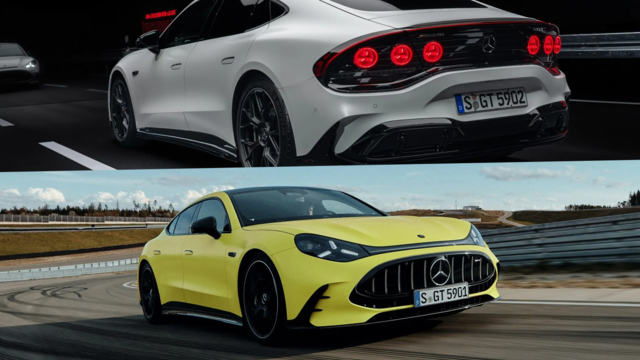
New Electric Mercedes-AMG GT 4-Door Coupe Unveiled: 10 Things You Need to Know
Verdad Gallardo
6 Mercedes Models That Did NOT Age Well (But Are Somehow Still Cool)
Verdad Gallardo
Manual Mercedes? 6 Times Sindelfingen Let Drivers Have All The Fun
Verdad Gallardo
Mercedes SLR McLaren 722 S Is Extremely Rare Example Modified by McLaren
Verdad Gallardo
8 Classic Boxy Mercedes Designs That Have Aged Like Fine Wine
Verdad Gallardo
Flawlessly Restored Mercedes 190E Evo II Heads to Auction
Verdad Gallardo
Electric Mercedes C-Class Unveiled: 11 Things You Need to Know
Verdad Gallardo
Mercedes EQS Gets A Major Update: Everything You Need to Know
Verdad Gallardo

Junior Member
Joined: May 2014
Posts: 45
Likes: 2
From: Novato,Ca
2011 Mercedes Benz E550
You can only get 91 in Ca.unless you go to a race track and buy gas,I live near Sears Point/Sonoma raceway and I could put 99 96,93,91 if I wanted to pay extra,I use good old 91 and car seems fine,I get 26-27 mpg on highway
MBWorld Fanatic!
Joined: Oct 2010
Posts: 5,142
Likes: 1,295
From: Southern US
2010 E550, 273 Engine: 2012 S550, 278 Engine
Both Arrie and El-Cid are right: Octane is actually a inhibitor and must be mixed with additives, primarily heptane or a derivative to create a Octane Level. Octane level is required to reduce knock (that is why higher is better than lower) based on Gas engines introducing fuel into the combustion process (intake) prior to entering the combustion chamber and Diesel is introduced directly into the chamber, both create some knock, but Diesel's have more knock. Diesels really do not use Spark Plugs per-se, but use glow plugs or other type element to heat the chamber so that when fuel is introduced it burns faster to reduce knock, and that is why knock is bad in a Gas engine and normal for a Diesel to some degree. Engine manufacturers have tried numerous ways to introduce Diesel into the combustion chamber over the years-but combustion of non-additive fuel has been challenging.
Read this about Octane:
http://www.eejitsguides.com/environm...e-summary.html
Read this to learn the difference in Combustion engines:
http://auto.howstuffworks.com/diesel.htm
Read this about Octane:
http://www.eejitsguides.com/environm...e-summary.html
Read this to learn the difference in Combustion engines:
http://auto.howstuffworks.com/diesel.htm
Diesel does not use glow plugs other than for starting it up. Timing for ignition is done by the timing of the fuel spray in the pressurized cylinder, i.e. diesel is a direct injection engine and the fuel is sprayed in the cylinder after the air is already fully compressed or almost fully compressed. Diesel ignites the fuel by the pressure and the temperature from the compressed air. This is why the fuel cannot be mixed in the air intake as the ignition of the fuel could not be precisely controlled. It can only be controlled by injecting it in the cylinder at the correct moment.

MBWorld Fanatic!
Joined: Aug 2013
Posts: 1,365
Likes: 61
2006 E320 CDI 2014 C63 507 Coupe 2012 E550 4M 2016 E63s Wagon
My Benz get filled up with 93. Pumps where I live are usually 87 89 93. One station I rarely use has 87 89 91 93 so I may use the 91 there since it's usually more expensive there in general.
93 is $0.30 more than 87. I rarely put 20 gal in, and maybe fill up twice a month so no more than $12/month extra.
I put 87 and occasionally (every 4th tank) 89 in my truck.
93 is $0.30 more than 87. I rarely put 20 gal in, and maybe fill up twice a month so no more than $12/month extra.
I put 87 and occasionally (every 4th tank) 89 in my truck.

MBWorld Fanatic!
Joined: Jun 2015
Posts: 1,523
Likes: 85
From: New Jersey
2010 E550 P2 w/AMG Sport Package + Pano, 2015 Nissan Pathfinder
I considered myself on the frugal end and 87 to 93 is about a 50 cent difference here in Jersey. It's such a small amount though, that I don't even consider 87 at all. However, I'll never be that guy to tell you what you should do with your money even if you drive a 100k vehicle. Do whatever you want since it is "YOURS".
Member
Joined: Feb 2015
Posts: 110
Likes: 3
From: USA
11' E350 PP SP
Back or Forward in the day
Liveoak you forgot to mention the high-tech Dwell-Tach, other than that my match book cover came in handy for adjusting the points. Going from Flagstaff down to Winslow or Needles was a pinging experience IMO, use to drive from OK on 40 to 55 and 405 a lot to visit mom in CA. K-A is right about today or forward-the ECU does a lot with multiple fuels IMO, and you do not need a matchbook anymore you need a costly aftermarket ECU kit for advanced tuning, which IMO basically does what a lot of us liked to do back in the day.
Junior Member
Joined: Sep 2015
Posts: 30
Likes: 0
From: Seattle, WA
2010 E500 4Matic
My Benz get filled up with 93. Pumps where I live are usually 87 89 93. One station I rarely use has 87 89 91 93 so I may use the 91 there since it's usually more expensive there in general.
93 is $0.30 more than 87. I rarely put 20 gal in, and maybe fill up twice a month so no more than $12/month extra.
I put 87 and occasionally (every 4th tank) 89 in my truck.
93 is $0.30 more than 87. I rarely put 20 gal in, and maybe fill up twice a month so no more than $12/month extra.
I put 87 and occasionally (every 4th tank) 89 in my truck.
Seen a few specialty gas stations that sell up to 119 octane


MBWorld Fanatic!
Joined: Oct 2010
Posts: 5,142
Likes: 1,295
From: Southern US
2010 E550, 273 Engine: 2012 S550, 278 Engine
If you can afford a Mercedes you can probably afford to flush $10 down the toilet every week, that doesn't mean it's a good idea. Being a numbers guy, last tyear I only put 87 in, and this year I'm putting the highest octane available when I fill up. I record all the details about my fill ups and will compare if my average fuel economy changed from one year to the next. Looking at the timing in Torque (Android application connecting over Bluetooth dongle plugged into ODB II port), I don't see and difference under full throttle with premium or regular; it's not being retarded when running 87. To each his own, I guess we can be thankful people aren't this passionate about the brand of brake or power steering fluid they put in the car!
Are you sure the premium fuel you pump in your tank really is premium fuel?
I have noticed many times that some "premium" fuel clearly does not deliver the performance as some other fuel. I seriously believe some gas stations cheat with this as there is no way for a regular consumer to know the octane values of the fuels and all new cars can use any of them.

Member
Joined: Apr 2011
Posts: 99
Likes: 7
From: Bradenton, FL
'12 E550 4M, '14 ML5504M
I was looking for a post I wrote some time ago on this, but this was the gist of it... Octane is an indirect measure of how fast fuel burns. If there is a minimum octane rating, it's because the engine was designed with a burn rate in mind, which is reflected in the timing of the engine, or the time it takes for the engine to extract all the energy from the burning fuel. Very fast or uncontrolled burning of the fuel is considered, "detonation" or, "knock", which is why octane ratings are also called anti knock ratings or similar. If equipped, an engine will change the timing to prevent detonation, which has the related effect of lowering its peak output. Unfortunately it doesn't work the other way; adding a higher octane fuel will not give more power, only ensure the engine can produce its peak output.
So using lower octane than 91 will not harm the w212, but it will not produce full power. Hope this helps.
So using lower octane than 91 will not harm the w212, but it will not produce full power. Hope this helps.
MBWorld Fanatic!
Joined: Oct 2010
Posts: 5,142
Likes: 1,295
From: Southern US
2010 E550, 273 Engine: 2012 S550, 278 Engine
I was looking for a post I wrote some time ago on this, but this was the gist of it... Octane is an indirect measure of how fast fuel burns. If there is a minimum octane rating, it's because the engine was designed with a burn rate in mind, which is reflected in the timing of the engine, or the time it takes for the engine to extract all the energy from the burning fuel. Very fast or uncontrolled burning of the fuel is considered, "detonation" or, "knock", which is why octane ratings are also called anti knock ratings or similar. If equipped, an engine will change the timing to prevent detonation, which has the related effect of lowering its peak output. Unfortunately it doesn't work the other way; adding a higher octane fuel will not give more power, only ensure the engine can produce its peak output.
So using lower octane than 91 will not harm the w212, but it will not produce full power. Hope this helps.
So using lower octane than 91 will not harm the w212, but it will not produce full power. Hope this helps.
My opinion in this is a little different and who know better then comment on this.
In my understanding all gasoline regardless of the octane rating burn at the same rate under the same conditions. The difference with the octane rating is that the higher rating means the fuel-air mixture under high pressure and temperature inside the cylinder will not "self detonate" before the spark comes in.
The key to get high power from the engine, other than very high rpm, is to get the max force on top of the piston. This is done by compression ratio, i.e. compressing the air-fuel mixture to the fullest before it is ignited by the spark plug. If fuel octane rating is too low it will ignite (self detonate) from the heat that compression of the air and the hot cylinder bring and cause premature ignition. This is called knocking.
So, in my understanding octane rating is NOT about how fast fuel burns, it is about what pressure and heat the fuel can take before self detonation to allow precise ignition control via the spark in the plug.


