



Greetings and first question

Thread Starter
Junior Member

Joined: Sep 2019
Posts: 29
Likes: 3
Gl450
Greetings and first question
Hello everyone. New owner of a 2012 GL450. Loving this beast of a car! First question, manual says only 91 octane or better, but fellow Mercedes smaller suv owner says you don't have to and it will run just fine. Thoughts?

Out Of Control!!


Joined: Sep 2018
Posts: 14,711
Likes: 4,603
From: unbegrenzt
2017 GLE350 4MATIC
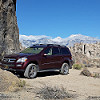
Welcome! Please post a photo of the GL.
German vehicles are developed in a land where 95 Euro octane / 91 US octane is the norm. Using the manufacturer's recommended fuel helps achieve manufacturer's warranted performance. Using lower octane fuel is the choice of the operator. I suggest following M-B's recommendations.
German vehicles are developed in a land where 95 Euro octane / 91 US octane is the norm. Using the manufacturer's recommended fuel helps achieve manufacturer's warranted performance. Using lower octane fuel is the choice of the operator. I suggest following M-B's recommendations.

MBWorld Fanatic!


Joined: Jan 2010
Posts: 3,128
Likes: 792
NGL450 w/EORP, S550
Have you had this change accommodated using an MB STAR/DAS tool?
There's a largely unadvertised option for running 87 octane within the engine management menu for those customers living in areas where premium is not available - it just sets a max conservative ignition map for use with lower than 91 octane fuel; lowering the risk of detonation.
Pre-detonation is very bad for our all-aluminium engines.
Max
There's a largely unadvertised option for running 87 octane within the engine management menu for those customers living in areas where premium is not available - it just sets a max conservative ignition map for use with lower than 91 octane fuel; lowering the risk of detonation.
Pre-detonation is very bad for our all-aluminium engines.
Max
Last edited by Max Blast; Sep 29, 2019 at 09:29 PM. Reason: add info

MBWorld Fanatic!

Joined: Sep 2005
Posts: 6,194
Likes: 242
From: Albuquerque
'10 CL550, '12 GL550
Mpg is reduced as ignition is retarded. So is power.
one should be proud to own a super efficient engine, that is an engine with high compression that maximizes simultaneously both power and efficiency.
TINSTAAFL
one should be proud to own a super efficient engine, that is an engine with high compression that maximizes simultaneously both power and efficiency.
TINSTAAFL

MBWorld Fanatic!
Joined: May 2015
Posts: 1,932
Likes: 291
From: Allentown, PA
'08 GL 320 CDI
Took me right back to my 12th grade Economics class in 1990! 
I've been using 87 octane in my BMW (same basic recommendations as MB) for the last 10 fillups. I have noticed zero effects on power and mpg - and I keep very accurate, recorded data on my mpg. I was skeptical, at first, but now I don't even hesitate and all my fillups are 87. Personally, I wouldn't do this with a low mileage car, but I think it's a safe bet that as the cars get older, the compression drops a bit. Can't say for sure as my BMW still seems to have the same get up and go - according to my 0-60 times vs published 0-60 times - but I'm satisfied with the 87.
I've been using 87 octane in my BMW (same basic recommendations as MB) for the last 10 fillups. I have noticed zero effects on power and mpg - and I keep very accurate, recorded data on my mpg. I was skeptical, at first, but now I don't even hesitate and all my fillups are 87. Personally, I wouldn't do this with a low mileage car, but I think it's a safe bet that as the cars get older, the compression drops a bit. Can't say for sure as my BMW still seems to have the same get up and go - according to my 0-60 times vs published 0-60 times - but I'm satisfied with the 87.

Senior Member
Joined: Jan 2017
Posts: 254
Likes: 60
From: Houston, TX
Mercedes Benz 2007 GL450 , 2012 BMW 528i
In March 2019, I drove from Houston to Sacramento, CA and drove back. I used 87 while going there and 91 on my way back. It was about 1930 miles each way
My GL had 91K miles at that time.
I calculated the mileage and it dropped about 4 mpg with 87. It was 22mpg on 91 and 18mpg on 87. I didn't notice much difference in power or handling.
so my personal result- 87 gives low mileage than 91.
My GL had 91K miles at that time.
I calculated the mileage and it dropped about 4 mpg with 87. It was 22mpg on 91 and 18mpg on 87. I didn't notice much difference in power or handling.
so my personal result- 87 gives low mileage than 91.
Trending Topics

MBWorld Fanatic!
Joined: Aug 2003
Posts: 8,882
Likes: 1,214
From: In my garage
E55, GLS450, GL63, GLE350
I've suffered no noticeable difference in MPG's and that's an average over many tens of thousands of miles. Just started using 87 around the time gas was spiking above $4/gallon and never went back. Now, if you tow or drive very aggressively, I recommend you stick with premium.
MB World Stories
The Best of Mercedes & AMG

Dubai Tuner Gives the Mercedes G-Class An Entirely New Look
Verdad Gallardo
Six Gift Ideas Your AMG Loving Dad or Grad Will Cherish

7 Craziest Things AMG Gas Ever Built
Verdad Gallardo
New Electric Mercedes-AMG GT 4-Door Coupe Unveiled: 10 Things You Need to Know
Verdad Gallardo
6 Mercedes Models That Did NOT Age Well (But Are Somehow Still Cool)
Verdad Gallardo
Manual Mercedes? 6 Times Sindelfingen Let Drivers Have All The Fun
Verdad Gallardo
Mercedes SLR McLaren 722 S Is Extremely Rare Example Modified by McLaren
Verdad Gallardo
8 Classic Boxy Mercedes Designs That Have Aged Like Fine Wine
Verdad Gallardo
Flawlessly Restored Mercedes 190E Evo II Heads to Auction
Verdad Gallardo
Super Member
Joined: Apr 2004
Posts: 625
Likes: 82
From: Germantown, MD
'07 GL450
In March 2019, I drove from Houston to Sacramento, CA and drove back. I used 87 while going there and 91 on my way back. It was about 1930 miles each way
My GL had 91K miles at that time.
I calculated the mileage and it dropped about 4 mpg with 87. It was 22mpg on 91 and 18mpg on 87. I didn't notice much difference in power or handling.
so my personal result- 87 gives low mileage than 91.
My GL had 91K miles at that time.
I calculated the mileage and it dropped about 4 mpg with 87. It was 22mpg on 91 and 18mpg on 87. I didn't notice much difference in power or handling.
so my personal result- 87 gives low mileage than 91.
Based on current fuel prices in the Washington, DC suburbs, the fuel cost difference for both one-way trips is approximately US$3.83. It would seem that, by going with the lower octane, the cost savings are negligible.
The math (numbers rounded off):
- High octane, $3.29/gallon (less fuel, higher price per gallon)
- 1930 / 22 mpg = 88 gallons of fuel consumed
- 88 * $3.29 = $289.52 in fuel charges
- Low octane, $2.67/gallon (more fuel, lower price per gallon)
- 1930 / 18 mpg = 107 gallons of fuel consumed
- 107 * $2.67 = $285.69 in fuel charges
And an extra stop to refuel (107 - 88 = 19 ==> one more tank of fuel).
Personally, I'd stick to the manufacturer specification. Not sure how this would work out for city driving, but I'd suspect it's not that far off.
Just sayin'....
Last edited by Miguk_Saram; Sep 30, 2019 at 08:38 AM.

Member
Joined: Jan 2019
Posts: 83
Likes: 36
From: Central NY State
2010 GL550
I think the biggest takeaway is that mechanically, the chances of it being catastrophic to the vehicle to use regular, is very slim. As for the mileage, run through a couple tanks of each, and see how you fare and go from there.

MBWorld Fanatic!
Joined: Jun 2010
Posts: 2,778
Likes: 641
From: Emmett, ID, USA
2007 GL450
Not discounting any math or other experiences. However, the cost savings are only negligible if you're experiencing a drop in MPG between them. I don't compare octanes unless I know I'm taking the same exact routes and road conditions. Sometimes, just different directions can affect MPG. I have a 3 hour drive that I make each weekend for example, and there's a 2 mpg difference between direction, even at the same speeds via cruise control. And when I went west and south this summer, it was a noticeable difference in mileage going down than coming back up home. In my experience, I've had virtually no difference in MPG between 87 and 91/93 octane fuels. And in some stations around here, there can be up to an 80 cent difference from regular to premium. Couple that with a 25 gallon fill-up, and you're at a $20 dollar difference per tank. Using your figures above, rounding to 4 tanks of gas per trip, and now it's closer to a $100 difference, not $4. I'm not arguing real world numbers from other people, but not everyone's experiences are the same either.
I think the biggest takeaway is that mechanically, the chances of it being catastrophic to the vehicle to use regular, is very slim. As for the mileage, run through a couple tanks of each, and see how you fare and go from there.
I think the biggest takeaway is that mechanically, the chances of it being catastrophic to the vehicle to use regular, is very slim. As for the mileage, run through a couple tanks of each, and see how you fare and go from there.
I did my own 1,000 mile test. I accumulated the miles and fuel cost (and price, therefore quantity). I paid attention to whether long trips were involved (there weren't any), and also whether there were significant differences in weather, and tried to make the gasoline source consistent. This was in summer in San Diego, when the weather is very consistent.
Results? Mileage with 89 octane was slightly higher than with 93. This implies the knock sensors were not retarding the ignition timing - so there was no knocking on 89 octane gas.
I've now gone about 130k miles on 89 octane. That would be a fuel cost savings of about $1,300.
(Math: 130k / 20 mpg = 6500 gallons; x$0.20 / gal = $1,300)
That's $130 a year, which buys a lot of coke and hookers. Not really.
MBWorld Fanatic!
Joined: Jun 2010
Posts: 2,778
Likes: 641
From: Emmett, ID, USA
2007 GL450
I think it's out on I-10 there are massive wind farms. Ugly as sin, but that's not the point. The windmills are all facing west.


