





To STP

Thread Starter
MBWorld Fanatic!
Joined: Oct 2009
Posts: 2,071
Likes: 20
Nissan GT-R BE / '12 Ducati-1199 Panigale S / '12 C300-4M Loaded/GLK350-4M Loaded
To STP

How are you guys going to address the carbon build-up on Direct Injected Engines, especially in the new Mercedes 3.5L for 2012? Your products will have absolutely no effect on these engines. In fact they'll be a total waste of money.
An example of a Direct Injected engine's intake valves at only 28,000 miles.
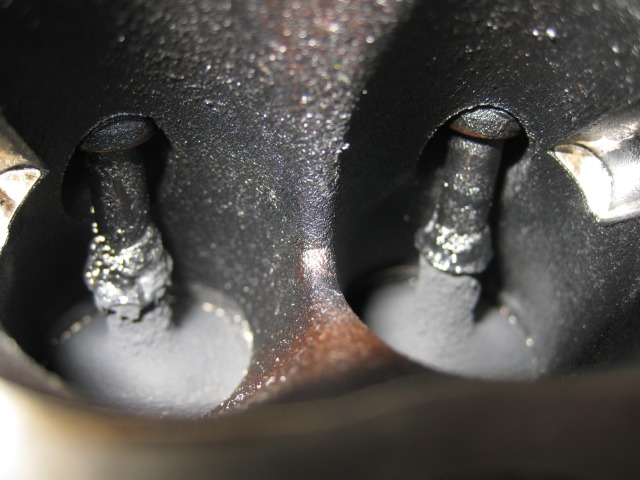
Please note the severe carbon build-up. STP products, nor anyone else's will ever clean these valves...ever!
Unlike port fuel injected engines, direct injection never touches or bathes the intake valves, thus it's impossible for your cleaners and detergents to ever clean them. Direct Injected engines deliver their fuel inside the combustion chamber.
Here's an illustration of a DI engine. Please note that the fuel injector is inside the combustion chamber. The fuel never touches the valves to clean them.

And here's an illustration of a Port Fuel Injected car (Like our current 2010-2011 GLK's) Please note that the fuel injector sprays the fuel inside the port, before the valve, thus cleaning it.)

Because DI engines deliver better fuel economy, lower emissions and more power, you'll soon be seeing this technology on every internal combustion engine made, not only on VW's, Audi's, Mercedes Benz, BMW, Toyota/Lexus, Honda/Acura, Ford etc.
So the question is, what will you do? Lie that your fuel injection cleaner will still "clean your engine's intake system"?
 Sure it will help clean the injectors themselves, but injectors today are made so well they rarely, if ever, need cleaning. Most high octane gasolines of today have enough cleaners to take of them.
Last edited by MBRedux; May 7, 2011 at 10:29 AM.

Super Member

Joined: Oct 2009
Posts: 887
Likes: 6
From: Northern New Jersey
2010 GLK Black, Premium 1, Lighting, Multimedia, Appearance and Media Pkg, 2012 Corvette Grand Sport
It is interesting to see that STP replied to your email. Well maybe not.
https://mbworld.org/forums/misc.php?...61&prx_t=54150
Or maybe it had to do with timing.
So the bottle is smaller and more concentrated! Same cleaning power though.
Its ergonomic! And a tapered neck, wonder why they didn't think of that before now?
Smaller foot print, easier to store, less plastic.
But the question still is...........well maybe they will get around to answering that sometime
https://mbworld.org/forums/misc.php?...61&prx_t=54150
Or maybe it had to do with timing.
So the bottle is smaller and more concentrated! Same cleaning power though.
Its ergonomic! And a tapered neck, wonder why they didn't think of that before now?
Smaller foot print, easier to store, less plastic.
But the question still is...........well maybe they will get around to answering that sometime
Thread Starter
MBWorld Fanatic!
Joined: Oct 2009
Posts: 2,071
Likes: 20
Nissan GT-R BE / '12 Ducati-1199 Panigale S / '12 C300-4M Loaded/GLK350-4M Loaded
It is interesting to see that STP replied to your email. Well maybe not.
https://mbworld.org/forums/misc.php?...61&prx_t=54150
Or maybe it had to do with timing.
So the bottle is smaller and more concentrated! Same cleaning power though.
Its ergonomic! And a tapered neck, wonder why they didn't think of that before now?
Smaller foot print, easier to store, less plastic.
But the question still is...........well maybe they will get around to answering that sometime
https://mbworld.org/forums/misc.php?...61&prx_t=54150
Or maybe it had to do with timing.
So the bottle is smaller and more concentrated! Same cleaning power though.
Its ergonomic! And a tapered neck, wonder why they didn't think of that before now?
Smaller foot print, easier to store, less plastic.
But the question still is...........well maybe they will get around to answering that sometime
Our 2009.5 - 2011 GLK's have port fuel injection and will benifit some from their products. I prefer to allow the cleaners that are already provided in the high octane fuels we buy (at high cost) do their magic. These after-market cleaners are a waste of money.
But if I had to use one, it would be Chevron/Techron FI cleaner.

Trending Topics
Thread Starter
MBWorld Fanatic!
Joined: Oct 2009
Posts: 2,071
Likes: 20
Nissan GT-R BE / '12 Ducati-1199 Panigale S / '12 C300-4M Loaded/GLK350-4M Loaded
MB World Stories
The Best of Mercedes & AMG

Dubai Tuner Gives the Mercedes G-Class An Entirely New Look
Verdad Gallardo
Six Gift Ideas Your AMG Loving Dad or Grad Will Cherish

7 Craziest Things AMG Gas Ever Built
Verdad Gallardo
New Electric Mercedes-AMG GT 4-Door Coupe Unveiled: 10 Things You Need to Know
Verdad Gallardo
6 Mercedes Models That Did NOT Age Well (But Are Somehow Still Cool)
Verdad Gallardo
Manual Mercedes? 6 Times Sindelfingen Let Drivers Have All The Fun
Verdad Gallardo
Mercedes SLR McLaren 722 S Is Extremely Rare Example Modified by McLaren
Verdad Gallardo
8 Classic Boxy Mercedes Designs That Have Aged Like Fine Wine
Verdad Gallardo
Flawlessly Restored Mercedes 190E Evo II Heads to Auction
Verdad Gallardo
Super Member


Joined: Jan 2009
Posts: 596
Likes: 37
From: Savannah, GA
2021 G63
i guess it doesn't matter for 2012, this says the GLK is not getting the new 3.5 engine??
https://mbworld.org/mercedes_benz_ne...ynews.php#more
https://mbworld.org/mercedes_benz_ne...ynews.php#more

Member
Joined: Jun 2017
Posts: 84
Likes: 8
2013 benz c250
Could someone provide instructions on how to remove the carbon build up from the intake valves using CRC intake cleaner? My 2013 C250 W204 has a turbo on it and I want to be able to spray the cleaner onto the throttle body, turbo blades and intake valve to remove the carbon build up. My car already has 40K miles on it and I want to address this issue before the carbon build up gets out of hand. Would like to avoid needing to remove the manifold just to get to the intake valves to clean them .I can't figure out where to spray the cleaner in, from?
There's too many hoses routed around the engine.
Any help on this, with pictures or video would be appreciated.
Thanks.
B.
There's too many hoses routed around the engine.
Any help on this, with pictures or video would be appreciated.
Thanks.
B.


Joined: Nov 2016
Posts: 7,847
Likes: 3,499
From: Maryland
2015 SL400 (M276 Turbo), 2014 C350 Sport (M276 NA), 2004 SL500 (M113), 2004 Audi TT225 (BEA)
Just follow the directions on the CRC can. I used it on my M276 3.5L engine with approximately 60,000 miles on it. When I started to change my plugs and removed the intake plenum, I checked the valves and noticed the were carboned up a bit. I was unable to do the change then (needed to get a precision torque wrench) and put the intake back on. In the mean time, I did both the CRC treatment and a couple of days later, I did a treatment with Seafoam. When I went back in to change the plugs, I noticed that the worse of the carbon was gone. I’ll now probably do a treatment ever other oil change (5000 mile intervals).
If you have the 1.8t, I would also install an oil catch can.
If you have the 1.8t, I would also install an oil catch can.
Joined: Nov 2016
Posts: 7,847
Likes: 3,499
From: Maryland
2015 SL400 (M276 Turbo), 2014 C350 Sport (M276 NA), 2004 SL500 (M113), 2004 Audi TT225 (BEA)
Old question, but yes. Injecting the cleaner through the intake, either before or after the throttle body, is just about the only way to chemically clean the valves on a GDI engine. (See my post above.)

Member
Joined: Sep 2019
Posts: 86
Likes: 7
2010 GLK350 4Matic
Great advice. There are a few cleaners that actually do something when introduced into the air intake manifold, the one I have always used was Sea Foam. Shame the valves do not enjoy being cleaned by the fuel flow, as then Lucas Fuel Injector cleaner would be my choice.
Member
Joined: Sep 2019
Posts: 86
Likes: 7
2010 GLK350 4Matic
How are you guys going to address the carbon build-up on Direct Injected Engines, especially in the new Mercedes 3.5L for 2012? Your products will have absolutely no effect on these engines. In fact they'll be a total waste of money.
An example of a Direct Injected engine's intake valves at only 28,000 miles.
Please note the severe carbon build-up. STP products, nor anyone else's will ever clean these valves...ever!
Unlike port fuel injected engines, direct injection never touches or bathes the intake valves, thus it's impossible for your cleaners and detergents to ever clean them. Direct Injected engines deliver their fuel inside the combustion chamber.
Here's an illustration of a DI engine. Please note that the fuel injector is inside the combustion chamber. The fuel never touches the valves to clean them.
And here's an illustration of a Port Fuel Injected car (Like our current 2010-2011 GLK's) Please note that the fuel injector sprays the fuel inside the port, before the valve, thus cleaning it.)
Because DI engines deliver better fuel economy, lower emissions and more power, you'll soon be seeing this technology on every internal combustion engine made, not only on VW's, Audi's, Mercedes Benz, BMW, Toyota/Lexus, Honda/Acura, Ford etc.
So the question is, what will you do? Lie that your fuel injection cleaner will still "clean your engine's intake system"?
Sure it will help clean the injectors themselves, but injectors today are made so well they rarely, if ever, need cleaning. Most high octane gasolines of today have enough cleaners to take of them. Some auto manufactures will make mention of any additives they will endorse use in their vehicle that will not void the warranty. I could be mistaken but I never have noticed STP as being an approved additive.
Last edited by Travelness; Sep 12, 2019 at 04:07 PM. Reason: spellcheck
Member
Joined: Sep 2019
Posts: 86
Likes: 7
2010 GLK350 4Matic


