



Can GLK250 Bluetec fit a donut spare in the well?

Senior Member
Joined: Feb 2013
Posts: 375
Likes: 18
From: Michigan
2014 GLK250BT, Polar White; 2016 GLE 300d, Polar White
Read tread https://mbworld.org/forums/glk-class...n-flats-2.html

Thread Starter
Senior Member
Joined: May 2013
Posts: 356
Likes: 33
From: NYC
glk
I am not ( yet ) with GLK250, just did a test drive last week. There is no "tire well" in the trunk. The trunk area is not big and under the trunk floor cover there is small space with a collapsible shopping crate. Under the second floor cover just a fuse box and a AdBlue tank lid. This AdBlue tank takes place of the spare tire.
Read tread https://mbworld.org/forums/glk-class...n-flats-2.html
Read tread https://mbworld.org/forums/glk-class...n-flats-2.html
In some places, the diesel costs more than gas which eats into the savings too.
the only reason to buy the 250 is fuel savings right?
Senior Member
Joined: Feb 2013
Posts: 375
Likes: 18
From: Michigan
2014 GLK250BT, Polar White; 2016 GLE 300d, Polar White
Sigh.. with the added cost of run-flats and possible flush/refills of the adblue solution.. I'm wondering if it really offsets the fuel costs against the V6.
In some places, the diesel costs more than gas which eats into the savings too.
the only reason to buy the 250 is fuel savings right?
In some places, the diesel costs more than gas which eats into the savings too.
the only reason to buy the 250 is fuel savings right?
The AdBlue tank in GLK250 is ~7gal. The 2.5gal canister in the local Walmart is ~$11 and you can add it yourself.
It's a big discussion gasoline vs. diesel. I like the 369 lb-ft of torque. On the long run diesel beats gasoline.
How about this link http://news.wyotech.edu/post/2012/03...diesel-engines ?
Thread Starter
Senior Member
Joined: May 2013
Posts: 356
Likes: 33
From: NYC
glk
Thanks so much!
Now, I'm wondering what the cost analysis is when taking into account the added price of run-flats. This article implies they wear out much much faster
http://www.autoguide.com/auto-news/2...-buy-them.html
Now, I'm wondering what the cost analysis is when taking into account the added price of run-flats. This article implies they wear out much much faster
http://www.autoguide.com/auto-news/2...-buy-them.html
Trending Topics
Junior Member
Joined: Apr 2013
Posts: 15
Likes: 0
2013 GLK250BT
Sigh.. with the added cost of run-flats and possible flush/refills of the adblue solution.. I'm wondering if it really offsets the fuel costs against the V6.
In some places, the diesel costs more than gas which eats into the savings too.
the only reason to buy the 250 is fuel savings right?
In some places, the diesel costs more than gas which eats into the savings too.
the only reason to buy the 250 is fuel savings right?
Fuel savings should be lower on the list.
Maintenance will not be much more than other vehicles.
Run-flats are actually a +.
BUT, you need to love diesels to own one. If you haven't had one, make this a first one. You will not regret.

MB World Stories
The Best of Mercedes & AMG

Manual Mercedes? 6 Times Sindelfingen Let Drivers Have All The Fun
Verdad Gallardo
Mercedes SLR McLaren 722 S Is Extremely Rare Example Modified by McLaren
Verdad Gallardo
8 Classic Boxy Mercedes Designs That Have Aged Like Fine Wine
Verdad Gallardo
Flawlessly Restored Mercedes 190E Evo II Heads to Auction
Verdad Gallardo
Electric Mercedes C-Class Unveiled: 11 Things You Need to Know
Verdad Gallardo
Mercedes EQS Gets A Major Update: Everything You Need to Know
Verdad Gallardo
5 Underrated Mercedes-Benz Models That Don't Get the Love They Deserve
Verdad Gallardo
Mercedes 300D Has Pushed Well Past 1 Million Miles and It Ain't Stopping
Verdad Gallardo
10 Most Reliable Mercedes-Benz Models You Can Buy Used
Verdad Gallardo
Super Member


Joined: Feb 2013
Posts: 533
Likes: 240
From: Pennsylvania
2021 GLE450

MBWorld Fanatic!
Joined: Nov 2012
Posts: 6,130
Likes: 1,117
A gaggle of MB's
Let's clear up some of this stuff...
Tires: I have not been a fan of run flats in larger/heavier SUV's - like ML and GL - to me they have a noticeably harsher ride - even when fresh - on the lighter/shorter wheel base dirivng a new/new I don't get that same type of harsh feeling.
Under a "nrmal" leak - thru the tread portion - run flats are designed with very stiff sidewalls to allow you to move off-traffic even if the leak is dramatic under low/no pressure - with "standard" tires if you have a dramatic leak/blowout you will trash the tire easily as the wheel cuts the sidewall when low/no pressure - "more" runflats can be reapired and "less" "standard" tires can be repaired.
Under "slow" leak thru the tread - Road Side Service at least in my area can reapir either on site... under dramatic blow out then Road Side "should" cover a Run Flat tow to the nearest MB dealer...
On tire life - my personal estimate is Run Flats will have longer life than Run Flats on heavier ML/GL - but yes, Run Flats will not - my opinion - run 30K+ like some "2nd set" tire replacements can.
I say 2nd set replacement - since my personal suspicion based on my experience is that tire manufacturers supply OE tires for manuf with softer compound - because frankly ALL 1st manuf tire sets last like 25% less than 2nd set tire replacements same tire - go figure that !
Maintenance - Maintenance for the 250BT is the same with two exceptions - AdBlue/DEF at 10K miles - as prior noted generic/Peak-recommended is easy DIY - get one MB bottle to cut/use as a funnel - and will save you over $150. 2nd additional cost is the diesel fuel filter which for ML350BT is every 20K miles - I have not drilled down into the online Owner's Manual to check on mbusa.com owner support section to see if 250BT is the same interval yet.
Fuel Economy Savings: Are in direct realtion to fuel cost - my area disel is the same as premium for the 350 gasser - and how many miles you plan to drive. Frankly, the "guesstimate" on increased fuel economy real dollars with equal fuel cost is about 30%
Driveability: The GLK350 can do amazing things in S mode - especially when using paddle shifting correctly - that 300hp can really kick. That said, the 250BT can be amazing too, especially around town, with that torque with no paddles.
My opinion right now the 2013 GLK is severely under rated and severey under reviewed - the GLK350 well driven will kick butt - BMW "sport" X3 guys, paying more - get a 4-banger and the GLK has 300hp 350 engine. The GLK250BT kicks butt - this isn't a wanna-be VW truck engine..
Keep the beat !
Tires: I have not been a fan of run flats in larger/heavier SUV's - like ML and GL - to me they have a noticeably harsher ride - even when fresh - on the lighter/shorter wheel base dirivng a new/new I don't get that same type of harsh feeling.
Under a "nrmal" leak - thru the tread portion - run flats are designed with very stiff sidewalls to allow you to move off-traffic even if the leak is dramatic under low/no pressure - with "standard" tires if you have a dramatic leak/blowout you will trash the tire easily as the wheel cuts the sidewall when low/no pressure - "more" runflats can be reapired and "less" "standard" tires can be repaired.
Under "slow" leak thru the tread - Road Side Service at least in my area can reapir either on site... under dramatic blow out then Road Side "should" cover a Run Flat tow to the nearest MB dealer...
On tire life - my personal estimate is Run Flats will have longer life than Run Flats on heavier ML/GL - but yes, Run Flats will not - my opinion - run 30K+ like some "2nd set" tire replacements can.
I say 2nd set replacement - since my personal suspicion based on my experience is that tire manufacturers supply OE tires for manuf with softer compound - because frankly ALL 1st manuf tire sets last like 25% less than 2nd set tire replacements same tire - go figure that !
Maintenance - Maintenance for the 250BT is the same with two exceptions - AdBlue/DEF at 10K miles - as prior noted generic/Peak-recommended is easy DIY - get one MB bottle to cut/use as a funnel - and will save you over $150. 2nd additional cost is the diesel fuel filter which for ML350BT is every 20K miles - I have not drilled down into the online Owner's Manual to check on mbusa.com owner support section to see if 250BT is the same interval yet.
Fuel Economy Savings: Are in direct realtion to fuel cost - my area disel is the same as premium for the 350 gasser - and how many miles you plan to drive. Frankly, the "guesstimate" on increased fuel economy real dollars with equal fuel cost is about 30%
Driveability: The GLK350 can do amazing things in S mode - especially when using paddle shifting correctly - that 300hp can really kick. That said, the 250BT can be amazing too, especially around town, with that torque with no paddles.
My opinion right now the 2013 GLK is severely under rated and severey under reviewed - the GLK350 well driven will kick butt - BMW "sport" X3 guys, paying more - get a 4-banger and the GLK has 300hp 350 engine. The GLK250BT kicks butt - this isn't a wanna-be VW truck engine..
Keep the beat !
Thread Starter
Senior Member
Joined: May 2013
Posts: 356
Likes: 33
From: NYC
glk
http://www.autoguide.com/auto-news/2...-buy-them.html
Super Member
Joined: Feb 2013
Posts: 533
Likes: 240
From: Pennsylvania
2021 GLE450
Just the user feedback from this link, in general people dont like them at all. Also choosing the bluetec because of lower gas costs, but are those savings going to be eaten up by faster wearing tire and more expensive replacements
http://www.autoguide.com/auto-news/2...-buy-them.html
http://www.autoguide.com/auto-news/2...-buy-them.html


Although it's too early to say for sure, diesels do tend to hold their value better than their gasoline counterparts. If that holds true for the GLK250, you'll save money on fuel and depreciation, which should offset the additional maintenance costs and then some.
Last edited by HotRodW; May 9, 2013 at 10:56 PM.

Senior Member
Joined: Sep 2012
Posts: 265
Likes: 4
From: New York
2015 GLA250 4MATIC
Doesn't it depend on the kind of runflats? Some runflats, have a plastic core inside. The rest of the tire is the same. The only difference in those tires is the added weight of the plastic core, but otherwise the ride should be the same. The side wall reinforced runflats would have an effect on the ride.


Just looked it up. Mercedes uses reinforced sidewall protection.
Just looked it up. Mercedes uses reinforced sidewall protection.
Last edited by kozak79; May 10, 2013 at 09:38 AM.
Super Member
Joined: Feb 2013
Posts: 533
Likes: 240
From: Pennsylvania
2021 GLE450
Doesn't it depend on the kind of runflats? Some runflats, have a plastic core inside. The rest of the tire is the same. The only difference in those tires is the added weight of the plastic core, but otherwise the ride should be the same. The side wall reinforced runflats would have an effect on the ride.

Senior Member
Joined: Jun 2010
Posts: 343
Likes: 1
From: Rancho Santa Margarita, CA
C250,GLK350
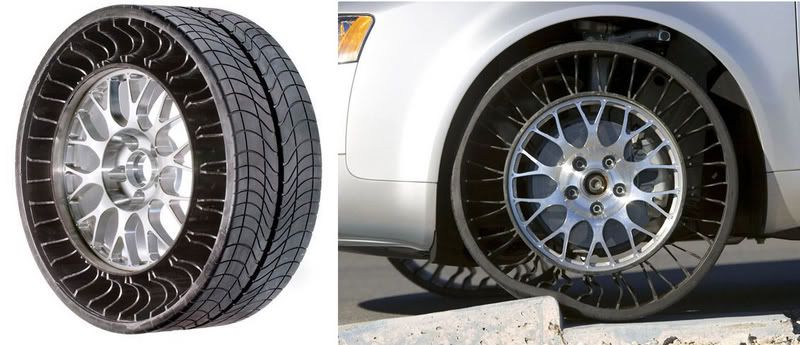
Good eye, the tire shop has to be certified to do any tire changes and requires specialized equipment. The PAX tires were unique sizes IIRC, and they made some run-flat tires look cheap.

Junior Member
Joined: Jan 2023
Posts: 21
Likes: 4
GLK250
This is a very timely discussion for me as I need to get 2 new tires in the next couple of weeks in order to pass inspection. Not only am I having trouble finding them in stock near me, I'd really rather just go to a regular tire. Pricing is relatively equal at the moment, but seems like it would be easier to just go with what's most common.
So... I'd REALLY like to get a spare "donut," but from what I'm hearing there are none that fit underneath the cargo area. Is anyone doing anything like this in a creative way? One idea is just to carry one in the baggage area in a box or something, but that seems lame. Looking for some options. Thanks!
So... I'd REALLY like to get a spare "donut," but from what I'm hearing there are none that fit underneath the cargo area. Is anyone doing anything like this in a creative way? One idea is just to carry one in the baggage area in a box or something, but that seems lame. Looking for some options. Thanks!
MBWorld Fanatic!
Joined: Jul 2012
Posts: 1,369
Likes: 319
From: WI
GLK 250
I ditched the OE run-flats more than 4 years ago, have never had a tire issue before or since. The ride is also much better than on run-flats.
I advise carrying a small tire patch/plug repair kit and a small air compressor just for emergencies. You can get both for under $20 these days.
Between that and AAA which costs maybe $50 a year, you shouldn't need anything else.
I advise carrying a small tire patch/plug repair kit and a small air compressor just for emergencies. You can get both for under $20 these days.
Between that and AAA which costs maybe $50 a year, you shouldn't need anything else.
Junior Member
Joined: Jan 2023
Posts: 21
Likes: 4
GLK250
I ditched the OE run-flats more than 4 years ago, have never had a tire issue before or since. The ride is also much better than on run-flats.
I advise carrying a small tire patch/plug repair kit and a small air compressor just for emergencies. You can get both for under $20 these days.
Between that and AAA which costs maybe $50 a year, you shouldn't need anything else.
I advise carrying a small tire patch/plug repair kit and a small air compressor just for emergencies. You can get both for under $20 these days.
Between that and AAA which costs maybe $50 a year, you shouldn't need anything else.
MBWorld Fanatic!

Joined: Jun 2021
Posts: 1,918
Likes: 521
From: New Hampsha
'17 GLS450, '14 GLK250, Grandpa's Roadster
When was the last time you had a flat? Most flats are from slow leaks. With a tire monitor system, you can detect them before any real tire damage occurs. (Most tire failures are from running for long periods of time underinflated.)
I am running 4 regular tires and carry this and a AAA card.
https://slime.com/collections/all-in...ire-repair-kit
Even the spare in the GLK350 has to be inflated before you use it.
I am running 4 regular tires and carry this and a AAA card.
https://slime.com/collections/all-in...ire-repair-kit
Even the spare in the GLK350 has to be inflated before you use it.
Last edited by John CC; May 15, 2023 at 10:31 AM.
Junior Member
Joined: Jan 2023
Posts: 21
Likes: 4
GLK250

MBWorld Fanatic!
Joined: Jun 2021
Posts: 1,008
Likes: 280
From: South Texas
2014 GLK350 base model (active) ; 2001 E320 base (retired); 2001 Wrangler soft-top


Last edited by calder-cay; May 16, 2023 at 12:45 PM.
MBWorld Fanatic!
Joined: Jun 2021
Posts: 1,008
Likes: 280
From: South Texas
2014 GLK350 base model (active) ; 2001 E320 base (retired); 2001 Wrangler soft-top
To this day, I haven't the slightest idea what that is. I was shocked when I pulled it out.
The best I can describe... a thin piece of aluminum, which is shiny on one side and has that "cross-hatch" pattern on the other side, with a shape like a knife blade.
We live in a semi-rural area, where the "main" road to civilization is a two lane blacktop with not much traffic ... I'm completely perplexed where the tire (left rear) picked that up. That piece should have been laying flat on the road ... how it jammed itself into the tire will be a mystery
The best I can describe... a thin piece of aluminum, which is shiny on one side and has that "cross-hatch" pattern on the other side, with a shape like a knife blade.
We live in a semi-rural area, where the "main" road to civilization is a two lane blacktop with not much traffic ... I'm completely perplexed where the tire (left rear) picked that up. That piece should have been laying flat on the road ... how it jammed itself into the tire will be a mystery

Super Member
Joined: Feb 2023
Posts: 728
Likes: 271
2011 GLK 350 4Matic
I think the cross-hatching is just from being scraped up on the road, but could be wrong.
They key to how it got into your tire is that it's in the rear tire. Your front tire hit it, and kicked it up into a position where it contacted the rear tire with the point toward the tire and the "base" on the road, allowing the tire's forward momentum and rotation to do the stabbing.
They key to how it got into your tire is that it's in the rear tire. Your front tire hit it, and kicked it up into a position where it contacted the rear tire with the point toward the tire and the "base" on the road, allowing the tire's forward momentum and rotation to do the stabbing.


