When you click on links to various merchants on this site and make a purchase, this can result in this site earning a commission. Affiliate programs and affiliations include, but are not limited to, the eBay Partner Network.
Hi, just went to a local garage to have my wheels rotated on my 2014 GLK250. Took quite some time and they explained that someone apparently used a standard lug wrench and distorted the "flower" pattern on lugs. It's a CPO with 35k on it so I don't know the history. I looked at the lugs and while there are scuff signs, nothing looked damaged. I also looked at the lug wrench provided by Mecedes in my trunk area and it doesn't haven kind of accommodation for this "flower" pattern. They guys there said that if I get a flat and call roadside services, a lot of those guys don't have the right tool to remove my tire. Seems moot as I have run flats and no spare to change out. Is there any truth to any part of what I was told? They've got me thinking I should buy a set of replacement lug bolts with normal heads to avoid future trouble. Not too concerned about wheel locks or theft. While I believe in having Mercedes handle most of my maintenance, I'm finding it hard to believe that non Mercedes shops can't handle this without a special adapter especially since my supplied lug wrench looks average to me. Thanks for any insight anyone may have. Any links or sources for reasonably priced aftermarket would be appreciated. I did some searching there and it's not super clear what will fit. I did do some searching on the forum and haven't found any answers.
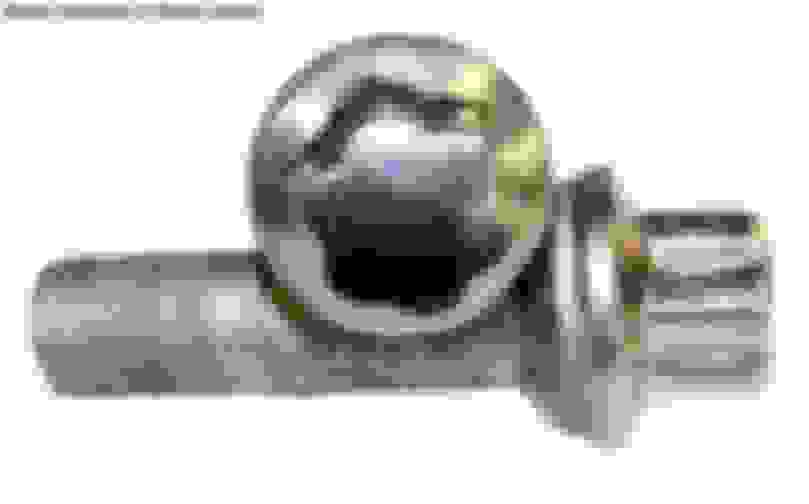
These below bolts do take a special socket. However some shops don't have the right socket and ram on a 17mm socket which can damage the head. Just because the car is CPO does not mean that some third party shop has not been working on it. CPO is just a sales gimmick to make you think the car you are buying is special,
So. the wrench that comes with the car is a 6 point hex, no adapter. Johnnu says that's fine on the bolts pictured by formerjeep guy. But Former jeep guy, are you saying that I'm missing an adapter for my mercedes lug wrench because it's on ly a 6 point? I'm not a tool guy but I googled side by side photos of a 6 point and a 12 point and can see the 6 point can handle high torque and air guns with no slippage. Hard to imagine a garage with 3 lifts and 6 bays wouldn't have a at least one set of 6 point impact sockets and have their staff trained to only use those?? But all I care about is moving forward and if I need to buy and keep an adapter with my lug wrench for future?
My glk350 did not come with the right wrench either and I bought it new. Some folks like JohhnyC think its fine to jam a 17mm socket on there but I prefer to use the correct tool for the job so I got one of these:
Thanks for both replies. The Amazon link and minimal cost is just right for me. I'll be sure I have a properly sized breaker bar as well for a few dollars more. And hope i never need them 😆
I own a bunch of obscure Mercedes-Benz tools, and you know which one I don't have because even the manufacturer doesn't have it in their catalog? That would be this special socket. I had these capped lug bolts when i first got my car, went to the dealership asking for the socket they use, they said 17mm. I ended up just buying regular grey hex lug bolts, then eventually going to titanium or black oxide hex bolts.
It is still just a slight variation of a 17mm Hex, clearly the engineer designed it to be removed with a regular hex or that special socket. Capped lug nuts or lug bolts are not durable enough to be hit with an impact gun.
I still retain the belief that there are numerous tools that can interchange just fine; such as 8mm and 5/16 or twelve-point on hex.



 07-20-2018, 01:02 AM