
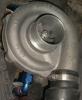

I've been reading through a bunch of the posts here and I'm seeing the same old misconceptions that have been plaguing hot rodders for years. Let me help shine a light on some of the voodoo and dispel some of the myths. Lots of you know this stuff but it seems a few folks might find it informative.
Air doesn't make power. Fuel makes power.
We all love superchargers and turbos because of the power they allow us to make. Those things cram more air into the engine than Mother Nature can give it allowing us to stuff in a lot more power producing fuel.
The hufferchargers are pushing so much air the engine can't take it all. Unused air backs up in the intake manifold where it gets squished by all the air being forced in behind it. That thicker and heavier air is registered as positive manifold pressure (boost).
Boost is air you can't use. It is a measurement of resistance to flow. This inefficiency is demonstrated by the heat created when you compress all that air. To crutch that issue we throw intercoolers in the mix.
With superchargers the air movement is directly proportional to engine speed. Boost pressure (read: inefficiency) will vary a slight bit as the engine approaches (and passes) it's peak efficiency range for a given throttle position.
Turbos change the game a bit. Once you blow the whirlygigs up to speed the wastegates will open to moderate both the amount of air the engine sees as well as control the speed of the turbo. The last thing you want to do is overspeed a turbo. Those things are already zinging along well north of 100,000 rpm. Go too far and they can create a pressure wave that blocks air flow. Worst case scenario is a turbo coming apart and sending shrapnel through your engine.
A big thing that catches a lot of people off guard is boost dropping off at high rpm. The turbo isn't running out of steam. Just the opposite is happening. The engine is starting to catch up to the turbo. It's able to use more of the air you're feeding it. That thing is making power with all that air and leaving less of it in the intake manifold.
When I build turbo engines, I want the fat turbo spinning in it's happy place on the chart and moving tons of air while very little pressure shows on the boost gauge. That means the engine is using every bit of it. More power and low boost is a very happy place to be! Think about that for a moment. If an S65 was able to use more air flow the pressure (resistance to flow) would drop and power would rise. When that happens we all want to run out and get bigger turbos to shove even thicker air into the engine. It's a really vicious cycle.
Yes, we've all seen full race engines sitting under 35 lbs of boost making crazy power. Those engines are optimized to take that super thick air/fuel mix and contain the explosions. Try burning that much fuel/air in a regular engine and you've pulled the pin on a grenade..
A fine example of all this is the twin turbocharged 440 I stuffed in my old 1965 Plymouth Belvedere. When I had factory stock cylinder heads, an ancient intake manifold, and poorly designed headers it took 17 psi of boost and an alcohol injector to turn 657 hp at the wheels. When I upgraded the cylinder heads to higher flowing pieces, built a big custom intake manifold, and improved the turbo headers it made the same power at 12 psi of boost and no longer needed the alcohol injection. The same turbos and cam were still in use. Engine efficiency had improved and it was able to make better use of the air.
Blowers and turbos are just pushing air. Are you going to let it stack up and make heat or do you want to turn it into power?
Air doesn't make power. Fuel makes power.
We all love superchargers and turbos because of the power they allow us to make. Those things cram more air into the engine than Mother Nature can give it allowing us to stuff in a lot more power producing fuel.
The hufferchargers are pushing so much air the engine can't take it all. Unused air backs up in the intake manifold where it gets squished by all the air being forced in behind it. That thicker and heavier air is registered as positive manifold pressure (boost).
Boost is air you can't use. It is a measurement of resistance to flow. This inefficiency is demonstrated by the heat created when you compress all that air. To crutch that issue we throw intercoolers in the mix.
With superchargers the air movement is directly proportional to engine speed. Boost pressure (read: inefficiency) will vary a slight bit as the engine approaches (and passes) it's peak efficiency range for a given throttle position.
Turbos change the game a bit. Once you blow the whirlygigs up to speed the wastegates will open to moderate both the amount of air the engine sees as well as control the speed of the turbo. The last thing you want to do is overspeed a turbo. Those things are already zinging along well north of 100,000 rpm. Go too far and they can create a pressure wave that blocks air flow. Worst case scenario is a turbo coming apart and sending shrapnel through your engine.
A big thing that catches a lot of people off guard is boost dropping off at high rpm. The turbo isn't running out of steam. Just the opposite is happening. The engine is starting to catch up to the turbo. It's able to use more of the air you're feeding it. That thing is making power with all that air and leaving less of it in the intake manifold.
When I build turbo engines, I want the fat turbo spinning in it's happy place on the chart and moving tons of air while very little pressure shows on the boost gauge. That means the engine is using every bit of it. More power and low boost is a very happy place to be! Think about that for a moment. If an S65 was able to use more air flow the pressure (resistance to flow) would drop and power would rise. When that happens we all want to run out and get bigger turbos to shove even thicker air into the engine. It's a really vicious cycle.
Yes, we've all seen full race engines sitting under 35 lbs of boost making crazy power. Those engines are optimized to take that super thick air/fuel mix and contain the explosions. Try burning that much fuel/air in a regular engine and you've pulled the pin on a grenade..
A fine example of all this is the twin turbocharged 440 I stuffed in my old 1965 Plymouth Belvedere. When I had factory stock cylinder heads, an ancient intake manifold, and poorly designed headers it took 17 psi of boost and an alcohol injector to turn 657 hp at the wheels. When I upgraded the cylinder heads to higher flowing pieces, built a big custom intake manifold, and improved the turbo headers it made the same power at 12 psi of boost and no longer needed the alcohol injection. The same turbos and cam were still in use. Engine efficiency had improved and it was able to make better use of the air.
Blowers and turbos are just pushing air. Are you going to let it stack up and make heat or do you want to turn it into power?


Sure would be nice to have exhaust more inclined to flow then we see in the twin-turbo V-12.
Thems some ugly manifolds. Yes; space is limited but it seems we could have had better for a similar boost threshold and more fun higher in the rev range.
Nothing wrong with the intake side of things. Pair of reasonably sized intake valves and enough intake volume.
I'd opt for larger charge air coolers given the choice. More time (relatively) for pressurized air to let the heat out on a bigger surface.
I did a + Turbo game with a Volvo Peugeot Renault V-6 years ago. Changing from hideous Volvo exhaust manifolds to much nicer found n a Renault brought the boost threshold down and made more power up top. Changing from a Saab charge air cooler to Ford Powerstroke made an even bigger improvement + made for ambient intake air temperature at any boost.
Much fun to be had with forced induction. Even better when the car is direct injected. Alas we don't have that with the bent-12. Still lots of room for improvement.
Thems some ugly manifolds. Yes; space is limited but it seems we could have had better for a similar boost threshold and more fun higher in the rev range.
Nothing wrong with the intake side of things. Pair of reasonably sized intake valves and enough intake volume.
I'd opt for larger charge air coolers given the choice. More time (relatively) for pressurized air to let the heat out on a bigger surface.
I did a + Turbo game with a Volvo Peugeot Renault V-6 years ago. Changing from hideous Volvo exhaust manifolds to much nicer found n a Renault brought the boost threshold down and made more power up top. Changing from a Saab charge air cooler to Ford Powerstroke made an even bigger improvement + made for ambient intake air temperature at any boost.
Much fun to be had with forced induction. Even better when the car is direct injected. Alas we don't have that with the bent-12. Still lots of room for improvement.

maw1124
MBWorld Fanatic!
close


May 13, 2026
- Join DateApr 2009
- Posts:1,259
-
iTrader Positive Feedback0
-
iTrader Feedback Score(0)
- Vehicle(s) I drive'06 MB S55 AMG; '04 Audi Allroad 4.2; '05 BMW M3 Conv.; '92 MB 500E
-
Likes:1,055
-
Liked:363 Times in 299 Posts
Has anyone run ported/polished heads with a tune, long tubes and cooling to see what that yields on either the TTV12 or V8Komp? Seems simple, safe and not a science project. Just wondering.
maw
maw
Quote:
maw
Jay's Brabus K8 has shorty headers, bigger crank pulley, reflash that removed 155 mph limiter (and who knows what else). Additional charge air cooling heat exchanger + bigger charge coolant pump. Originally Posted by maw1124
Has anyone run ported/polished heads with a tune, long tubes and cooling to see what that yields on either the TTV12 or V8Komp? Seems simple, safe and not a science project. Just wondering.maw
His car would walk away from my stock E-55.
I have driven an S-65 reflashed for 900lb ft. It was traction limited. I understand that the five speed needs mods to handle more then that.
Currently Active Users (1)












