SL/R230: When is it really a lemon? or?

Thread Starter
Senior Member


Joined: Jun 2020
Posts: 449
Likes: 129
From: Melbourne Florida
SL500
When is it really a lemon? or?
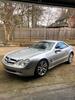
I saw this car for sale. Here is the carfax report. Look at the service records and the mileage. What say you?
https://www.carfax.com/VehicleHistor...471&source=BUP
https://www.carfax.com/VehicleHistor...471&source=BUP
Senior Member


Joined: Oct 2021
Posts: 495
Likes: 101
From: Benton, Louisiana, USA
SL 500 2004, Ford F-150-2014
Looks like the vehicle has been taken care frequently. I would buy it if the price is right..! These vehicles has natural problems and only if you are a DYI, you can life support it!
Thread Starter
Senior Member
Joined: Jun 2020
Posts: 449
Likes: 129
From: Melbourne Florida
SL500
taken care of? I wonder who was doing the caring. Look at the mileage difference between services. What price would you buy it for?
Senior Member
Joined: Oct 2021
Posts: 495
Likes: 101
From: Benton, Louisiana, USA
SL 500 2004, Ford F-150-2014
Gene, I own the SL-500 because I bought it pretty cheap, even with a collection of small problems that I am still battling. But, I take them one at a time and keep me entertained..! That rig looks much better than mine, less mileage, and I will top it at $14000. What else could be wrong?? Lemon are lemons because the root cause has not been identified on time, but for smart guys, lemons could be an opportunity if the price is right.!

Senior Member
Joined: Dec 2019
Posts: 407
Likes: 137
From: Houston, TX
2005 SL600
Having spent 20+ years working in new car dealerships (GM, Toyota, Nissan, Mitsubishi, Audi, Saab), here's a couple of things to know about lemon law/manufacturer buyback cars.
Most importantly, by law in the US, lemon law/manufacturer buyback cars must have the problem for the buyback resolved before they can resell the car.
The laws have very specific terms defining when a vehicle buyback is warranted. It varies by state, but basically it's a problem that causes the car to be undriveable, and it's the same problem recurring a certain number of times, and/or a problem taking a long time to repair (usually due to parts being unavailable).
In my experience, there were always a few people who would demand a buyback over the smallest issues, even if they were fixed fairly quickly. Seemed to me that these people were usually first-time new car buyers who expected their new car to be perfect, and when it wasn't they had severe anxiety about the long term reliability of the car and wanted to use the lemon laws to relieve themselves of the situation. And then there's the type of person who is just very picky and demanding in everything, and has no inhibition to push in every possible way to get what they want. The kind of person who is never happy with the quality of service anywhere. These people almost always did not have knowledge of the actual law, they only knew that lemon laws exist so they would demand a buyback when their situation had not even come close to meeting the legal requirements.
And then there's the people who are in one of the above groups, but they either have the means to basically have a lawyer on permanent retainer, or are actually lawyers themselves. They will use the civil courts as a weapon, filing suit followed by endless motions, etc. until the dealer and manufacturer decide it's more cost-efficient to just appease them. The vast majority of buybacks I saw came from these people who didn't actually have a legitimate buyback complaint, but they were able to complain so loudly and expensively that they'd get their way.
The other buybacks I saw had defective parts at their root - the replacement parts would still have defects so the problem would recur, or replacements weren't available for an extended period because manufacturing had to be changed.
Most importantly, by law in the US, lemon law/manufacturer buyback cars must have the problem for the buyback resolved before they can resell the car.
The laws have very specific terms defining when a vehicle buyback is warranted. It varies by state, but basically it's a problem that causes the car to be undriveable, and it's the same problem recurring a certain number of times, and/or a problem taking a long time to repair (usually due to parts being unavailable).
In my experience, there were always a few people who would demand a buyback over the smallest issues, even if they were fixed fairly quickly. Seemed to me that these people were usually first-time new car buyers who expected their new car to be perfect, and when it wasn't they had severe anxiety about the long term reliability of the car and wanted to use the lemon laws to relieve themselves of the situation. And then there's the type of person who is just very picky and demanding in everything, and has no inhibition to push in every possible way to get what they want. The kind of person who is never happy with the quality of service anywhere. These people almost always did not have knowledge of the actual law, they only knew that lemon laws exist so they would demand a buyback when their situation had not even come close to meeting the legal requirements.
And then there's the people who are in one of the above groups, but they either have the means to basically have a lawyer on permanent retainer, or are actually lawyers themselves. They will use the civil courts as a weapon, filing suit followed by endless motions, etc. until the dealer and manufacturer decide it's more cost-efficient to just appease them. The vast majority of buybacks I saw came from these people who didn't actually have a legitimate buyback complaint, but they were able to complain so loudly and expensively that they'd get their way.
The other buybacks I saw had defective parts at their root - the replacement parts would still have defects so the problem would recur, or replacements weren't available for an extended period because manufacturing had to be changed.
Senior Member
Joined: Dec 2019
Posts: 407
Likes: 137
From: Houston, TX
2005 SL600
My 2005 SL600 is a lemon law/buyback car. Buyback was in 2007 at 7K miles, and I bought 2019 it at 65K miles so it was clear the issue had been resolved.
I had my own thoughts about why - the car was about $130K sticker price in 2005, so I could see where a buyer might be expecting perfection and feeling buyer's remorse at any persistent problem. Of course I was curious about exactly why Mercedes did the buyback, so I contacted MB USA about it but they said they'd only give that information out to the current owner. The selling dealer was not an MB dealer, and they didn't have it titled in their name so they weren't able to get this information either. I went ahead with the purchase because I really liked the car and the price was too good to pass up ($14K).
After I got the car titled in my name, I contacted MB USA again and they told me the car was bought back due to "electrical fault", but wouldn't provide any more details. I've thought about visiting a dealer and having them pull up the detailed service history, but haven't gotten around to it. I suspect this was a CAN bus issue that a dealership had problems resolving; CAN bus was still pretty new technology back then and there were few technicians that were good at resolving issues. For that matter, there were few technicians that even really understood what a CAN bus was, much less understanding how it worked. Practically all the technicians I had known in my dealership years were extremely resistant to change, hated having to learn about new stuff, just wanted to be able to flag as many hours as possible without thinking too hard. Guys that preferred carburetors over fuel injection 'cause they already knew carburetors. I changed careers in 2001, left the car business for IT, so I wasn't there when CAN bus became widespread, but I can imagine there were a lot of very grumpy mechanics during those times. Well, let's say even grumpier than usual
I had my own thoughts about why - the car was about $130K sticker price in 2005, so I could see where a buyer might be expecting perfection and feeling buyer's remorse at any persistent problem. Of course I was curious about exactly why Mercedes did the buyback, so I contacted MB USA about it but they said they'd only give that information out to the current owner. The selling dealer was not an MB dealer, and they didn't have it titled in their name so they weren't able to get this information either. I went ahead with the purchase because I really liked the car and the price was too good to pass up ($14K).
After I got the car titled in my name, I contacted MB USA again and they told me the car was bought back due to "electrical fault", but wouldn't provide any more details. I've thought about visiting a dealer and having them pull up the detailed service history, but haven't gotten around to it. I suspect this was a CAN bus issue that a dealership had problems resolving; CAN bus was still pretty new technology back then and there were few technicians that were good at resolving issues. For that matter, there were few technicians that even really understood what a CAN bus was, much less understanding how it worked. Practically all the technicians I had known in my dealership years were extremely resistant to change, hated having to learn about new stuff, just wanted to be able to flag as many hours as possible without thinking too hard. Guys that preferred carburetors over fuel injection 'cause they already knew carburetors. I changed careers in 2001, left the car business for IT, so I wasn't there when CAN bus became widespread, but I can imagine there were a lot of very grumpy mechanics during those times. Well, let's say even grumpier than usual
Trending Topics
Senior Member
Joined: Dec 2019
Posts: 407
Likes: 137
From: Houston, TX
2005 SL600
By the way, when a professional mechanic says a car is "a piece of sh*t", they often don't mean it's a car that breaks down a lot, they usually mean it's a car that's hard to work on, one that has a lot of jobs that are hard to beat book time on. In other words, mechanics like cars where, for example, swapping out an alternator pays 3 hours labor but they can get it done in 30 minutes. These are "good cars". Most mechanics don't want manufacturers to make reliable cars, they want manufacturers to make cars that they can make good money on.
MB World Stories
The Best of Mercedes & AMG

Dubai Tuner Gives the Mercedes G-Class An Entirely New Look
Verdad Gallardo
Six Gift Ideas Your AMG Loving Dad or Grad Will Cherish

7 Craziest Things AMG Gas Ever Built
Verdad Gallardo
New Electric Mercedes-AMG GT 4-Door Coupe Unveiled: 10 Things You Need to Know
Verdad Gallardo
6 Mercedes Models That Did NOT Age Well (But Are Somehow Still Cool)
Verdad Gallardo
Manual Mercedes? 6 Times Sindelfingen Let Drivers Have All The Fun
Verdad Gallardo
Mercedes SLR McLaren 722 S Is Extremely Rare Example Modified by McLaren
Verdad Gallardo
8 Classic Boxy Mercedes Designs That Have Aged Like Fine Wine
Verdad Gallardo
Flawlessly Restored Mercedes 190E Evo II Heads to Auction
Verdad Gallardo
Senior Member
Joined: Dec 2019
Posts: 407
Likes: 137
From: Houston, TX
2005 SL600
So basically, I'd consider buying a "lemon law" titled car WAY before I'd consider buying a salvage titled car. I'm surprised that lemon law titled cars take the same value hit that salvage titles do, but I think they just kind of get lumped together as "branded title cars" by the car sales valuation industry (CarFax, Kelly Blue Book, TrueCar, etc.).