




SL55/63/65/R230 AMG: I/C pump

Thread Starter
MBWorld Fanatic!
Joined: Apr 2008
Posts: 2,838
Likes: 19
From: U.K.
SL 63 W/B AMG , S600,C220
I/C pump
I am going to fit a new ic pump to my SL65. I fitted a Johnson last time,
but members have been saying just fit the latest Bosch pump.
Can someone tell me the part number or details of the Bosch pump.
I am changing it before a re map.
but members have been saying just fit the latest Bosch pump.
Can someone tell me the part number or details of the Bosch pump.
I am changing it before a re map.

Member
Joined: Jan 2004
Posts: 116
Likes: 1
From: Surrey, England
2004 SL55 AMG
Bought the new Bosch IC Water pump for my 2004 SL55 from here: http://www.ebay.co.uk/itm/Mercedes-W...item53fc5e337a
Cost about £105 but varies with exchange rate. About half the price of buying from UK dealer. Took about 10 days to arrive and was able to track it. Straight replacement for older ones.
Cost about £105 but varies with exchange rate. About half the price of buying from UK dealer. Took about 10 days to arrive and was able to track it. Straight replacement for older ones.
Senior Member


Joined: Jul 2013
Posts: 306
Likes: 19
From: West Chester, PA - USA
2003 SL55 AMG
I think the 'new' Bosch pump is about $100 US on US Amazon. Might check there to see what shipping to UK is.
Also, a Brit, living in TX has a auto parts supply business - primarily for Porsche 928's, but he also does other marques. He gets OE, aftermarket and 'dealer' parts. Web site with his e-mail and telephone is: www.928sRus.com . Name is Roger Tyson, tell him Gary Knox referred you. He'll give you a good price, and does a lot of international shipping. e-mail or phone is probably the best for contacting him.
Also, a Brit, living in TX has a auto parts supply business - primarily for Porsche 928's, but he also does other marques. He gets OE, aftermarket and 'dealer' parts. Web site with his e-mail and telephone is: www.928sRus.com . Name is Roger Tyson, tell him Gary Knox referred you. He'll give you a good price, and does a lot of international shipping. e-mail or phone is probably the best for contacting him.
Last edited by kittyandgary; May 20, 2014 at 05:14 PM.
Senior Member
Joined: Jul 2013
Posts: 306
Likes: 19
From: West Chester, PA - USA
2003 SL55 AMG
Do a double check with Roger T. Might have a method for reducing cost by combining it with other shipments to England, as he has a lot of customers there.
Last edited by kittyandgary; May 21, 2014 at 10:37 AM.
Trending Topics
MB World Stories
The Best of Mercedes & AMG

New Electric Mercedes-AMG GT 4-Door Coupe Unveiled: 10 Things You Need to Know
Verdad Gallardo
6 Mercedes Models That Did NOT Age Well (But Are Somehow Still Cool)
Verdad Gallardo
Manual Mercedes? 6 Times Sindelfingen Let Drivers Have All The Fun
Verdad Gallardo
Mercedes SLR McLaren 722 S Is Extremely Rare Example Modified by McLaren
Verdad Gallardo
8 Classic Boxy Mercedes Designs That Have Aged Like Fine Wine
Verdad Gallardo
Flawlessly Restored Mercedes 190E Evo II Heads to Auction
Verdad Gallardo
Electric Mercedes C-Class Unveiled: 11 Things You Need to Know
Verdad Gallardo
Mercedes EQS Gets A Major Update: Everything You Need to Know
Verdad Gallardo
5 Underrated Mercedes-Benz Models That Don't Get the Love They Deserve
Verdad Gallardo
MBWorld Fanatic!


Joined: Nov 2010
Posts: 2,605
Likes: 343
From: Welwyn, Herts, UK
2006 S600
The small one looks like a cabin heating circulation pump, not an IC pump.
The -002 Bosch IC pump looks like the -010, but has a black impeller housing instead.
Do a google image search for 0392022002 and you'll see what I mean.
Nick
The -002 Bosch IC pump looks like the -010, but has a black impeller housing instead.
Do a google image search for 0392022002 and you'll see what I mean.
Nick
Last edited by Welwynnick; May 27, 2014 at 03:32 AM.
Thread Starter
MBWorld Fanatic!
Joined: Apr 2008
Posts: 2,838
Likes: 19
From: U.K.
SL 63 W/B AMG , S600,C220
I have just ordered a Johnson CM pump, they asked if the pipes were
16mm or 20mm. Looking at the picture the AMG looks like 16mm and the
Bosch looks like 20mm. I have ordered 20mm, hope it's right.
16mm or 20mm. Looking at the picture the AMG looks like 16mm and the
Bosch looks like 20mm. I have ordered 20mm, hope it's right.
MBWorld Fanatic!
Joined: Nov 2010
Posts: 2,605
Likes: 343
From: Welwyn, Herts, UK
2006 S600
If there is only one thing I know about more than anyone else, its IC pumps.
And if there's one message that I'd like to get out there, its DON'T use a Johnson CM-30 as an IC pump - everything else is better.
I spend a year or so putting this information together:
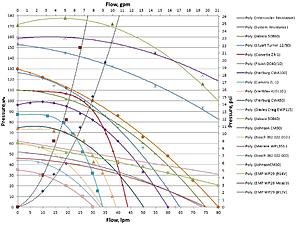
The pink curve at the bottom is the CM-30.
All the info is in my signature link
Nick
And if there's one message that I'd like to get out there, its DON'T use a Johnson CM-30 as an IC pump - everything else is better.
I spend a year or so putting this information together:
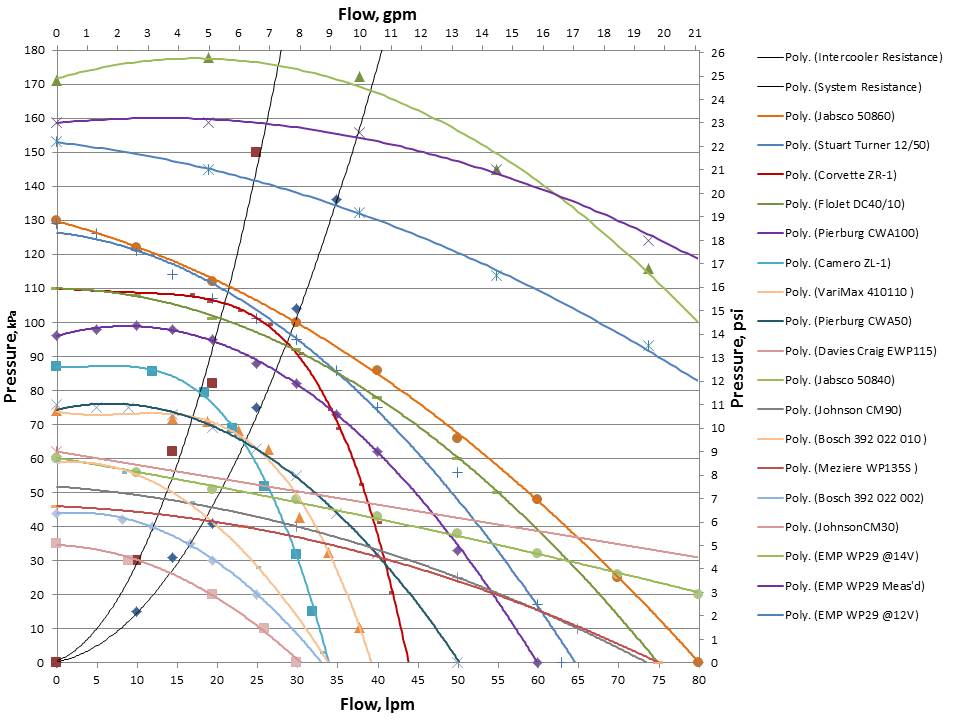
The pink curve at the bottom is the CM-30.
All the info is in my signature link
Nick


 ,
,
Thread Starter
MBWorld Fanatic!
Joined: Apr 2008
Posts: 2,838
Likes: 19
From: U.K.
SL 63 W/B AMG , S600,C220
If there is only one thing I know about more than anyone else, its IC pumps.
And if there's one message that I'd like to get out there, its DON'T use a Johnson CM-30 as an IC pump - everything else is better.
I spend a year or so putting this information together:

The pink curve at the bottom is the CM-30.
All the info is in my signature link
Nick
And if there's one message that I'd like to get out there, its DON'T use a Johnson CM-30 as an IC pump - everything else is better.
I spend a year or so putting this information together:
The pink curve at the bottom is the CM-30.
All the info is in my signature link
Nick
However the colours are hard to match up, and did you carry out your
experiments in real time. ie did you put the pumps under conditions say
if you were driving the car very hard with increasing temperature.
The other thing is there isn't that much difference between the CM30
and the Bosch, the other names I have never heard of. Most people fit
either the Bosch and some fit the Johnson, I don't read that they use
anything else apart from maybe Renntech, but that is expensive and would
it make that much difference.
When my 600 was remapped they told me to change the pump, I bought
a Johnson and Mercedes actually fitted it. I also put a Johnson on my previous SL65,the only reason I brought up the subject of pumps was a
member said they had improved the Bosch and I was curious.
Anyway what are you going to do with all those pumps, or were they on loan. I presume they were all new when tested.
Good stuff
Member
Joined: Jan 2004
Posts: 116
Likes: 1
From: Surrey, England
2004 SL55 AMG
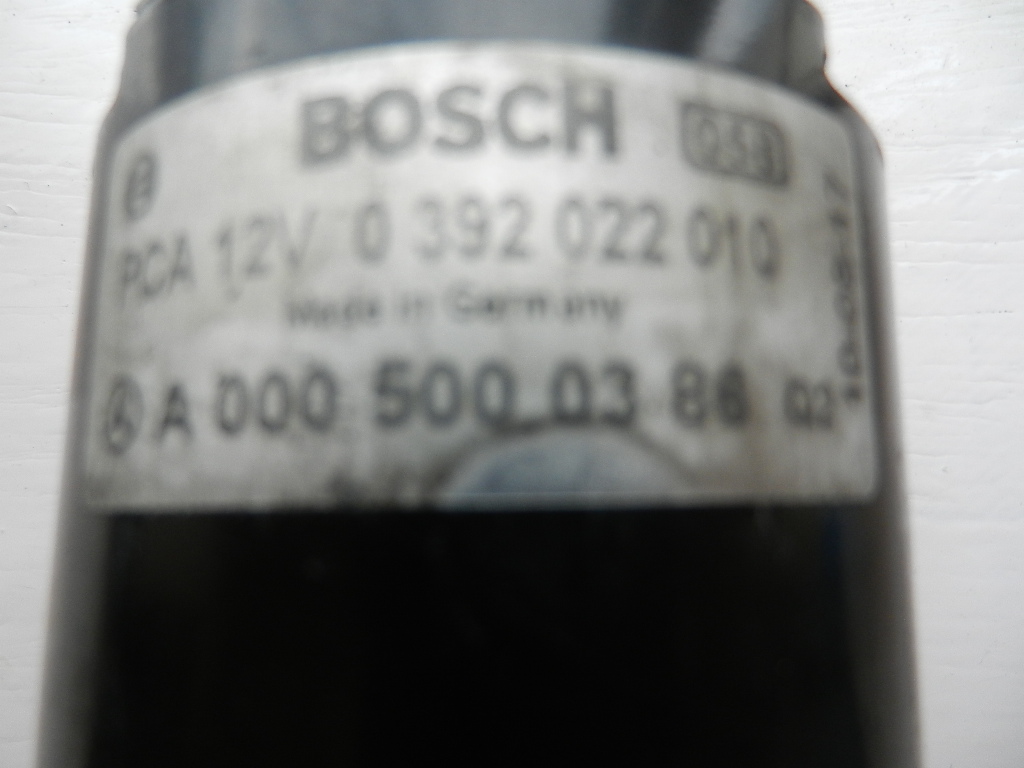
The upgraded Bosch pump is the Bosch 392 022 010 which has better performance than Johnson CM30 and if ordered from US can be had for £105 including shipping and taxes. It is also far easier to fit as uses the same connections.
Thread Starter
MBWorld Fanatic!
Joined: Apr 2008
Posts: 2,838
Likes: 19
From: U.K.
SL 63 W/B AMG , S600,C220
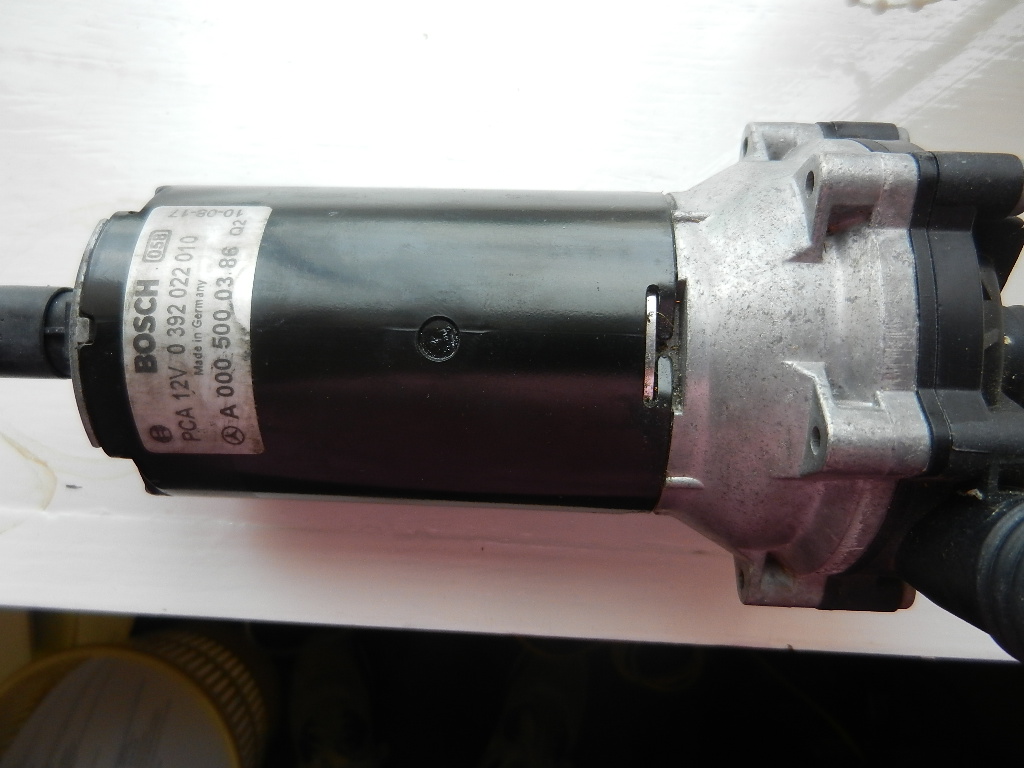
If you look it is the same number on the pump which came out of my 2004
S600 which I changed for a Johnson CM30.
Member
Joined: Jan 2004
Posts: 116
Likes: 1
From: Surrey, England
2004 SL55 AMG
Must have been upgraded then by previous owner. How long have you owned the car? Bosch replaced the 392 022 003, which would have been fitted to your 2004 S600, with the 392 022 010.
Thread Starter
MBWorld Fanatic!
Joined: Apr 2008
Posts: 2,838
Likes: 19
From: U.K.
SL 63 W/B AMG , S600,C220
I don't understand. The previous owner sold it to me in 2007 after warranty
had run out. Was the upgraded pump available from 2004 to 2007
I have had the car since 2007 and never changed the pump until 2012 so
this pump has got to be before 2007 that's if the first owner did change it.
It still works, so when I get the Johnson I will measure the flow on both.
I am working through your thread, god your fingers must be aching
When I decided to change the pump on my 600 it was recommended by
the guys who had re mapped it, at the time everybody seemed to be saying
buy a Johnson, so like a sheep I went along with them and bought one.
But after reading your thread perhaps less flow stops turbulence , meaning
the Johnson does a better job by pumping slower or less violently. I work
in a industry where people are always comparing, the comparison though
must be done under condition exactly the same for both objects, if not
it's hearsay, people guessing and I hate that. You are an intelligent man and
I love the way you dissect and explain things. You are certainly invaluable
to this Forum.
had run out. Was the upgraded pump available from 2004 to 2007
I have had the car since 2007 and never changed the pump until 2012 so
this pump has got to be before 2007 that's if the first owner did change it.
It still works, so when I get the Johnson I will measure the flow on both.
I am working through your thread, god your fingers must be aching
When I decided to change the pump on my 600 it was recommended by
the guys who had re mapped it, at the time everybody seemed to be saying
buy a Johnson, so like a sheep I went along with them and bought one.
But after reading your thread perhaps less flow stops turbulence , meaning
the Johnson does a better job by pumping slower or less violently. I work
in a industry where people are always comparing, the comparison though
must be done under condition exactly the same for both objects, if not
it's hearsay, people guessing and I hate that. You are an intelligent man and
I love the way you dissect and explain things. You are certainly invaluable
to this Forum.
MBWorld Fanatic!
Joined: Nov 2010
Posts: 2,605
Likes: 343
From: Welwyn, Herts, UK
2006 S600
Thank you Sound 8, I appreciate that. You're right about the significance of turbulence, but its a double-edged thing.
On the one hand, you do want a fast pump that creates turbulence in the heat exchangers, as that increases heat transfer. HE tubes are narrow and result in a high Reynolds number, which should increase the likelihood of turbulance. Slowing the pump down may make the HE less efficient.
However, the pipes have a large x-section area and a favourable geometry, so they're less likely to have turbulent flow, which would increase the flow resistance. However, I just don't know whether they're turbulent or not. The flow coming out of the bleed pipes into my IC header tank certainly isn't turbulent, so maybe it isn't. Fluidics are complicated, and that's about the biggest clue I can offer.
Perhaps the most significant issue with my IC system was bleeding it, and keeping air out of it. I found that the flow rate fell off a cliff unless all the air was out, it really is so important. With a sealed system its so difficult to bleed, and to establish whether the bleeding is successful. If air gets into the pump inlet, the speed of the impeller turns the coolant into a light, viscous froth, and then the show's over. Anti-freeze makes it all worse. Since I could vary the speed of my various Pierburg pumps, I did a lot of experimentation last summer, and found that the frothing was exacerbated by small, high-speed impellers.
When the pump runs slowly, the air separates, and the coolant runs clear again. My feeling is that having a high speed pump running at full speed all the time may be counter-productive. Therefore the thermostatically controlled stock system may actually be a good thing. What Mercedes have done may actually have been the right thing, even if the IC's do get heat-soaked by the exhausts, and the flow rate isn't all that good. None of us have the benefit of the experience of the development that Mercedes did on our cars, and we're having to learn it all for ourselves. Certainly the tuners don't know all the answers.
My preferred solution is to have the pump running slowly all the time, and have it speed up in response to demand. Ironically an engine driven pump would be ideal, but failing that I'd settle for a programmable pump controller like the Tecomotive or the SFR Electronics.
Regards, Nick
On the one hand, you do want a fast pump that creates turbulence in the heat exchangers, as that increases heat transfer. HE tubes are narrow and result in a high Reynolds number, which should increase the likelihood of turbulance. Slowing the pump down may make the HE less efficient.
However, the pipes have a large x-section area and a favourable geometry, so they're less likely to have turbulent flow, which would increase the flow resistance. However, I just don't know whether they're turbulent or not. The flow coming out of the bleed pipes into my IC header tank certainly isn't turbulent, so maybe it isn't. Fluidics are complicated, and that's about the biggest clue I can offer.
Perhaps the most significant issue with my IC system was bleeding it, and keeping air out of it. I found that the flow rate fell off a cliff unless all the air was out, it really is so important. With a sealed system its so difficult to bleed, and to establish whether the bleeding is successful. If air gets into the pump inlet, the speed of the impeller turns the coolant into a light, viscous froth, and then the show's over. Anti-freeze makes it all worse. Since I could vary the speed of my various Pierburg pumps, I did a lot of experimentation last summer, and found that the frothing was exacerbated by small, high-speed impellers.
When the pump runs slowly, the air separates, and the coolant runs clear again. My feeling is that having a high speed pump running at full speed all the time may be counter-productive. Therefore the thermostatically controlled stock system may actually be a good thing. What Mercedes have done may actually have been the right thing, even if the IC's do get heat-soaked by the exhausts, and the flow rate isn't all that good. None of us have the benefit of the experience of the development that Mercedes did on our cars, and we're having to learn it all for ourselves. Certainly the tuners don't know all the answers.
My preferred solution is to have the pump running slowly all the time, and have it speed up in response to demand. Ironically an engine driven pump would be ideal, but failing that I'd settle for a programmable pump controller like the Tecomotive or the SFR Electronics.
Regards, Nick
Last edited by Welwynnick; Jun 2, 2014 at 05:48 PM.
Thread Starter
MBWorld Fanatic!
Joined: Apr 2008
Posts: 2,838
Likes: 19
From: U.K.
SL 63 W/B AMG , S600,C220
Thank you Sound 8, I appreciate that. You're right about the significance of turbulence, but its a double-edged thing.
On the one hand, you do want a fast pump that creates turbulence in the heat exchangers, as that increases heat transfer. HE tubes are narrow and result in a high Reynolds number, which should increase the likelihood of turbulance. Slowing the pump down may make the HE less efficient.
However, the pipes have a large x-section area and a favourable geometry, so they're less likely to have turbulent flow, which would increase the flow resistance. However, I just don't know whether they're turbulent or not. The flow coming out of the bleed pipes into my IC header tank certainly isn't turbulent, so maybe it isn't. Fluidics are complicated, and that's about the biggest clue I can offer.
Perhaps the most significant issue with my IC system was bleeding it, and keeping air out of it. I found that the flow rate fell off a cliff unless all the air was out, it really is so important. With a sealed system its so difficult to bleed, and to establish whether the bleeding is successful. If air gets into the pump inlet, the speed of the impeller turns the coolant into a light, viscous froth, and then the show's over. Anti-freeze makes it all worse. Since I could vary the speed of my various Pierburg pumps, I did a lot of experimentation last summer, and found that the frothing was exacerbated by small, high-speed impellers.
When the pump runs slowly, the air separates, and the coolant runs clear again. My feeling is that having a high speed pump running at full speed all the time may be counter-productive. Therefore the thermostatically controlled stock system may actually be a good thing. What Mercedes have done may actually have been the right thing, even if the IC's do get heat-soaked by the exhausts, and the flow rate isn't all that good. None of us have the benefit of the experience of the development that Mercedes did on our cars, and we're having to learn it all for ourselves. Certainly the tuners don't know all the answers.
My preferred solution is to have the pump running slowly all the time, and have it speed up in response to demand. Ironically an engine driven pump would be ideal, but failing that I'd settle for a programmable pump controller like the Tecomotive or the SFR Electronics.
Regards, Nick
On the one hand, you do want a fast pump that creates turbulence in the heat exchangers, as that increases heat transfer. HE tubes are narrow and result in a high Reynolds number, which should increase the likelihood of turbulance. Slowing the pump down may make the HE less efficient.
However, the pipes have a large x-section area and a favourable geometry, so they're less likely to have turbulent flow, which would increase the flow resistance. However, I just don't know whether they're turbulent or not. The flow coming out of the bleed pipes into my IC header tank certainly isn't turbulent, so maybe it isn't. Fluidics are complicated, and that's about the biggest clue I can offer.
Perhaps the most significant issue with my IC system was bleeding it, and keeping air out of it. I found that the flow rate fell off a cliff unless all the air was out, it really is so important. With a sealed system its so difficult to bleed, and to establish whether the bleeding is successful. If air gets into the pump inlet, the speed of the impeller turns the coolant into a light, viscous froth, and then the show's over. Anti-freeze makes it all worse. Since I could vary the speed of my various Pierburg pumps, I did a lot of experimentation last summer, and found that the frothing was exacerbated by small, high-speed impellers.
When the pump runs slowly, the air separates, and the coolant runs clear again. My feeling is that having a high speed pump running at full speed all the time may be counter-productive. Therefore the thermostatically controlled stock system may actually be a good thing. What Mercedes have done may actually have been the right thing, even if the IC's do get heat-soaked by the exhausts, and the flow rate isn't all that good. None of us have the benefit of the experience of the development that Mercedes did on our cars, and we're having to learn it all for ourselves. Certainly the tuners don't know all the answers.
My preferred solution is to have the pump running slowly all the time, and have it speed up in response to demand. Ironically an engine driven pump would be ideal, but failing that I'd settle for a programmable pump controller like the Tecomotive or the SFR Electronics.
Regards, Nick
or perhaps you could switch inside the cab between comfort, sport and sport
plus.
Also I feel that all the pipe work should be as straight as possible taking out
the kinks, I think you mentioned that.
The Johnson pump arrived to day, and your right it is much lighter than the
Bosch, I keep thinking buy a Rentech but the price puts me off, and I ask
myself will I feel a difference, I am supposed to be cutting down
I don't really know what to do, the Johnson feels light and cheap, and the
Bosch looks and feels so much better.
Lastly have you got any tips how to bleed the system, would appreciate it
MBWorld Fanatic!
Joined: Nov 2010
Posts: 2,605
Likes: 343
From: Welwyn, Herts, UK
2006 S600
I think weight is often a reasonable measure of merit, and the Bosch is 1.1kg vs 0.6kg.
Power consumption is a better indicator. The installed consumption of the 0392 022 010 is around 50W, while the CM30 is 20W. I think that tells the story.
This is how I did IC system bleeding, with a small swirl pot / header tank next to the heater plunum, and two bleed pipes from the top of the IC inlets, but it might not be a good solution for everyone:
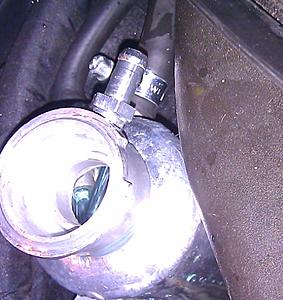
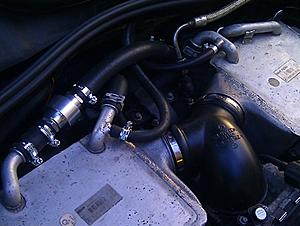
Most of the experienced guys here say you need a vacuum bleeder to do the job right - usually called a cooling system vacuum filler.
Nick
Power consumption is a better indicator. The installed consumption of the 0392 022 010 is around 50W, while the CM30 is 20W. I think that tells the story.
This is how I did IC system bleeding, with a small swirl pot / header tank next to the heater plunum, and two bleed pipes from the top of the IC inlets, but it might not be a good solution for everyone:
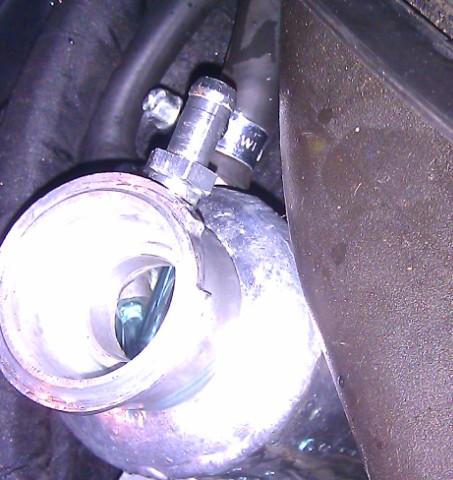
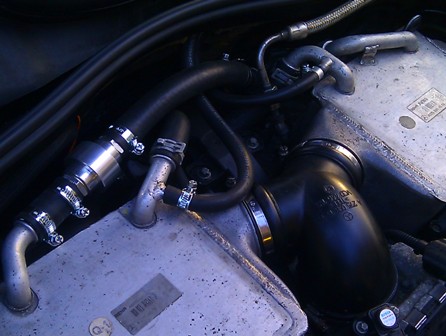
Most of the experienced guys here say you need a vacuum bleeder to do the job right - usually called a cooling system vacuum filler.
Nick


