



M102 & M103 "free power uprade" (R16 modification) must read

Member
Joined: Jun 2003
Posts: 101
Likes: 0
From: Cornwall, NY
e320 2000
Got to agree on the Octane issue
Good recap on Octane!
Having bought pipeline and shipload quantities of gasolines professionally for major players in the transportation industry, I'd say I haven't heard as good a description of Octane in motor cars for quite a while.
One additional thing to note, pre-detonation ( that pinging sound) is a sign of an engine working against itself. Once some of the fuel mix in a cylinder explodes early, it takes more power ( or the rest of the cylinder's charge) to keep the piston going in the right direction. ( don't worry you'll never reverse a multi-cylinder 4 stroke engine with a ping or two). That's where the power is robbed.
A pinging engine is also a hotter engine. And extra heat really doesn't do too much good to an engine -- probably contributing directly to "carbonizing" small additional amounts of gasoline and lube on to exhaust valves, stems and seats, maybe fouling plugs a bit more.
Thanks again for the lesson on Octane.
Any diesel guys want to discuss 40 Cetane ( the 16 carbon cousin to Octane)? Yes, there are diesel grades out there -- 42 or winter blend and 38 - 32 for the railroads' mid speed diesel electrics. Depending on how much you cut a standard 40 Cetane diesel with a 50 Cetane K1 kerosene, the less power but greater cold weather starting you get for that "D" in the garage. It works differently with diesel and Cetane.
Having bought pipeline and shipload quantities of gasolines professionally for major players in the transportation industry, I'd say I haven't heard as good a description of Octane in motor cars for quite a while.
One additional thing to note, pre-detonation ( that pinging sound) is a sign of an engine working against itself. Once some of the fuel mix in a cylinder explodes early, it takes more power ( or the rest of the cylinder's charge) to keep the piston going in the right direction. ( don't worry you'll never reverse a multi-cylinder 4 stroke engine with a ping or two). That's where the power is robbed.
A pinging engine is also a hotter engine. And extra heat really doesn't do too much good to an engine -- probably contributing directly to "carbonizing" small additional amounts of gasoline and lube on to exhaust valves, stems and seats, maybe fouling plugs a bit more.
Thanks again for the lesson on Octane.
Any diesel guys want to discuss 40 Cetane ( the 16 carbon cousin to Octane)? Yes, there are diesel grades out there -- 42 or winter blend and 38 - 32 for the railroads' mid speed diesel electrics. Depending on how much you cut a standard 40 Cetane diesel with a 50 Cetane K1 kerosene, the less power but greater cold weather starting you get for that "D" in the garage. It works differently with diesel and Cetane.

MBWorld Fanatic!
Joined: Mar 2002
Posts: 1,537
Likes: 2
From: Arizona, USA
W205 C300
Don't get started on the diesel fuel issues. Diesel here in the US is not up to the Euro standards either. The new high performance diesels won't be showing up anytime soon in the US because they need better and cleaner diesel fuel.

Member
Joined: Apr 2002
Posts: 140
Likes: 0
From: Southern Germany
MB C200K (W202), MB 190E (W201), MB A140 (W168)
Neither will high tech gas engines show up in the US  Look at the CLK 200 CGI e.g. with Stratified Charged Gasoline Injection... get's 170 HP with its 1.8 Liter 4-cylinder engine, but runs only with 98 octane or better fuel!
But Mercedes-Benz is planing to reintroduce Diesel engines in the US... we'll see
Look at the CLK 200 CGI e.g. with Stratified Charged Gasoline Injection... get's 170 HP with its 1.8 Liter 4-cylinder engine, but runs only with 98 octane or better fuel!But Mercedes-Benz is planing to reintroduce Diesel engines in the US... we'll see
Member
Joined: Jun 2003
Posts: 101
Likes: 0
From: Cornwall, NY
e320 2000
The issue is not "cleaner" or "better" diesel.
Is 91 Octane gasoline cleaner or better than 87 Octane?
Diesel in the US actually has less sulfur than many Euro grades. We often consider the carbon particulate emission from diesel (the soot) as being somehow "dirtier" than the NOx emissions from gasoline. That's a matter of point of view.
In Europe, naptha, a gasoline component, can be blended with gas-oil ( the European distillate or diesel) to "boost" its quality. This may be perceived as a higher quality fuel in that it may deliver better performance on acceleration, but it also produces more NOx's. It's also more dangerous to handle with the naptha component. It doesn't necessarily mean greater speed or utilization of latent energy in the diesel, or performance.
We don't typically blend gasoline components with distillates in the US. Too dirty, dangerous and hard to sell.
Alternately, diesel can be "boosted" with Kerosene. This may improve combustion velocity in the cylinder ( acceleration) but at the expense of energy content in the fuel and in terms of fuel economy (torque).
Didn't MB have a 220 mph diesel prototype ( using really "bad" diesel fuel)?
(Go to the "diesel" thread to continue)
The real reason for not having the "best" diesel and diesel cars in the US is the US' love affair with gasoline. At one point gasoline was almost as easy to refine as distillate, it has a much lower flash point and vapor pressure, so cars in the northern climates in the US could start more quickly and refiners could pull more yield of gasolines, napthas and raffinates out of a barrel of crude. ( more profit from gasoline)
Once new natural gas formulated fuels and Liquid Natural Gas come into the mainstream in the US, diesel will compete less with heating oil and will fall in price, relative to gasolines.
(Diesel fuel has been selling at a 2 - 3 cent/gallon premium to Premium unleaded in the northeast this winter)
Lower diesel prices and better perfromance from next generation diesels will cause more demand to shift to diesel cars. More diesels on the road means more folks with more interest in more horsepower and acceleration.
Is 91 Octane gasoline cleaner or better than 87 Octane?
Diesel in the US actually has less sulfur than many Euro grades. We often consider the carbon particulate emission from diesel (the soot) as being somehow "dirtier" than the NOx emissions from gasoline. That's a matter of point of view.
In Europe, naptha, a gasoline component, can be blended with gas-oil ( the European distillate or diesel) to "boost" its quality. This may be perceived as a higher quality fuel in that it may deliver better performance on acceleration, but it also produces more NOx's. It's also more dangerous to handle with the naptha component. It doesn't necessarily mean greater speed or utilization of latent energy in the diesel, or performance.
We don't typically blend gasoline components with distillates in the US. Too dirty, dangerous and hard to sell.
Alternately, diesel can be "boosted" with Kerosene. This may improve combustion velocity in the cylinder ( acceleration) but at the expense of energy content in the fuel and in terms of fuel economy (torque).
Didn't MB have a 220 mph diesel prototype ( using really "bad" diesel fuel)?
(Go to the "diesel" thread to continue)
The real reason for not having the "best" diesel and diesel cars in the US is the US' love affair with gasoline. At one point gasoline was almost as easy to refine as distillate, it has a much lower flash point and vapor pressure, so cars in the northern climates in the US could start more quickly and refiners could pull more yield of gasolines, napthas and raffinates out of a barrel of crude. ( more profit from gasoline)
Once new natural gas formulated fuels and Liquid Natural Gas come into the mainstream in the US, diesel will compete less with heating oil and will fall in price, relative to gasolines.
(Diesel fuel has been selling at a 2 - 3 cent/gallon premium to Premium unleaded in the northeast this winter)
Lower diesel prices and better perfromance from next generation diesels will cause more demand to shift to diesel cars. More diesels on the road means more folks with more interest in more horsepower and acceleration.
Member
Joined: Apr 2002
Posts: 140
Likes: 0
From: Southern Germany
MB C200K (W202), MB 190E (W201), MB A140 (W168)
Originally posted by mctwin2kman
I bought an 86 190E 2.3 8V. What gas should I be using? The fuel door says regular, but I thought these required 91 octane or better.
I bought an 86 190E 2.3 8V. What gas should I be using? The fuel door says regular, but I thought these required 91 octane or better.
MBWorld Fanatic!
Joined: Mar 2002
Posts: 1,537
Likes: 2
From: Arizona, USA
W205 C300
Originally posted by mctwin2kman
I bought an 86 190E 2.3 8V. What gas should I be using? The fuel door says regular, but I thought these required 91 octane or better.
I bought an 86 190E 2.3 8V. What gas should I be using? The fuel door says regular, but I thought these required 91 octane or better.

MBWorld Fanatic!
Joined: Aug 2002
Posts: 2,753
Likes: 0
From: York, PA
2003 C230K Sport Coupe, 1986 190E 2.3
E-Klasse, thanks buddy. That is all I wanted to know. I put 92 in it the other day and it seems to run a little smoother, but that is probably becuase the fuel injector cleaner is gone now and who the heck knows what kind of gas was in it when I bought it. I will use the mid grade next time and then back to 87. Maybe the engine needed a little cleaning internally....
MB World Stories
The Best of Mercedes & AMG

Manual Mercedes? 6 Times Sindelfingen Let Drivers Have All The Fun
Verdad Gallardo
Mercedes SLR McLaren 722 S Is Extremely Rare Example Modified by McLaren
Verdad Gallardo
8 Classic Boxy Mercedes Designs That Have Aged Like Fine Wine
Verdad Gallardo
Flawlessly Restored Mercedes 190E Evo II Heads to Auction
Verdad Gallardo
Electric Mercedes C-Class Unveiled: 11 Things You Need to Know
Verdad Gallardo
Mercedes EQS Gets A Major Update: Everything You Need to Know
Verdad Gallardo
5 Underrated Mercedes-Benz Models That Don't Get the Love They Deserve
Verdad Gallardo
Mercedes 300D Has Pushed Well Past 1 Million Miles and It Ain't Stopping
Verdad Gallardo
10 Most Reliable Mercedes-Benz Models You Can Buy Used
Verdad Gallardo
MBWorld Fanatic!
Joined: Mar 2002
Posts: 1,537
Likes: 2
From: Arizona, USA
W205 C300
A good book for reference:
Stone, R., Introduction to Internal Combustion Engines, Second Edition, Society of Automotive Engineers, 1993.
A direct quote from Stone (p. 80): "The attraction of high octane fuels is that they enable high compression ratios to be used. Higher compression ratios give increased power output and improved economy [assuming the same power of engine] ... The octane number requirements for a given compression ratio vary widely, but typically a compression ratio of 7.5 requires 85 octane fuel, while a compression ratio of 10.0 requires 100 octane fuel. There are even wide variations in octane number requirements between supposedly identical engines."
Raising the octane level of your fuel will primarily help prevent knock. If your engine is not currently knocking, you won't see any significant advantages of using higher octane fuel. On the other hand, if the engine is designed from the beginning for higher octane fuel, it will have considerable advantages in power and economy.
--------------------------------------------------------------------------------
Good site to go to:
Stone, R., Introduction to Internal Combustion Engines, Second Edition, Society of Automotive Engineers, 1993.
A direct quote from Stone (p. 80): "The attraction of high octane fuels is that they enable high compression ratios to be used. Higher compression ratios give increased power output and improved economy [assuming the same power of engine] ... The octane number requirements for a given compression ratio vary widely, but typically a compression ratio of 7.5 requires 85 octane fuel, while a compression ratio of 10.0 requires 100 octane fuel. There are even wide variations in octane number requirements between supposedly identical engines."
Raising the octane level of your fuel will primarily help prevent knock. If your engine is not currently knocking, you won't see any significant advantages of using higher octane fuel. On the other hand, if the engine is designed from the beginning for higher octane fuel, it will have considerable advantages in power and economy.
--------------------------------------------------------------------------------
Good site to go to:


Member
Joined: Sep 2006
Posts: 111
Likes: 0
From: NJ, USA
Euro 1985 190e 2.3-16vlv
Come on guys.... 4 yr old thread and no pix? People will think you are all lieing about this mythical resistor.

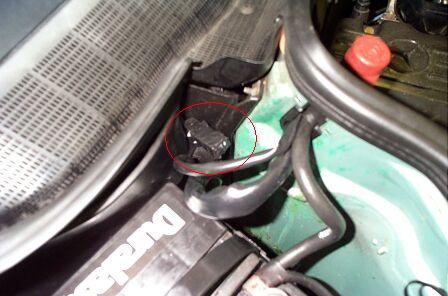


Here you see pictures. The last ones are of the Resistor Next To an American Quarter. In the first few pictures. The red circle indicated where my resistor WAS. You can see i taped over it with a combination of electrical tape and duct tape. Now i heard from a reliable source that the 2.3 does have a resistor.
So...There you have it. haha
Here you see pictures. The last ones are of the Resistor Next To an American Quarter. In the first few pictures. The red circle indicated where my resistor WAS. You can see i taped over it with a combination of electrical tape and duct tape. Now i heard from a reliable source that the 2.3 does have a resistor.
Originally Posted by Chat Session
[Cdn190er] 1:59 am: pretty well everyone one made
[Cdn190er] 2:01 am: the early ones did not have them because they lowered the compression but if you have a 985/986
engine series it is there
[Cdn190er] 2:01 am: and on NAm it is called the R16.1
[Kynyption] 2:03 am: Is it generally located in the same spot like on the 2.6?
[Cdn190er] 2:07 am: in the 2.3 I believe it is directly under the air cleaner
[Cdn190er] 2:08 am: hovering around the Cold start valve.
[Cdn190er] 2:01 am: the early ones did not have them because they lowered the compression but if you have a 985/986
engine series it is there
[Cdn190er] 2:01 am: and on NAm it is called the R16.1
[Kynyption] 2:03 am: Is it generally located in the same spot like on the 2.6?
[Cdn190er] 2:07 am: in the 2.3 I believe it is directly under the air cleaner
[Cdn190er] 2:08 am: hovering around the Cold start valve.


