


Rolling backwards in Drive

Thread Starter
Member
Joined: Nov 2001
Posts: 144
Likes: 0
From: Midwest
2002 C240
Rolling backwards in Drive
For all of ya with auto's, ever had the car start rolling backwards on you even in drive gear? I was on a slight incline the other day and that happened...should I be concerned?

MBWorld Fanatic!
Joined: Nov 2001
Posts: 3,600
Likes: 1
From: Earth
GLB 250 4matic
it rolls back on me too on an incline. my friend, whom i carpool with, lives on a very steep incline and i'm always rolling back. don't know how much b/c i step on the brake... i'm guessing that it would eventually stop - but not at 2 ft, maybe a foot. this happens in my coupe and bmw.
MBWorld Fanatic!
Joined: Nov 2001
Posts: 3,600
Likes: 1
From: Earth
GLB 250 4matic
heh, the slope is like 40 degrees  even worse, the driveway goes to a road that is at like a 30 degree angle! winter/snow is not going to be fun.
it doesn't always happen so i'm guessing the anti-rollback device is a relatively variable system - that is, sometimes its close to the point where it catches, sometimes its a little further. i'm totally guessing w/ the distance b/c i always brake. and this has happened to pretty much every auto i've ever owned (soobie, acura, and others)
even worse, the driveway goes to a road that is at like a 30 degree angle! winter/snow is not going to be fun. it doesn't always happen so i'm guessing the anti-rollback device is a relatively variable system - that is, sometimes its close to the point where it catches, sometimes its a little further. i'm totally guessing w/ the distance b/c i always brake. and this has happened to pretty much every auto i've ever owned (soobie, acura, and others)

MBWorld Fanatic!
Joined: Nov 2001
Posts: 1,230
Likes: 0
From: Gaithersburg, MD
2002 C240 6-spd (ret)
Originally posted by young
...it doesn't always happen so i'm guessing the anti-rollback device is a relatively variable system - that is, sometimes its close to the point where it catches, sometimes its a little further.
...it doesn't always happen so i'm guessing the anti-rollback device is a relatively variable system - that is, sometimes its close to the point where it catches, sometimes its a little further.
 I think it's related to the idle speed -- that's what holds your automatic-transmission car on a slight grade. If the normal "resting" idle is somewhat low (which may be the correct setting), then it won't hold on much of a hill -- this is perfectly normal. You're supposed to apply the brakes when you're stopped .
MBWorld Fanatic!
Joined: Nov 2001
Posts: 3,600
Likes: 1
From: Earth
GLB 250 4matic
i could've sworn that there was something about the gears that would prevent an automatic car from rolling back. but i'm not a car expert so i'm probably wrong.
heh, i thought this was funny - from cartalk.com about manuals:
Dear Tom and Ray:
When I was young, my Dad and I each owned Studebaker autos. My last one was a 1949. All of them were standard transmission cars and all of them had as standard equipment a hill-holder. This rather nice device holds a car in place while waiting for a light to change at a hilly intersection. You merely keep the clutch pedal at the floor, step on the brake pedal, and then you can remove your right foot and put it on the accelerator. Then, as you release the clutch pedal, the brake is released, too. And by then, you're going forward, so the car doesn't roll backwards into the car behind it. Whatever happened to hill holders? Does anybody still make one? Don
Ray: Subaru still makes cars with hill holders, Don. And as far as I know, they're the only ones who still do. I guess there's just not a public clamoring for them. Most people must still want the "challenge" of seeing if they can get moving before rolling backwards into the car behind them.
Tom: I actually have my own modern version of the hill-holder, Don. I check my rear view mirror, and when the driver behind me looks away for a minute, I ease back until I'm resting against his front bumper. So HE'S my hill holder. It works great.
heh, i thought this was funny - from cartalk.com about manuals:
Dear Tom and Ray:
When I was young, my Dad and I each owned Studebaker autos. My last one was a 1949. All of them were standard transmission cars and all of them had as standard equipment a hill-holder. This rather nice device holds a car in place while waiting for a light to change at a hilly intersection. You merely keep the clutch pedal at the floor, step on the brake pedal, and then you can remove your right foot and put it on the accelerator. Then, as you release the clutch pedal, the brake is released, too. And by then, you're going forward, so the car doesn't roll backwards into the car behind it. Whatever happened to hill holders? Does anybody still make one? Don
Ray: Subaru still makes cars with hill holders, Don. And as far as I know, they're the only ones who still do. I guess there's just not a public clamoring for them. Most people must still want the "challenge" of seeing if they can get moving before rolling backwards into the car behind them.
Tom: I actually have my own modern version of the hill-holder, Don. I check my rear view mirror, and when the driver behind me looks away for a minute, I ease back until I'm resting against his front bumper. So HE'S my hill holder. It works great.
Trending Topics
MBWorld Fanatic!
Joined: Nov 2001
Posts: 3,600
Likes: 1
From: Earth
GLB 250 4matic
MarkL, i think you're right (for once ). here's another article from cartalk that helps explain it. basically, the power of the engine keeps the car from rolling back but if the incline is high enough, it will roll back and braking is recommended.
------------
Dear Tom and Ray:
I had a problem with a run-away car. I had a 1977 Delta 88 Royale with 35,000 miles on it. I was driving up a slight hill, and stopped at a stop sign near the top. The car evidentally stalled out and I didn't realize it. I had depressed the gas pedal with the intention of making a left turn. But instead of going forward, the car drifted backwards and turned into the corner of a house. I had shut the engine off thinking the car would stop, but it didn't, and the brakes and steering didn't seem to work. I panicked and didn't know what to do. Now I won't drive again. What do you think could have happened that it went out of control and drifted backwards? Dottie
Tom: Nothing happened, Dottie. The car just stalled. And you're right; you panicked.
Ray: When a car stalls on a hill, it will start to roll. And without the power of the engine, the power steering and power brakes disappear...as you found out. The brakes and steering still work, but it's very difficult to stop or steer the car, especially if the car is large and heavy, and you happen to be small and light.
Tom: And turning off the ignition will not make the car stop. All that does is make the ENGINE stop. And in your case, the engine had already stopped! Plus, turning off the ignition can lock the steering wheel, which really does make it impossible to steer.
Ray: So what should you have done? First of all, leave the key where it is. That will at least keep the steering wheel from locking up. Next, try pushing on the brakes with both feet. It takes a lot of pressure to stop a big car without power brakes, but most people can do it.
Tom: If you don't think you can stop the car by standing on the brake pedal, you have two more options on a car with an automatic transmission. First, you can use the parking brake. While it's not always effective (which is why they don't call it the "emergency brake" anymore), if you're rolling towards a house, it's certainly worth a shot. And if the brakes are in good shape, the parking brake will generally stop a slow moving vehicle.
Ray: If that doesn't work, then you should just slam the transmission into Park. You may hear the transmission grind or clack when you do that, but isn't that better than explaining to to Mrs. Miller why you thought the dinner party she invited you to was a "drive through?"
). here's another article from cartalk that helps explain it. basically, the power of the engine keeps the car from rolling back but if the incline is high enough, it will roll back and braking is recommended.------------
Dear Tom and Ray:
I had a problem with a run-away car. I had a 1977 Delta 88 Royale with 35,000 miles on it. I was driving up a slight hill, and stopped at a stop sign near the top. The car evidentally stalled out and I didn't realize it. I had depressed the gas pedal with the intention of making a left turn. But instead of going forward, the car drifted backwards and turned into the corner of a house. I had shut the engine off thinking the car would stop, but it didn't, and the brakes and steering didn't seem to work. I panicked and didn't know what to do. Now I won't drive again. What do you think could have happened that it went out of control and drifted backwards? Dottie
Tom: Nothing happened, Dottie. The car just stalled. And you're right; you panicked.
Ray: When a car stalls on a hill, it will start to roll. And without the power of the engine, the power steering and power brakes disappear...as you found out. The brakes and steering still work, but it's very difficult to stop or steer the car, especially if the car is large and heavy, and you happen to be small and light.
Tom: And turning off the ignition will not make the car stop. All that does is make the ENGINE stop. And in your case, the engine had already stopped! Plus, turning off the ignition can lock the steering wheel, which really does make it impossible to steer.
Ray: So what should you have done? First of all, leave the key where it is. That will at least keep the steering wheel from locking up. Next, try pushing on the brakes with both feet. It takes a lot of pressure to stop a big car without power brakes, but most people can do it.
Tom: If you don't think you can stop the car by standing on the brake pedal, you have two more options on a car with an automatic transmission. First, you can use the parking brake. While it's not always effective (which is why they don't call it the "emergency brake" anymore), if you're rolling towards a house, it's certainly worth a shot. And if the brakes are in good shape, the parking brake will generally stop a slow moving vehicle.
Ray: If that doesn't work, then you should just slam the transmission into Park. You may hear the transmission grind or clack when you do that, but isn't that better than explaining to to Mrs. Miller why you thought the dinner party she invited you to was a "drive through?"
Last edited by young; Dec 12, 2001 at 10:57 AM.
MB World Stories
The Best of Mercedes & AMG

8 Oddball Mercedes Ideas That Actually Made it to Production
Verdad Gallardo
Dubai Tuner Gives the Mercedes G-Class An Entirely New Look
Verdad Gallardo
Six Gift Ideas Your AMG Loving Dad or Grad Will Cherish

7 Craziest Things AMG Gas Ever Built
Verdad Gallardo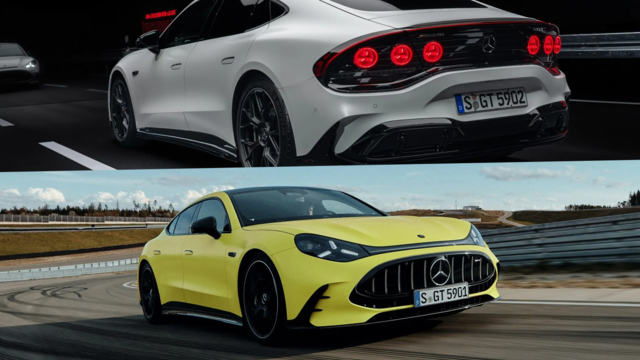
New Electric Mercedes-AMG GT 4-Door Coupe Unveiled: 10 Things You Need to Know
Verdad Gallardo
6 Mercedes Models That Did NOT Age Well (But Are Somehow Still Cool)
Verdad Gallardo
Manual Mercedes? 6 Times Sindelfingen Let Drivers Have All The Fun
Verdad Gallardo
Mercedes SLR McLaren 722 S Is Extremely Rare Example Modified by McLaren
Verdad Gallardo
8 Classic Boxy Mercedes Designs That Have Aged Like Fine Wine
Verdad Gallardo
Almost a Member!
Joined: Nov 2001
Posts: 69
Likes: 0
From: Earth
2002 C230K
gassing to stay in place on hill
Living in hilly San Francisco and driving automatics for decades, I've never given this subject much thought. Every car I've driven (domestic and Japanese to this point) has had the tendency to roll back on severe inclines.
By habit, I use the brakes to prevent rollback. Way back when, someone told me that holding a car in place on a steep hill using the accelerator is bad for the transmission. True?
By habit, I use the brakes to prevent rollback. Way back when, someone told me that holding a car in place on a steep hill using the accelerator is bad for the transmission. True?
MBWorld Fanatic!
Joined: Nov 2001
Posts: 1,230
Likes: 0
From: Gaithersburg, MD
2002 C240 6-spd (ret)
Originally posted by young
i could've sworn that there was something about the gears that would prevent an automatic car from rolling back. but i'm not a car expert so i'm probably wrong.
i could've sworn that there was something about the gears that would prevent an automatic car from rolling back. but i'm not a car expert so i'm probably wrong.
Originally posted by geistmeister
By habit, I use the brakes to prevent rollback. Way back when, someone told me that holding a car in place on a steep hill using the accelerator is bad for the transmission. True?
By habit, I use the brakes to prevent rollback. Way back when, someone told me that holding a car in place on a steep hill using the accelerator is bad for the transmission. True?
Geistmeister - I believe it's bad to hold an auto car on a hill by using the accelerator because by raising the idle, you are causing the torque converter to heat up higher than normal idle temperatures and can therefore cause damage in the long run.


