




 Jun 10, 2015, 06:49 PM
Last edit by: IB Advertising
See related guides and technical advice from our community experts:
Browse all: Engine Diagnostics
- Mercedes-Benz C-Class: Why is My Engine Getting Carbon Buildup?
Guide to diagnose trouble and recommended solutions
Browse all: Engine Diagnostics

New DI Engines -- Excessive Carbon Buildup ??

Super Member


Joined: Nov 2008
Posts: 604
Likes: 29
From: SA
2008 C350-Sport-AMG-Active Agility Pack(Not reliable) +Izuzu KB6 3L(It seems Reliable)+Mazda
Informative information.
I have a practical suggestion:Why not somebody with a new V6 with enough milage to witness buildup if there is going to be, take his car for an non intrusive examination via plughole, is this possible, with photos ?
I have a practical suggestion:Why not somebody with a new V6 with enough milage to witness buildup if there is going to be, take his car for an non intrusive examination via plughole, is this possible, with photos ?

Super Moderator

Joined: Jun 2008
Posts: 19,942
Likes: 192
From: Llandudno, Cape Town, South Africa
late 2009 CLK 350 Coupe Elegance, '65 Jaguar S Type wires
Contradictory? 
Are we looking at the same pictures? There is no cone on this new Mercedes Direct Injected M278 piston, nor is there an extended flush skirt, nor anything resembling a diesel crown or piston design. I'm sorry, but piston design is going in the opposite direction. Diesel engine design is adopting gasoline attributes. Audi has repeated proven this to be the case with their world class TDI designs and cars. Lighter designs improve efficiency, new alloy compositions improve strength without power sacrificing weight. I'm on the track every season networking with the best engine builders out there and I simply think you're either out of touch, or dreaming. You haven't convinced me.
This new Mercedes DI piston has NOTHING in common with a diesel... period.
Are we looking at the same pictures?
There is no cone on this new Mercedes Direct Injected M278 piston, nor is there an extended flush skirt, nor anything resembling a diesel crown or piston design. I'm sorry, but piston design is going in the opposite direction. Diesel engine design is adopting gasoline attributes. Audi has repeated proven this to be the case with their world class TDI designs and cars. Lighter designs improve efficiency, new alloy compositions improve strength without power sacrificing weight. I'm on the track every season networking with the best engine builders out there and I simply think you're either out of touch, or dreaming. You haven't convinced me. This new Mercedes DI piston has NOTHING in common with a diesel... period.
I could suggest some good reading but it's obvious you don't read much. You prefer being a Google parrot.
BTW - At the present time DI gasoline pistons are heavier than equivalent non DI designs. Much is being done to mitigate this.
I've been involved with my company's racing endeavours all my life - 2 & 4 stroke racing motorcycles, Motocross, Supercross, Enduro, Indycar, NASCAR, F1, DTM, Modified saloons & even some diesel racing with VW. My ear is very close to the ground. My hearing is also well maintained so that I can enjoy my audio hobby despite the excessive time spent in altitude compensated dyno rooms over many, many years.
Last edited by Glyn M Ruck; Feb 25, 2012 at 03:08 PM.
Super Moderator
Joined: Jun 2008
Posts: 19,942
Likes: 192
From: Llandudno, Cape Town, South Africa
late 2009 CLK 350 Coupe Elegance, '65 Jaguar S Type wires
A fine suggestion. I intend watching a friend's car. Unfortunately I no longer have an Olympus camera to fit my old boroscope.

MBWorld Fanatic!
Joined: Oct 2009
Posts: 2,071
Likes: 20
Nissan GT-R BE / '12 Ducati-1199 Panigale S / '12 C300-4M Loaded/GLK350-4M Loaded
It would require removing the cowl and possibly the intake port, thus involving warranty issues. The spark plug is way too behind the intake valves to see anything significant.
MBWorld Fanatic!
Joined: Oct 2009
Posts: 2,071
Likes: 20
Nissan GT-R BE / '12 Ducati-1199 Panigale S / '12 C300-4M Loaded/GLK350-4M Loaded

This is the OM642 Diesel Piston: (This OM642 does have a coned crown.)

Not to get too complex with this, simply, the only similarities between these two pistons beside the fact that they are connected to rods via pins, contain rings, (although completely different in design, construction and composition) and have indents for valve clearances, is.... absolutely.... Nothing!

Glyn may have some of you fooled, but I stand by my comments and my 40 years of racing engine building knowledge.


Senior Member
Joined: Oct 2011
Posts: 360
Likes: 3
From: Pittsburgh, PA
2020 C363 S / 2007 SLK55 / 2016 F150 4x4 / 1998 Cobra Convertible
Senior Member
Joined: Oct 2011
Posts: 360
Likes: 3
From: Pittsburgh, PA
2020 C363 S / 2007 SLK55 / 2016 F150 4x4 / 1998 Cobra Convertible
Based on your years of building race engines...when would you consider a new C350's engine being considered "broken in" enough for a dyno run? IE, how many miles?
I see the confusion. Here, please look again. This is the M276 Piston: (Please note: This M276 piston does not have a cone crown.)is is the OM642 Diesel Piston: (This OM642 does have a coned crown.)
Glyn may have some of you fooled, but I stand by my comments and my 40 years of racing engine building knowledge.
Glyn may have some of you fooled, but I stand by my comments and my 40 years of racing engine building knowledge.
MB World Stories
The Best of Mercedes & AMG

Manual Mercedes? 6 Times Sindelfingen Let Drivers Have All The Fun
Verdad Gallardo
Mercedes SLR McLaren 722 S Is Extremely Rare Example Modified by McLaren
Verdad Gallardo
8 Classic Boxy Mercedes Designs That Have Aged Like Fine Wine
Verdad Gallardo
Flawlessly Restored Mercedes 190E Evo II Heads to Auction
Verdad Gallardo
Electric Mercedes C-Class Unveiled: 11 Things You Need to Know
Verdad Gallardo
Mercedes EQS Gets A Major Update: Everything You Need to Know
Verdad Gallardo
5 Underrated Mercedes-Benz Models That Don't Get the Love They Deserve
Verdad Gallardo
Mercedes 300D Has Pushed Well Past 1 Million Miles and It Ain't Stopping
Verdad Gallardo
10 Most Reliable Mercedes-Benz Models You Can Buy Used
Verdad Gallardo
Super Moderator
Joined: Jun 2008
Posts: 19,942
Likes: 192
From: Llandudno, Cape Town, South Africa
late 2009 CLK 350 Coupe Elegance, '65 Jaguar S Type wires
Please explain the purpose of the toroidal cavity in both pistons. Toroidal cavities have been a feature of diesel pistons for years due to DI. The pre DI piston of the M272 was flat - no toroidal cavity. The gasoline piston in fact has a slight dome at the base of the toroidal cavity whereas the diesel has a more pronounced cone due to larger diesel droplet size requiring greater swirl as I've explained previously. Don't be fooled by the heavily "airbrushed" picture of the M276 piston. It's not accurate. Here is another Benz application of a similar DI piston design in which the slight dome is more clear due to chroming of the piston for display. However the main common factor in Benz DI gas & diesel engines is the toroidal cavity not present on non DI engines.

Here is the new Chrysler Pentastar engine that shares DNA with the M276 but is not DI. Note no toroidal cavity in non DI application.

For further reading on the subject I suggest publications by the likes of Sean Bennett. White papers presented to SAE etc. Do your own research. There is much written on the subject. Just make sure it's recent.
Here is the new Chrysler Pentastar engine that shares DNA with the M276 but is not DI. Note no toroidal cavity in non DI application.
For further reading on the subject I suggest publications by the likes of Sean Bennett. White papers presented to SAE etc. Do your own research. There is much written on the subject. Just make sure it's recent.
Last edited by Glyn M Ruck; Feb 26, 2012 at 02:52 PM.
Super Moderator
Joined: Jun 2008
Posts: 19,942
Likes: 192
From: Llandudno, Cape Town, South Africa
late 2009 CLK 350 Coupe Elegance, '65 Jaguar S Type wires
Frankly - monitoring the valve tulip will probably be adequate.
Even with port injection the fuel based cleaners like Techron could only clean where they could get. The rest of the porting got fouled.
Pic of M271 on Techron. Fouled where fuel can't get & pretty normal. Valve tulip spotless.

Last edited by Glyn M Ruck; Feb 26, 2012 at 04:28 PM.
MBWorld Fanatic!
Joined: Oct 2009
Posts: 2,071
Likes: 20
Nissan GT-R BE / '12 Ducati-1199 Panigale S / '12 C300-4M Loaded/GLK350-4M Loaded
You can see the inlet valve tulip clearly with a 90 degree lense fitted to a steerable boroscope by going down the plug hole with the valve cranked open. A 120> deg lookback lense will give you a bad look at the porting. Unlikely to be satisfactory.
Frankly - monitoring the valve tulip will probably be adequate.
Even with port injection the fuel based cleaners like Techron could only clean where they could get. The rest of the porting got fouled.
Pic of M271 on Techron. Fouled where fuel can't get & pretty normal. Valve tulip spotless.
Frankly - monitoring the valve tulip will probably be adequate.
Even with port injection the fuel based cleaners like Techron could only clean where they could get. The rest of the porting got fouled.
Pic of M271 on Techron. Fouled where fuel can't get & pretty normal. Valve tulip spotless.
Nonetheless, that picture is not of the DI M276, and if I read you correctly, is not down the "plug hole" as you indicate but a view down the intake chamber port with the manifold off, like I said earlier.
I believe you are trying to defend your reputation here rather than be truthful with the membership. So I apologize if you feel challenged, threatened or something in any way, but you have proven to me that you are simply making stuff up to save face.... playing with us by first offering to investigate, then backing off that offer (which made me think you're really a phony) which then only added to the "conspiracy" fears you accused me of but actually started instead. By refusing to contribute to the OP true concerns, you offer no information other than misimformation!
How long has that been going on here? Yikes! 
A = Down the intake port toward the valves. (Where your picture was taken although not of this engine.)
B = Twin Intake Valves showing location of valve seat #1 relative to the injector nozzle location with the hope that this will help with the carbon issue.
C = Piezo Direct Injector located TDC (#4 - injector tip) and forward, closer to the intake valves.
D = Spark plug located down lower than Intake Valves and between the exhaust valves. (Thus any camera probe (even with a swivel head) down the plug hole (#5) will not see the intake valves very well.)
#2 = Piston Crown showing no cone. The recess crown is typical for turbo engines including turbo diesels to reduce overall compression ratios. Now if you were to look at the other picture of the non turbo V6 DI M276, this depression is far less than this Mercedes DI turbo V8.
#3 = Piston ring depth, much less than a diesel. No full skirt seen either. No resemblance to a real diesel piston at all.... as seen here...

Sorry if this appears confusing, but this is again addressing two issues. The possible and corrective measures Mercedes took to reduce or eliminate the carbon issues in their Direct Injected engines.... and the claimed "similarities" of piston design.
Last edited by MBRedux; Feb 27, 2012 at 12:08 AM.
Super Moderator
Joined: Jun 2008
Posts: 19,942
Likes: 192
From: Llandudno, Cape Town, South Africa
late 2009 CLK 350 Coupe Elegance, '65 Jaguar S Type wires
You really are confused or not very bright. The M271 pic was to show that even with port injection - i.e. not DI into the combustion chamber the fuel can only clean where it can get to. Thus dirty inlet ports are common & thus monitoring the valve tulip for fouling on a DI engine is adequate. All engine porting gets fouled over time.
My boroscope with a 90 degree lens attached to the tip & inserted down the plug hole will easily see the entire inlet valve tulips with the valves cranked open. Our additive company sells 50% of the fuel detergents/detergent components dosed into fuel globally. I'm more than accustomed to examining inlet systems on some very difficult designs. The very reason that decent boroscopes have many different angle optics available is so they can look around 90 deg corners 120 deg corners etc. Known as prism lenses for your edification. This is how non destructive examination of aircraft turbines is achieved etc. The way that a medical endoscope can examine the whole of your colon.
Here is a 90 degree tip as an example. My prism tips are approx .6 of a cm long & in a range of 10 angles.

You of course always shirt the toroidal cavity question. As I have previously stated & you have difficulty understanding. Gasoline DI pistons have taken on diesel characteristics but are more lightly built than diesel ones but more strongly built than non DI designs.
They have longer skirts than non DI but not as long as diesel to prevent thrust side scuffing.
They have a stronger crown than non DI gasoline pistons due to early cracking problems experienced - go do your homework. There is a whole SAE paper on the subject
They are at present heavier than non DI designs although a lot of work is being done to mitigate this.
They have adopted diesel type toroidal cavities to operate in desired swirl, low turbulence conditions ideal for DI but with a different fuel.
Yes - they are lighter in construction than diesel pistons because they don't have to contend with diesel compression ratios & knock. They have, however, by design taken on diesel piston characteristics. As injection improves DI diesel & gasoline pistons will look more like one another but diesel will always be stronger. I stated this up front.
I strongly suggest you go and do some reading & learn. Kevin - who is the OP of this thread will have no trouble grasping what I'm saying.
If you don't then tough!
I'm not violating my company embargo. That will not happen.
My original statement was "See how the piston design is adopting diesel characteristics - obviously of far lighter construction." I'm sure a whole SAE conference would agree with me. I did not say the pistons were identical.
My boroscope with a 90 degree lens attached to the tip & inserted down the plug hole will easily see the entire inlet valve tulips with the valves cranked open. Our additive company sells 50% of the fuel detergents/detergent components dosed into fuel globally. I'm more than accustomed to examining inlet systems on some very difficult designs. The very reason that decent boroscopes have many different angle optics available is so they can look around 90 deg corners 120 deg corners etc. Known as prism lenses for your edification. This is how non destructive examination of aircraft turbines is achieved etc. The way that a medical endoscope can examine the whole of your colon.
Here is a 90 degree tip as an example. My prism tips are approx .6 of a cm long & in a range of 10 angles.
You of course always shirt the toroidal cavity question. As I have previously stated & you have difficulty understanding. Gasoline DI pistons have taken on diesel characteristics but are more lightly built than diesel ones but more strongly built than non DI designs.
They have longer skirts than non DI but not as long as diesel to prevent thrust side scuffing.
They have a stronger crown than non DI gasoline pistons due to early cracking problems experienced - go do your homework. There is a whole SAE paper on the subject
They are at present heavier than non DI designs although a lot of work is being done to mitigate this.
They have adopted diesel type toroidal cavities to operate in desired swirl, low turbulence conditions ideal for DI but with a different fuel.
Yes - they are lighter in construction than diesel pistons because they don't have to contend with diesel compression ratios & knock. They have, however, by design taken on diesel piston characteristics. As injection improves DI diesel & gasoline pistons will look more like one another but diesel will always be stronger. I stated this up front.
I strongly suggest you go and do some reading & learn. Kevin - who is the OP of this thread will have no trouble grasping what I'm saying.
If you don't then tough!
I'm not violating my company embargo. That will not happen.
My original statement was "See how the piston design is adopting diesel characteristics - obviously of far lighter construction." I'm sure a whole SAE conference would agree with me. I did not say the pistons were identical.
Last edited by Glyn M Ruck; Feb 27, 2012 at 12:31 AM.

MBWorld Fanatic!
Joined: Oct 2009
Posts: 2,071
Likes: 20
Nissan GT-R BE / '12 Ducati-1199 Panigale S / '12 C300-4M Loaded/GLK350-4M Loaded
I've got several back in our shop, but not this old. Our's is made by Olympus Optical, has several different bendable, rotatable and detachable heads, (via joy-stick) with WiFi high def video capable (720p) etc.
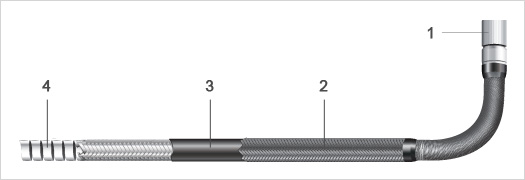
Last edited by MBRedux; Feb 27, 2012 at 12:53 AM.
Super Moderator
Joined: Jun 2008
Posts: 19,942
Likes: 192
From: Llandudno, Cape Town, South Africa
late 2009 CLK 350 Coupe Elegance, '65 Jaguar S Type wires
Indeed. Mine is the older, much older Olympus. But nevertheless steerable 10 head & still film camera bayonet compatible. Obviously our research labs have the latest. Mine is more than good enough for home use & was given to me by the company after I ran a fuel clean up program for them many years back. A nice gesture at the time because it cost a bomb. A lot more than they are now. The pic is of a fixed 90 deg head. Not my unit.
We will agree to disagree.
Thanks to all of those who flooded my PM box with support.
We will agree to disagree.
Thanks to all of those who flooded my PM box with support.

Thread Starter
MBWorld Fanatic!
Joined: Sep 2008
Posts: 1,331
Likes: 9
From: Delaware
2004 Mazda6, 1993 RX7
"There might be a special thin rod borescope that can be past down the spark plug hole when the intake valve is wide open, to view build-up on the back side of the valve head."
.
Thread Starter
MBWorld Fanatic!
Joined: Sep 2008
Posts: 1,331
Likes: 9
From: Delaware
2004 Mazda6, 1993 RX7
Hi,
I believe the DI M276 cone shaped piston crown centralizes the stratified charge/lean burn mixture around the spark plug to get a better burn/more complete burn from a mixture that is well leaner than the stoichiometric ideal mixture of 14.7 : 1
It also enables, in conjunction with the multi-squirt injectors, the engine to run at very lean mixtures at higher load/higher rpm levels, not just at idle and very minimal load levels.
I believe the DI M276 cone shaped piston crown centralizes the stratified charge/lean burn mixture around the spark plug to get a better burn/more complete burn from a mixture that is well leaner than the stoichiometric ideal mixture of 14.7 : 1
It also enables, in conjunction with the multi-squirt injectors, the engine to run at very lean mixtures at higher load/higher rpm levels, not just at idle and very minimal load levels.
Post for Bosch DI Fuel Control Video
.
Super Moderator
Joined: Jun 2008
Posts: 19,942
Likes: 192
From: Llandudno, Cape Town, South Africa
late 2009 CLK 350 Coupe Elegance, '65 Jaguar S Type wires
MBWorld Fanatic!
Joined: Oct 2009
Posts: 2,071
Likes: 20
Nissan GT-R BE / '12 Ducati-1199 Panigale S / '12 C300-4M Loaded/GLK350-4M Loaded
"D = Spark plug located down lower than Intake Valves and between the exhaust valves. (Thus any camera probe (even with a swivel head) down the plug hole (#5) will not see the intake valves very well.)"
Even when the valves are opened fully. But there could be something on the manifold like a sensor, vacuum point, or some other hose that when removed will give you access point to the intake valves through "A".
Last edited by MBRedux; Feb 27, 2012 at 10:15 PM.
Thread Starter
MBWorld Fanatic!
Joined: Sep 2008
Posts: 1,331
Likes: 9
From: Delaware
2004 Mazda6, 1993 RX7
That's an excellent graphic illustration you posted, with the arrows, but it's still a bit difficult for me to visualize how scoping won't work. It worked up my butt 
I like the bookeds you showed, from a piston trophy. I have a twin row 80mm spherical roller bearing that failed and got so hot it welded the rollers to the inner race (outer race removed). It came to me at the office, in a box with others for analysis. it was too good to toss, so I cleaned it up and useded it as a paper weight.
.
I like the bookeds you showed, from a piston trophy. I have a twin row 80mm spherical roller bearing that failed and got so hot it welded the rollers to the inner race (outer race removed). It came to me at the office, in a box with others for analysis. it was too good to toss, so I cleaned it up and useded it as a paper weight.
.
Thread Starter
MBWorld Fanatic!
Joined: Sep 2008
Posts: 1,331
Likes: 9
From: Delaware
2004 Mazda6, 1993 RX7
As OP here, I have several unenumerated powers, and I am using one now to suggest civil sanity. Glen and MBRedux are well known powerhouses of knowledge for this forum, and it's below each of them to tussle via keyboard, as it is too easy to do.
As a yahoo in LA (who won the top $3.8E6 award for playing a race card) once said about 30 years ago, "can we all get along?" .
nuuf said, can I hear an Amen?
.
As a yahoo in LA (who won the top $3.8E6 award for playing a race card) once said about 30 years ago, "can we all get along?" .
nuuf said, can I hear an Amen?
.

Junior Member
Joined: Mar 2012
Posts: 27
Likes: 1
From: Portland, OR
2001 E55, 2016 ML350, 1974 240D
I admit that I'm a bit scared about the DI design of the new 3.5. I've heard many horror stories from Mini owners with their DI engines... I'm hoping to find that there's some brand of gas that's better for minimizing this risk. Either that or I guess I should start seeing how much effort it will be to take off the top half of the engine in 4 years.... I'm hoping I don't regret not buying Ford...

Newbie
Joined: May 2012
Posts: 6
Likes: 0
From: Shanghai
V212 E260L (China version)
As a new owner of a E260L using the M271EVO (the Chinese long version coded V212, it is not called 250L just because 250 means stupid person in Beijing slang), I experienced some engine knocking in the first few months of ownership (the car has just 1600km now). I bring back to the dealer to check and the technician blame it on the poor fuel quality. I started searching on the Chinese internet and apparently it affects both C and E class commonly. And import version seems more affected but local assembled version like mine has problem as well.
Unfortunately we don't have independent Mercedes specialists to go to so the only option is the authorised dealer but the general feeling is they do not have a clue (or maybe MB is unable to really solve the issue).
My questions are if there is anything I can do to minimise the knocking / delay the carbon build up. Obviously I can do nothing about the fuel quality, but e.g. can I change my driving habit (I am now using manual change to keep a higher rpm when hard acceleration is needed), or put fuel additive (the dealer recommend Keropur from BASF), or can I ask the dealer to change some ECU parameters (and what are they??? fuel requirement? emission?). Thanks.
Unfortunately we don't have independent Mercedes specialists to go to so the only option is the authorised dealer but the general feeling is they do not have a clue (or maybe MB is unable to really solve the issue).
My questions are if there is anything I can do to minimise the knocking / delay the carbon build up. Obviously I can do nothing about the fuel quality, but e.g. can I change my driving habit (I am now using manual change to keep a higher rpm when hard acceleration is needed), or put fuel additive (the dealer recommend Keropur from BASF), or can I ask the dealer to change some ECU parameters (and what are they??? fuel requirement? emission?). Thanks.


