Un-even space between tire and fender

Thread Starter
Senior Member
Joined: Mar 2007
Posts: 365
Likes: 0
2003 C32 AMG & 2009 CTS-V
Un-even space between tire and fender
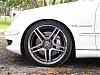
Over the weekend, I was checking the tread on my rear tires and noticed a considerable difference in the space between the top of the tiire and the center of the fender wheel well on the left side when compared the the right side. I can comfortably stick my hand in the space on the left side, but on the right side, the space will just accomodate my hand. When I looked at it from the rear while in the driveway, it seemed the squat on the right side was more pronounced. While driving,... I can sense a list to the right, but I'm thinking it may be a combo of road crown and a concern stuck in my head. I never noticed it until I was inspecting the rear tire tread, so the perceived listing could very well be in my head. I accept that. But the spacing between tire and fender is real.
Before I purchased the car, I checked carfax to see if there had been any body work perfromed or if there was an accident in it's history. Nothing turned up. Something else. It seems more pronounced when it's parked on an incline,... like in my driveway, than it appears to be when on evel ground. Could the design of the rear suspension have something to do with it? What about a fatiqued spring? I'm not getting any bounce, so I'm thinking shock or anything like that.
Has anyone else had to deal with this,... if so, what was the cause? What was the fix?
Before I purchased the car, I checked carfax to see if there had been any body work perfromed or if there was an accident in it's history. Nothing turned up. Something else. It seems more pronounced when it's parked on an incline,... like in my driveway, than it appears to be when on evel ground. Could the design of the rear suspension have something to do with it? What about a fatiqued spring? I'm not getting any bounce, so I'm thinking shock or anything like that.
Has anyone else had to deal with this,... if so, what was the cause? What was the fix?

MBWorld Fanatic!
Joined: Nov 2003
Posts: 4,278
Likes: 0
From: Fresno, CA
'09 A4 S Line
Over the weekend, I was checking the tread on my rear tires and noticed a considerable difference in the space between the top of the tiire and the center of the fender wheel well on the left side when compared the the right side. I can comfortably stick my hand in the space on the left side, but on the right side, the space will just accomodate my hand. When I looked at it from the rear while in the driveway, it seemed the squat on the right side was more pronounced. While driving,... I can sense a list to the right, but I'm thinking it may be a combo of road crown and a concern stuck in my head. I never noticed it until I was inspecting the rear tire tread, so the perceived listing could very well be in my head. I accept that. But the spacing between tire and fender is real.
Before I purchased the car, I checked carfax to see if there had been any body work perfromed or if there was an accident in it's history. Nothing turned up. Something else. It seems more pronounced when it's parked on an incline,... like in my driveway, than it appears to be when on evel ground. Could the design of the rear suspension have something to do with it? What about a fatiqued spring? I'm not getting any bounce, so I'm thinking shock or anything like that.
Has anyone else had to deal with this,... if so, what was the cause? What was the fix?
Before I purchased the car, I checked carfax to see if there had been any body work perfromed or if there was an accident in it's history. Nothing turned up. Something else. It seems more pronounced when it's parked on an incline,... like in my driveway, than it appears to be when on evel ground. Could the design of the rear suspension have something to do with it? What about a fatiqued spring? I'm not getting any bounce, so I'm thinking shock or anything like that.
Has anyone else had to deal with this,... if so, what was the cause? What was the fix?


MBWorld Fanatic!
Joined: Nov 2005
Posts: 1,513
Likes: 0
C32 AMG
Before reaching any conclusions, you would need to check the car on absolutely flat ground. If it's still off, then consider spring changes.
I got coilovers on my A6 and sweated off half of my body weight trying to get ride heights equivalent (LF=RF, RR=LR). By my best efforts, I determined that my car could NEVER be set to an even ride height because there was about 1/4 inch of "twist" in the body. That could be at the core of the car, or just one fender slightly imperfect.
Basically, it's not worth sweating as long as it's not visual.
The CORRECT way to balance a car is by weight, not height. Weight balancing ensures that the sides of the car bear weight equally (assuming you want balanced handling). If, for example, the right front spring/strut is taller/stiffer than the others, then the right front and left rear tires will bear more weight than LF/RR, which may help in right turns, and hurt left turns. (It's called "Wedge" in NASCAR lingo).
I got coilovers on my A6 and sweated off half of my body weight trying to get ride heights equivalent (LF=RF, RR=LR). By my best efforts, I determined that my car could NEVER be set to an even ride height because there was about 1/4 inch of "twist" in the body. That could be at the core of the car, or just one fender slightly imperfect.
Basically, it's not worth sweating as long as it's not visual.
The CORRECT way to balance a car is by weight, not height. Weight balancing ensures that the sides of the car bear weight equally (assuming you want balanced handling). If, for example, the right front spring/strut is taller/stiffer than the others, then the right front and left rear tires will bear more weight than LF/RR, which may help in right turns, and hurt left turns. (It's called "Wedge" in NASCAR lingo).
Thread Starter
Senior Member
Joined: Mar 2007
Posts: 365
Likes: 0
2003 C32 AMG & 2009 CTS-V
Before reaching any conclusions, you would need to check the car on absolutely flat ground. If it's still off, then consider spring changes.
I got coilovers on my A6 and sweated off half of my body weight trying to get ride heights equivalent (LF=RF, RR=LR). By my best efforts, I determined that my car could NEVER be set to an even ride height because there was about 1/4 inch of "twist" in the body. That could be at the core of the car, or just one fender slightly imperfect.
Basically, it's not worth sweating as long as it's not visual.
The CORRECT way to balance a car is by weight, not height. Weight balancing ensures that the sides of the car bear weight equally (assuming you want balanced handling). If, for example, the right front spring/strut is taller/stiffer than the others, then the right front and left rear tires will bear more weight than LF/RR, which may help in right turns, and hurt left turns. (It's called "Wedge" in NASCAR lingo).
I got coilovers on my A6 and sweated off half of my body weight trying to get ride heights equivalent (LF=RF, RR=LR). By my best efforts, I determined that my car could NEVER be set to an even ride height because there was about 1/4 inch of "twist" in the body. That could be at the core of the car, or just one fender slightly imperfect.
Basically, it's not worth sweating as long as it's not visual.
The CORRECT way to balance a car is by weight, not height. Weight balancing ensures that the sides of the car bear weight equally (assuming you want balanced handling). If, for example, the right front spring/strut is taller/stiffer than the others, then the right front and left rear tires will bear more weight than LF/RR, which may help in right turns, and hurt left turns. (It's called "Wedge" in NASCAR lingo).
I picked the car up and reschedules an appointment this coming Monday because I jsut wasn't logistically prepared for a three day outage! So I'll come out of this with new bushings, a rear control arm, and some other parts replaced under warranty on the front,... my cost will be the price of a pair of new shocks for the rear and a wheel alignment.
How does this sound to everyone? What do you guys think? Should I be protesting the wheel alignment charge? I'm even thinking that maybe I shouldn't be paying for shocks if a warranteed falure caused the shocks to be un-usable. Really woud appreciate comments and advice.
MBWorld Fanatic!
Joined: Nov 2003
Posts: 4,278
Likes: 0
From: Fresno, CA
'09 A4 S Line
It sounds like you're on the right track here. Most likely you don't need new shocks, but it's sure a good way for them to place part of the blame on wear and tear parts not covered under warranty so they can overcharge you for parts, some of the labor, and an alignment that they should be doing anyway after replacing all the parts that are under warranty. If it was me, I'd tell them to skip replacing the shocks, but make sure they align the car properly after replacing all the other suspension components. At the very minimum, they should do an alignment check to be sure the car is still within OEM specs.

Super Moderator
Joined: Jul 2006
Posts: 3,365
Likes: 12
From: Orange County, CA
GMC - Miata - Trek - P-Car
The spring cup secures and locates the top of the spring against the chassis where it mounts.
Some variation in ride height and wheel/tire location (laterally and longitudinally) is to be considered normal. Witness those W203 owners who have fitted aftermarket wheels that experience interference on only one side, but not the other.
As Blake advised, do not authorize them to replace the dampers, as they have no effect on static ride height. If, in fact, they have exceeded their useful service life, quality aftermarket pieces (Bilstein, Koni) installed by a competent independent technician will be more cost effective and may result in improved handling prowess. As for them charging to check and/or correct the alignment, the task is most often a rather modest expense. It is always less expensive than having to replace expensive tires prematurely.
On principle, the alignment should be included at no charge as it was incidental to your warranty repair. An analogy might be if one had a (warranty covered) oil leak emanating from the oil pan gasket. During the course of the repair, which necessitates removing the oil pan from the engine, the old motor oil is drained and discarded. Should the owner be required to purchase the new oil? I should think not.
Has your SA treated you well on other service and repair occasions? Let that be your guide, as one must choose which battles are worth fighting.
Some variation in ride height and wheel/tire location (laterally and longitudinally) is to be considered normal. Witness those W203 owners who have fitted aftermarket wheels that experience interference on only one side, but not the other.
As Blake advised, do not authorize them to replace the dampers, as they have no effect on static ride height. If, in fact, they have exceeded their useful service life, quality aftermarket pieces (Bilstein, Koni) installed by a competent independent technician will be more cost effective and may result in improved handling prowess. As for them charging to check and/or correct the alignment, the task is most often a rather modest expense. It is always less expensive than having to replace expensive tires prematurely.
On principle, the alignment should be included at no charge as it was incidental to your warranty repair. An analogy might be if one had a (warranty covered) oil leak emanating from the oil pan gasket. During the course of the repair, which necessitates removing the oil pan from the engine, the old motor oil is drained and discarded. Should the owner be required to purchase the new oil? I should think not.
Has your SA treated you well on other service and repair occasions? Let that be your guide, as one must choose which battles are worth fighting.

MBWorld Fanatic!
Joined: Dec 2005
Posts: 1,239
Likes: 1
From: San Jose, CA
ML63
The spring cup secures and locates the top of the spring against the chassis where it mounts.
Some variation in ride height and wheel/tire location (laterally and longitudinally) is to be considered normal. Witness those W203 owners who have fitted aftermarket wheels that experience interference on only one side, but not the other.
As Blake advised, do not authorize them to replace the dampers, as they have no effect on static ride height. If, in fact, they have exceeded their useful service life, quality aftermarket pieces (Bilstein, Koni) installed by a competent independent technician will be more cost effective and may result in improved handling prowess. As for them charging to check and/or correct the alignment, the task is most often a rather modest expense. It is always less expensive than having to replace expensive tires prematurely.
On principle, the alignment should be included at no charge as it was incidental to your warranty repair. An analogy might be if one had a (warranty covered) oil leak emanating from the oil pan gasket. During the course of the repair, which necessitates removing the oil pan from the engine, the old motor oil is drained and discarded. Should the owner be required to purchase the new oil? I should think not.
Has your SA treated you well on other service and repair occasions? Let that be your guide, as one must choose which battles are worth fighting.
Some variation in ride height and wheel/tire location (laterally and longitudinally) is to be considered normal. Witness those W203 owners who have fitted aftermarket wheels that experience interference on only one side, but not the other.
As Blake advised, do not authorize them to replace the dampers, as they have no effect on static ride height. If, in fact, they have exceeded their useful service life, quality aftermarket pieces (Bilstein, Koni) installed by a competent independent technician will be more cost effective and may result in improved handling prowess. As for them charging to check and/or correct the alignment, the task is most often a rather modest expense. It is always less expensive than having to replace expensive tires prematurely.
On principle, the alignment should be included at no charge as it was incidental to your warranty repair. An analogy might be if one had a (warranty covered) oil leak emanating from the oil pan gasket. During the course of the repair, which necessitates removing the oil pan from the engine, the old motor oil is drained and discarded. Should the owner be required to purchase the new oil? I should think not.
Has your SA treated you well on other service and repair occasions? Let that be your guide, as one must choose which battles are worth fighting.

Trending Topics
MB World Stories
The Best of Mercedes & AMG

Manual Mercedes? 6 Times Sindelfingen Let Drivers Have All The Fun
Verdad Gallardo
Mercedes SLR McLaren 722 S Is Extremely Rare Example Modified by McLaren
Verdad Gallardo
8 Classic Boxy Mercedes Designs That Have Aged Like Fine Wine
Verdad Gallardo
Flawlessly Restored Mercedes 190E Evo II Heads to Auction
Verdad Gallardo
Electric Mercedes C-Class Unveiled: 11 Things You Need to Know
Verdad Gallardo
Mercedes EQS Gets A Major Update: Everything You Need to Know
Verdad Gallardo
5 Underrated Mercedes-Benz Models That Don't Get the Love They Deserve
Verdad Gallardo
Mercedes 300D Has Pushed Well Past 1 Million Miles and It Ain't Stopping
Verdad Gallardo
10 Most Reliable Mercedes-Benz Models You Can Buy Used
Verdad Gallardo
Thread Starter
Senior Member
Joined: Mar 2007
Posts: 365
Likes: 0
2003 C32 AMG & 2009 CTS-V
The spring cup secures and locates the top of the spring against the chassis where it mounts.
Some variation in ride height and wheel/tire location (laterally and longitudinally) is to be considered normal. Witness those W203 owners who have fitted aftermarket wheels that experience interference on only one side, but not the other.
As Blake advised, do not authorize them to replace the dampers, as they have no effect on static ride height. If, in fact, they have exceeded their useful service life, quality aftermarket pieces (Bilstein, Koni) installed by a competent independent technician will be more cost effective and may result in improved handling prowess. As for them charging to check and/or correct the alignment, the task is most often a rather modest expense. It is always less expensive than having to replace expensive tires prematurely.
On principle, the alignment should be included at no charge as it was incidental to your warranty repair. An analogy might be if one had a (warranty covered) oil leak emanating from the oil pan gasket. During the course of the repair, which necessitates removing the oil pan from the engine, the old motor oil is drained and discarded. Should the owner be required to purchase the new oil? I should think not.
Has your SA treated you well on other service and repair occasions? Let that be your guide, as one must choose which battles are worth fighting.
Some variation in ride height and wheel/tire location (laterally and longitudinally) is to be considered normal. Witness those W203 owners who have fitted aftermarket wheels that experience interference on only one side, but not the other.
As Blake advised, do not authorize them to replace the dampers, as they have no effect on static ride height. If, in fact, they have exceeded their useful service life, quality aftermarket pieces (Bilstein, Koni) installed by a competent independent technician will be more cost effective and may result in improved handling prowess. As for them charging to check and/or correct the alignment, the task is most often a rather modest expense. It is always less expensive than having to replace expensive tires prematurely.
On principle, the alignment should be included at no charge as it was incidental to your warranty repair. An analogy might be if one had a (warranty covered) oil leak emanating from the oil pan gasket. During the course of the repair, which necessitates removing the oil pan from the engine, the old motor oil is drained and discarded. Should the owner be required to purchase the new oil? I should think not.
Has your SA treated you well on other service and repair occasions? Let that be your guide, as one must choose which battles are worth fighting.
As far as the shocks (dampers), I think you guys hit it on the head. If I can't get them to replace them within warranty, I think I will opt for a pair of shocks that out performs the standard shocks. But I will lightly press for them to replace them. Here's their explanation on the shocks: The shcok pistons were wearing normally, but in different sections of the cylinders because of the list (lean), since the height will be affected by the repair, the side repaired will be cause the shock piston to settle in a new mean area. According to them, this will have the affect of making one shock "newer" than the other. They claim that this will make one side ride and re-act to road bumps differently,... one side softer than the other. I completely understand the possibility of all this talk being just an attempt to sell me a pair of shocks, but it seemed to make sense (a little),... I just don't know. Does it make sense to you guys, or does it sound like blowing smoke?
As far as the wheel alignmnet,... I think I heavily press on that issue. I'll prolly use your anology in my argument if I get more than the standard resistance.
This SA has treated me well. He's taken me through all my S/C and I/C pump drama, electrical problems, and power steering problems with no problems.
Thanks again man,... totally agree with Mark. Great post!
MBworld Guru


Joined: Apr 2002
Posts: 22,058
Likes: 18
From: Diamond Bar, CA
W206 PHEV AMG
The spring cup secures and locates the top of the spring against the chassis where it mounts.
Some variation in ride height and wheel/tire location (laterally and longitudinally) is to be considered normal. Witness those W203 owners who have fitted aftermarket wheels that experience interference on only one side, but not the other.
As Blake advised, do not authorize them to replace the dampers, as they have no effect on static ride height. If, in fact, they have exceeded their useful service life, quality aftermarket pieces (Bilstein, Koni) installed by a competent independent technician will be more cost effective and may result in improved handling prowess. As for them charging to check and/or correct the alignment, the task is most often a rather modest expense. It is always less expensive than having to replace expensive tires prematurely.
On principle, the alignment should be included at no charge as it was incidental to your warranty repair. An analogy might be if one had a (warranty covered) oil leak emanating from the oil pan gasket. During the course of the repair, which necessitates removing the oil pan from the engine, the old motor oil is drained and discarded. Should the owner be required to purchase the new oil? I should think not.
Has your SA treated you well on other service and repair occasions? Let that be your guide, as one must choose which battles are worth fighting.
Some variation in ride height and wheel/tire location (laterally and longitudinally) is to be considered normal. Witness those W203 owners who have fitted aftermarket wheels that experience interference on only one side, but not the other.
As Blake advised, do not authorize them to replace the dampers, as they have no effect on static ride height. If, in fact, they have exceeded their useful service life, quality aftermarket pieces (Bilstein, Koni) installed by a competent independent technician will be more cost effective and may result in improved handling prowess. As for them charging to check and/or correct the alignment, the task is most often a rather modest expense. It is always less expensive than having to replace expensive tires prematurely.
On principle, the alignment should be included at no charge as it was incidental to your warranty repair. An analogy might be if one had a (warranty covered) oil leak emanating from the oil pan gasket. During the course of the repair, which necessitates removing the oil pan from the engine, the old motor oil is drained and discarded. Should the owner be required to purchase the new oil? I should think not.
Has your SA treated you well on other service and repair occasions? Let that be your guide, as one must choose which battles are worth fighting.

Thread Starter
Senior Member
Joined: Mar 2007
Posts: 365
Likes: 0
2003 C32 AMG & 2009 CTS-V
Ok,... just got off the phone with my SA. The car will be ready in the morning. Here's what they ended up doing to the suspension. In the front, left/right ball joints and bushings were replaced. I asked about wheel alignment, and he said it would be done at no charge. Out back in the rear, there was a problem with a leading or a trailing arm,... I forgot which one he said. They're also replacing struts (shock absorbers I'm thinking). I know there's more to it than this, but I won't know until I see the service report and look thru the part #'s. But it looks like I got some pretty major work done under the car,... and under warranty. I also asked whether there was any indication of a collision that might have caused some of my ride height problems (not trusting carfax),... none!
Thanks everyone for advice and comments.
Thanks everyone for advice and comments.