






C43 better than M3

MBWorld Fanatic!
Joined: Jan 2002
Posts: 1,869
Likes: 2
From: Los Angeles
GL450, Sienna SE
Hmm. My C36 used to walk away from M3's all the time. I only did one mod thou. Test pipe.  I also like to pump 100 octane once in awhile too. Now my C43 would rip up my C36. No contest. The C43 would get easy 4-5 cars on the C36 and would keep pulling. I believe my C43 has a very aggressive tranny chip. Ive been in other C43's and they shift a lot slower. There are a few silver 99 C43 that have blown their trannies at 60K. Thats what mine also did and I bet its cuz of the tranny ECU. If your friend raced a C43 like mine, it would kill the M3 unless its F/I.
I also like to pump 100 octane once in awhile too. Now my C43 would rip up my C36. No contest. The C43 would get easy 4-5 cars on the C36 and would keep pulling. I believe my C43 has a very aggressive tranny chip. Ive been in other C43's and they shift a lot slower. There are a few silver 99 C43 that have blown their trannies at 60K. Thats what mine also did and I bet its cuz of the tranny ECU. If your friend raced a C43 like mine, it would kill the M3 unless its F/I.

Newbie
Joined: Mar 2003
Posts: 13
Likes: 0
From: Silicon Valley
C43
My previous car was a 1995 (May 1994, actually) USA M3 with the 5-speed manual ZF. (The automatic wasn't available until November or December.) In 1999, California went to California Reformulated Gas Version 2 and my M3's power took a nose dive. It was very depressing. :-(
The final straw came when I took the car to Dinan--one of the bonuses of living in silicon valley. (Just do a google search for "dinan bmw" if you don't know who Dinan is.) The tech said something like: "Your car drives like sh-t; welcome to California! ... no, you're not going to be happy with any Dinan power modifications; it's the gasoline that is the problem, not your car."
So, I bought a 1998 C43 last summer and sent the M3 to live with my sister in Boston, where they have much better fuel. The C43 was born in August 1998 and is not modified. Here are my seat-of-the-pants impressions of the C43, M3, and M3 on current California fuel (M3/CA). Note that I have recently driven the M3 on good fuel on a trip back home.
0 to 20 times: M3 is the clear winner; has the best tire traction (most weight on back, no traction control, limited-slip differential) and can skid the wheels throughout the range. M3/CA and C43 each have a hard time keeping the wheels at their limits throughout. The 1998 C43's traction control can't be defeated easily (using wire cutters might be easy, but I don't really want to do that :-).
20 to 35 times: again the M3 is the clear winner, with wheels at their limit the whole time. C43 also at the tire limit. M3/CA can't develop enough torque to keep up.
35 to 60 times: The M3 and C43 both redline at about 35 to 37 MPH. M3 (stick) and will out-shift the C43. After the shift, the M3 and C43 are about the same. M3/CA is lagging due to lack of power.
65+ (i.e.: 3rd gear): the faster you go the larger the advantage to the C43's engine. I've never gone fast enough to experience 4th gear, but can only assume that the C43 pulls better and better relative to the M3.
"Street start": starting at 5MPH and assuming that the cars are in 1st gear already, I think the M3 would STILL win the race to the 1st gear redline.
"4 passengers": the C43 would easily do better after 35 MPH. The C43 would probaby hold its own in the 0 to 35 range.
Handling... this one is pretty easy. The M3 will win on the track. The M3 has a better rubber/weight ratio and the 1995 model is really well balanced. Add a lower center of gravity, limited slip differential, and a controllable transmission--there is no contest. Over bumps and undulations, I think the M3's better balance will win out. That being said, I suspect that my C43's cornering grip is just as good. With 4 people in the car, the "ride quality" is much nicer.
The final straw came when I took the car to Dinan--one of the bonuses of living in silicon valley. (Just do a google search for "dinan bmw" if you don't know who Dinan is.) The tech said something like: "Your car drives like sh-t; welcome to California! ... no, you're not going to be happy with any Dinan power modifications; it's the gasoline that is the problem, not your car."
So, I bought a 1998 C43 last summer and sent the M3 to live with my sister in Boston, where they have much better fuel. The C43 was born in August 1998 and is not modified. Here are my seat-of-the-pants impressions of the C43, M3, and M3 on current California fuel (M3/CA). Note that I have recently driven the M3 on good fuel on a trip back home.
0 to 20 times: M3 is the clear winner; has the best tire traction (most weight on back, no traction control, limited-slip differential) and can skid the wheels throughout the range. M3/CA and C43 each have a hard time keeping the wheels at their limits throughout. The 1998 C43's traction control can't be defeated easily (using wire cutters might be easy, but I don't really want to do that :-).
20 to 35 times: again the M3 is the clear winner, with wheels at their limit the whole time. C43 also at the tire limit. M3/CA can't develop enough torque to keep up.
35 to 60 times: The M3 and C43 both redline at about 35 to 37 MPH. M3 (stick) and will out-shift the C43. After the shift, the M3 and C43 are about the same. M3/CA is lagging due to lack of power.
65+ (i.e.: 3rd gear): the faster you go the larger the advantage to the C43's engine. I've never gone fast enough to experience 4th gear, but can only assume that the C43 pulls better and better relative to the M3.
"Street start": starting at 5MPH and assuming that the cars are in 1st gear already, I think the M3 would STILL win the race to the 1st gear redline.
"4 passengers": the C43 would easily do better after 35 MPH. The C43 would probaby hold its own in the 0 to 35 range.
Handling... this one is pretty easy. The M3 will win on the track. The M3 has a better rubber/weight ratio and the 1995 model is really well balanced. Add a lower center of gravity, limited slip differential, and a controllable transmission--there is no contest. Over bumps and undulations, I think the M3's better balance will win out. That being said, I suspect that my C43's cornering grip is just as good. With 4 people in the car, the "ride quality" is much nicer.
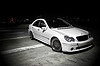
MBworld Guru


Joined: Apr 2002
Posts: 22,058
Likes: 18
From: Diamond Bar, CA
W206 PHEV AMG
don't think the us spec 95 is any different from those that are from the 98 (same pkg, etc etc) other than the 95 being a 3.0 instead of the 3.2. Unless you had the limited edition LTW M3 that only comes in white.
Newbie
Joined: Mar 2003
Posts: 13
Likes: 0
From: Silicon Valley
C43
>>>
don't think the us spec 95 [BMW M3] is any different from those that are from the 98 (same pkg, etc etc) other than the 95 being a 3.0 instead of the 3.2.
<<<
The 1995 had 235/40/17 tires front and back. The 1996+ used the same setup as the C36 & C43: 225/45/17 front and 245/40/17 back. The 3.0L engine from 1995 was "ODB 1" emissions compliant wherease the 1996+ 3.2L was "ODB 2," which seems to have more than negated the displacement advantage. If you look at the car magazine specs, you'll see that the 1995s are the best accelerating. In 1999 (I think it was '99) there was a tire switch and the cars became slower still.
Now, if you are talking about the automatic transmission M3 it's another story. The 1996+ automatics are faster than the 1995 although neither are as quick to 60 as a C36 or C43.
don't think the us spec 95 [BMW M3] is any different from those that are from the 98 (same pkg, etc etc) other than the 95 being a 3.0 instead of the 3.2.
<<<
The 1995 had 235/40/17 tires front and back. The 1996+ used the same setup as the C36 & C43: 225/45/17 front and 245/40/17 back. The 3.0L engine from 1995 was "ODB 1" emissions compliant wherease the 1996+ 3.2L was "ODB 2," which seems to have more than negated the displacement advantage. If you look at the car magazine specs, you'll see that the 1995s are the best accelerating. In 1999 (I think it was '99) there was a tire switch and the cars became slower still.
Now, if you are talking about the automatic transmission M3 it's another story. The 1996+ automatics are faster than the 1995 although neither are as quick to 60 as a C36 or C43.

Newbie
Joined: Mar 2003
Posts: 13
Likes: 0
From: Washington
C36 AMG
Other than a S/C you could just do what I did and go with NOS I smoke M3's like no tomorrow. I have also beat a '97 Moded TT Supra. But as previously stated, its all about the driver.
I smoke M3's like no tomorrow. I have also beat a '97 Moded TT Supra. But as previously stated, its all about the driver.
Last edited by ROLLINAMG; Mar 26, 2003 at 05:49 PM.
MB World Stories
The Best of Mercedes & AMG

Manual Mercedes? 6 Times Sindelfingen Let Drivers Have All The Fun
Verdad Gallardo
Mercedes SLR McLaren 722 S Is Extremely Rare Example Modified by McLaren
Verdad Gallardo
8 Classic Boxy Mercedes Designs That Have Aged Like Fine Wine
Verdad Gallardo
Flawlessly Restored Mercedes 190E Evo II Heads to Auction
Verdad Gallardo
Electric Mercedes C-Class Unveiled: 11 Things You Need to Know
Verdad Gallardo
Mercedes EQS Gets A Major Update: Everything You Need to Know
Verdad Gallardo
5 Underrated Mercedes-Benz Models That Don't Get the Love They Deserve
Verdad Gallardo
Mercedes 300D Has Pushed Well Past 1 Million Miles and It Ain't Stopping
Verdad Gallardo
10 Most Reliable Mercedes-Benz Models You Can Buy Used
Verdad Gallardo

Thread Starter
Newbie
Joined: Aug 2002
Posts: 24
Likes: 0
From: Newark NJ
C36 AMG
Whats good damn we got some bangin carz up in here. I had a question. I wanted to get springs, but do i have to get shocks too. because im guessin i do since the shocks are designed for a certain height and then when i drop it there gonna be a big difference. well Keep Spankin the M3. im gonna try to get my car back this week and try to race my boy again.

Member
Joined: May 2003
Posts: 162
Likes: 0
Originally posted by ROLLINAMG
...But as previously stated, its all about the driver.
...But as previously stated, its all about the driver.

MBWorld Fanatic!
Joined: Jan 2002
Posts: 1,597
Likes: 0
From: San Francisco, CA
1996 C36 AMG, 1995 Volvo 850 Turbowagon
Originally posted by FrankW
cool, got it
didn't know that 95 has slimmer tire in the back. gearing ratio is probably different too.
so auto vs auto, the AMGs are faster
cool, got it
didn't know that 95 has slimmer tire in the back. gearing ratio is probably different too.
so auto vs auto, the AMGs are faster
auto vs auto...my wagon is faster than an m3. even with auto, there are ways to make sure u get it right. brake torquing is one thing, another (as in my case) is the fwd and turbo...u need to get the rpm high enough to avoid boggin down but also not too high and get wheel spin.

Almost a Member!
Joined: Dec 2001
Posts: 60
Likes: 0
i own both cars..
a 1995 C36 and 1998 M3..
i like the C36 SO SO SO SO much better, therefore i think the C43 would blow the M3 away even more.
to me a car is not just performance numbers. if you want a track car, the M3 is it. stronger following, easier to mod. etc.
if u want a daily driver...can't compare! M3 sounds and feels cheap inside. my C36 AMG is solid and its almost a 10 yr old car!
a 1995 C36 and 1998 M3..
i like the C36 SO SO SO SO much better, therefore i think the C43 would blow the M3 away even more.
to me a car is not just performance numbers. if you want a track car, the M3 is it. stronger following, easier to mod. etc.
if u want a daily driver...can't compare! M3 sounds and feels cheap inside. my C36 AMG is solid and its almost a 10 yr old car!
Member
Joined: May 2003
Posts: 162
Likes: 0
Originally posted by steve s
auto vs auto...my wagon is faster than an m3. even with auto, there are ways to make sure u get it right. brake torquing is one thing, another (as in my case) is the fwd and turbo...u need to get the rpm high enough to avoid boggin down but also not too high and get wheel spin.
auto vs auto...my wagon is faster than an m3. even with auto, there are ways to make sure u get it right. brake torquing is one thing, another (as in my case) is the fwd and turbo...u need to get the rpm high enough to avoid boggin down but also not too high and get wheel spin.
MBWorld Fanatic!
Joined: Jan 2002
Posts: 1,597
Likes: 0
From: San Francisco, CA
1996 C36 AMG, 1995 Volvo 850 Turbowagon
yeah...
basically u hold the brake pedal, and use the gas pedal to bring the revs up...and depending on the stall speed of ur torque converter, u can find the max power to put down. on the volvo, it's at an extremely low rpm...around 2250 rpm...just a few below where the turbo really kicks in/where the torque plateau starts....kinda sucks. and being fwd it's difficult for traction too... not sure about the c36 tho
basically u hold the brake pedal, and use the gas pedal to bring the revs up...and depending on the stall speed of ur torque converter, u can find the max power to put down. on the volvo, it's at an extremely low rpm...around 2250 rpm...just a few below where the turbo really kicks in/where the torque plateau starts....kinda sucks. and being fwd it's difficult for traction too... not sure about the c36 tho
MBWorld Fanatic!
Joined: Jan 2002
Posts: 1,597
Likes: 0
From: San Francisco, CA
1996 C36 AMG, 1995 Volvo 850 Turbowagon
hmm...how should i explain this...i think it's basic idea is u have the automatic, which has to convert the torque from the engine to the wheels, and the maximum rpm the engine will hold against wheels that aren't spinning (brake torqued) is the stall speed. any more torque and the auto box gets chewed up..... i'm gonna see if i can find something a little more technical than that...
but it's the same idea with clutch drop during launch (which is the equivalent of brake torque for an automatic)...too much power sometimes, and u can burn the clutch itself up instead of lighting up the tires.
but it's the same idea with clutch drop during launch (which is the equivalent of brake torque for an automatic)...too much power sometimes, and u can burn the clutch itself up instead of lighting up the tires.
MBWorld Fanatic!
Joined: Jan 2002
Posts: 1,597
Likes: 0
From: San Francisco, CA
1996 C36 AMG, 1995 Volvo 850 Turbowagon
With the engine running, the emergency brake fully applied and the brake pedal held firmly with your left foot put the selector in drive and depress the accelerator fully to the floor with your right foot for four seconds. Your stall speed will be the maximum RPM shown on the tach.
STALL SPEED
Torque converter stall is a commonly used term and is commonly misunderstood. Stall is the speed at which the converter will hold the engine speed and not allow further gain (i.e., the engine "stalls"). The key word here is engine. The speed at which stall occurs with a given converter is a function of engine peak torque. It is clear that the stall speed on a given converter will not be the same coupled to a tame small block engine when compared to a big block with all of the muscle features added. When comparing stall speeds it is important to account for the engine that drives it. True converter stall can best be determined when a Transbrake is used. Testing for stall value by locking the wheel brakes generally does not produce a true stall value because the engine power can often cause wheel turn by overpowering the brakes. Stall speed determined by this method should be identified as such when discussing stall speed determination. Flash stall is determined by launching at full throttle and observing the peak speed attained at launch. Selection of the right stall speed for your vehicle should be matched to the engine peak torque, engine torque curve shape and vehicle weight. In general, the stall speed selected for your converter would be 500 to 700 rpm below the peak torque. This speed allows the margin for application of the torque reserve on takeoff. When selecting stall speed without having prior experience to go by, it is better to conservatively estimate the engine torque than it is to over estimate it. If you over estimate the torque output you will have a converter with a stall speed too low, making your car slow off the line and have slow ET. A properly selected stall speed will give you better launch and better ET. You can see why it is important to consult with professionals prior to making a stall speed selection. Within the converter, stall speed is balanced off against inefficiency after launch. Getting desired stall at the expense of performance after launch is just as costly as improper stall speed to begin. The optimum converter has careful selection and design of changes to the impeller, turbine and stator.
Torque converter stall is a commonly used term and is commonly misunderstood. Stall is the speed at which the converter will hold the engine speed and not allow further gain (i.e., the engine "stalls"). The key word here is engine. The speed at which stall occurs with a given converter is a function of engine peak torque. It is clear that the stall speed on a given converter will not be the same coupled to a tame small block engine when compared to a big block with all of the muscle features added. When comparing stall speeds it is important to account for the engine that drives it. True converter stall can best be determined when a Transbrake is used. Testing for stall value by locking the wheel brakes generally does not produce a true stall value because the engine power can often cause wheel turn by overpowering the brakes. Stall speed determined by this method should be identified as such when discussing stall speed determination. Flash stall is determined by launching at full throttle and observing the peak speed attained at launch. Selection of the right stall speed for your vehicle should be matched to the engine peak torque, engine torque curve shape and vehicle weight. In general, the stall speed selected for your converter would be 500 to 700 rpm below the peak torque. This speed allows the margin for application of the torque reserve on takeoff. When selecting stall speed without having prior experience to go by, it is better to conservatively estimate the engine torque than it is to over estimate it. If you over estimate the torque output you will have a converter with a stall speed too low, making your car slow off the line and have slow ET. A properly selected stall speed will give you better launch and better ET. You can see why it is important to consult with professionals prior to making a stall speed selection. Within the converter, stall speed is balanced off against inefficiency after launch. Getting desired stall at the expense of performance after launch is just as costly as improper stall speed to begin. The optimum converter has careful selection and design of changes to the impeller, turbine and stator.
While stall speed is very important it is by no means the only consideration when selecting a converter. Torque multiplication at launch and high end efficiency are equally important. Stall speed can be attained in many ways that cripple the converter in other ways. Stall speed can be obtained at the expense of looseness at low speeds and loss of performance at higher speeds after launch. You want a converter that produces the right stall without sacrificing performance down the street or down the strip.
Member
Joined: May 2003
Posts: 162
Likes: 0
nice writeup steve. i think i understand it a little better now.
i think i have heard somebody mention that the c36's "stall speed" is somewhere really low, around 1800 rpm. is this correct?
how hard is brake torquing on the car's drivetrain? i would imagine that one would be very selective of which stoplight drag racing opponents the brake torque would be used on, since it seems to me that it would place very excessive wear on the tranny, brakes, and engine all at the same time.
thanks for the explanation, steve.
i think i have heard somebody mention that the c36's "stall speed" is somewhere really low, around 1800 rpm. is this correct?
how hard is brake torquing on the car's drivetrain? i would imagine that one would be very selective of which stoplight drag racing opponents the brake torque would be used on, since it seems to me that it would place very excessive wear on the tranny, brakes, and engine all at the same time.
thanks for the explanation, steve.
MBWorld Fanatic!
Joined: Jan 2002
Posts: 1,597
Likes: 0
From: San Francisco, CA
1996 C36 AMG, 1995 Volvo 850 Turbowagon
all the quoted ones are from a website i found online.
of course, brake torquing adds a bunch of stress on the drivetrain...so it's not exactly what u wanna do every day every stoplight. i have no idea what the stall speed is on the c36, i don't race this one...but i do know that the rpm only goes to 4000 when u are in P or N...and at that rpm, the engine shakes quite violently...
of course, brake torquing adds a bunch of stress on the drivetrain...so it's not exactly what u wanna do every day every stoplight. i have no idea what the stall speed is on the c36, i don't race this one...but i do know that the rpm only goes to 4000 when u are in P or N...and at that rpm, the engine shakes quite violently...

Member
Joined: Jun 2003
Posts: 157
Likes: 1
You can brake torque a C36 to over 3000rpm and get the car to launch hard. Very hard. It also is hard on your driveline, your tires, and takes some nerve to keep your foot it in it.
The downside is that even with ASR "off", the launch can generate enough wheelspin to knock it into the "never off" program of the ASR system. Then, the power is killed and your run is toast.
My wife was able to launch the car perfectly and ran a couple 14.1 at 100flat quarters in the C36 running Michelin Pilot Sports dropped to 22lbs. Mostly though, the C36 ran 14.3-14.4's on a nicely broken in engine and rear tires with only 3-4/32's left. (better than fresh tires...)
To the topic, who realy cares if an M3 ran beat a C36/C43, or whatever? For about $10K I can build a 1979-81 Camaro small block that can run high 11's and kill a new E55-K. Would you rather have the Camaro? Thought not. The M3's are engineered to be on kill and who cares about lasting? They don't age well and can become junk if pushed repeatedly. Our C36 had 161K on 'er when we sold it and it was tight, strong, and deadly reliable. It was more comfortable than an E36 M3, and of obvious better build quality. If I wanted to be a teeny bit faster, I would just have bought an M3!
The downside is that even with ASR "off", the launch can generate enough wheelspin to knock it into the "never off" program of the ASR system. Then, the power is killed and your run is toast.
My wife was able to launch the car perfectly and ran a couple 14.1 at 100flat quarters in the C36 running Michelin Pilot Sports dropped to 22lbs. Mostly though, the C36 ran 14.3-14.4's on a nicely broken in engine and rear tires with only 3-4/32's left. (better than fresh tires...)
To the topic, who realy cares if an M3 ran beat a C36/C43, or whatever? For about $10K I can build a 1979-81 Camaro small block that can run high 11's and kill a new E55-K. Would you rather have the Camaro? Thought not. The M3's are engineered to be on kill and who cares about lasting? They don't age well and can become junk if pushed repeatedly. Our C36 had 161K on 'er when we sold it and it was tight, strong, and deadly reliable. It was more comfortable than an E36 M3, and of obvious better build quality. If I wanted to be a teeny bit faster, I would just have bought an M3!

Newbie
Joined: Jul 2003
Posts: 4
Likes: 0
From: Newark NJ
 hey, its me with the M3
what's up guys, im TheBeast's friend with the M3, recently ive been getting into the MB world and have found a new appreciation for these cars. Although i would never replace my M with a automatic car i still think they are sweet!. Anyways here are a few pics of the car.


