When you click on links to various merchants on this site and make a purchase, this can result in this site earning a commission. Affiliate programs and affiliations include, but are not limited to, the eBay Partner Network.
Update (March '20) on my M276 pcv oil issue, AND IMO a warning about generic catch cans:
I did not cut the part in the pix with the yellow arrow I posted, but instead I rotated it clockwise ~120 degrees. Then I rednecked it by using some 1/2"OD tubing bent in a way it would go in each of the now open holes and snake down and over to the right (left as you look at it w/ the hood open). I then wrapped rubber tape around the ends of the tubes so they'd be a tight fit in each of the now open oem ports, and got creative with zip-ties to make it stay put. I'm a certified redneck yet I like it to look nice if possible so it actually turned out well and all fit under the oem plastic cover. The metal tubing ended under the air intake tube, the one that transitions from horizontal to vertical. From there I used generic 1/2"ID PCV hose to reach the open space behind the right headlight. First I tried a centrifugal oil separator made for an aircraft that a friend said was the hot ticket. Ran it for a bit and noticed my intake was all oily again. So I made a filter using paper towels stuffed into a water filter container (ebay.com/itm/223292342591). The kind for DI filters but the smaller one so the container is ~2.5"OD or so and ~12" long and clear. Now the air exiting the "hot ticket" went to my filter, then the eng. After ~500miles it was clear the centrifugal caught about 5% or less of the oil, the paper towels catching all that remained. Being clear I could see the paper was still clean at the exit side, very oily and inlet side, so it was doing its job well. The paper was rolled up by hand to make a "tampon" of sorts that was not too tight so it could flow, but not so loose oil could get by. It was Costco paper towels and ~12 sheets which as I rolled 'em was an equally snug fit in the filter housing. At the bottom (exit) I had a stainless pot scrubbie so the exit could not get blocked as the paper had become saturated and/or forced against it.
I ran this for months and changed the paper out every month (1k miles) and it works like a champ.
So, after seeing the flat out failure of the centrifugal unit, and seeing the guts of other units sold online, I'd bet $ they are failures as well. I guess they're like so many things in life where nobody checks to see if it's working, they just pay and assume it is.
So I suggest people check by making a paper setup like I did which was very cheap and easy. Or whatever temporary setup just to see if oil is getting past.
I've since got rid of the car so I removed all that, and am very glad I did not cut that part.
I know my setup is at least somewhat restrictive, but not sure if its too restrictive. Either way I wanted something better and I found this guy: ebay.com/itm/143462698364
The element is the only one I've seen that I think might work. It's just stainless screen wrapped like 20x so it would be pretty hard for oil mist to get through it. It's also for turbo/blown engines so it has a pressure relief in the lid so you don't pop hoses off or worse... I just need to mount it, including the paper one to verify, and see what happens. If that fails I guess I'll just improvise a larger paper towel filter.
Hope this helps in our overall effort to find the best fix, and thanks to all for input.
Update (March '20) on my M276 pcv oil issue, AND IMO a warning about generic catch cans:
I did not cut the part in the pix with the yellow arrow I posted, but instead I rotated it clockwise ~120 degrees. Then I rednecked it by using some 1/2"OD tubing bent in a way it would go in each of the now open holes and snake down and over to the right (left as you look at it w/ the hood open). I then wrapped rubber tape around the ends of the tubes so they'd be a tight fit in each of the now open oem ports, and got creative with zip-ties to make it stay put. I'm a certified redneck yet I like it to look nice if possible so it actually turned out well and all fit under the oem plastic cover. The metal tubing ended under the air intake tube, the one that transitions from horizontal to vertical. From there I used generic 1/2"ID PCV hose to reach the open space behind the right headlight. First I tried a centrifugal oil separator made for an aircraft that a friend said was the hot ticket. Ran it for a bit and noticed my intake was all oily again. So I made a filter using paper towels stuffed into a water filter container (ebay.com/itm/223292342591). The kind for DI filters but the smaller one so the container is ~2.5"OD or so and ~12" long and clear. Now the air exiting the "hot ticket" went to my filter, then the eng. After ~500miles it was clear the centrifugal caught about 5% or less of the oil, the paper towels catching all that remained. Being clear I could see the paper was still clean at the exit side, very oily and inlet side, so it was doing its job well. The paper was rolled up by hand to make a "tampon" of sorts that was not too tight so it could flow, but not so loose oil could get by. It was Costco paper towels and ~12 sheets which as I rolled 'em was an equally snug fit in the filter housing. At the bottom (exit) I had a stainless pot scrubbie so the exit could not get blocked as the paper had become saturated and/or forced against it.
I ran this for months and changed the paper out every month (1k miles) and it works like a champ.
So, after seeing the flat out failure of the centrifugal unit, and seeing the guts of other units sold online, I'd bet $ they are failures as well. I guess they're like so many things in life where nobody checks to see if it's working, they just pay and assume it is.
So I suggest people check by making a paper setup like I did which was very cheap and easy. Or whatever temporary setup just to see if oil is getting past.
I've since got rid of the car so I removed all that, and am very glad I did not cut that part.
I know my setup is at least somewhat restrictive, but not sure if its too restrictive. Either way I wanted something better and I found this guy: ebay.com/itm/143462698364
The element is the only one I've seen that I think might work. It's just stainless screen wrapped like 20x so it would be pretty hard for oil mist to get through it. It's also for turbo/blown engines so it has a pressure relief in the lid so you don't pop hoses off or worse... I just need to mount it, including the paper one to verify, and see what happens. If that fails I guess I'll just improvise a larger paper towel filter.
Hope this helps in our overall effort to find the best fix, and thanks to all for input.
Please don’t explain how it works. That is not the question.
Please explain the root cause, why the root cause requires a solution, and why a catch can is the best solution among multiple other solutions?
So are we cross shopping the forums in order to find an opportunity to pontificate? Catch cans are pretty common in the tuning community. A wealth of info on Google.
Why try to come after someone with condescending remarks and questions?
So are we cross shopping the forums in order to find an opportunity to pontificate? Catch cans are pretty common in the tuning community. A wealth of info on Google.
Why try to come after someone with condescending remarks and questions?
No, in answer to the question. What is the root cause requiring a solution, and for which a catch can is the best solution compared with all other candidate solutions?
No, in answer to the question. What is the root cause requiring a solution, and for which a catch can is the best solution compared with all other candidate solutions?
During combustion, high pressure on the top side of the piston pushes combustion gasses, as well as droplets of oil and fuel, past the piston rings and into the crankcase. This mixture is known as “blow-by.” To keep the crankcase from becoming pressurized, causing issues with oil sealing and robbing the engine of power, blow-by is pulled from the crankcase via the positive crankcase ventilation (PCV) system and routed back into the intake. Obviously, oil and fuel are not what you want in your air intake system. Many modern cars employ some sort of air-oil separator system to minimize the amount of oil and fuel vapors that reach the intake. Due to cost and maintenance restrictions, however, these stock systems are usually not completely effective.
Over time, blow-by can reduce engine efficiency as it coats parts of the intake in oil and fuel. In forced-induction and intercooled engines, blow-by often coats the inside of the intercooler, severely affecting its ability to transfer heat and cool the intake charge. These issues become even more apparent with age.
I have had to install catch cans on prior non-Mercedes vehicles that were highly modified. On my c43 (stage 2 etc) I have seen no evidence of blow by and believe the OEM system is efficient enough.
Sorry, I guess I spaced and forgot to update this. Better late then never I guess?
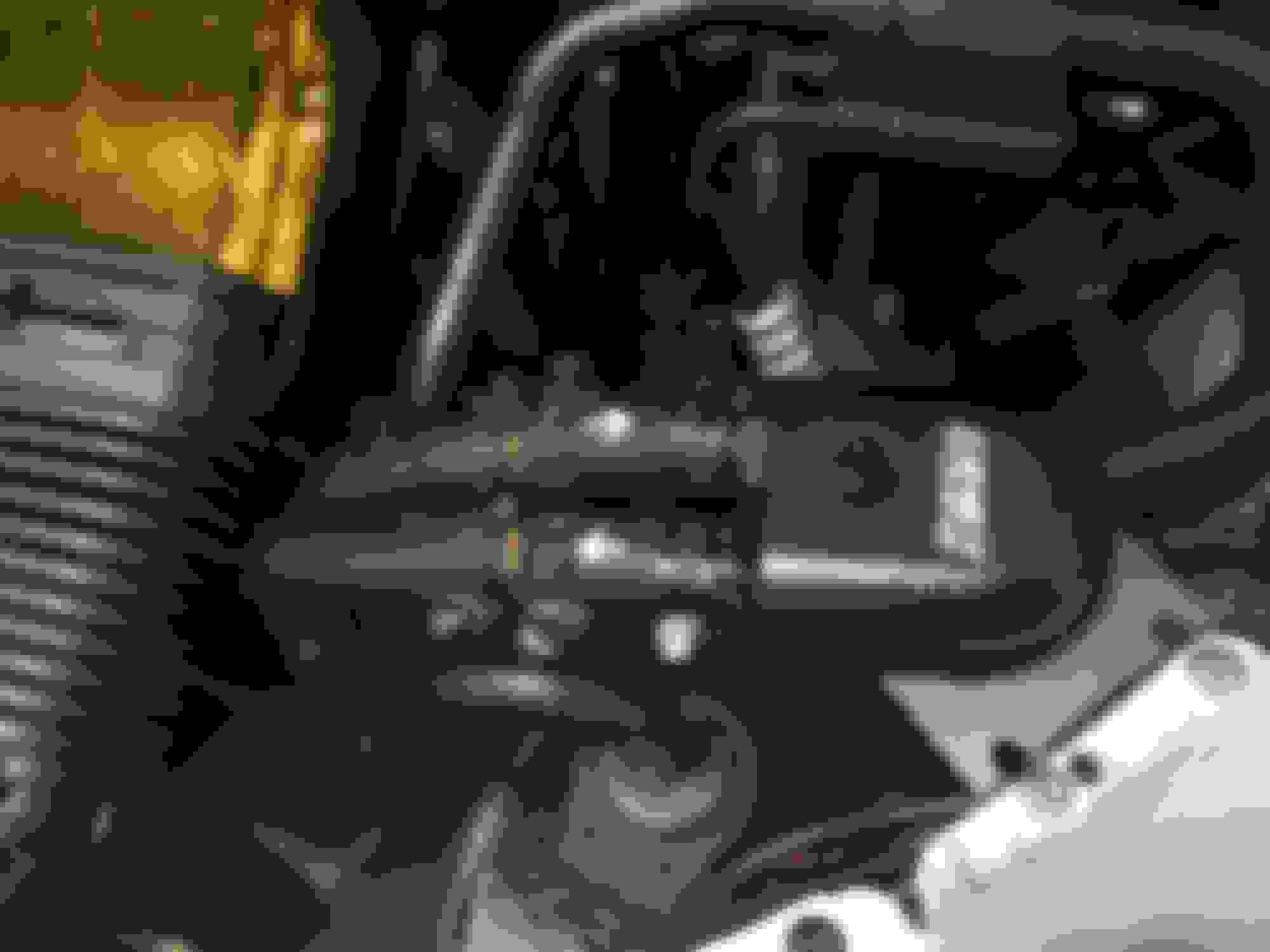
Pix should explain it better than text. These are during fitment, not sure what where the final install pix went.
Obviously I pulled the 90 degree fitting out of the intake and attached my tubing. At the 90 I simply wrapped the metal tube with rubber tape until its OD was a snug fit in the 90, then wrapped it all with more rubber tape to hold it together. On the intake manifold side the hole for the 90 was pretty big, so I used rubber hose around the tube, which you can just make out in the pix, then rubber tape around that until it fit nice n tite. Since the stainless tubing was ziptied down under the intake, it stayed in place.
The eng cover fit back on and all hoses/tubing were hidden, with the exception of the filter which kinda sticks out like a sore thumb.
The smallest restriction in the system was the ID of the stainless tubing. There were no fittings to further restrict flow. I ran a die over the tubing to avoid using fittings, so it threads directly into the filter. The paper towels were loose enough to not restrict flow, at least when dry. It didn't seem to do much when oily but it's not like I have a way to measure, so I just blew into it and guesstimated. That gray stuff at the end of the paper towels in the filter is scotchbrite, to prevent the paper from getting near the exit port and restricting flow, if it had moved, but no evidence it ever did.
chassis: The system pulls nasty air from the crankcase, as you probably know, but that air is thick with oil vapor. That vapor gets sucked into the intake where it lands on the hot intake valves, cooks, and leaves carbon that builds up over time. Since we're direct injected, no fuel cleans that oil off, so we have this problem.... Oil gets past the valve seals too, but the PVC is the by far the #1 source of carbon build up on valves, imo. Why car mfg's can't/won't fix this? Probably $. It's makes it past warranty as-is so why would they care?
Sorry, I guess I spaced and forgot to update this. Better late then never I guess?
Pix should explain it better than text. These are during fitment, not sure what where the final install pix went.
Obviously I pulled the 90 degree fitting out of the intake and attached my tubing. At the 90 I simply wrapped the metal tube with rubber tape until its OD was a snug fit in the 90, then wrapped it all with more rubber tape to hold it together. On the intake manifold side the hole for the 90 was pretty big, so I used rubber hose around the tube, which you can just make out in the pix, then rubber tape around that until it fit nice n tite. Since the stainless tubing was ziptied down under the intake, it stayed in place.
The eng cover fit back on and all hoses/tubing were hidden, with the exception of the filter which kinda sticks out like a sore thumb.
The smallest restriction in the system was the ID of the stainless tubing. There were no fittings to further restrict flow. I ran a die over the tubing to avoid using fittings, so it threads directly into the filter. The paper towels were loose enough to not restrict flow, at least when dry. It didn't seem to do much when oily but it's not like I have a way to measure, so I just blew into it and guesstimated. That gray stuff at the end of the paper towels in the filter is scotchbrite, to prevent the paper from getting near the exit port and restricting flow, if it had moved, but no evidence it ever did.
chassis: The system pulls nasty air from the crankcase, as you probably know, but that air is thick with oil vapor. That vapor gets sucked into the intake where it lands on the hot intake valves, cooks, and leaves carbon that builds up over time. Since we're direct injected, no fuel cleans that oil off, so we have this problem.... Oil gets past the valve seals too, but the PVC is the by far the #1 source of carbon build up on valves, imo. Why car mfg's can't/won't fix this? Probably $. It's makes it past warranty as-is so why would they care?
Thanks for the pictures and explanation on how it works, etc.
In order to run the catch can I made a fitting that fits into the intake manifold where the one way valve disc originally fitted. One one end I added a nipple for my boost gauge, one the other end I inserted the one way valve which has two discs which only let air in/ not out. One side of this sent to the line to the oil seperator, the other side goes to the fuel purge valve line. For the line that goes to the air oil seperator, I pulled the line off the one way valve and inserted a brass barbed fitting. I rant that lien to the "In" on the catch can. I then ran the "out" line of the catch can back to the original one way valve (now on one side of my fitting which runs to the manifold).
I'm trying to make the same catch can setup. Could you please advise what size the fitting is that you connected to the intake manifold? Hopefully I can find some nearby or online.
Update (March '20) on my M276 pcv oil issue, AND IMO a warning about generic catch cans:
I did not cut the part in the pix with the yellow arrow I posted, but instead I rotated it clockwise ~120 degrees. Then I rednecked it by using some 1/2"OD tubing bent in a way it would go in each of the now open holes and snake down and over to the right (left as you look at it w/ the hood open). I then wrapped rubber tape around the ends of the tubes so they'd be a tight fit in each of the now open oem ports, and got creative with zip-ties to make it stay put. I'm a certified redneck yet I like it to look nice if possible so it actually turned out well and all fit under the oem plastic cover. The metal tubing ended under the air intake tube, the one that transitions from horizontal to vertical. From there I used generic 1/2"ID PCV hose to reach the open space behind the right headlight. First I tried a centrifugal oil separator made for an aircraft that a friend said was the hot ticket. Ran it for a bit and noticed my intake was all oily again. So I made a filter using paper towels stuffed into a water filter container (ebay.com/itm/223292342591). The kind for DI filters but the smaller one so the container is ~2.5"OD or so and ~12" long and clear. Now the air exiting the "hot ticket" went to my filter, then the eng. After ~500miles it was clear the centrifugal caught about 5% or less of the oil, the paper towels catching all that remained. Being clear I could see the paper was still clean at the exit side, very oily and inlet side, so it was doing its job well. The paper was rolled up by hand to make a "tampon" of sorts that was not too tight so it could flow, but not so loose oil could get by. It was Costco paper towels and ~12 sheets which as I rolled 'em was an equally snug fit in the filter housing. At the bottom (exit) I had a stainless pot scrubbie so the exit could not get blocked as the paper had become saturated and/or forced against it.
I ran this for months and changed the paper out every month (1k miles) and it works like a champ.
So, after seeing the flat out failure of the centrifugal unit, and seeing the guts of other units sold online, I'd bet $ they are failures as well. I guess they're like so many things in life where nobody checks to see if it's working, they just pay and assume it is.
So I suggest people check by making a paper setup like I did which was very cheap and easy. Or whatever temporary setup just to see if oil is getting past.
I've since got rid of the car so I removed all that, and am very glad I did not cut that part.
I know my setup is at least somewhat restrictive, but not sure if its too restrictive. Either way I wanted something better and I found this guy: ebay.com/itm/143462698364
The element is the only one I've seen that I think might work. It's just stainless screen wrapped like 20x so it would be pretty hard for oil mist to get through it. It's also for turbo/blown engines so it has a pressure relief in the lid so you don't pop hoses off or worse... I just need to mount it, including the paper one to verify, and see what happens. If that fails I guess I'll just improvise a larger paper towel filter.
Hope this helps in our overall effort to find the best fix, and thanks to all for input.
This is super helpful. Thank you for taking the time to install the paper tester filter to determine whether the can was working!
I’m in avid believer in oil catch cans and install them on pretty much all my cars… I empty them during oil changes and amount of mucky, gunky oil I pour out of the can each time is astounding!
I’ve used a lot of Moroso brand catch cans which seem to do the job well, they use a thick gauge steel wool Scotch-Brite style material inside, but now I’m super curious on how efficient they really are… Might have to put a paper filter inline to test it.
Is there any chance you cool post a photo of the type of material you mentioned did the job well? (that link no longer works!)
700: Material? I used paper towels from CostCo. The broken link that I saw is the catch can I liked, so info below. Otherwise you'd need to more specific:
Not the seller I used but looks identical: ebay.com/itm/356571399522 or ebay.com/itm/286408607324
Search words/phrases if those links die: ProVent 200, Pro 200 Oil Catch Can, 200 ProVent
Plus the pix which should help. I believe I mentioned it can come with the stainless screen wrap filter or a fiber filter. Not sure which is better but it just seemed like a no-brainer to get the stainless. I forget how many layers thick the wrap is but from memory I guess ten layers? Whatever it is it seems enough. I also have some stainless steel wool, which I bought to experiment with just in case. The element is hollow inside so easily packed if needed.
I've yet to install this ProVent 200 can. I swapped that E350 I originally posted about for an E550, so a catch can would be a totally different install. Maybe easier, maybe not. It would connect to the PCV at the back of the right head. My PVC is likely about at end of life so I should do it sooner than later, but lets just say if motivation were O2, I'd be dead.
Looking into installing a universal catch can for our motors. No vendor offers a complete kit yet. I'm not sure if I need a two port or three port and also where I should tap into for the hose routing? Has anyone done this on the M276 engine or can share info with me about how to setup the lines for this?
I have noticed significant amount of oil coming from PCV, definitely need aa catch can. The one that comes from factory is pretty much useless.
Mercedes SLR McLaren 722 S Is Extremely Rare Example Modified by McLaren
Slideshow: A one-of-one U.S.-spec Mercedes-Benz SLR McLaren Roadster became even rarer after a factory-backed transformation at McLaren's headquarters.