When you click on links to various merchants on this site and make a purchase, this can result in this site earning a commission. Affiliate programs and affiliations include, but are not limited to, the eBay Partner Network.
The more I think of it, the more I am getting convinced the NACA ducts there will not work at all. They would need lower pressure inside the engine compartment to do their job. However, the pressure inside the engine compartment has to be higher than above the hood, where the air rushing by will create underpressure. Extraction openings should work well, however.
Jim, regarding hood, you want the air to get extracted there in order to prevent heat build up in the higher areas under the hood. That way the airflow through the radiator gets increased as a bonus.
2012 P31 C63 Coupe Trackrat, 2019 GLE63S Coupe Beast
Originally Posted by Jasonoff
I know they look like ***, but hood spacers help ditch quite a bit of heat under the hood.
Totally agree, I was talking to ErnstVBauer offline about this and he also suggested. I looked at the hood today, was alone without a helping hand, and decided against unbolting it. Couple of washers may make a difference but you're right that it looks like ***. I removed all of the weatherstripping rubber surround that insulates the engine compartment, so that may help get some air flowing through there for now.
2012 P31 C63 Coupe Trackrat, 2019 GLE63S Coupe Beast
Originally Posted by Wobble64
The more I think of it, the more I am getting convinced the NACA ducts there will not work at all. They would need lower pressure inside the engine compartment to do their job. However, the pressure inside the engine compartment has to be higher than above the hood, where the air rushing by will create underpressure. Extraction openings should work well, however.
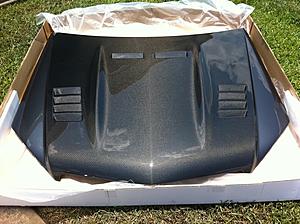
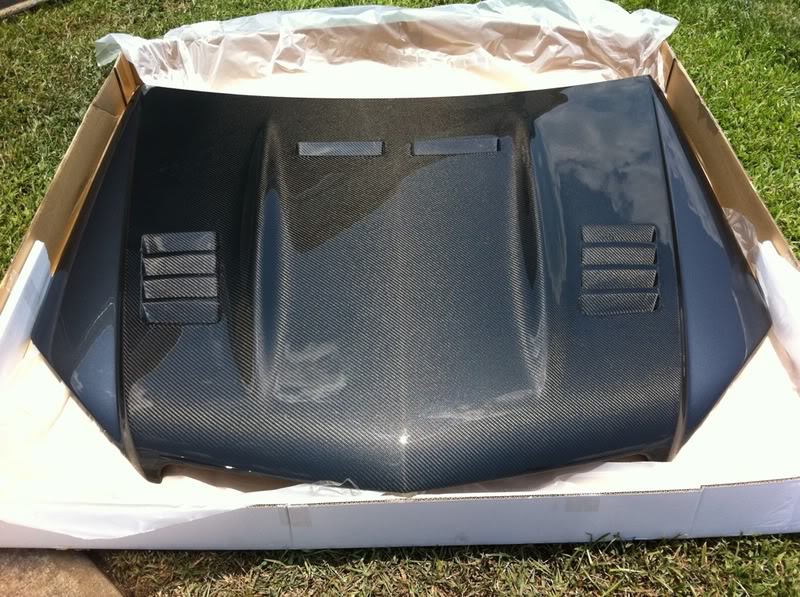
Well then louvers should help a ton. Basically any 'racing' C63 has them all over the hood. Still debating if I want to maintain an OE look with the 507 vents, or if I should just louver the **** out of the hood. Like this:
Man Blkrkt, looks sooo good and major kudos to being innovative and pushing the edge. The front looks fantastic and gives it that aggressive, custom appearance. I hope you can get ducting going as well to be perfect. Major hats off to you...
Totally agree, I was talking to ErnstVBauer offline about this and he also suggested. I looked at the hood today, was alone without a helping hand, and decided against unbolting it. Couple of washers may make a difference but you're right that it looks like ***. I removed all of the weatherstripping rubber surround that insulates the engine compartment, so that may help get some air flowing through there for now.
Originally Posted by BLKROKT
Well then louvers should help a ton. Basically any 'racing' C63 has them all over the hood. Still debating if I want to maintain an OE look with the 507 vents, or if I should just louver the **** out of the hood. Like this:
I have the Dad's hood. The cold air that goes through the grill helps moved the hot air through the vents. And as a bonus you get some weight reduction.
2012 P31 C63 Coupe Trackrat, 2019 GLE63S Coupe Beast
Here's what I'm planning. Get vents over the high heat areas (headers), as well as a couple further forward in the 507 locations to help flow through the radiators. Should be easy and make a big difference. No critical electrical in these areas so I'm not worried about a little bit of water (will probably fab up some kind of covers in case of massive downpours because the accessory belt is right there). Have some spare hexagon mesh leftover too. I bet I can do this without messing my hood up too much.
Here's what I'm planning. Get vents over the high heat areas (headers), as well as a couple further forward in the 507 locations to help flow through the radiators. Should be easy and make a big difference. No critical electrical in these areas so I'm not worried about a little bit of water (will probably fab up some kind of covers in case of massive downpours because the accessory belt is right there). Have some spare hexagon mesh leftover too. I bet I can do this without messing my hood up too much.
I think you need the louvers to direct the air flow up and out for proper extraction. Otherwise it will just have negative pressure from the fast moving air over the vent. No louvers would likely only work when you're stopped or going very slow.
Very cool. Trust the ToyoBaru kids to call 60mph "high speed testing" tho lol.
It is clearly all relative. haha
Not a C63, but things to consider when deciding on location.
Cortesy of the Autospeed article about siting bonnet vents (outlets, not inlets):
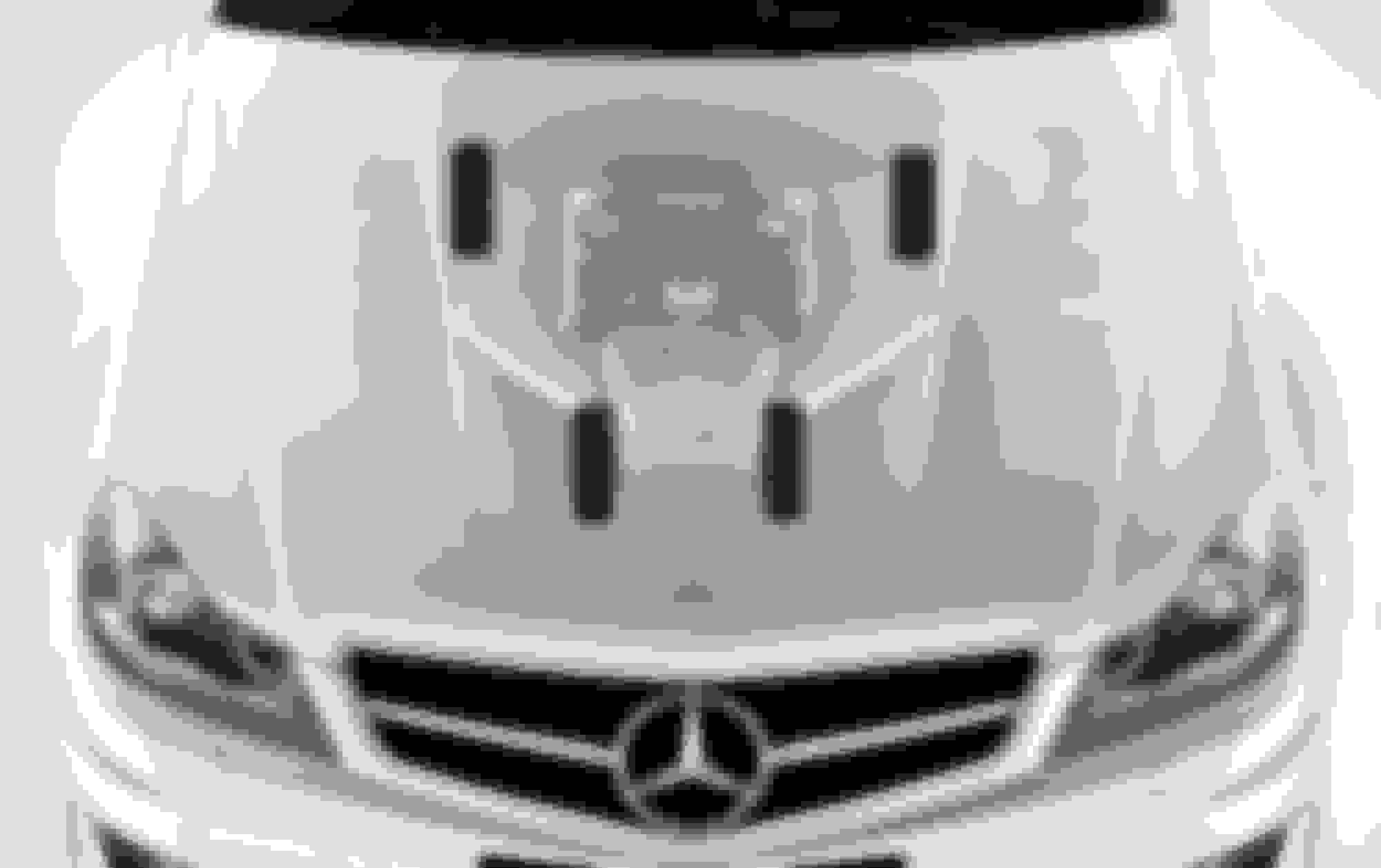
"The pressure on the surface of the bodywork depends on the aerodynamic flows over it. This DaimlerChrysler graphic shows the typical frontal pressure distribution of a car. Looking just at the bonnet you can see that there is low pressure (blue) where the air wraps around the leading edge of the bonnet, grading to high pressure (green) as the air reaches the obstruction which is the windscreen.
So you wouldn’t site a bonnet outlet vent close to the windscreen – in fact that’s usually where the cabin ventilation inlet ducts are... they’re taking advantage of that high pressure! Looking at just the exterior pressures, what we want at the vent location is the very lowest external pressure."
It is highlighting that where you place a louver matters as the low pressure area varies based on the specific aerodynamics of the car.
i.e. placing too far forward or back (towards the windshield) will impact how the vent draws air our from under the hood.
That's assuming there's no airflow underneath as well right?
I would think if air is moving underneath the hood on top of the engine and the louvers directed it up and out the pressure on top would be less significant on the draw.
Exact same reason why the spacers work. Air rushes out through the back up the windshield exiting from the area, in your pic, that has the highest positive pressure.
That's assuming there's no airflow underneath as well right?
I would think if air is moving underneath the hood on top of the engine and the louvers directed it up and out the pressure on top would be less significant on the draw.
Exact same reason why the spacers work. Air rushes up and out through the back up and out from the area, in your pic, that has the highest positive pressure.
That diagram is representative of a car that would have air also flowing through the front grill, under the car etc.
A simple string or tuft test will show you what is happening.
The reason vents or louvers are not placed at the base of a windshield is that they will not 'release' as much air as they will when moved forward to an area that has a lower region of pressure. That is why vents are in placed near the first half of a hood to vent air passing through the radiator. To maximize this they will have ducting surrounding the rear of the radiator connecting to the under surface of the hood (if budget and space allow for this level of design). And the vents near the middle half of the hood rather than right at the base.
The intake inlets for many ventilation systems of cars is a the base of the windshield because this is a HIGH area of pressure and air wants to enter the intake of the HVAC system.
As for spacers for the hood believe what you will, but I recommend a simple string test and test at the speeds that you will be driving (or what you expect to be driving). The usefulness of spacers has been shown by many auto magazines to decrease radiator function by decreasing flow (by affecting the delta/gradient) across the radiator). Increasing the flow under the hood may drop intake temps (for ITB), and may allow heat to escape when idling or parked, but otherwise I think this has been debunked as a means of adding cooling while racing.
FWIW I did this when switching hoods on my RX-7 and raising the rear only dropped temps when idling for a while, but eventually it reached equilibrium and the ultimate highest underhood temps recorded were the same. A vented hood definitely cooled faster once parked. When I did a string test, with spacers at 60+mph there were more strings than not that were sucked under the back edge of the hood showing that air was being drawn into the engine bay. There are many videos on youtube showing this same thing. I don't see why our C63 would be any different.
Air will simply flow from high pressure to low pressure.
The hood spacers work well for the S2000 platform, lowering both coolant, oil (if you have an external cooler) and IA temps. Unfortunately that's the only platform I have experience with.
I had a proper vented hood on mine (vent near the front) which did all 3 marginally better than the spacers.
Edit: not the best pic but this vent location worked very well.
Last edited by Jasonoff; Aug 29, 2016 at 04:58 PM.
Mercedes SLR McLaren 722 S Is Extremely Rare Example Modified by McLaren
Slideshow: A one-of-one U.S.-spec Mercedes-Benz SLR McLaren Roadster became even rarer after a factory-backed transformation at McLaren's headquarters.