When you click on links to various merchants on this site and make a purchase, this can result in this site earning a commission. Affiliate programs and affiliations include, but are not limited to, the eBay Partner Network.
Well that was terrifying. I thought I had a flat tire, pulled over and a rear wheel is held on by one lug bolt. Three of the others aren't missing.. they are sheared. I can see the stump of what is left still in the hub.
Pulled one from the front, and limped home on two at the back corner. Thought that I must have left them loose or something.. kicking myself as I pulled the brake disk and worked the stubs out of the hub. Put the wheel on with the crappy security lug bolts that came with my wheels (hate them!) and went to check the torque all around to find the three of the bolts on the other side are falling apart too!
Wow.. so that means I was running with 3 out of 10 rear lug bolts. I'm still in a cold sweat.
those bolts do not appear (from casual view) to be MB OEM bolts. did you
replace the stock wheel with an aftermarket design? if so which make/model?
specs for the wheels would be good, too, if you have that.
I had similar issues with my Forgestar lug bolts and have since replaced them with quality after market lug bolts. I wondered whether the tyre shop had overtightened the Forgestar lugs but came to the conclusion that whilst they may have, the quality of the Forgestars was simply rubbish.
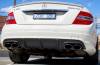
When I got the car it had some crappy aftermarket rims with these lug bolts. I bought some TSWs (see picture - but hard to see) that came with new lug bolts, but the security kind which I kinda hate. Possibly these failed ones are the problem, possibly over tightened at some point. I set them to 85lb which I think is ok, right?
Right now I'm using the lugs that came with the wheels, but definitely going to keep an eye on this. Any recommendation for lug bolts that should work well with these wheels and stand up to the test of time welcome.
it is hard to determine if the bolts are appropriate without knowing the wheel model. can you verify that they indeed use conical seat bolts which match the bolts?
also the wheel needs a 66.5mm hub (from memory). this is critical for load bearing fitment
2012 P31 C63 Coupe Trackrat, 2019 GLE63S Coupe Beast
That's a good point. In the other linked thread, the lug bolt shearing problem ended up being caused by the wheels installed were not hub-centric, or did not have the hub centering rings installed correctly.
Thanks! I'll look at the shape of the lugs that came with the wheels and buy something good quality with the same seat. I'm pretty confident on the hub. The company I bought it from (records not here) went to all kinds of lengths to make sure they were good to go. Even came back and said that based on their research with new brake pads I should use a 2mm spacer, also concentric. I really felt they knew their stuff.. in fact, if I can track down the invoice I'll give them a shout for the lugs.
The whole hubcentric thing if you do research on hub rings. There are mixed things on it. Some things say you def need them. Others say as long as you get the wheel on center your fine. Most people think the hub rings provide some sort of integral stability. This is not the case the thing holding the wheel to the car is 100 percent load on the lugs. The hub rings only helps with the initial mounting of the rim that's it.
The whole hubcentric thing if you do research on hub rings. There are mixed things on it. Some things say you def need them. Others say as long as you get the wheel on center your fine. Most people think the hub rings provide some sort of integral stability. This is not the case the thing holding the wheel to the car is 100 percent load on the lugs. The hub rings only helps with the initial mounting of the rim that's it.
I would disagree with you on the 100% part. If you take a wheel or adaptor
which is sized properly to the hub and do not insert the bolts, you will find that
there is, for the most part, no lateral movement. Even if you insert the bolts
they are undersized by a millimeter or so within the wheel. This would suggest
that the bolt seat bears 100% of the load based on your theory. I opine that
the 100% is shared by the combined ball seat AND the hub. It takes a village...
I would disagree with you on the 100% part. If you take a wheel or adaptor
which is sized properly to the hub and do not insert the bolts, you will find that
there is, for the most part, no lateral movement. Even if you insert the bolts
they are undersized by a millimeter or so within the wheel. This would suggest
that the bolt seat bears 100% of the load based on your theory. I opine that
the 100% is shared by the combined ball seat AND the hub. It takes a village...
it only aligns the the rim that's it. Tell me how the cheap plastic hub rings that most people buy or the rims come with are supporting our 3900 pound cars. No I'm sorry they are not. I would always try to buy a hubcentric rim makes me feel better however it's not always possible and hub rings are used but they arnt supporting load. That's what the lug bolts are for.
2012 C63;1971 280SE 3.5(Sold);2023 EQS 450 SUV 4 Matic (Wife's)
Originally Posted by GNOSHME
When I got the car it had some crappy aftermarket rims with these lug bolts. I bought some TSWs (see picture - but hard to see) that came with new lug bolts, but the security kind which I kinda hate. Possibly these failed ones are the problem, possibly over tightened at some point. I set them to 85lb which I think is ok, right?
Right now I'm using the lugs that came with the wheels, but definitely going to keep an eye on this. Any recommendation for lug bolts that should work well with these wheels and stand up to the test of time welcome.
Keith
Proper torque spec for a C63 is 96 lb-ft. I believe that should be a good starting point for an aftermarket wheel as well. Also it is recommended that torque be rechecked after a short distance of say 60 - 100 miles. If your wheels are not hub-centric get rings and preferably metal ones or you will likely not get the wheel centered and will get vibrations.
The whole hubcentric thing if you do research on hub rings. There are mixed things on it. Some things say you def need them. Others say as long as you get the wheel on center your fine. Most people think the hub rings provide some sort of integral stability. This is not the case the thing holding the wheel to the car is 100 percent load on the lugs. The hub rings only helps with the initial mounting of the rim that's it.
That is completely wrong.
Wheel bolts are only designed to clamp the wheel to the hub laterally, not to support the ENTIRE WEIGHT of the car longitudinally. The only "mixed things" about them are because of people like youself propagating tales of the "I did it on mine and it didn't break so it must be OK" variety. Nothing could be further form the truth.
I have posted here previously on this topic (IIRC it was about hubcentric spacers, but it certainly applies to the wheel-to-hub mating surface as well)... do a search if you actually want to read an explanation of why they need to be hubcentric.
And, unless your wheel bolts are of the proper hardness grade and you can see the "10.9" marking on the bolt heads, do NOT put them on the car.
P.S. They also need to have the correct seat type for the wheel holes, and be torquerd down to the proper spec. Bolts / screws elongate as they tighten, and this elongation has to be exactly right for the bolt to achieve the proper clamping force. 96 ft lb is not a "starting point"... it is the proper torque for our cars. Period.
Last edited by Diabolis; Jun 14, 2017 at 12:39 PM.
it only aligns the the rim that's it. Tell me how the cheap plastic hub rings that most people buy or the rims come with are supporting our 3900 pound cars. No I'm sorry they are not. I would always try to buy a hubcentric rim makes me feel better however it's not always possible and hub rings are used but they arnt supporting load. That's what the lug bolts are for.
The cheap plastic rings are useless when it comes to load bearing and just as dangerous as having no plastic ring at all. You need proper metal-tometal contact. Again, your assertion that the bolts are designed to "support" the weight of the car is 100% wrong.
Those bolts broke mid way on the shank. I agree this looks to be user error. Over torqued for sure.
Not necessarily. They look like they sheared exactly at the point at which the bolt was no longer in the hub. If it was simple overtightening they could have snapped anywhere on the shank as you suggested, but those look like they broke off at the exact point where they were subjected by longitudinal shear because they were supporting the weight of the car.
Wheel bolts are only designed to clamp the wheel to the hub laterally, not to support the ENTIRE WEIGHT of the car longitudinally.
Your absolutely right!! I thought about this for a while. And came up with this thought, there is the possibility that these wheels were not hub centric and the buyer didn't use hub centric rings. Therefore the weight of the car rested on the lug bolts, hence the shearing effect.
I also seen this happen with extreme high horsepower cars in drag racing.
Wheel bolts are only designed to clamp the wheel to the hub laterally, not to support the ENTIRE WEIGHT of the car longitudinally. The only "mixed things" about them are because of people like youself propagating tales of the "I did it on mine and it didn't break so it must be OK" variety. Nothing could be further form the truth.
I have posted here previously on this topic (IIRC it was about hubcentric spacers, but it certainly applies to the wheel-to-hub mating surface as well)... do a search if you actually want to read an explanation of why they need to be hubcentric.
And, unless your wheel bolts are of the proper hardness grade and you can see the "10.9" marking on the bolt heads, do NOT put them on the car.
P.S. They also need to have the correct seat type for the wheel holes, and be torquerd down to the proper spec. Bolts / screws elongate as they tighten, and this elongation has to be exactly right for the bolt to achieve the proper clamping force. 96 ft lb is not a "starting point"... it is the proper torque for our cars. Period.
sorry but your wrong. Iv done research on them and not reading forum postings either. The hub rings do nothing but help you align the wheel. The misconception thing is posts like yours thanks though. You should really search on the topic.
Mercedes SLR McLaren 722 S Is Extremely Rare Example Modified by McLaren
Slideshow: A one-of-one U.S.-spec Mercedes-Benz SLR McLaren Roadster became even rarer after a factory-backed transformation at McLaren's headquarters.



























 (medium rare, wine...and honey buttered bread was awesome!)





 I thought about this for a while. And came up with this thought, there is the possibility that these wheels were not hub centric and the buyer didn't use hub centric rings.
  Therefore the weight of the car rested on the lug bolts, hence the shearing effect.


