Emailed them about running it and asking the question about adding other additives and their response was they don't recommend running it at all in our cars and pointed to running Hi Tech with Ceratec as the best option for us, thought it was interesting.
Our Molygen New Generation motor oils contain already an additional additive formulation for extra wear protection. The formulation is well balanced and works perfect, so we don´t recommend to add any further friction modifier into our Molygen New Generation oils in order to avoid bringing the formulation out of balance.
Further our MOLYGEN New Generation motor oils are mainly designed and developed for the latest generation of american and asian gasoline fired engines and have no european motor oil classification (ACEA) or OEM approval (the exception is the Molygen New Generation SAE 5W-40 which at least has a recommendation - no approval! - for various european engines). So our Molygen New Generation motor oils are perfectly suited for all vehicles where no OEM approval is existing and API or ILSAC performance specification is mandatory.
But for nearly all european engines there is a given OEM in-house motor oil specification which we highly recommend to use only OEM approved motor oils for. OurLeichtlauf High Tech SAE 5W-40 is Mercedes-Benz factory approved for your engine (MB 229.5), so we highly recommend you to use this oil - it´s the first choice for you.
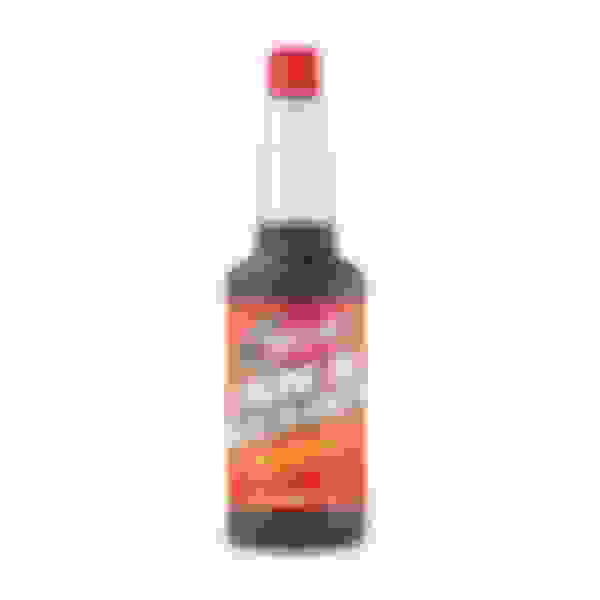
If you want to further increase the engine´s performance and generate extra wear protection we recommend you to add our proven Cera Tec into the motor oil. Cera Tec is a high performance additive that works with a chemical agent (for extra wear protection) and a solid lubricant (ceramic) for friction reduction. It has proven itself worldwide and will protect your engine even under extreme operating conditions. The ideal dosage of Cera Tec is around 6-7% of the total motor oil volume.
So the combination of the OEM approved Leichtlauf High Tech SAE 5W-40 and the power of Cera Tec is currently the best possible package for your engine !We also recommend you the following products to prevent excessive wear and improve the performance of your vehicle:
Timely, thanks bro. Was just about to order a change kit this week from FCP using the green stuff to try out. Sound company policy not to steer us towards an "unapproved" oil...and I can save two bucks by going with the High Tech kit and put it towards more Cera tec...
I'm on my second oil change with just molygen and no additives and I'm sticking to it. Maybe talk to one of there engineers because molygen is supposed to be there best oil yet.
Tried everything and my lifters sound the best on it. I'm sticking to it.
And the Rotella that many also have success with? I'm guessing Liqui-Moly just can't officially recommend in writing that you put a non-approved oil in your motor, but that talk to an engineer at the ol' watering hole and yeah, they'll say Molygen.
Quote: Back in April of 2016:
Liqui Moly's Molygen New Generation engine oil is the brand's newest high-quality premium engine
oil. It features molecular friction control, and has an effective chemical friction modifier that permanently
protects the surface of all parts of the engine. The special Molygen additive ensures that the engine oil
is of low viscosity and has a high shear stability and reliably prevents the formation of deposits, significantly
reducing frictional losses in the engine and providing the optimum protection from wear. A fluorescent green
oil smooths and refines the surface structure on areas of contact, ensuring optimal performance.
This unique oil contains a fluorescent green chemical friction modifier to smooth out hard metal surfaces,
reducing overall engine wear and heat due to friction. Tests have shown a reduction in friction coefficient
of as much as 15%! MolyGen oil is also a great choice for modern turbocharged engines which produce
much more heat.
Technical Specifications:
Density at 15°C - .855kg/cm3
Viscosity at 40°C - 80.7mm²/s
Viscosity at 100°C - 14.0mm²/s
Viscosity Index - 180
Flash Point - 230°C
Recommended for the following oil and manufacturer specifications:
ACEA A3
ACEA B4
API SN
API CF
BMW Longlife-01
MB 229.5
Porsche A40
Renault RN 0700
VW 502.00
VW 505.00 https://www.ecstuning.com/b-liqui_mo...ter/20232~liq/ It glows under UV light too, so leaks can be easily traced.
Available in 5W-20, 5W-30, 10W-30, 10W-40, and 5W-40.
Ads also say florescent green in color, with synthetic based tungsten friction modifiers: https://youtu.be/QL92HG1thmY
and on FCP Euro
Quote:
Product Information
This state of the art low-friction motor oil combines fully synthetic base oils and advanced additive technology. The powerful MFC (Molecular Friction Control) technology prevents the formation of deposits while simultaneously reducing frictional losses in the engine. This unique synergetic effect provides the optimum protection from wear and a flawless running engine. Improvements can be seen in reduced fuel consumption and extended service life for the engine. The advanced oil engineering is further underlined by the distinguished green florescent color.
LIQUI MOLY RECOMMENDS THIS PRODUCT FOR VEHICLES THAT NEEDS TO COMPLY THE FOLLOWING SPECIFICATIONS:
Tungsten Disulfide (WS2) and Molybdenum Disulfide (MoS2) are two of the most popular industrial dry film lubricants. Both are similar in terms of appearance, color, and high chemical durability. Both are dry lubricants, non magnetic, and are compatible with liquids such as paint, oil, fuel, and solvents. They can be applied on almost all surfaces for industrial purposes including iron, steel, plastic, aluminum, and copper. While both come from the same chemical family, there are certain differences that make them unique and thus, suitable for different industrial applications.
Differences between Tungsten Disulfide and Molybdenum Disulfide
Though they are similar in many properties, one can find a few differences between the two lubricants that set them apart.
Co-efficiency of Friction: Tungsten disulfide is perhaps the most lubricious material known to man. It is known to be a very low Coefficient of Friction (COF) at 0.03. Molybdenum disulfide also comprises good friction capabilities. It can provide a friction coefficient of up to 0.05. Both can be easily applied onto various metallic surfaces. This is the reason why the automotive industry is one of the most popular applications of both Ws2 and MoS2.
Weight and Density: For a dry film lubricant coating, the higher the molecular weight, the more stable it is. Tungsten disulfide has been found to have a molecular weight of 248, while molybdenum disulfide is 160.08. A similarity is also found in their respective densities. Ws2 has a density of 7500 Kg.m-3, while MoS2’s density is 5060 Kg.m-3. As they come from the same chemical family, Mos2 can be replaced by Ws2 in an industrial application.
Thermal Stability: Tungsten disulfide has the ability to operate in high air conditions. Beginning with a low COF of 0.01, its air thermal stability rate can increase up to 1100oF. With MoS2, it is slightly different. The basic COF is also 0.01, but it only provides an air thermal stability rate of 600oF. However, MoS2’s coefficient can be raised to 0.05, in which case, the thermal stability rate of MoS2 increases to 1100oF.
Load Bearing Capacity: This is one area where tungsten disulfide has a bigger advantage over molybdenum disulfide. On an average, Ws2 can provide high load bearing capacities between 200,000 and 400,000 psi at COF of 0.024 for coated films. MoS2 has the capability to provide load bearing capacities of up to 250,000 psi.
Temperature Range: This feature is always considered when choosing one of the dry film lubricants for industrial applications. The temperature range of a dry film lubricant is based on two aspects – ambient and vacuum temperature. Tungsten disulfide can operate anywhere between -273oC to 650oC. As Ws2 performs better in extreme applications, it has the ability to provide a vacuum temperature range from -188oC to 1316oC. Molybdenum disulfide has a vast difference in its ambient and vacuum temperatures. In an ambient atmosphere, it operates between -185oC to 350oC. Its temperature range increases in a vacuum atmosphere between -185oC to 1100oC.
Miscellaneous Advantages of Ws2:
It is obvious to see that tungsten disulfide has a better edge over molybdenum disulfide. Other aspects that make Ws2 more suitable for industrial applications are:
It has a coating thickness of up to 0.5 microns.
Unlike MoS2, tungsten disulfide has the ability to provide good resistance against corrosion.
It has good electrical properties, making it a good option for semi conductor applications.
Tungsten disulfide can be used in a variety of applications including aerospace, military, semi conductor, automotive, and medicine.
Depending on the application and the expected results, one should always give preference to tungsten disulfide for its strength, versatility, and durability.
I find it very odd their website recommends it for mb 229.5 but the email basically says the opposite, seems it has no approvals but just is recommended. I am going to email again as they said it is recommended for American and Japanese cars which is the 5w30 maybe they are confused. Will report back and see what they say.
EDIT - seems they were a bit confused about the made for american an japanese cars (that is the 5w30) the 5w40 is recommended as their side says, but they basically say that the best choice is to use the approved oil in the car (the High Tech) but is ok to use the Molygen also but they would always recommend the approved option over the recommended option.
I just bought some of the Molygen new generation but haven't used it yet. I was excited to see how the lifters sounded with the 5W-40 over the 0W-40 M1 I've been using. Last time I used T6 Rotella my engine didn't have enough miles to notice a difference in sound.
I’ve been on Leichtlauf/Ceratec with UOA that had 6-7 iron and aluminum content in ppm. I’m now trying to figure out the best balance between oil change intervals. I’ve been adding Ceratec on every other oil change instead of the 50,000 km advised. Also, I’ve been on an oil change schedule of less than 5000 km intervals.
I just changed mine today. Lifters sound a little quieter though I'm not sure if that is because I went from 0W to 5W. It's a bright green color. Almost looks like anti-freeze.
I've been using Liqui Moly 5W40, my car (2005 E500) just hit the 60K miles and the mechanic suggested to move to a 10W40 viscosity. I do not see any oil in the recommended list for 229.5 referencing 10W40. Do anyone know what is a good alternative? I've been thinking on Molygen 10W30 but I would like to read suggestions. Thanks!
Too many of you guys get stuck on approvals and trending oils that the majority of people use or recommend with no real data or backing these opinions or butt dynos or placebo effects. Until you do VOA or a few UOA on oil in or going in your car you won't really know if its working out well for your engine. Your car feeling "faster " by your butt dyno or "quieter" doesn't mean the oil is better by any means.
I'm not saying LM is not a good oil, I have honestly not looked much into it. As long as you use a good specd oil with great additive pack and do a UOA or 2 to see how its working for your engine you won't know. Im all for running a good oil. I would say any oil thats highly regarded name is probably decent and we focus too much on approvals of various oils etc. With no real back up. I run 5w-50 in my car as of now and most would **** a brick doing that. I also say it depends on you oci and how well the oil is working. If you beat the ever living **** out of your car I would not run 10k oci. I just wouldn't, even 5k oci might be a bit much in my eyes. But it all comes down to UOA to see how your engine is doing.
To be honest I have never seen an oil related failure due to the oil itself. Even if a crappy oil such as Walmart supertech or wolfshead etc. I'd go as far to bet those oils would be just fine in our engines if you changed the oil every 2-3k without hard track miles.
Also, in response to my first post, I do use and recommend good oils but with research and data to back them up. I've never been a fan of amsoil products but it doesn't mean its not good.
I do however run, motul. Rotella T6, and my current is schaeffer's 5w-50. Hell id run pennzoil ultra platinum euro because its a dam good oil also.. but it all comes down to how you drive your car and your oci, irregardless of soft cam metals etc.
I'm on my second oil change with just molygen and no additives and I'm sticking to it. Maybe talk to one of there engineers because molygen is supposed to be there best oil yet.
Hi sorry to dig this up, how's the molygen performance a year later? Anything out of the ordinary?
Oh,, why do you folks even bother with liqui molly yada yada.
Look at what engines with serious camshaftproblems is recommended to run: oil´s with higher level of ZDDP(zinc).
This is a well known additive already blended into oils today(but in small amounts), just buy Red line break in additive and pour in a 1/4-1/2 of a bottle in every oilchange.
This to raise the ZDDP level in your favorite oil.
Hi sorry to dig this up, how's the molygen performance a year later? Anything out of the ordinary?
Thanks
I'm on my second or third oil change on MolyGen. It's a solid oil, but I prefer my previous configuration which is a little bit more work. Motul 8100 5w-40 and 2 cans of LiquiMoly MoS2. If you don't want to deal with mixing and saving a few bucks MolyGen is a solid choice. My previous configuration felt like it had a tick more power, smoothness, and power production until 8k. MolyGen only a hair less and power seemed to fall off a tad at the 7k mark.
Slideshow: A one-of-one U.S.-spec Mercedes-Benz SLR McLaren Roadster became even rarer after a factory-backed transformation at McLaren's headquarters.