


Headlights restoration

MBWorld Fanatic!
Joined: Aug 2011
Posts: 3,184
Likes: 16
From: Highlands Ranch, Colorado
2014 BMW M235i
Did mine yesterday for the second time actually! I've done mine twice due to the harsh Colorado winters. The first time they were really bad when I first got the car, but the process goes something like this:
1) Mask off the paint around the headlights really well, go out a couple inches
2) Start with wet sanding, how bad they are will determine the grit you use. I remember starting at a pretty coarse 320 and ending at 1200. The second time we started at 600 and ended with 3000 (maybe not necessary with the polishing I did but why not). Water and purpose spray lubes both work fine.
TIP: Sand in straight lines, not circles. The reason for this is two fold: first you can easily count the number of passes you do this way and make sure its even all around. Second reason is related to step 3, as with everything paint or polishing related it's easier to get straight line scratches out of the lens with a circular pad than it is to get circular scratches out of the lens with a circular pad.
3) Then you polish the headlights out. First time I did it I used a dremel with a buffing pad attachment, used simichrome to polish it out. It worked pretty well. Second time I had a guy from D3Detail do it for me with with a 3 stage Adam's Polish system - cutting fluid, polish, and jewlers polish that also acted like a sealant. Used a 1300 RPM drill with a few different pads.
4) Peal off the tape and wipe to a shine.
I've heard of the 3M system you can get at PepBoys for doing this as being pretty good, and some people even use tooth paste for a polishing compound due to its abrasiveness but I've never tried that. Kind of hard to mess up unless you crack, melt, or ruin a lens or somehow scuff up your paint.
1) Mask off the paint around the headlights really well, go out a couple inches
2) Start with wet sanding, how bad they are will determine the grit you use. I remember starting at a pretty coarse 320 and ending at 1200. The second time we started at 600 and ended with 3000 (maybe not necessary with the polishing I did but why not). Water and purpose spray lubes both work fine.
TIP: Sand in straight lines, not circles. The reason for this is two fold: first you can easily count the number of passes you do this way and make sure its even all around. Second reason is related to step 3, as with everything paint or polishing related it's easier to get straight line scratches out of the lens with a circular pad than it is to get circular scratches out of the lens with a circular pad.
3) Then you polish the headlights out. First time I did it I used a dremel with a buffing pad attachment, used simichrome to polish it out. It worked pretty well. Second time I had a guy from D3Detail do it for me with with a 3 stage Adam's Polish system - cutting fluid, polish, and jewlers polish that also acted like a sealant. Used a 1300 RPM drill with a few different pads.
4) Peal off the tape and wipe to a shine.
I've heard of the 3M system you can get at PepBoys for doing this as being pretty good, and some people even use tooth paste for a polishing compound due to its abrasiveness but I've never tried that. Kind of hard to mess up unless you crack, melt, or ruin a lens or somehow scuff up your paint.
Last edited by AMGAffalterbach; May 2, 2014 at 12:01 AM.

Member
Joined: May 2012
Posts: 149
Likes: 1
From: Lubbock, Tx
E350
At my dealership we use the 3M kits. They are a 4 step process and pretty aggressive for my taste. The final 2 stages are about all you will need unless your lenses are really bad.
AMG Af has the right idea. The least aggressive method is a lot safer. Take the extra time and do it in more steps. I always figure my time is cheaper than new parts. Also, beware using a single action buffer/polisher. They build up heat very quickly and can melt the plastic lens very quickly.
I do use the Meguiars Headlight Protectant on all of my cars BEFORE they start to look bad. If you will use it before the lenses start getting cloudy, they will stay new looking for a very long time. The UV protection is just like sunscreen for your headlights. When I restore headlights at work I always finish up with the Meguiars Protectant and the restoration will last a lot longer.
AMG Af has the right idea. The least aggressive method is a lot safer. Take the extra time and do it in more steps. I always figure my time is cheaper than new parts. Also, beware using a single action buffer/polisher. They build up heat very quickly and can melt the plastic lens very quickly.
I do use the Meguiars Headlight Protectant on all of my cars BEFORE they start to look bad. If you will use it before the lenses start getting cloudy, they will stay new looking for a very long time. The UV protection is just like sunscreen for your headlights. When I restore headlights at work I always finish up with the Meguiars Protectant and the restoration will last a lot longer.
MBWorld Fanatic!
Joined: Aug 2011
Posts: 3,184
Likes: 16
From: Highlands Ranch, Colorado
2014 BMW M235i
For sure! Mine were much worse than that, I don't have any pictures on my computer or phone but I know my dad did on his, so I'll upload some before and after tomorrow. Otto makes some very valid points too.

Out Of Control!!


Joined: Aug 2010
Posts: 12,517
Likes: 628
From: Charlotte NC area
2019 WS222 S450 4-Matic / 2007 W211 E350 4Matic (Sold) / 2008 X164 GL320 CDI
you should apply a UV protectant after polishing.
The sanding/polishing will have removed the UV protectant layer and without replacing it they will fog or yellow more quickly.
The sanding/polishing will have removed the UV protectant layer and without replacing it they will fog or yellow more quickly.
Trending Topics
Out Of Control!!
Joined: Aug 2010
Posts: 12,517
Likes: 628
From: Charlotte NC area
2019 WS222 S450 4-Matic / 2007 W211 E350 4Matic (Sold) / 2008 X164 GL320 CDI
http://www.duplicolor.com/products/h...htRestoration/
http://www.autogeek.net/dp-headlight-protectant.html
http://www.repaintsupply.com/pd_2_part_2k_aerosol.cfm
http://www.autogeek.net/dia-plastic-liquid-armor.html
Some people use exterior grade urethane coating (Usually cut with mineral sprits)
http://www.autogeek.net/dp-headlight-protectant.html
http://www.repaintsupply.com/pd_2_part_2k_aerosol.cfm
http://www.autogeek.net/dia-plastic-liquid-armor.html
Some people use exterior grade urethane coating (Usually cut with mineral sprits)
MB World Stories
The Best of Mercedes & AMG

8 Oddball Mercedes Ideas That Actually Made it to Production
Verdad Gallardo
Dubai Tuner Gives the Mercedes G-Class An Entirely New Look
Verdad Gallardo
Six Gift Ideas Your AMG Loving Dad or Grad Will Cherish

7 Craziest Things AMG Gas Ever Built
Verdad Gallardo
New Electric Mercedes-AMG GT 4-Door Coupe Unveiled: 10 Things You Need to Know
Verdad Gallardo
6 Mercedes Models That Did NOT Age Well (But Are Somehow Still Cool)
Verdad Gallardo
Manual Mercedes? 6 Times Sindelfingen Let Drivers Have All The Fun
Verdad Gallardo
Mercedes SLR McLaren 722 S Is Extremely Rare Example Modified by McLaren
Verdad Gallardo
8 Classic Boxy Mercedes Designs That Have Aged Like Fine Wine
Verdad Gallardo
Super Member
Joined: May 2009
Posts: 673
Likes: 27
From: Frederick
2000 ML320, 2005 E320 CDI
I just did mine again and this time clear coated it. Use the 3M system, it will make it so much easier. I would recommend wet sanding and not dry sanding. It will eliminate the pigtail problems most get with dry sanding. Use a good drill and take your time. ALWAYS tape up your area - TWICE. Tape can be gone through, so a second layer is needed in most cases. After hitting with 500 and 800 - have a body shop throw a few coats of clear on it. Wet sand with the trizact pad and polish...you're done. I am putting the 3M Lamin-X on them to keep them looking good.
I also pulled mind apart and sprayed the inside satin black, made the trim rings glossy black. Tinted the tail lights as well.
The Valspar? method mentioned above works....but it tends to slightly yellow over time which isn't a huge deal. I used it, but some cockbag took a power washer to my lens and took off the coating as well as paint on the bumper. But for normal wear and tear it was fine prior. I am clearing those as well here in a few days.
I also pulled mind apart and sprayed the inside satin black, made the trim rings glossy black. Tinted the tail lights as well.
The Valspar? method mentioned above works....but it tends to slightly yellow over time which isn't a huge deal. I used it, but some cockbag took a power washer to my lens and took off the coating as well as paint on the bumper. But for normal wear and tear it was fine prior. I am clearing those as well here in a few days.

Newbie
Joined: Apr 2010
Posts: 5
Likes: 0
E350W4
I just did mine today and they look like new. Before you start, make sure you wash off dirt from headlights. Then start wet sanding using first a 400 sand paper. Then move to 600, 800, 1000, 1200, 1500, and then 2000 sand paper. Then, spread any toothpaste on the lense and using a papertowel rub it on the plastic surface very well using circular motions. Then wash toothpaste off and wipe the lense dry. You can either spray some WD40 on the lense, let it sit for a couple of minutes, and then wipe it off with a papertowel. ONCE IN A WHILE YOU WILL NEED TO APPLY SOME WD40 TO REGAIN FULL CLARITY.
Alternatively, for a permanent fix, spray the entire lense surface with few thin layers of any UV resistant clear coat for plastic surfaces. Let it dry well and then repeat the shinning process with the sand papers starting with 400. At first clear coat may look horrible, but after shinning is complete it will look awesome. You may need to repeat shinning till best result is obtained.
(I DID MINE WITH THE CLEAR COAT AND AFTER TWO ROUNDS OF SHINNING LENSES LOOK BRAND NEW. I ALSO APPLIED SOME WD40 FOR SHINE IN THE VERY END).
IMPORTANT NOTE: Make sure you work well the 400 and 600 sandpapers in order to remove the fog from plastic. Same for shinning clear coat.
Alternatively, for a permanent fix, spray the entire lense surface with few thin layers of any UV resistant clear coat for plastic surfaces. Let it dry well and then repeat the shinning process with the sand papers starting with 400. At first clear coat may look horrible, but after shinning is complete it will look awesome. You may need to repeat shinning till best result is obtained.
(I DID MINE WITH THE CLEAR COAT AND AFTER TWO ROUNDS OF SHINNING LENSES LOOK BRAND NEW. I ALSO APPLIED SOME WD40 FOR SHINE IN THE VERY END).
IMPORTANT NOTE: Make sure you work well the 400 and 600 sandpapers in order to remove the fog from plastic. Same for shinning clear coat.

Newbie
Joined: Apr 2010
Posts: 5
Likes: 0
E350W4
WD40 is applied as an additional final step of polishing after sanding is done. Simply apply WD40 then rub it on the surface with paper towel and then wipe it off completely. I am attaching a photo of what headlights look like after the procedure is completed (no clearcoat in the photo). By the way I have extensive experience using WD40 for more than 10 years to restore headlights. So do a couple of my friends. If you apply WD40 as I describe it here, you regain full clarity and no harm will be caused. Of course please free not to use it...Keep in mind that, if the result is not to your satisfaction, worse case scenario, you sand again...
Last edited by notoriousk; May 3, 2014 at 06:30 AM. Reason: misspelling - addition of picture for better clarity
Out Of Control!!
Joined: Aug 2010
Posts: 12,517
Likes: 628
From: Charlotte NC area
2019 WS222 S450 4-Matic / 2007 W211 E350 4Matic (Sold) / 2008 X164 GL320 CDI
http://wd40.com/faqs/#a98
What surfaces or materials are OK to use WD-40 Multi-Use Product on?
WD-40 Multi-Use Product can be used on just about everything. It is safe to use on metal, rubber, wood and plastic. It can also be applied to painted metal surfaces without harming the paint. Polycarbonate and clear polystyrene plastic are among the few surfaces on which to avoid using a petroleum-based product like WD-40 Multi-Use Product
(Emphasis added)
What surfaces or materials are OK to use WD-40 Multi-Use Product on?
WD-40 Multi-Use Product can be used on just about everything. It is safe to use on metal, rubber, wood and plastic. It can also be applied to painted metal surfaces without harming the paint. Polycarbonate and clear polystyrene plastic are among the few surfaces on which to avoid using a petroleum-based product like WD-40 Multi-Use Product
(Emphasis added)

Junior Member
Joined: Mar 2014
Posts: 55
Likes: 0
From: Raleigh, NC, USA
640i Gran Coupé
I did an older BMW M5 using the Meguiars kit. I removed the headlight assembly from the car and put it into a vise to work on. It was a bit of trouble, but I didn't risk damaging the car with the power drill (and buffing wheel). Not as risky on a Mercedes.
The results weren't perfect, they still didn't look like new, but it was a huge improvement.
And I too would stay away from using WD40.
The results weren't perfect, they still didn't look like new, but it was a huge improvement.
And I too would stay away from using WD40.

Thread Starter
Member
Joined: Apr 2014
Posts: 204
Likes: 2
E320
At my dealership we use the 3M kits. They are a 4 step process and pretty aggressive for my taste. The final 2 stages are about all you will need unless your lenses are really bad.
AMG Af has the right idea. The least aggressive method is a lot safer. Take the extra time and do it in more steps. I always figure my time is cheaper than new parts. Also, beware using a single action buffer/polisher. They build up heat very quickly and can melt the plastic lens very quickly.
I do use the Meguiars Headlight Protectant on all of my cars BEFORE they start to look bad. If you will use it before the lenses start getting cloudy, they will stay new looking for a very long time. The UV protection is just like sunscreen for your headlights. When I restore headlights at work I always finish up with the Meguiars Protectant and the restoration will last a lot longer.
AMG Af has the right idea. The least aggressive method is a lot safer. Take the extra time and do it in more steps. I always figure my time is cheaper than new parts. Also, beware using a single action buffer/polisher. They build up heat very quickly and can melt the plastic lens very quickly.
I do use the Meguiars Headlight Protectant on all of my cars BEFORE they start to look bad. If you will use it before the lenses start getting cloudy, they will stay new looking for a very long time. The UV protection is just like sunscreen for your headlights. When I restore headlights at work I always finish up with the Meguiars Protectant and the restoration will last a lot longer.
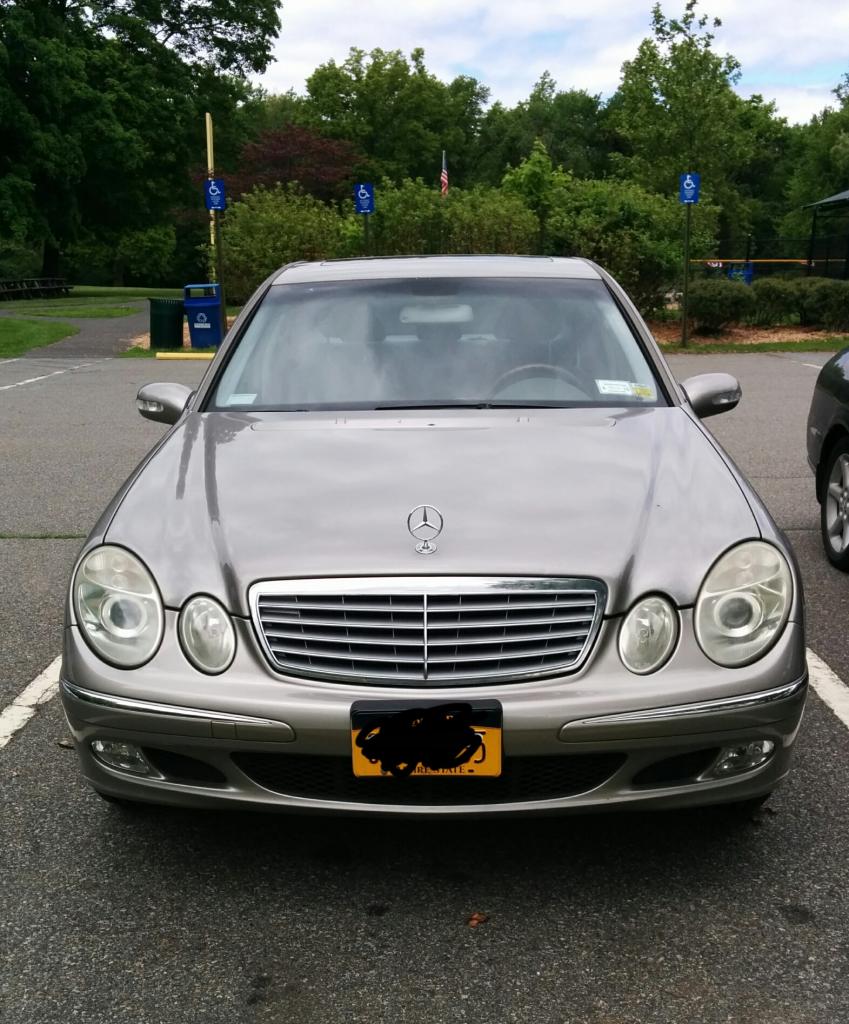
P. S. got to adjust hood.
Member
Joined: May 2012
Posts: 149
Likes: 1
From: Lubbock, Tx
E350

And with the water and grey pad, even though it's a single action motion, it is perfectly fine to use your electric or air drill. It's a slow cut and the water keeps it cool enough that you won't burn or melt the plastic. It will take forever if you try to go by hand or even with an orbital. Just keep it wet, with the pad moving constantly, and you can't hurt it unless you really bear down.
For the final compound polish, I use a Griots orbital buffer set on 5. You need to spin it decently fast to get the compound to work correctly. I have used a single motion buffer many times but you do need to be very careful. It heats up fast and with the curves in the W211 headlight, it's easy to overheat the plastic. The orange polishing pad they give you is very forgiving and was designed to be used in a drill, so if you don't have an orbital polisher it's not a big deal. Just keep the pad moving, use light pressure and you will be fine. An orbital just makes the process almost idiot proof by slowing down the cutting action and keeping the heat to a minimum. Don't be afraid to use plenty of the compound. They include enough to do 4 or 5 headlights so don't be stingy with it.
Good luck and take an "after" photo.
Out Of Control!!
Joined: Aug 2010
Posts: 12,517
Likes: 628
From: Charlotte NC area
2019 WS222 S450 4-Matic / 2007 W211 E350 4Matic (Sold) / 2008 X164 GL320 CDI
Member
Joined: May 2012
Posts: 149
Likes: 1
From: Lubbock, Tx
E350
In the 3M kit you get 2 dry sand paper stages. IIRC it's 400 then 800 grit. Then a grey wet padded disc and you finish with a thick orange foam disc for the compound based polish. I add the 5th step of the Meguiars Headlight Protectant after I'm satisfied with the final polish.

Out Of Control!!
Joined: Aug 2010
Posts: 12,517
Likes: 628
From: Charlotte NC area
2019 WS222 S450 4-Matic / 2007 W211 E350 4Matic (Sold) / 2008 X164 GL320 CDI
In the 3M kit you get 2 dry sand paper stages. IIRC it's 400 then 800 grit. Then a grey wet padded disc and you finish with a thick orange foam disc for the compound based polish. I add the 5th step of the Meguiars Headlight Protectant after I'm satisfied with the final polish.
Member
Joined: May 2012
Posts: 149
Likes: 1
From: Lubbock, Tx
E350
http://www.xpel.com/products/stealth_film.asp


