Checking a mechanically bad solenoid you need a vacuum gauge first and foremost so you can trace vacuum integrity on whole car vacuum system too.
This is a must have tool, vacuum and pressure capable. I have this one.
You will benefit a lot from this dual purpose vacuum and pressure capable hand pump + its fitting accesories. Even vacuuming radiator coolant system to prevent hidden air pockets you can use this.
No need naughty Xentry, Launch Creader Elite for Benz is the greatest El-Cheapo under US$200 scanner to date I seen and own.
Mind you I have 3 scanners and mild naughty and very naughty Xentry too. So total 5 now.
These 2 must have tools is approx US$250 at the most.
Buy these 2 and we can proceed on how to troubleshoot your solenoid in great detail and that Launch baby scanner will do you good in the long run.
Yes, you can easily verify the operation of the "transducer" with a cheap Amazon vacuum hand pump as I did. Some auto parts stores actually "rent" this kit among other tools. You pay for it and get a full refund upon return.
Problem fixed ?! Any of you fixed the low boost problem on out M276 ? My c43 amg has this problem, i change all vacuum parts, vacuum is mint but i guess is the wastegate flappers that are going bad... some ideea for changeing this ?
Problem fixed ?! Any of you fixed the low boost problem on out M276 ? My c43 amg has this problem, i change all vacuum parts, vacuum is mint but i guess is the wastegate flappers that are going bad... some ideea for changeing this ?
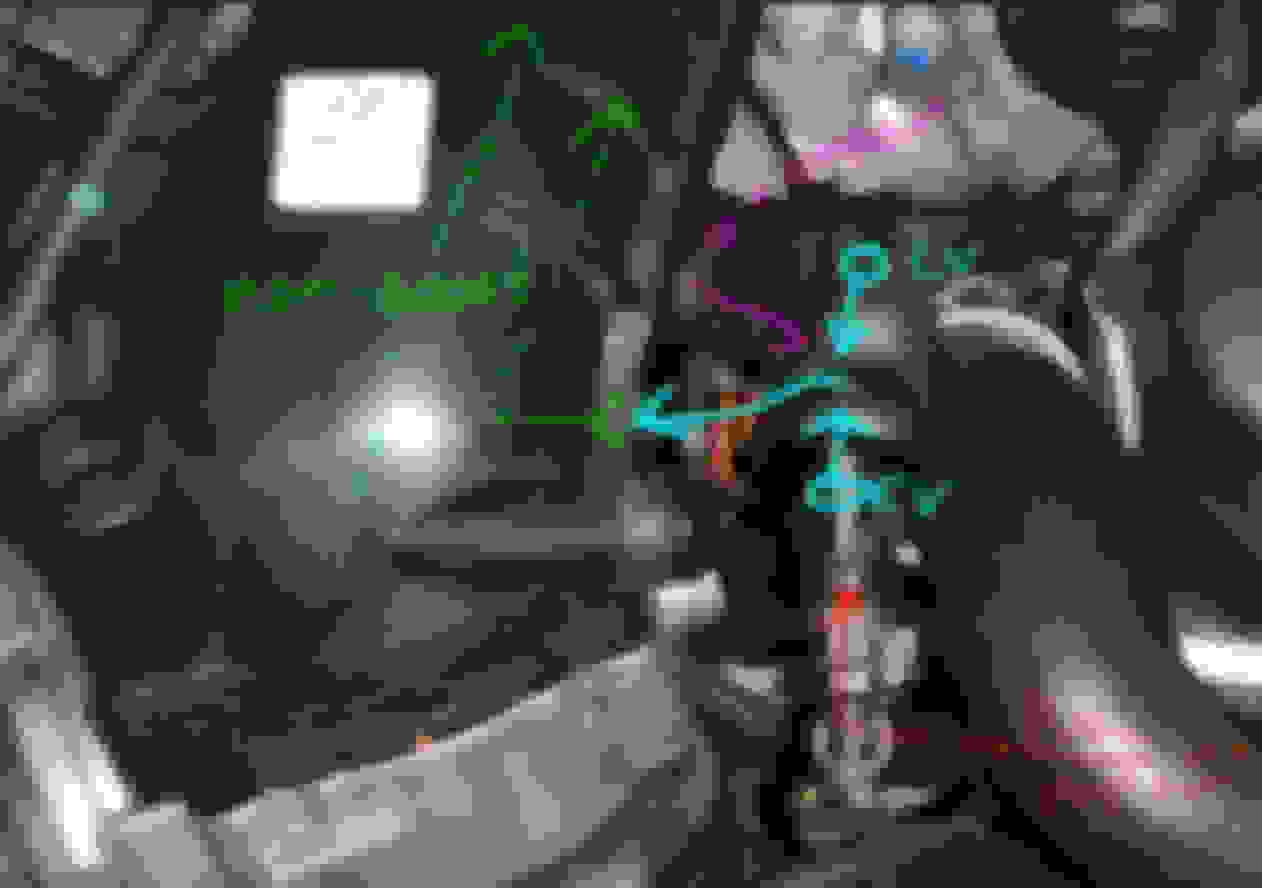
This check valve can cause low boost too. This is a 2 check valves in one.
During engine breathing not under boost aka "vacuum" or below 1 ATM, the oil vapor and fuel vapor get sucked by the intake manifold. The check valve allows that.
The check valve item 71 above, its top side check valve section facing windshield or flywheel if for oil vapor.
Its radiator facing check valve section is for fuel vapor.
When not under boost
When under BOOST and if that check valve failed or open up, your boost goes to engine cranckase and get sucked by RIGHT SIDE BANK 1 turbo.
Basically u loose boost.
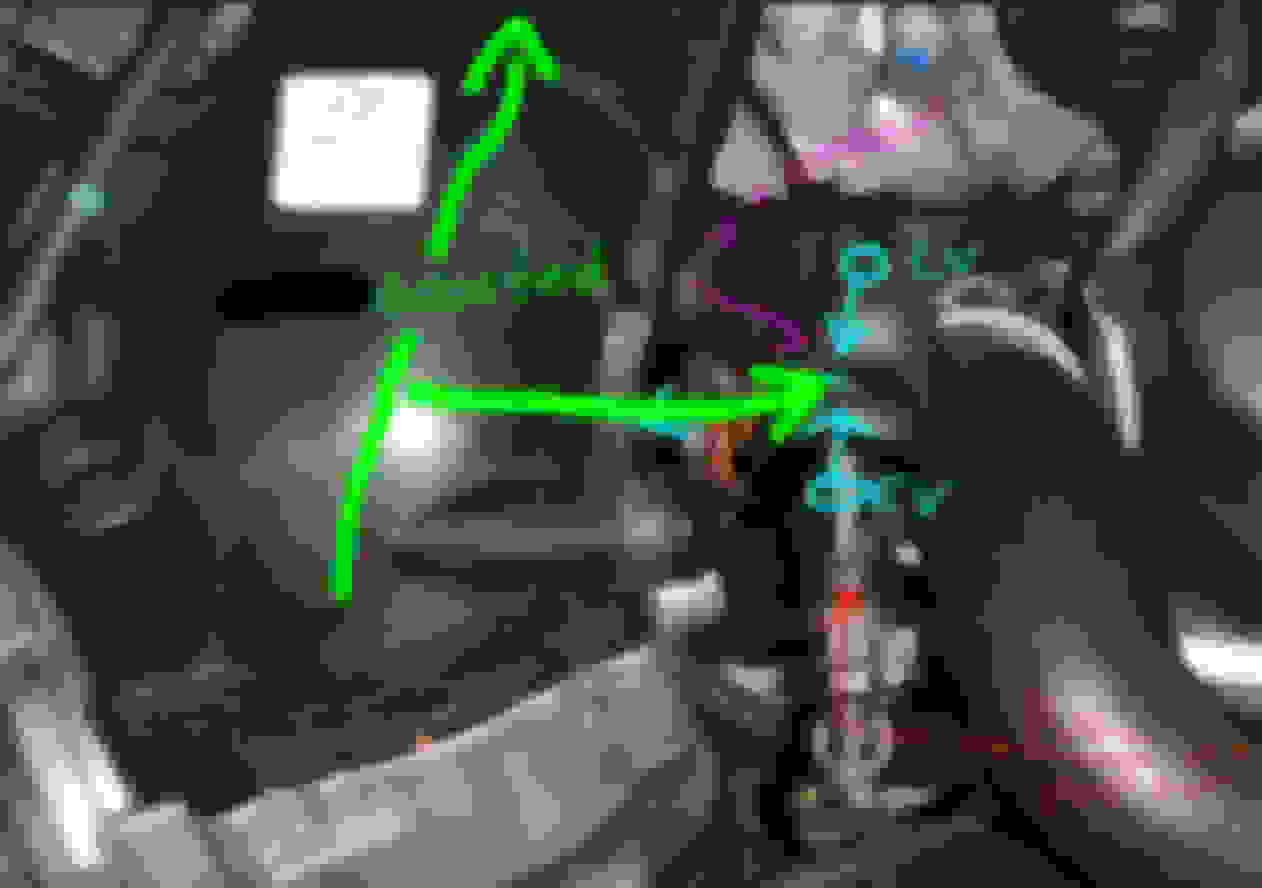
This check valve can cause low boost too. This is a 2 check valves in one.
During engine breathing not under boost aka "vacuum" or below 1 ATM, the oil vapor and fuel vapor get sucked by the intake manifold. The check valve allows that.
The check valve item 71 above, its top side check valve section facing windshield or flywheel if for oil vapor.
Its radiator facing check valve section is for fuel vapor.
When not under boost
When under BOOST and if that check valve failed or open up, your boost goes to engine cranckase and get sucked by RIGHT SIDE BANK 1 turbo.
Basically u loose boost.
How can i test this valve ? And how should i check it "on boost"?
As per video, my check valve is mild leaking, very mild. I replaced it anyway.
Dont do more than 15PSI test pressure yah. M276 3.0 turbo boost max is only 0.8 BAR or 11.6 PSI.
A new check valve would hold pressure better. The video is not uploaded yet, its on my PC back home. Me now out of town.
Make sure you test fittings are not leaking.
I’ve had a few instances where I didn’t have any boost. When I restart the car, it comes back (most of the time). It happened again today.
Original Part:
When I pull vacuum on the vacuum supply (the smaller of the two connections), it release very slowly. When i blow through it, nothing comes out of the larger port (the one that connects to the waste gate actuators). I reinstalled this one and went for a drive. It seemed better, but I won’t know until I get some more road time in it.
New part:
When I try to pull vacuum, it drops immediately. It doesn’t hold anything. When I blow through it, air flows through the OUT port. This is the one that gave me issues yesterday and today where I wasn’t getting any boost.
I have already replaced the brake check valve. I’m confused on which one is functioning properly or if I need to order another replacement.
This photo is with the original part and the engine idling. If I read the PDF correctly, it should read at least 480mmHg and 0mmHg when disconnected. I put a “T” in it to see what it would read. Any help would be appreciated!
Mine will kill boost if it was too high or too low while driving. A safety feature, apparently. Why too low I don't know, seems redundant. Point is it will, and the fix is restart.
So it sounds to me like your solenoid is Off, like when it sees too much/little boost.
The solenoids job is to simply let air in to reduce vacuum. That vent port on the side is said air inlet. So it should be getting high vacuum from the vac pump, then the solenoid is what controls how much of it the turbos get. The ECU controls the solenoid by a duty cycle that closes the air vent. So a 10% DC basically doesn't do squat and lets all the air in, killing vacuum. A DC of 100% would be completely closing the air vent and the turbos get all the vac from the pump.
It does this air control by opening/closing the vent hole, not like a regulator or valve, but pulsing the vent On/Off until it gets the avg pressure it wants. Kinda like a switching power supply. Or your lump sum paycheck vs the steady bank acct drain.
There is also a Catalyst heating mode where it may let all the air in. So if you see 0 at idle, I'd keep watching to see if it starts working at some point. If not, and it didn't fault out from driving, then something is up. You mentioned the brake check valve, but on my car there the brake valve is next to the turbo valve, not one in the same. And the turbo valve tends to fail. Not sure if you have that separate turbo valve, but fyi.
Mine will kill boost if it was too high or too low while driving. A safety feature, apparently. Why too low I don't know, seems redundant. Point is it will, and the fix is restart.
So it sounds to me like your solenoid is Off, like when it sees too much/little boost.
The solenoids job is to simply let air in to reduce vacuum. That vent port on the side is said air inlet. So it should be getting high vacuum from the vac pump, then the solenoid is what controls how much of it the turbos get. The ECU controls the solenoid by a duty cycle that closes the air vent. So a 10% DC basically doesn't do squat and lets all the air in, killing vacuum. A DC of 100% would be completely closing the air vent and the turbos get all the vac from the pump.
It does this air control by opening/closing the vent hole, not like a regulator or valve, but pulsing the vent On/Off until it gets the avg pressure it wants. Kinda like a switching power supply. Or your lump sum paycheck vs the steady bank acct drain.
There is also a Catalyst heating mode where it may let all the air in. So if you see 0 at idle, I'd keep watching to see if it starts working at some point. If not, and it didn't fault out from driving, then something is up. You mentioned the brake check valve, but on my car there the brake valve is next to the turbo valve, not one in the same. And the turbo valve tends to fail. Not sure if you have that separate turbo valve, but fyi.
I managed to get another drive in this evening. Boost was there…like maxing out on the gauge! I’m not sure if that’s good or bad at this point. No codes or anything which is what is driving me crazy. I thought that without it being able to enter boost, it would throw a code. I’ve scanned it and nothing pops up. That’s why I’m at a loss.
I’ve had a few instances where I didn’t have any boost. When I restart the car, it comes back (most of the time). It happened again today.
Original Part:
When I pull vacuum on the vacuum supply (the smaller of the two connections), it release very slowly. When i blow through it, nothing comes out of the larger port (the one that connects to the waste gate actuators). I reinstalled this one and went for a drive. It seemed better, but I won’t know until I get some more road time in it.
New part:
When I try to pull vacuum, it drops immediately. It doesn’t hold anything. When I blow through it, air flows through the OUT port. This is the one that gave me issues yesterday and today where I wasn’t getting any boost.
I have already replaced the brake check valve. I’m confused on which one is functioning properly or if I need to order another replacement.
This photo is with the original part and the engine idling. If I read the PDF correctly, it should read at least 480mmHg and 0mmHg when disconnected. I put a “T” in it to see what it would read. Any help would be appreciated!
To test your VACUUM PUMP itself, you need engine to be running and that vacuum gauge of yours attached to the small test fitting at the brake booster.
TEST 1 - At brake booster
Plug off the small fitting at vacuum pump first, the one for the turbo actuator.
TEST 2 - at vacuum pump small port ( the one going to turbo boost controller ) <<< corrected
Plug off the BIG fitting at vacuum pump first, the one for the brake booster. Engine must be running.
I just changed on of my turbos in my w205 M276 due to wastegate issue and rattle, also i got low boost code.
during installation, it was hard to install the turbo as a one piece, so we have to install it in 2 pieces, we also had to remove the actuator (unscrew it from the 2 rods end) then install it again, now what we faxed is that once you put the turbo together in place, it's hard to install back the actuator, removing the c clip while the turbo is installed is pain in the butt, so we had to unscrew the nut to gain more space in the shaft so the 2 back rods can fit in place, then turn the rod with pliers to screw it down like before. Now the question is... How to recalibrate the wastegate? I've looked everywhere with no luck, asked if there's another way to install the actuator, couldn't find any info,
Was looking into buying the mamba actuator since it's rods can be removed for easy installation, but they told me you need air line anot vacuum line for it.. so mot sure.
Need help please.
Pictures shows max boost and vacuum I could get
You need to mark the vacuum actuator rod thread count BEFORE you remove them and apply the same thread depth. That simple.
.
I think your car is modified....yes ?
That boost if it is correct at 14.79 PSI is a bit higher than factory spec.
W205 C400 supposedly the same engine as mine at 328/333 HP.
Our boost is 0.8 BAR, which is only 0.8 x 14.5 = 11.6 PSI.
This is my boost log.
Because our turbos are comfort turbos, its maximum boost is not at redline RPM but about 3,000 to 4,500 ish RPM, depending on load on how ECM wants to do it.
Here is data point 1300 ish.
.
Use my photos of vacuum actuator rod thread count left over as a guideline.
.
We want the wastegate to open up PROPERLY as designed, when vacuum actuator is not pulling the wastegate flap close.
When the vacuum actuator is commanded to work, it must close/pull the wastegate flap good enough.
if you use my thread count, you will get there.
It is not old fashion wastegate calibration for us, it is all electronic based on boost sensor ( MAP )...as long as mechanically the wastegate flap parking/open position and pulled/closed position is accurate to say 2mm.
Thank you for this info,
I'm stage 2, yes modified.
Boost should be around 17 psi for a stage 2 tune, but I'm alittle less.
Counting threads is what i did but I'm not sure if I did it right, that's why i asked if there's another way to calibrate..
Does both turbos have the same thread count? Maybe i can double check by counting the right turbo for the left turbo.. if that's the only way.
Other way than counting threads but is rougher in accuracy I guess, is angular view of the wastegate arm when at engine off.
Let say original setting is 90 degrees, engine OFF, you then use it as baseline. But maybe defining where the zero degree is difficult with such shape of the turbocharger,
I suggest you do that, count you threads and compare it to mine.
Absolutely AWESOME thread. Many thanks, specially to S Prihadi.
I have the same 3.0 TT engine, and I am in my way of checking proper operation of the turbos, as they seem a bit laggy to me (when you floor the throttle pedal, it takes around 1 sec to start feeling the turbo boost. This delay is not so noticeable in other turbo cars I have (Audi TT 1.8T, Mondeo 2.5 T for instance). I have purchased a replacement small check valve for the vacuum pump as I have read that most of them tend to fail, and will probably replace the solenoid actuator as well.
By the way, my wastegates have some play also and get noisy during partial load (rattle can be heard outside the car). I found a solution from Mercedes involving SCN coding the engine ECU. I checked at my local dealer and they confirmed that they also have that procedure reported and can be done for 1hr labor (90 euro here in Spain). Will probably do that to try to solve the rattle. This TSB explains that the coding modifies the way the wastegates close during partial load, holding them closed for a longer time to avoid the rattle. Let's see....
Yes, there is a TSB for those who does not like the rattling noise.
M276.820 turbo is not a performance turbo, it is a comfort turbo if the 333HP version.
Its best boost is 1,400 to max 4,500 ish RPM , this is its best zone, not redline RPM.
How long have you own this car/engine ?
See the torque chart below :
It is so easy to test the check valve for the turbo boost solenoid at the vacuum pump. Simply suck it with a vacuum hand pump and it should produce vacuum at your hand pump,
because the silicone diaghram will not allow suction from outside.
You can do the same test for the vacuum actuators for the turbos.
Thanks, Prihadi. I really, really appreciate your reply, specially when anybody has posted in this thread for so long.
I have had the car for 1 month or so, so still getting used to its engine response. I think it should show lots of low-end torque, but I feel that it is not quite like that, with very noticeable lag and not so strong response below 2000 rpm or so. Turbos definitely work after that, and you feel the boost and the car pulls hard when revved.
I have started checking everything, By the moment, I disconnected the "output" pipe from the solenoid to the wastegates and connected a vacuum hand pump there. Saw that both wastegates move and hold vacuum, so that's ok.
Now i have to test the check valve as you stated (but I noticed some oil in the pipe leading to the solenoid) and will probably replace the solenoid (with 130kmiles on the clock, it's time to renew some parts).
Regarding that TSB (I am glad that you know it), do you have some feedback about its effectiveness? My car makes that strange rasp sounds when driving in the city, noticeable when you pass near a wall or something that reflects the noise. You cannot hear it from inside unless your window is open, but people outside can clearly hear it, definitely, and it's not a nice sound.
My last issue (probably the most worrying) is that, when started from cold, my card makes a loud and nasty "raspy" sound, heard from below. It is really ugly, and progressively quiets down as soon as idle gets lower. I have noticed that the first 1-2 secs after crank up, that noise is quiet, and then it is like something "opens" and the noise appears. As I said, after 1 minute or so it quiets down and after a while it only remains the typical "diesel like" idle sound of the engine (I have to say that I don't like the idle sound of this direct injection engine). Some people point to the typical chain tensioners, etc. but to me it doesn't sound as a typical "mechanical periodic tap" but more as something rubbing and sound quite external (not engine internal). Also, the fact that it seems quiet for 1-2 secs. and that it disappears progressively makes me suspect that it should be something else.
I never get MB Indonesia to do anything to software fix my wastegate rattling.
First I don't mind the rattling, secondly such TSB is only for USA.... .
In Indonesia only the dangerous Takata Airbag get MB to recall even 10+ years old MBs....but 3 years late compared to US or Europe. This year was the recall.
Yes, the wastegate electric solenoid can become weak overtime.
If the vacuum hose to the wastegate electric solenoid has oil, that is the small port's membrane gone/ torn.
Get a MityVac vacuum+positive pressure hand pump, test all vacuum hoses related to turbo and the brake booster. Without this tool, you can't do proper work.
SS wrote : My last issue (probably the most worrying) is that, when started from cold, my card makes a loud and nasty "raspy" sound, heard from below. It is really ugly, and progressively quiets down as soon as idle gets lower.
Do a recording, I do not understand RASPY .... I mean I don't know how to imagine such sound.
Get a logging capable OBD2 gauge, minimum 1Hz or 1 data point per second.
Choose BOOST or Intake Manifold Pressure , RPM, Absolute Load, Throttle Opening and Accelerator Pedal data PID.
Do a test run, 1st to 3rd if possible WOT, if not 1st to 2nd WOT is OKEY.
USE MANUAL GEAR : Stay in 3rd gear at lowest speed possible say 1,200 RPM only and then do enough throttle/pedal to accelerate fast enough, here the boost maybe at its peak.
Search topic I started, I done so many on vacuum testing yada yada, read them and try it.
Thanks for your reply again.
As for turbo operation... didn't have much time so I just disconnected the pipe reaching the boost solenoid from the back of the engine, and connected a vacuum hand pump to that pipe (the one that was connected to the solenoid). So this way I am testing the installed vacuum check valve and all the pipe until the solenoid. With engine off, pumping by hand, vacuum barely held, dropping to 0 in a couple of secs.
Then I did the same test outside the car, testing my new check valve (before installing it) and it holds vacuum for a while, much better than the one in the car but it is not at all holding for long, say some seconds. I suppose it has to be this way or should it hold vacuum for minutes, for example? Have in mind that it hasn't been installed yet so the diaphragm is dry, etc.
This afternoon I will try to disconnect the hose and try to figure out if the pipe is at least ok, and then I will replace the check valve.
As for the TSB, I am in Spain, it seems that it also applies here (but you have to ask for it and they won't offer it easily. They were astonished when I showed them a print of the US TSB, they wondered how I got that, as it is secret (when it is public in US!!)). Let's see how it works... Will post my feedback!
As for the cold start noise: With "raspy" I mean like something metallic rubbing (not tapping) and goes away progressively.
I will definitely test boost with Torque app or similar and try to log what is the real boost value attained. I have done that in other turbo cars before, I know I have to set a mid gear (3rd or I will end the test at a toooo high speed) and log from low rpm to, say, 6000 rpm with full throttle.
Slideshow: A one-of-one U.S.-spec Mercedes-Benz SLR McLaren Roadster became even rarer after a factory-backed transformation at McLaren's headquarters.





 So total 5 now.