When you click on links to various merchants on this site and make a purchase, this can result in this site earning a commission. Affiliate programs and affiliations include, but are not limited to, the eBay Partner Network.
Dang, 2 months special order.
I am the only dude who actually buy such thing from MB Indonesia.
I bought the one for my own engine.
..
CORRECTION : The valve #1 travel is 4.x mm not 14mm, sorry.
The guesstimate INTERNAL construction of the piston oil jet is below, based on me poking around the valve item #1. Sorry me can't draw any nicer.
Observe the #4 BLEED HOLE
----
Yes, there is a BLEED HOLE , item 2 for below.
BMW's oil jet has valve too but no BLEED HOLE
..
Other MB engine's piston oil jet, all of them have bleed hole
M276.9 3.5 NA
M278 and surely M272 / M273 the same, because the P/N belongs to M272
Why the hell M157 uses M278 P/N while M278 uses M272 P/N ?
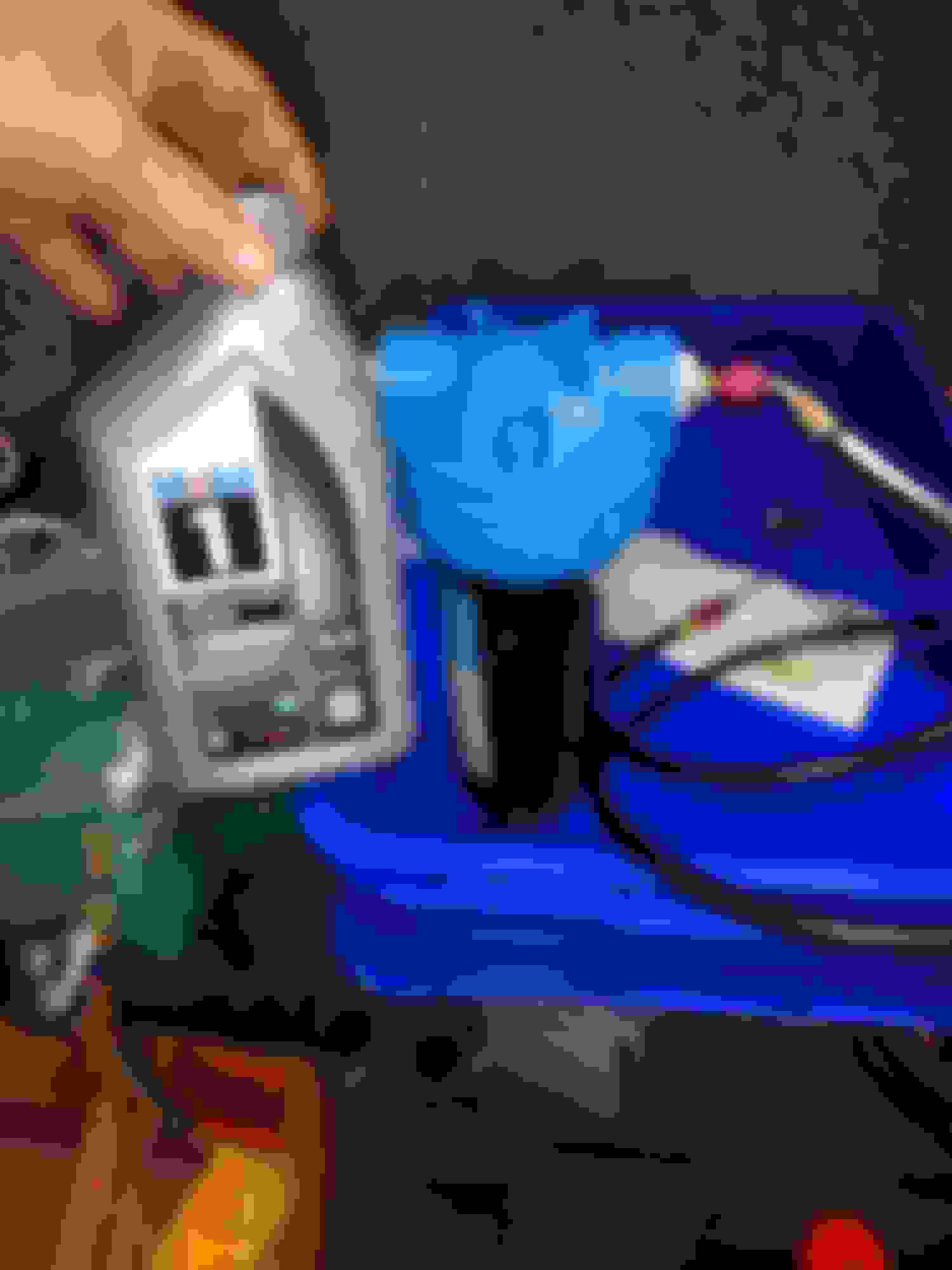
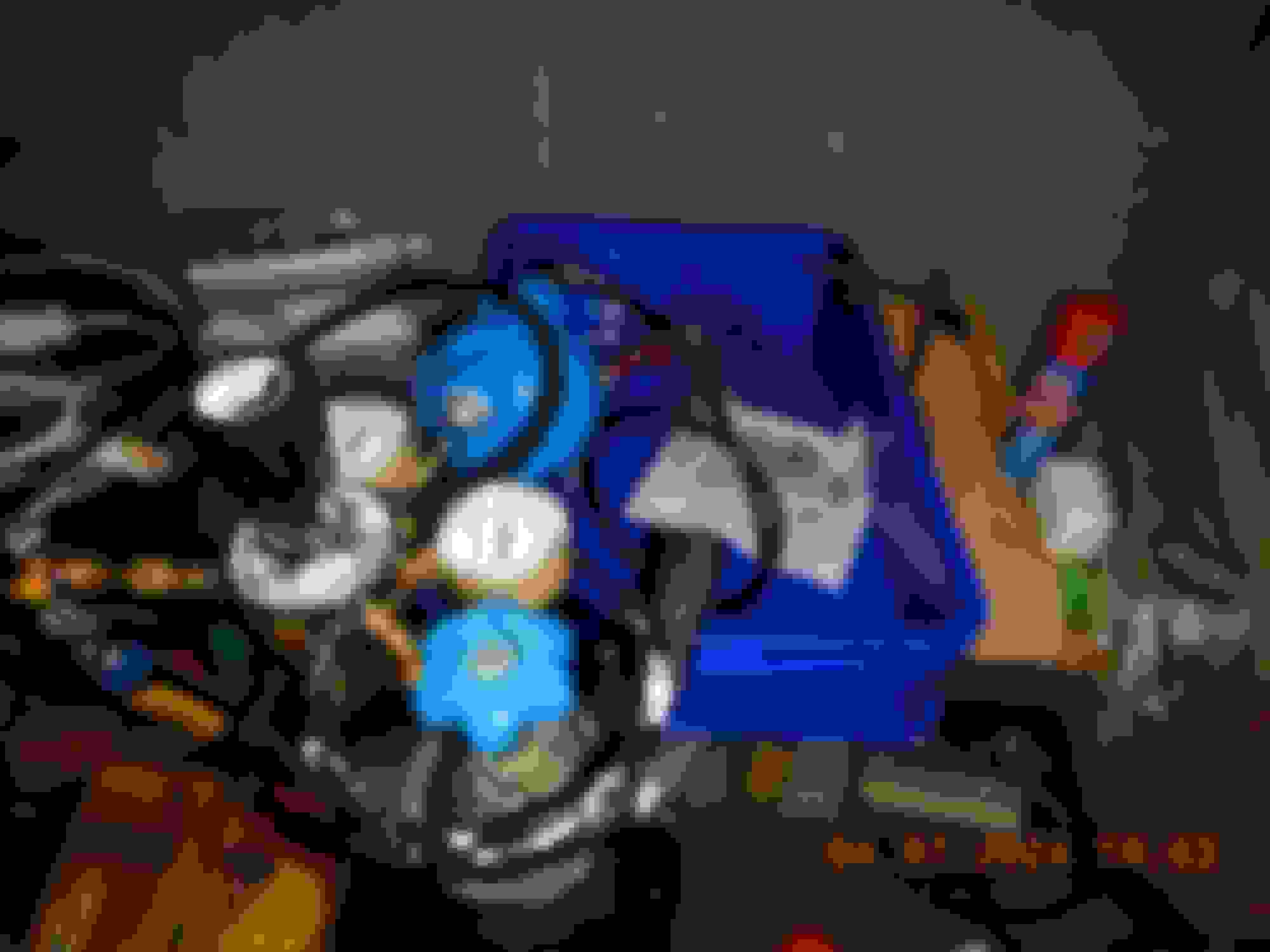
For M157 P/N is A2781800143 Oil spray nozzle, piston cooling
M156
For M156, P/N is A1561800543 Oil Nozzle, piston cooling
WILL CONTINUE...............
Last edited by S-Prihadi; Jun 30, 2024 at 11:07 AM.
Reason: add info
Please be aware, at this point in time, the test is still using air ( nitrogen) and not liquid water or oil....yet.
Me gotta buy or make oil vessel capable of sustaining at least 65 PSI. So be patient.
The density of air is so much lighter than oil, so the result for air is most likely not very accurate for certain behavior of the bleed hole vs the goose neck in its oil output.
..
The pressure reading is using my HVAC wireless pressure sensor. In PSI.
.
.
.
The re-seating ( closing ) pressure of the valve inside is 24.5 psi, after being opened at 31.x PSI.
.
. CORRECTION : The valve #1 travel is 4.x mm not 14mm, sorry.
Now look again at the oil jet internals.
At 31.x PSI, the valve #1 starts to lift up enough to allow air to flow in good volume..... HOWEVER, the bleed hole is the one getting the most air output and not the goose neck.
Only at 35 PSI, then the valve #1 moves up enough and starts closing the bleed hole #4. Total travel distance of valve #1 is 4mm,
I think MB uses such design is to achieve proper or maximum oil spray opening to the goose neck when oil pressure is probably near 40 PSI.
The higher the pressure is, the more valve #1 moves up and starts to restrict bleed hole #4.
It will not shut totally #4 bleed hole, but perhaps 90% closed/choked.
Seeing the oil pressure curve for defeated oil pump solenoid.... for my engine :
.
I would think 1,750 RPM would be the good volume and distance oil spray , being at 41 PSI.
I am a bit confused on why MB chose a design with bleed hole ?? There must be other technical reason behind it.
I hope in a week, I can have the proper oil vessel/container to do the test with engine oil....or maybe cooking oil
Last edited by S-Prihadi; Jun 30, 2024 at 11:13 AM.
That's a lot of great information for our piston squirter that opens at about 30psi. It's got some smart engineering built into it. It's more than ball-on-spring valve.
We know the oil pump produces volume... what happens to pressure when all squirters open?
When available volume can not supply ALL squirters at once, the pressure drops back lower.
If we test system with high volume at regulated pressure is this indicative of squirters under our limited pump volume??
-- We have very limited volume at lower RPM.
-- Pressure drops when flow volume is not replaced.
-- Pump has to deliver enough volume for ALL squirters + bearings to hold pressure....
-- Squirters has a specification for "flow volume per psi" that pump must meet.
The bleed hole may help the valve open up with absolutely no back pressure.... (**): drains while unused.
I wonder what happens to pressure when the bleed port is not fully shut during squirter opening? (bleed port may be fully shut with minimal movement).
When a dual-squirter fails... so does the cylinder pair it is serving.
(**) Squirter's bleed port:
a way to prevent solid deposits from accumulating when heatsoak cools down. Oil drains out leaving clean pipes.
a proven way of stabilizing operations
The delta between opening and closing is called hysteresis. It's used to prevent valve hunting during operations.
When pressure drops during opening at 30psi, the valve does not close until 25psi is reached, likely does not happen because of hysteresis. It would close with 30/30, so we have 30/25.
Last edited by CaliBenzDriver; Jun 30, 2024 at 12:38 PM.
We do not have full control nor all the answers. Live testing can help us achieve results under real conditions regardless of unknowns.
In a perfect world we would calculate an RPM for effective cooling. I could not do that.
Instead I tested oil viscosity (ie. volume/pressure) vs. smoke point RPM.
I realized I could prevent vaporizing burnt oil with a bit higher viscosity within the W40 range.
Removing heat from pistons with tiny squirters stream is a slow process that must stay ahead of producing heat.
The only control we have is RPM + viscosity.
But when you only raise RPM on thin oil, the outcome is more heat... NOT MORE COOLING !
The key is removing more heat than engine is producing at any driving RPM.
Limiting cooling to randomly or above 3500.RPM stores extreme heat for extreme heatsoaks stressing coolant relief through leaks.
Whatever psi is necessary to stop burning oil, the effective number is tied to effective viscosity at unknown temp near 200F coolant.
The effective cooling RPM rises up when viscosity is lost due to heat stress. To counter that prevent extreme heat.
In another thread I said that pistons cooling requires a fire-hose output, not a garden-hose stream at 32PSI.
Here we have tiny flow pipe and want the moon... The only way I found to provide an effective cooling flow is with pressure ie. viscosity.
Last edited by CaliBenzDriver; Jun 30, 2024 at 02:46 PM.
The bleed hole is to prevent hydrolocking the piston in case oil migrates to spring side of piston. The others have a plate style valve over the inlet with a spring holding it shut, both are opened as soon as pressure overcomes spring pressure, the inside of the plate style is full of oil and gives max spray at opening. On the MB, they use a piston that seals the side holes to the squirters, pressure pushes piston past the holes for squirters, giving better regulation of squirters making the amount of spray proportional to the oil pressure.
If you were to remove the springs from the squirters, change the oil pump sprocket for a slightly higher pressure, build a single stage oil pump to sill have 1 to 1.1 bar oil pressure, you'd have a more conventional setup, yet better piston cooling. I'd still want an external oil cooler. and a lower coolant thermostat, say 190 degrees F without computer controls.
Last edited by Rickman30; Jun 30, 2024 at 02:57 PM.
Yes, I firmly believe you are the only dude to buy such a thing in Indonesia.
Interesting because I assumed the oil valve opened the circuit to those. This setup is better. Nice, thanks for the details and pix
If you were to remove the springs from the squirters, change the oil pump sprocket for a slightly higher pressure, build a single stage oil pump to sill have 1 to 1.1 bar oil pressure, you'd have a more conventional setup, yet better piston cooling.
I'd still want an external oil cooler. and a lower coolant thermostat, say 190 degrees F without computer controls.
Rick, without a spring the wide open squirters would collapse pump output at low RPM pressure.
Rick, without a spring the wide open squirters would collapse pump output at low RPM pressure.
Didn't actually read the rest of my statement, did you? True if removing the springs were the only thing done, you'd be right. However, that's not what I said.
Didn't actually read the rest of my statement, did you? True if removing the springs were the only thing done, you'd be right. However, that's not what I said.
shopping outlet crawl
...sorry the wife keeps tugging on my sleeve. Drove inland to get 100°F weather
Last edited by CaliBenzDriver; Jun 30, 2024 at 07:20 PM.
Thanks, I’m like a sponge when it comes to this stuff.
My wife even enjoys the Lake Speed Jr. stuff too. She was working in the automotive industry when we met. Very knowledgeable, makes having automotive mechanical conversations at home much more enjoyable. Boy she has some stories from the retail side what some customers have and will do to their cars.
Wow, your wife can talk automotive.... that is fun
Me wife is a diver too like me, so we used to be dive buddy.... we talk about good eating fish often heheheh.
There is one more channel I really enjoy, husband and wife team both Germans, but Range Rover cars. LR Time.
They are so fun to watch and hubby is VERY VERY knowledgeable. They are funny and smart.
A lot to learn from them too from Range Rover perspective: https://www.youtube.com/@Vera_and_Christian
This is the only non Mercedes channel or non workshop like Pine Hollow, which I actually subscribed to.
I don't usually subscribe to personal car DIY channel, but LR Time is a class in its own when you watch them enough.
Wow, your wife can talk automotive.... that is fun
Me wife is a diver too like me, so we used to be dive buddy.... we talk about good eating fish often heheheh.
There is one more channel I really enjoy, husband and wife team both Germans, but Range Rover cars. LR Time.
They are so fun to watch and hubby is VERY VERY knowledgeable. They are funny and smart.
A lot to learn from them too from Range Rover perspective: https://www.youtube.com/@Vera_and_Christian
This is the only non Mercedes channel or non workshop like Pine Hollow, which I actually subscribed to.
I don't usually subscribe to personal car DIY channel, but LR Time is a class in its own when you watch them enough.
Oh yeah, We never miss watching LR Time on Sundays. And Ivan is great too, never miss Pine Hollow. We also watch Eric O on South Main Auto Channel. Super Mario Auto diagnostics, Automotive Auto diagnostics and Programming, And ATS with Bernie Thompson. There are a few others I like too, They all work on a variety of cars as well as Mercedes, But all their methods cross over to one another albeit maybe different approaches.
Good, I watch all the same channels you watch/listed ...
D-Tech is also good, if you have not watch him. BMW is his expertise, but he got some MB too. https://www.youtube.com/@DTEAuto
Rick: I think we're very likely to see a 3rd installment later!
Ivan troubleshot all the way to a distressed female connector pin as the source.
Very well done!!
Yes, it is bad but not "factory bad" like our "solderless pins"... Whomever worked on this last damaged that pin while probing it.
Ivan reconnects ALT LIN then returns the car as fixed.
I think this is dealing with what MS! and myself call the "voltage Yo-Yo".
This is an amazin Bosch system bug that drains battery and soft-crashes electronics.
The real issue is that the system comes preloaded with untested design bugs no one cares to address with a working fix.
Owners are forced through ridiculous chaos and repairs have to come from tallented individuals. instead of dealer trained specialists with all the factory tools necessary.
I the case of MB battery drain it is caused by poor networking between modules.
Not ECU,
Not BATT
Not F_SAM
Not R_SAM
Not ALT
All the disposable solderless modules with ESP has chief purveyor of referred chaos though CGW network bridge.
Fixing this requires to undo all the setup put in place to down grade basic reliability.
This bug highlights the lack of network supervision tools. The lavk of visibility is going to keep plaguing users.
Last edited by CaliBenzDriver; Jul 4, 2024 at 05:01 AM.
Rick: I think we're very likely to see a 3rd installment later!
Ivan troubleshot all the way to a distressed female connector pin as the source.
Very well done!!
Yes, it is bad but not "factory bad" like our "solderless pins"... Whomever worked on this last damaged that pin while probing it.
Ivan reconnects ALT LIN then returns the car as fixed.
I think this is dealing with what MS! and myself call the "voltage Yo-Yo".
This is an amazin Bosch system bug that drains battery and soft-crashes electronics.
The real issue is that the system comes preloaded with untested design bugs no one cares to address with a working fix.
Owners are forced through ridiculous chaos and repairs have to come from tallented individuals. instead of dealer trained specialists with all the factory tools necessary.
I the case of MB battery drain it is caused by poor networking between modules.
Not ECU,
Not BATT
Not F_SAM
Not R_SAM
Not ALT
All the disposable solderless modules with ESP has chief purveyor of referred chaos though CGW network bridge.
Fixing this requires to undo all the setup put in place to down grade basic reliability.
This bug highlights the lack of network supervision tools. The lavk of visibility is going to keep plaguing users.
You hit the nail…I would also add voltage drop issues too. Each connection adds a very small amount of resistance. Having so many connections is why when to put a meter on your battery and it says 12.6 volts, but when you look at scan data it says 12.2 to 12.4. That is voltage drop on both positive and negative side. Be it ground points with anywhere from paint to corrosion from dissimilar metals, to having ten connection points between the battery and the front SAM, and then every connector between SAM and modules. The yo yo just adds insult to injury.
It’s why the method of adding products like Stabilant 22 to connections, it creates a molecular type bond in the connection, be it positive or ground, the result is stability in the current load, and reduces the voltage drop. Leaving only the yo yo to correct.
I think I have a dying diode in my alternator. Interior lights flicker looks like around 30 cycles or less. I scoped the ripple but it looked good. I’m going to scope again, first ensure the lamps are flickering then look at the ripple without the extended test leads. One of the cool features of the Snap-on tools, you can create a test and save it to preset tests.
You are also correct, most shops and owners just fire the parts cannon, instead of trying to fix, no parts required. Once I find the offending diode, I’ll do just like any big name remanufacture does everyday, replace just the broken part and clean it up and send it.
Using Mobil 1 0W30. Ambient and thus oil temperature 30C.
Test set up :
Nitrogen tank, pumping nitrogen to the inverted filter housing.
Nitrogen pressure reading is right after the nitrogen regulator.
From nitrogen regulator 1.5 meter 1/4" refrigerant HVAC hose to filter housing INPUT.
From filter housing OUTPUT, another 1.5 meter 1/4" HVAC refrigerant hose and then to short clear hose and to the oil jet nozzle,
Total head resistance is 1.5 meters of small 1/4" hose filled with nitrogen and 1.5 meters filled with engine oil + whatever resistance to flow the filter housing has.
The nitrogen regulator airflow is not able to catch up with the oil output, so nitrogen pressure drop a little as oil started flowing out of filter housing,
and increasing the air space volume in the oil filter housing.
Once air pressure ( oil pressure ) hit above 41 PSI the valve in the oil nozzle opens up really good and the bleed valve is leaking only so very little oil, which we can say it is zero leak.
39 PSI is the closing of the oil nozzle valve.
Note : I can't read oil pressure actual pressure at filter housing output , I can only read the nitrogen pressure pumping the filter housing.
Let's assume it is the same.
So it is safe to say that 41 PSI the oil spray distance is good enough at piston BDC and if 45 PSI or more, oil spray distance is good to TDC.
Mercedes SLR McLaren 722 S Is Extremely Rare Example Modified by McLaren
Slideshow: A one-of-one U.S.-spec Mercedes-Benz SLR McLaren Roadster became even rarer after a factory-backed transformation at McLaren's headquarters.



















































 No worries my friend. Been there...