When you click on links to various merchants on this site and make a purchase, this can result in this site earning a commission. Affiliate programs and affiliations include, but are not limited to, the eBay Partner Network.
TEST 1
The fuel EVAP system has not been touched yet , so we can start from there.
For our car version, we do not have US type pressure sensors to produce EVAP DTC.
The Item 400 , the fatter one with sensor wire, that is US version, or any country with strict emission rules.
Your car has Item 330, my car does not have that. I wonder what it actually is, because the #400 is the true fuel vapor absorber.
Physical leak from hoses breaking down, are Items 270 and 250. Hose ( rubber ) #270 on my friends W204 C200 cracked, but I replaced both his #270 and #250 equivalent. #250 is plastic.
Physical leak from failed solenoid, it would be Item 290 being stuck open, which means the engine is sucking fuel vapor at all times.
The control from ECM to operate #290 is PWM in percentage. Not a simple Open-Close, its more like small>>big opening by way of pulses that PWM signal.
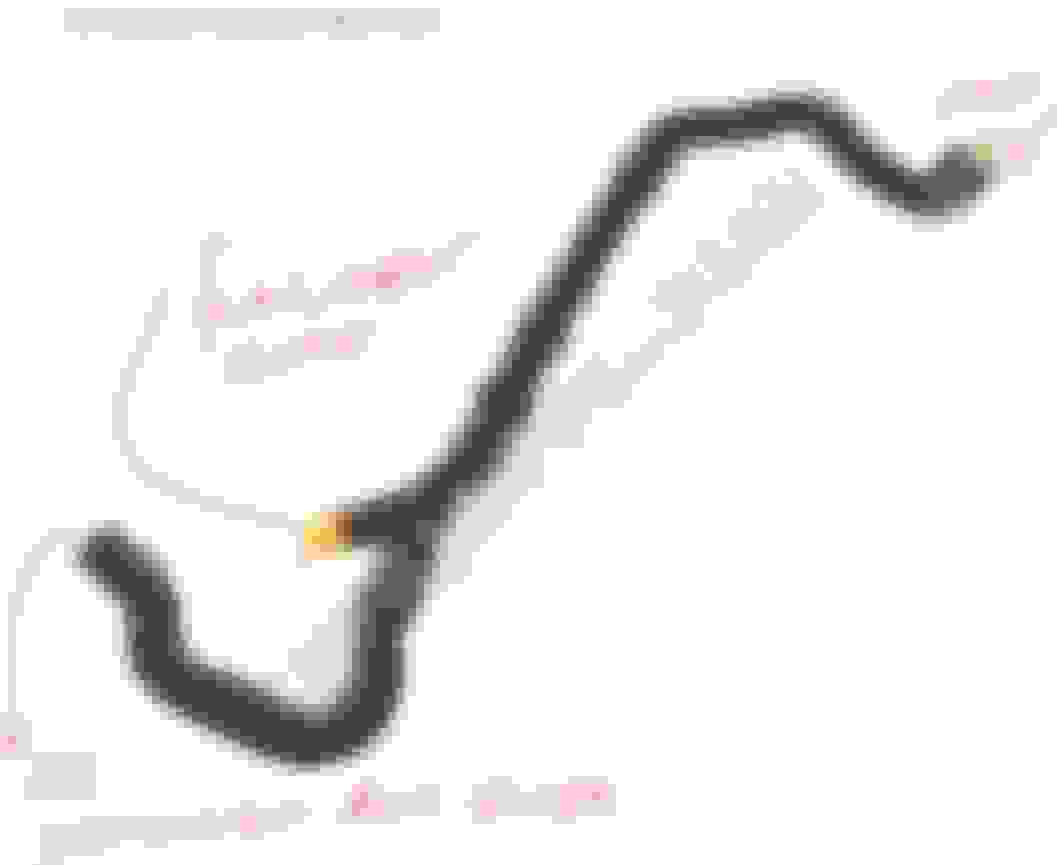
We inject smoke from the end of #250 which is a Y connection to engine PCV
.
If we inject smoke at end of #250 plastic hose, if there is any leak : it will show at #250 connection or the plastic hose itself, #270 connection or the rubber hose itself, body of #290 solenoid if any and
if #290 is not properly closed, we can see smoke at the fuel tank cap ( when fuel tank cap is opened or fuel cap closed but has leaking cap seal ).
While doing this, we will also test the integrity of the fuel EVAP system all the way from fuel cap >>>#400 charcoal canister >>#360 hose at rear left fender , #340 pipe under the car, #330 container and so on.
We need to command the #290 solenoid to open, Xentry or Launch can do this command.
============================
TEST 2
Next the Secondary Air Injection.
We can't test the engine's intake system yet, we must not contaminate it with smoke inside the crankcase.
If we inject smoke into Air Pump (A), smoke will travel to Combination Valve/Air-Shut Off Valves (B) and it should not enter engine crankcase via exhaust manifold if B is good working order.
Green color is simulation of the smoke if that B valve leaks. All we need to do is keep engine oil cap filler open and see the exhaust tips.
.
If Test 1 and 2 done, we go for TEST 3.
-------------
TEST 3 will test integrity of the new Intake Manifold and its gaskets to engine' cylinder head and PCV system hoses, and plastics oil separator.
Pink represent smoke leak, if any.
I think we best inject smoke from air filter box, we plug-off one and use only 1 hole. The green arrow.
If we inject smoke from air filter box, we can also detect this airbox leak if any and how good are the sealing for air path below : all the way to new Intake Manifold's to cylinder head, the gasket #120
.
This TEST 3 will also show any leak at exhaust system joints and even the o2 sensor's machine thread to exhaust pipe.
Any leak at exhaust system before o2 sensors can create lean condition.
I think that is all the test we can do for M272.
Last edited by S-Prihadi; Oct 8, 2024 at 04:25 AM.
I forgot to add, we will also test the Y32 Switch Over Valve, while we are in there.
We make sure it open properly when commanded and close properly when not powered. It could be Normally Open type, let see.
.
.
We will also test by using suction hand pump, the action of the Air-Shut-Off valve / Combination valve of Secondary Air Injection system.
That is pneumatic powered, not electrical.
whoa @S-Prihadi sounds a very comprehensive plan. after a lot of parts replacement I thought it will reduce a lot things to check.. Can't wait until saturday
2015 SL400 (M276 Turbo), 2014 C350 Sport (M276 NA), 2004 SL500 (M113), 2004 Audi TT225 (BEA)
Very detailed approach. I would probably try things in reverse order, starting with the air intake first. The high LTFT values are because of excess unmetered air entering the engine or at least the exhaust stream, or malfunctioning cats and/or sensors. Therefore, you are looking for a leak between the MAF and the cat, or the exhaust manifold and the cat. The combi valve which should be open only during startup to quickly heat the cats to operating temperature is a potential source of unmetered air if it is stuck open.
Potential failure points:
MAF (malfunction)
Throttle body and gasket (air leak)
Combi Valve and gasket (malfunction and/or air leak)
O2 Sensor (malfunction)
TWC Cat (malfunction)
Intake manifold gasket (air leak)
Exhaust manifold gasket (leak, but this should be audible)
I would start with the intake right after the MAF, if possible. Otherwise, be sure to clean the MAF afterwards since I'm not sure what the mineral oil residue will do to the hot wire. If there are no obvious smoke leaks, then maybe check individual components. Remember, you are looking for unmetered air or faulty sensors and/or cats. 🐈
Is your intake manifold, its rear L shaped air pipe plugged ? Like below :
Below is PLUGGED OFF
But.................................
This is probably US version car, that L pipe is connected to somewhere... but I don't know where
Please check on your own sweet time.........
I am doing deeper dive into your engine air and vacuum related hoses or plastic pipes.
MB is the worst when it comes to information on such hoses/pipes....very poor, we have to visually inspect the real hardware and figure it out.
Because your air intake and secondary air injection are using vacuum actuation to work, you need to refresh those hoses and mini check valves soon.
TO REFRESH :
I mean whatever hoses and plastic pipes not renewed with the new Pierburg intake manifold.
Last edited by S-Prihadi; Oct 8, 2024 at 10:13 AM.
Very detailed approach. I would probably try things in reverse order, starting with the air intake first ( as I explained, it should be last test #3, . I do not want to introduce smoke into intake manifold yet for Test #2 ). The high LTFT values are because of excess unmetered air entering the engine or at least the exhaust stream, or malfunctioning cats and/or sensors. Therefore, you are looking for a leak between the MAF and the cat, or the exhaust manifold and the cat. The combi valve which should be open only during startup to quickly heat the cats to operating temperature is a potential source of unmetered air if it is stuck open.
Potential failure points:
MAF (malfunction)
Throttle body and gasket (air leak)
Combi Valve and gasket (malfunction and/or air leak)
O2 Sensor (malfunction)
TWC Cat (malfunction)
Intake manifold gasket (air leak)
Exhaust manifold gasket (leak, but this should be audible)
I would start with the intake right after the MAF, if possible. Otherwise, be sure to clean the MAF afterwards since I'm not sure what the mineral oil residue will do to the hot wire. ( engine oil vapor is also coating the MAF at all times from PCV , smoke test is only oily at point of smoke injection entry ) If there are no obvious smoke leaks, then maybe check individual components. Remember, you are looking for unmetered air or faulty sensors and/or cats. 🐈
Thanks BTW Jet
Last edited by S-Prihadi; Oct 8, 2024 at 10:20 AM.
2015 SL400 (M276 Turbo), 2014 C350 Sport (M276 NA), 2004 SL500 (M113), 2004 Audi TT225 (BEA)
Originally Posted by S-Prihadi
Are you sure? The first thing that should hit the MAF is clean filtered air. That's why K&N filters mess up MAFs when people over-oil them. Any EGR vapors should be downstream of the MAF, shouldn't they?
Very detailed approach. I would probably try things in reverse order, starting with the air intake first. The high LTFT values are because of excess unmetered air entering the engine or at least the exhaust stream, or malfunctioning cats and/or sensors. Therefore, you are looking for a leak between the MAF and the cat, or the exhaust manifold and the cat. The combi valve which should be open only during startup to quickly heat the cats to operating temperature is a potential source of unmetered air if it is stuck open.
Potential failure points:
MAF (malfunction)
Throttle body and gasket (air leak)
Combi Valve and gasket (malfunction and/or air leak)
O2 Sensor (malfunction)
TWC Cat (malfunction)
Intake manifold gasket (air leak)
Exhaust manifold gasket (leak, but this should be audible)
I would start with the intake right after the MAF, if possible. Otherwise, be sure to clean the MAF afterwards since I'm not sure what the mineral oil residue will do to the hot wire. If there are no obvious smoke leaks, then maybe check individual components. Remember, you are looking for unmetered air or faulty sensors and/or cats. 🐈
thanks! I hope I will find some closure. I do suspect the exhaust tho, although its not making any sounds. If there's vacuum leak if I rev the engine STFT should go negative right then LTFT follows? I rev the engine on neutral STFT stays at 0 :O Or maybe its need to rev under load? because when i rev in neutral the MAP still shows vacuum (negative number)
Originally Posted by S-Prihadi
Tesna,
Is your intake manifold, its rear L shaped air pipe plugged ? Like below :
Below is PLUGGED OFF
But.................................
This is probably US version car, that L pipe is connected to somewhere... but I don't know where
Please check on your own sweet time.........
I am doing deeper dive into your engine air and vacuum related hoses or plastic pipes.
MB is the worst when it comes to information on such hoses/pipes....very poor, we have to visually inspect the real hardware and figure it out.
Because your air intake and secondary air injection are using vacuum actuation to work, you need to refresh those hoses and mini check valves soon.
TO REFRESH :
I mean whatever hoses and plastic pipes not renewed with the new Pierburg intake manifold.
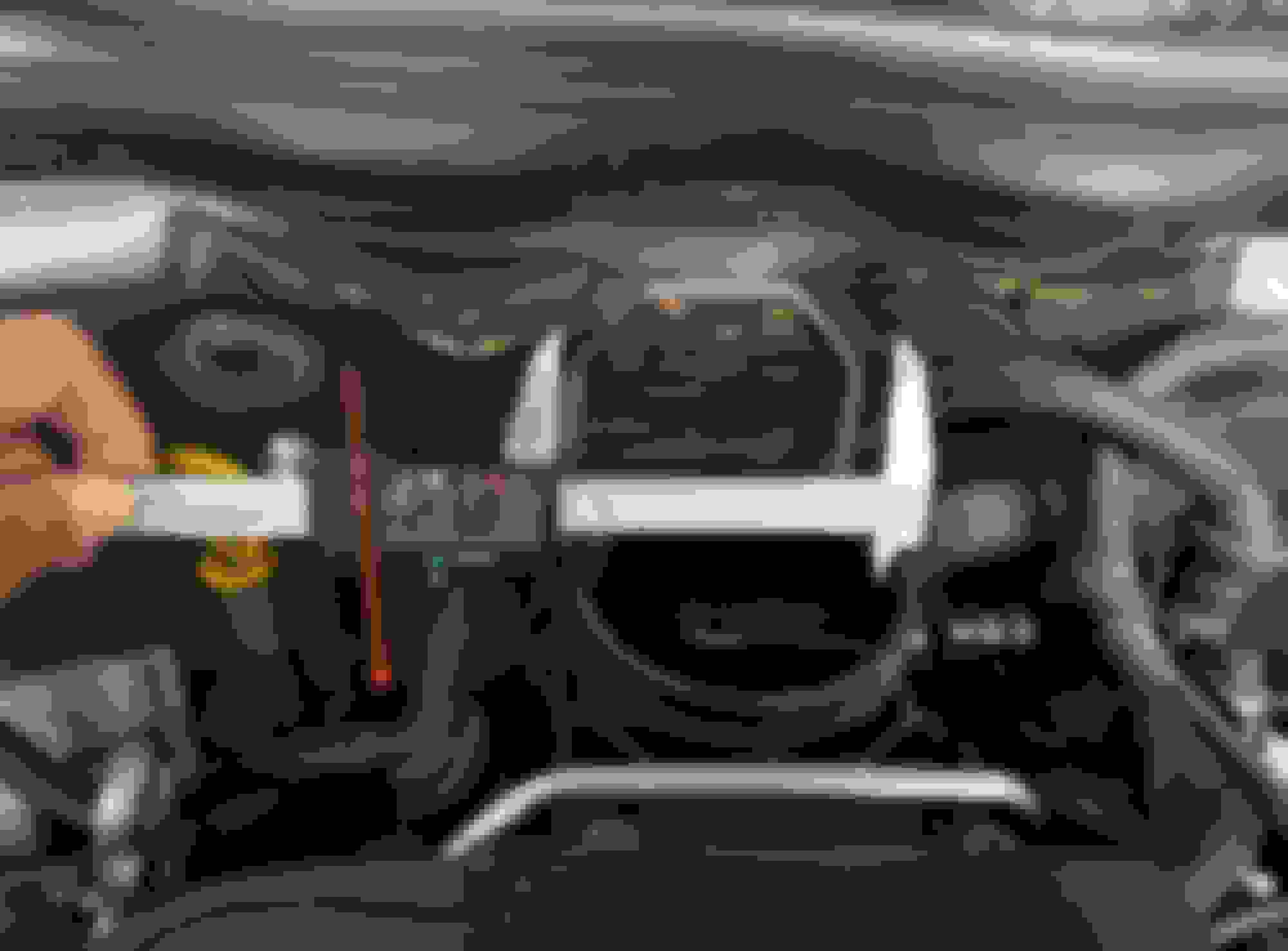
I think its connected to some hose, here's some pic when I measure the MAF. The left one goes to the brake booster, the right one goes to on top of bank 2
sorry could not took better pic as I'm in batik attire with long sleeve in the office, as I have some meeting coming up . Below is on top of bank 2, I did not remove the air filter housing. (btw, from below pic seems not connected properly?)
I see, this is like M278.
Brake booster get 2 suction sources, 1 is from vacuum pump and one is the L shape intake manifold pipe we speak of.
That Y thingy ( 2 pipes in 1 ) round thing as per ur red arrow is a check valve.
The vacuum pump also has check valve as connector.
OK, we shall test those 2 check valves and the vacuum pump suction power too then.
So that is the vacuum pump then, I googled around that one also common failure in m272 engine. Gosh so many things to fail when it fail can introduce oils into the throttle body/vacuum system. The mechanic did told me there was oil in the throttle body and intake. But he said most likely before the PCV system replaced. What he did not know just one week before PCV system replaced, the TB and intake was also cleaned (when I repair the tumble flap). Could one week of bad PCV system introduce a lot of oil in the TB? my oil level is fine tho.
Lets do the smoke test first, dont want to spend on more parts until confirmed.
Are you sure? The first thing that should hit the MAF is clean filtered air. That's why K&N filters mess up MAFs when people over-oil them. Any EGR vapors should be downstream of the MAF, shouldn't they?
I think you are right... MAF is above throttle body and the PCV oil air injection is after the MAF close to throttle body.... thanks Jetta
MAF>> Elbow>>>Throttle body
Elbow has the injection port for PCV
Vacuum pump eventually will wear-out. It has decent service life.....BUT........
BUT, the failure can be as simple as the built in check valve....better call it MEMBRANE, at the hose connector/port body which fail first.
The two hoses ports at the vacuum pump uses that check valve or MEMBRANE to make sure vacuum pump only SUCK and not pump oil out of those 2 hose fitting/barb.
In M278 and M157, the small hose connector/port, its membrane often fail and one will loose turbo boost, because that port is for turbocharger wastegate vacuum actuator.
You know, now comes potential problems on my mind when a few parts fail , which may cause engine to LEAN out, in the case of your M272 with such vacuum pump and brake booster and intake manifold set up as-is.
It has to be a few faults happening at the same time.
First important point to note : Connector A and B is fat, that fat part is a check valve integrated as connector.
For engine which its brake booster is or is also using intake manifold natural vacuum negative pressure availability..... that means at each and every press of the brake pedal,
your engine gets FRESH air from brake booster, that means it will LEAN out the engine.
How can that be, you may ask ?
Watch this video and pay attention when the guy mention ATMOSPHERIC PRESSURE into the brake booster....that is FRESH AIR.
So after the brake pedal is released, the brake booster for that moment in time will have negative pressure reduction aka vacuum power reduction because of the fresh air mix.
This fresh air inside the brake booster is then sucked again by engine intake manifold to maintain proper negative pressure aka vacuum inside the brake booster.
This is where FRESH AIR gets into the engine.
If brake booster is leaking, the engine then will have massive LEAN condition.
If in Tesna M272 case, dual suction sources of brake booster will confuse troubleshooter even more as it may masked the LEAN condition to a point.
I never expected M272 E300 indonesian market will have vacuum for brake booster set up that way. I thought it will be like my M276 or M271, brake booster vacuum is purely from vacuum pump....PERIOD.
---------------
Can vacuum pump pumps out oil into intake manifold in case of Tesna's M272 ? Hell yeah.
The same way M157/M278 engine has their turbo wastegate vacuum actuator becomes oil clogged....the membrane failure.
Vacuum pump always have oil inside its chamber, not crazy a lot, but has decent oil, otherwise it will not work.
HHHmmmm, more stuff to inspect
Last edited by S-Prihadi; Oct 10, 2024 at 02:55 AM.
Reason: typo
2015 SL400 (M276 Turbo), 2014 C350 Sport (M276 NA), 2004 SL500 (M113), 2004 Audi TT225 (BEA)
The theory makes sense. But for it to actually impact the LTFT, wouldn't the driver have to be riding the brakes or predominantly drive in stop-and-go congested city driving?
Some people, not many, ride the brakes unintentionally because they brake with their left foot instead of their right. I assume the vacuum pump uses unmetered air and is never intended to release air into the crankcase or downstream of the MAF. I'm guessing it is a closed system normally. Therefore, if there are any leaks, you will be introducing unmetered air causing the O2 sensors to report a lean condition.
@S-Prihadi thanks for the detailed info regarding the vacuum pump, nice. What if there is oil on the hose? hose replacement will be sufficient or needs to replace the vacuum pump?
Btw, this morning drive on usual route somehow LTFT improved, when I start the engine it was 11.8%.. by the time I reach usual destination on the morning (my kid's school) it's at 8.5% :O It's rare to see below 10% except when I reset the LTFT.. So there is little improvement from intake manifold replacement after all
After taking the kids to the school I did unusual route, needs to take highway and I drive a little bit fast... (a lot of WOT) it increased to 9.3%.I saw the exhaust temp did go to 1000C :O
Then on the afternoon (15:00 ), I drove back home and momentarily decreased to 8.5% again, nice. However when stuck in traffic it increased to 10.1% again.
I suspect there is leak somewhere on the plastic/rubber components, as LTFT tends to increase on a hot condition (IAT more than 50, coolant more than 95, usually happens when stuck in traffic when there's less airflow) and when engine compartments gets hot the leak increased somehow due to the heat (the leak/crack on plastic/rubber parts gets hot = more opening?)
2015 SL400 (M276 Turbo), 2014 C350 Sport (M276 NA), 2004 SL500 (M113), 2004 Audi TT225 (BEA)
I went to the Lufi website to find out more about this device and saw this list of possible functions. Is this normal (i.e., cylinder 1) or am I missing something? Does this impact your troubleshooting?
The theory makes sense. But for it to actually impact the LTFT, wouldn't the driver have to be riding the brakes or predominantly drive in stop-and-go congested city driving?
Some people, not many, ride the brakes unintentionally because they brake with their left foot instead of their right. I assume the vacuum pump uses unmetered air and is never intended to release air into the crankcase or downstream of the MAF. I'm guessing it is a closed system normally. Therefore, if there are any leaks, you will be introducing unmetered air causing the O2 sensors to report a lean condition.
If the brake booster has minor leak within capability of the intake manifold to still create enough vacuum for brake booster, probably car owner won't know.
Brake booster 1 full pedal push will not "eat-up" entire vacuum capacity when suction is still active by intake manifold or vacuum pump.
Multiple fast push of brake pedal continuously is king of vacuum reserve consumer.
Go to 29:43 minute to see how a car using its intake manifold vacuum for brake booster can introduce fresh air in enough quantity to lean out the o2 sensor reading while idling.
This is part of a simple way to test o2 sensor for lean capability.
.
This is me trying to "consume" my brake booster vacuum reserve, while vacuum pump is running. Engine idling.
My sensor is Absolute type. So when engine off, brake booster has zero vacuum, it will read atmospheric pressure, sea level my home is, thus approx 14.7 PSI.
Closer to zero, that is maximum vacuum or -14.7 PSI Gauge. Closer to 14.7 PSI absolute, that means I am consuming so much vacuum reserve... its back to 1 ATM.
@S-Prihadi thanks for the detailed info regarding the vacuum pump, nice. What if there is oil on the hose? hose replacement will be sufficient or needs to replace the vacuum pump?
Btw, this morning drive on usual route somehow LTFT improved, when I start the engine it was 11.8%.. by the time I reach usual destination on the morning (my kid's school) it's at 8.5% :O It's rare to see below 10% except when I reset the LTFT.. So there is little improvement from intake manifold replacement after all
After taking the kids to the school I did unusual route, needs to take highway and I drive a little bit fast... (a lot of WOT) it increased to 9.3%.I saw the exhaust temp did go to 1000C :O
Then on the afternoon (15:00 ), I drove back home and momentarily decreased to 8.5% again, nice. However when stuck in traffic it increased to 10.1% again.
I suspect there is leak somewhere on the plastic/rubber components, as LTFT tends to increase on a hot condition (IAT more than 50, coolant more than 95, usually happens when stuck in traffic when there's less airflow) and when engine compartments gets hot the leak increased somehow due to the heat (the leak/crack on plastic/rubber parts gets hot = more opening?)
Vacuum pump.
If there is A LOT OF oil in the vacuum hose.... that means the vacuum pump is also not able to "suck" well at that port.
Minimum replace the port ( and its membrane ), but must go aftermarket, MB does not sell those.....or we use stand alone check valve.
Must test first to make sure vacuum pump still can achieve -14 PSI suction.
--------------
Yes, it is possible on the hot temperature expanding components more and causing minor vacuum leak.
We will make sure engine is hot when we smoke test it.
By the way, what model Lufi are you using? XS? And is it configurable?
Originally Posted by JettaRed
I went to the Lufi website to find out more about this device and saw this list of possible functions. Is this normal (i.e., cylinder 1) or am I missing something? Does this impact your troubleshooting?
It's quite configureable, it can display what OBD2 data and in addition can add custom PIDs to read more than standard OBD2 data (such as transmission temp, transmission torque) Some custom PIDs already pre loaded on the device, you need to configure use it.
The fuel trims figure yes its only can display data on bank 1 (not on cylinder 1), for me no problem as I only need one of them to monitor, ever since I have problem with the emission I tend to look FT numbers so I purchase this little thing. I just plug my launch scanner if need more detailed data.
What I like about this lufi is we can set an alarm if something above/below preset threshold (eg when coolant temp above 100C set an alarm)
Originally Posted by S-Prihadi
Vacuum pump.
If there is A LOT OF oil in the vacuum hose.... that means the vacuum pump is also not able to "suck" well at that port.
Minimum replace the port ( and its membrane ), but must go aftermarket, MB does not sell those.....or we use stand alone check valve.
Must test first to make sure vacuum pump still can achieve -14 PSI suction.
--------------
Yes, it is possible on the hot temperature expanding components more and causing minor vacuum leak.
We will make sure engine is hot when we smoke test it.
Googled m272 exhaust leaks, and found this https://mbworld.org/forums/c-class-w...g-install.html . lets check for it tomorrow pak @S-Prihadi . I hope we will found the real root cause tomorrow . If there's vacuum leak due to more unmetered air it should not make the spark plug and combustion chamber rich in carbon deposits right.... ah dunno I'm not the expert
After the intake manifold replacement I found the car more responsive especially on the low rpm range (according to my butt dyno). fuel consumption seems improved a little. I wonder what can I feel if someday finally LTFT gets close to 0....
Don't worry, entire exhaust system up to exhaust manifold and secondary air injection valve is part of the test.
My vacuum cleaner is reversible, if smoke gets say lost in the CAT, we use the vacuum cleaner instead to push lots of air from tail pipe and we wait for hissing sound or
we look for micro bubble. I have a special awesome bubble tracker fluid, better than soapy water.
I got it from USA....for HVAC works actually.
well, I'm lucky enough to live in the same city as master @S-Prihadi , so the expert himself can check my car extensively. I even don't know most of the tools he got to check on my car :O I learned a lot from the master
So after more than half day of checking, found several problem.
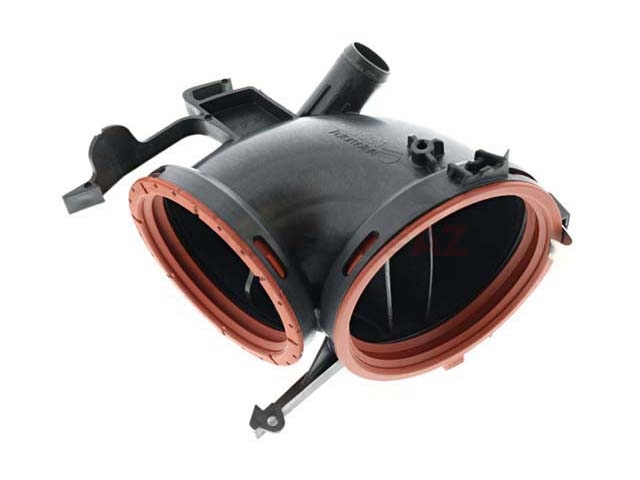
Air pump control valve (https://www.fcpeuro.com/products/mer...mer-0021408360) on the bank 1.
This thing does not hold vacuum when tried to actuate the valve manually using vacuum pump. and the smoke from smoke test machine gets out from the vacuum port . This does not happen on the same valve on bank 2. Perhaps the valve also stuck half open making the o2 sensor reads lean (since additional unwanted air can go to the exhaust manifold) . When the secondary air pump is turned on on cold start, the CATs does gets heat up same as the bank 2, so at least its confirmed open. Perhaps I'll try to do more test when the engine hot and open up the hose whether there's exhaust smoke from the hose or not.
The vacuum pump is bursting oils to one of the vacuum port (the one goes to the intake manifold levers, air pump control valve) . Can we replace the check valve? or whole pump replacement is required? those vacuum lines contaminated with oils for sure. how do I clean them after fixing the oil leaks... hmmm
Several vacuum hoses (nearby the vacuum pump, air control valve) has cracks
Fuel Evap canister is leaking smoke when smoke tested
Mercedes SLR McLaren 722 S Is Extremely Rare Example Modified by McLaren
Slideshow: A one-of-one U.S.-spec Mercedes-Benz SLR McLaren Roadster became even rarer after a factory-backed transformation at McLaren's headquarters.























 . Can't wait until saturday



















 when it fail can introduce oils into the throttle body/vacuum system. The mechanic did told me there was oil in the throttle body and intake. But he said most likely before the PCV system replaced. What he did not know just one week before PCV system replaced, the TB and intake was also cleaned (when I repair the tumble flap). Could one week of bad PCV system introduce a lot of oil in the TB? my oil level is fine tho.












 . If there's vacuum leak due to more unmetered air it should not make the spark plug and combustion chamber rich in carbon deposits right.... ah dunno I'm not the expert