Preamble
- This post is for information only. Despite my best efforts, I make no claims or warranties regarding the accuracy of this DIY. Your vehicle, its parts, systems, and torque specifications may differ from what is detailed below. You assume all risks associated with working on your own vehicle, and do not hold me liable for any damages. Having this work done by a qualified professional is recommended.
Who this tutorial is intended for
- Someone with mechanical aptitude, attention to detail, confidence, and appropriate tools.
- Someone who does not have Xentry or equivalent DAS software to perform the required coding/adaptation work.
Why did I decide to perform this procedure on my vehicle? - Symptom: intermittent rough idle
- Error Code: P02D5 Cylinder 5 Fuel Injector Offset Learning At Max Limit
- Error Code: P02D7 Cylinder 6 Fuel Injector Offset Learning At Max Limit
- Error Code: P0305 Cylinder 5 Misfire Detected
- Odometer: 104,000 kms - Based on the above, I concluded that at least two of the six injectors were requiring rebuild or replacement. I decided to purchase six new injectors, and the associated parts/tools to perform the mechanical work myself. Once I completed the mechanical work, I took the vehicle to a reputable Mercedes independent shop to perform the Xentry DAS re-adaptations.
Part List/consumables (for replacing all six injectors)
- Fuel Injectors (6x) new or re-manufactured
------ New ---------------------------------------------- A 642 070 11 87 (Bosch 0445116025)
------ Re-manufactured ------------------------------ A 642 070 11 87 80 (Bosch 0986435404)
- Fuel Injector Yield/Stretch Bolt (6x) ------------- A 000 990 29 07
- Fuel Injector Crush Washer (6x) ---------------- A 611 017 00 60
- High-temp Ceramic Grease (1x) ----------------- A 001 989 42 51 10 (or Febi/Bilstein 26712 grease as an alternate)
- Fuel Injector Brackets (as required) ------------ A 642 016 00 38
Special Tools
- Torque wrench(es) suitable for ranges between 7 Nm - 33 Nm.
- Box wrench bit (Mercedes Part No. 000 589 68 03 00) or crows foot sockets including 17 mm and 18 mm sizes.
- Diesel injector seat/bore cleaning kit. I used this kit.
- Acetone or equivalent solvent for cleaning injector bores.
- Shop vac with long/thin adapter to suction out debris from injector bores. This is helpful if you have it.
- Injector impact extractor (Mercedes Part No. 602 589 00 33 00) or equivalent, if injector is seized.
Before you begin the work
- Number and photograph QR codes on new injectors for Xentry DAS adaptation later.
- Begin with a warm engine. This may help during the injector removal stage to limit the chances of encountering a difficult to remove injector.
Air/Acoustic System Removal
- Disconnect engine Cover [700] from air duct [600]. Pull up on engine cover to remove.
- Disconnect raw air lines [540, 550] from air filter housings [400, 410] by gently pulling forward.
- Remove intake Y-pipe [85] downstream of filter housings:
------ Disconnect electrical connections for each MAF sensor [915], one per side.
------ Unclip connections to air filter housings [400, 410] by two clips per side.
------ Loosen clamp [110] connection.
------ Pull intake Y-pipe [85] gently towards front of vehicle to remove from turbocharger.
------ Carefully disconnect [150] from intake Y-pipe during removal.
- Remove air filter housings [400, 410]:
------ Disconnect electrical connection from pressure sensor [460] on the LHS air filter housing [400].
------ Remove bolts [475,495]. Two per side.
------ I also removed the air filter access panels and filters on [400,410]. Two Torx screws per side.
------ Pull upwards on air filter housings [400,410] to remove.
------ Remove soundproofing around injectors. One molded foam insert per cylinder head.
Fuel System Removal
- Disconnect fuel return line [75] from each injector by rotating tabs to unlock then pulling upwards. - Disconnect electrical connections [908] to each injector [70].
- Disconnect high-pressure fuel lines [65] between injectors & fuel rail. One per injector. Number and/or keep track of cylinder position for each line. This is where I used the 17 mm and 18 mm crows foot sockets. Harnesses/coverings may need to be slightly relocated to gain access to the Cylinder #6 fuel rail connection. - Remove injector yield bolts [85]. One per injector.
- Remove injector bracket [80]. One per injector.
- Carefully wiggle/twist and pull upwards on injector to remove. Gently leverage with flat screwdriver if required. If the injector is seized, first wet the bore with Acetone or equivalent solvent, wait, and try again at a later time. Else, use an injector slide hammer. - Number and/or keep track of cylinder position for each line.
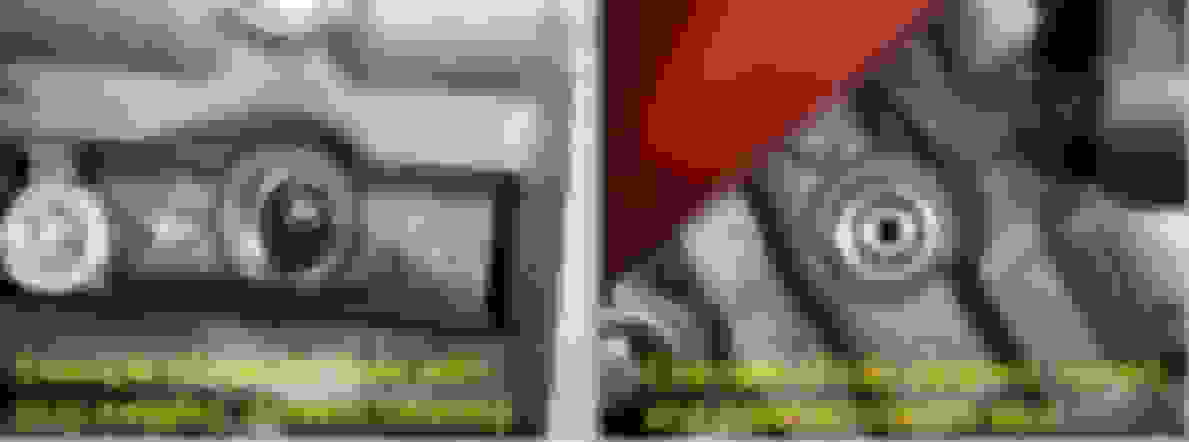
- If one or more injector crush washers [75] remains stuck in the bore, you can extract it with an extraction tool. You can also use an appropriately sized flat-head screwdriver pressed into the washer's inner bore to grab/rotate/retrieve.
Clean Injector Bores
- Follow instructions on your seat cleaning kit. Below is what I did.
------ Install injector bore sealing plug, and clean the injector bore with solvent.
------ Vacuum up the excess solvent and continue cleaning to obtain a clean/reflective finish.
------ If no vacuum is available, use absorbent towels/cloth to clean solvent from bores.
------ Remove injector bore plug, and hone/polish crush washer seat surface to a reflective finish.
------ Final bore cleaning with a lint-free microfiber towel.
- I ended up achieving a suitable result by only using the Nylon brush head.
Install new injectors
- Do not touch/contaminate the injector tip.
- Install crush washer [75] on injectors [70]. I faced the concave side towards injector body.
- Apply high-temp ceramic grease to injectors only to area "B" as shown in the attached photo.
- Reinstall injectors [70] along with injector brackets [80].
- Slowly/carefully torque the one-time use yield bolts [85] to 7 Nm, then an additional 90 degrees.
- (optional). Turn an additional 90 degrees. There is an excellent discussion regarding this via the following forum link. I did this step, as the yield bolt bore threads were in excellent shape with no visible debris at the base of the bores.
Reinstall fuel system
- Reconnect high-pressure fuel lines [65]. 27 Nm on union nut to fuel rail. 33 Nm on union nut to injector. Exercise caution to not damage injector during tightening.
- Reconnect fuel return line [75] to injectors. Push down until you hear it click, then rotate tabs to lock.
- Reconnect electrical connections [908] to each injector.
Reinstall Air/Acoustic System
- Reinstall soundproofing around injectors on each cylinder head.
- Reinstall air filter housings [400, 410]:
------ Push down onto standoffs until locked in place.
------ Reconnect bolts [475,495]. Two per side. 9 Nm torque.
------ Reinstall air filter access panels and filters on [400,410]. Two Torx screws per side.
------ Reconnect electrical connection to pressure sensor [460] on LHS air filter housing [400].
- Reinstall intake Y-pipe [85] downstream of filter housings:
------ Carefully reconnect [150] onto intake Y-pipe [85].
------ Push Y-pipe [85] gently rearward onto turbocharger.
------ Reinstall clamp [110] connection to turbocharger compressor inlet.
------ Reconnect to air filter housings [400, 410] by two clips per side. Exercise caution to align mating face of both parts to ensure an air tight and aligned connection via gasket [100].
------ Reconnect electrical connections to each MAF sensor [915], one per side.
- Reconnect raw air lines [540, 550] to air filter housings [400, 410].
- Reinstall engine Cover [700] by placing/pushing down on standoffs, and reconnect tor air duct [600].
Initial Start-Up
- Turn the key to 2nd position (run) position and wait 5-10 seconds for fuel system to prime.
- Repeat above several times to get as much fuel circulated into the injectors as possible.
- Start vehicle. This may take several attempts until it fires up. Mine required three attempts.
Xentry DAS re-adaptations
- Prepare printed photos of the new injectors, their QR codes (two per injector), and corresponding cylinder positions.
- Safely drive your vehicle to a reputable shop which can perform the re-adaptations. Bring the photos and old injectors (also numbered by cylinder position).
- They must code in each new injector through Xentry to update the trim/tolerance information in the ECU.
- I asked my shop to also reset the MAF sensor adaptations, as I thoroughly cleaned mine (by immersing in solvent) while they were out of the vehicle.
- Once coding is performed, you may need to drive the vehicle for a short time to allow the ECU to fully learn and trim the new injectors. As I understand, off-throttle coasting/deceleration will be part of the ECU learning.
Conclusion
- Since this work was completed, the idle has been extremely smooth.
- The error codes have not resurfaced.
Please notify me if you find any errors, discrepancies, or tips/tricks I should add to this tutorial.
Preamble
- This post is for information only. Despite my best efforts, I make no claims or warranties regarding the accuracy of this DIY. Your vehicle, its parts, systems, and torque specifications may differ from what is detailed below. You assume all risks associated with working on your own vehicle, and do not hold me liable for any damages. Having this work done by a qualified professional is recommended.
Who this tutorial is intended for
- Someone with mechanical aptitude, attention to detail, confidence, and appropriate tools.
- Someone who does not have Xentry or equivalent DAS software to perform the required coding/adaptation work.
Why did I decide to perform this procedure on my vehicle? - Symptom: intermittent rough idle
- Error Code: P02D5 Cylinder 5 Fuel Injector Offset Learning At Max Limit
- Error Code: P02D7 Cylinder 6 Fuel Injector Offset Learning At Max Limit
- Error Code: P0305 Cylinder 5 Misfire Detected
- Odometer: 104,000 kms - Based on the above, I concluded that at least two of the six injectors were requiring rebuild or replacement. I decided to purchase six new injectors, and the associated parts/tools to perform the mechanical work myself. Once I completed the mechanical work, I took the vehicle to a reputable Mercedes independent shop to perform the Xentry DAS re-adaptations.
Part List/consumables (for replacing all six injectors)
- Fuel Injectors (6x) new or re-manufactured
------ New ---------------------------------------------- A 642 070 11 87 (Bosch 0445116025)
------ Re-manufactured ------------------------------ A 642 070 11 87 80 (Bosch 0986435404)
- Fuel Injector Yield/Stretch Bolt (6x) ------------- A 000 990 29 07
- Fuel Injector Crush Washer (6x) ---------------- A 611 017 00 60
- High-temp Ceramic Grease (1x) ----------------- A 001 989 42 51 10 (or Febi/Bilstein 26712 grease as an alternate)
- Fuel Injector Brackets (as required) ------------ A 642 016 00 38
Special Tools
- Torque wrench(es) suitable for ranges between 7 Nm - 33 Nm.
- Box wrench bit (Mercedes Part No. 000 589 68 03 00) or crows foot sockets including 17 mm and 18 mm sizes.
- Diesel injector seat/bore cleaning kit. I used this kit.
- Acetone or equivalent solvent for cleaning injector bores.
- Shop vac with long/thin adapter to suction out debris from injector bores. This is helpful if you have it.
- Injector impact extractor (Mercedes Part No. 602 589 00 33 00) or equivalent, if injector is seized.
Before you begin the work
- Number and photograph QR codes on new injectors for Xentry DAS adaptation later.
- Begin with a warm engine. This may help during the injector removal stage to limit the chances of encountering a difficult to remove injector.
Air/Acoustic System Removal
- Disconnect engine Cover [700] from air duct [600]. Pull up on engine cover to remove.
- Disconnect raw air lines [540, 550] from air filter housings [400, 410] by gently pulling forward.
- Remove intake Y-pipe [85] downstream of filter housings:
------ Disconnect electrical connections for each MAF sensor [915], one per side.
------ Unclip connections to air filter housings [400, 410] by two clips per side.
------ Loosen clamp [110] connection.
------ Pull intake Y-pipe [85] gently towards front of vehicle to remove from turbocharger.
------ Carefully disconnect [150] from intake Y-pipe during removal.
- Remove air filter housings [400, 410]:
------ Disconnect electrical connection from pressure sensor [460] on the LHS air filter housing [400].
------ Remove bolts [475,495]. Two per side.
------ I also removed the air filter access panels and filters on [400,410]. Two Torx screws per side.
------ Pull upwards on air filter housings [400,410] to remove.
------ Remove soundproofing around injectors. One molded foam insert per cylinder head.
Fuel System Removal
- Disconnect fuel return line [75] from each injector by rotating tabs to unlock then pulling upwards. - Disconnect electrical connections [908] to each injector [70].
- Disconnect high-pressure fuel lines [65] between injectors & fuel rail. One per injector. Number and/or keep track of cylinder position for each line. This is where I used the 17 mm and 18 mm crows foot sockets. Harnesses/coverings may need to be slightly relocated to gain access to the Cylinder #6 fuel rail connection. - Remove injector yield bolts [85]. One per injector.
- Remove injector bracket [80]. One per injector.
- Carefully wiggle/twist and pull upwards on injector to remove. Gently leverage with flat screwdriver if required. If the injector is seized, first wet the bore with Acetone or equivalent solvent, wait, and try again at a later time. Else, use an injector slide hammer. - Number and/or keep track of cylinder position for each line.
- If one or more injector crush washers [75] remains stuck in the bore, you can extract it with an extraction tool. You can also use an appropriately sized flat-head screwdriver pressed into the washer's inner bore to grab/rotate/retrieve.
Clean Injector Bores
- Follow instructions on your seat cleaning kit. Below is what I did.
------ Install injector bore sealing plug, and clean the injector bore with solvent.
------ Vacuum up the excess solvent and continue cleaning to obtain a clean/reflective finish.
------ If no vacuum is available, use absorbent towels/cloth to clean solvent from bores.
------ Remove injector bore plug, and hone/polish crush washer seat surface to a reflective finish.
------ Final bore cleaning with a lint-free microfiber towel.
- I ended up achieving a suitable result by only using the Nylon brush head.
Install new injectors
- Do not touch/contaminate the injector tip.
- Install crush washer [75] on injectors [70]. I faced the concave side towards injector body.
- Apply high-temp ceramic grease to injectors only to area "B" as shown in the attached photo.
- Reinstall injectors [70] along with injector brackets [80].
- Slowly/carefully torque the one-time use yield bolts [85] to 7 Nm, then an additional 90 degrees.
- (optional). Turn an additional 90 degrees. There is an excellent discussion regarding this via the following forum link. I did this step, as the yield bolt bore threads were in excellent shape with no visible debris at the base of the bores.
Reinstall fuel system
- Reconnect high-pressure fuel lines [65]. 27 Nm on union nut to fuel rail. 33 Nm on union nut to injector. Exercise caution to not damage injector during tightening.
- Reconnect fuel return line [75] to injectors. Push down until you hear it click, then rotate tabs to lock.
- Reconnect electrical connections [908] to each injector.
Reinstall Air/Acoustic System
- Reinstall soundproofing around injectors on each cylinder head.
- Reinstall air filter housings [400, 410]:
------ Push down onto standoffs until locked in place.
------ Reconnect bolts [475,495]. Two per side. 9 Nm torque.
------ Reinstall air filter access panels and filters on [400,410]. Two Torx screws per side.
------ Reconnect electrical connection to pressure sensor [460] on LHS air filter housing [400].
- Reinstall intake Y-pipe [85] downstream of filter housings:
------ Carefully reconnect [150] onto intake Y-pipe [85].
------ Push Y-pipe [85] gently rearward onto turbocharger.
------ Reinstall clamp [110] connection to turbocharger compressor inlet.
------ Reconnect to air filter housings [400, 410] by two clips per side. Exercise caution to align mating face of both parts to ensure an air tight and aligned connection via gasket [100].
------ Reconnect electrical connections to each MAF sensor [915], one per side.
- Reconnect raw air lines [540, 550] to air filter housings [400, 410].
- Reinstall engine Cover [700] by placing/pushing down on standoffs, and reconnect tor air duct [600].
Initial Start-Up
- Turn the key to 2nd position (run) position and wait 5-10 seconds for fuel system to prime.
- Repeat above several times to get as much fuel circulated into the injectors as possible.
- Start vehicle. This may take several attempts until it fires up. Mine required three attempts.
Xentry DAS re-adaptations
- Prepare printed photos of the new injectors, their QR codes (two per injector), and corresponding cylinder positions.
- Safely drive your vehicle to a reputable shop which can perform the re-adaptations. Bring the photos and old injectors (also numbered by cylinder position).
- They must code in each new injector through Xentry to update the trim/tolerance information in the ECU.
- I asked my shop to also reset the MAF sensor adaptations, as I thoroughly cleaned mine (by immersing in solvent) while they were out of the vehicle.
- Once coding is performed, you may need to drive the vehicle for a short time to allow the ECU to fully learn and trim the new injectors. As I understand, off-throttle coasting/deceleration will be part of the ECU learning.
Conclusion
- Since this work was completed, the idle has been extremely smooth.
- The error codes have not resurfaced.
Please notify me if you find any errors, discrepancies, or tips/tricks I should add to this tutorial.
Absolutely great write up. Your effort is much appreciated.
1) I am not familiar with other methods to effectively plug the injector bores while cleaning. I do suspect that there are ways to do it safely, however I found great success by using the plugs which came with the injector seat/bore cleaning kit
2) If you are re-installing the exact same injectors into the same cylinders, I do not expect that re-adaptations would be required.
1) I am not familiar with other methods to effectively plug the injector bores while cleaning. I do suspect that there are ways to do it safely, however I found great success by using the plugs which came with the injector seat/bore cleaning kit
2) If you are re-installing the exact same injectors into the same cylinders, I do not expect that re-adaptations would be required.
Thank you. I tried to torque by bolts and ended up snapping one before the 7NM. Luckily, my brother was able to get it out with no damage.
will clean the threads again, and try to retorque/ go by feel.
I read a post that if there is dirt and it’s not torqued properly, I can crack the actual head. Any truth in this? I can’t see how this would happen.
I am glad to hear that retrieval of the snapped yield bolt was successful. Make sure to only use new bolts during re-installation of the injectors. They are yield bolts intended for one-time-use.
I suppose if there is dirt at the base of the yield bolt threads or bore, the risk would be that the yield bolt would bottom-out early. I.e. you would achieve 7 Nm of torque on the tool before the yield bolt applied the designed tension to the injector. In that case, there would be insufficient tension holding the injector in place, which could lead to injector seal blow-by and the infamous "Black Death".
I am glad to hear that retrieval of the snapped yield bolt was successful. Make sure to only use new bolts during re-installation of the injectors. They are yield bolts intended for one-time-use.
I suppose if there is dirt at the base of the yield bolt threads or bore, the risk would be that the yield bolt would bottom-out early. I.e. you would achieve 7 Nm of torque on the tool before the yield bolt applied the designed tension to the injector. In that case, there would be insufficient tension holding the injector in place, which could lead to injector seal blow-by and the infamous "Black Death".
just an fyi, if you got the recall done, injectors are covered under the new warranty for 4yrs/50k after recall work was performed.
Dam Didn't know that. I brought a 2015 Gl350 in April I did notice a recall sticker under the hood. So I'm going to call the dealer and find out. I just ordered a injector and parts to do the job. But Dam if i can get it done by the dealer saves me $ and a day.
Dam Didn't know that. I brought a 2015 Gl350 in April I did notice a recall sticker under the hood. So I'm going to call the dealer and find out. I just ordered a injector and parts to do the job. But Dam if i can get it done by the dealer saves me $ and a day.
I'm going to assume this is the recall that was done? I haven't paid to much attention to it I have two sprinters also
Thanks
I got some stuff in the mail about the sprinters but they been running good so didn't pay attention to the recall
But I'm going to get on it..
Thanks for all the info ...
just an fyi, if you got the recall done, injectors are covered under the new warranty for 4yrs/50k after recall work was performed.
Took it to the dealer said it needs number 5 and 6 injector,they said its NOT covered under warranty. I haven't called them back yet. But I will ***** in The A.M
Thank you so much for this outstanding write up. I'm starting to get parts to replace 2 injectors, and this has helped tremendously. I will be referencing this post a lot during the job.
A quick question: how long did this take you? And how long would it have taken to do only 2 injectors?
How can you measure where the injector should be when seated in the cylinder head?
@Keep
Thank you so much for this guide, you are a scholar and a gentleman for putting the effort into documenting this so well for the rest of us. I know it's been a minute since you originally posted, so the kit you used is no longer available; are you able to describe what you used for a plug? I found this kit on Amazon.ca that comes with 6 plugs so it looks like everything I need.
My wife's vehicle (2012 ML350 Bluetec, 197,000km) was having hard starts at times, then started making a noise that I thought was a clicking... turned out to be the chuffing of a leaking injector. Black death already firmly set in on #4 cylinder, (driver side, firewall), I actually got a video of it spitting diesel into the engine bay. Removed all injectors to take them to a shop for cleaning and testing and noted that the tips were worn, pitted and even concave on some, presumably from cavitation of combustion gases. Shop wouldn't even test them due to their condition and advised not re-installing them. Ordered remanufactured injectors from WT Diesel in UK, very happy with them, best price I could find (roughly 30% what shops in Canada told me) and shipping extremely fast. Anyways... I really wish I had found this guide before I started... I think I may have messed up my cylinder heads. The info I found said to use a seat cutter to "clean" the injector seats and not to use a brush - couldn't seem to get them clean with the recommended size (17x19mm) and the washers are 15mm anyways so I used a 15mm cutter. I have definitely removed some material (metal) from the cylinder heads (I was careful with the cleaning and always had grease on the cutter so hopefully no material went into the cylinder...) But I still can't seem to get them clean. I've stopped for now. My wife's SUV is currently a paperweight in the driveway... I'm going to try this cleaning kit to see if I can't get the seats polished up but I'm wondering if I should just replace the cylinder heads with used or remanned. I don't know how to measure the distance between the seat and the bottom of the head, nor do I know what that measurement should be. I don't want install the remanned injectors just to have them destroyed because they're sitting too low in the cylinder. I also don't want to double up on the washers unless I can confirm what the actual installed height should be, and if I'd even need to do that or not. I don't want to do that but I also don't want to drop another $800 for replacement heads, but that might be my only option. I don't know if a machine shop can fix the injector seats or not.
If anyone is able to provide some guidance I'd greatly appreciate it!!!
Slideshow: A one-of-one U.S.-spec Mercedes-Benz SLR McLaren Roadster became even rarer after a factory-backed transformation at McLaren's headquarters.