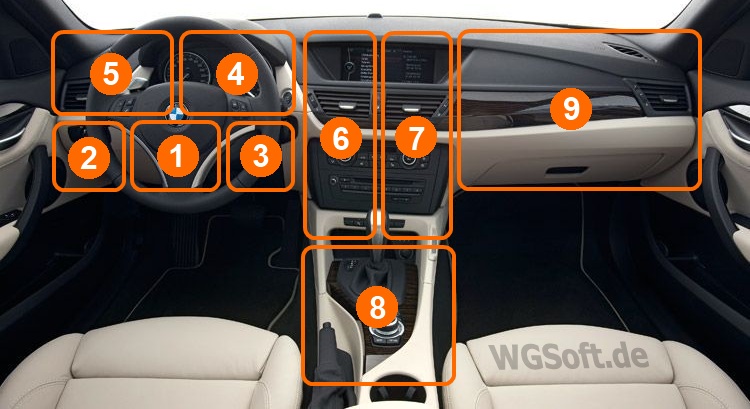
OBD Location

MBWorld Fanatic!
Joined: Oct 2009
Posts: 2,071
Likes: 20
Nissan GT-R BE / '12 Ducati-1199 Panigale S / '12 C300-4M Loaded/GLK350-4M Loaded
The OBD-II plug is where it is on EVERY left handed drive car. Under the dash to the left of the steering wheel. Look under there. See the red hood release lever? Now look slightly to the right of that lever, there should be a small black plastic cover door. Pull on it to open the door. The OBD-II plug is under the cover.
If you have trouble, let me know and I'll post a pic.

If you have trouble, let me know and I'll post a pic.
MBWorld Fanatic!
Joined: Oct 2009
Posts: 2,071
Likes: 20
Nissan GT-R BE / '12 Ducati-1199 Panigale S / '12 C300-4M Loaded/GLK350-4M Loaded
 I wonder what company he owned or worked for where he wouldn't know where to find a "OBD(II) plug for a customer"? A Honda repair shop maybe?
Trending Topics

Member
Joined: Jun 2010
Posts: 140
Likes: 3
--
Sorry to contradict, look here:
1) S70

2) http://en.openobd.org/locations/vw_passat_3b.jpg

I just came across this older info sheet.
http://www.cleanairforce.com/docs/EP...catorGuide.pdf
Last edited by allanX204; Mar 11, 2011 at 06:35 PM.
MB World Stories
The Best of Mercedes & AMG

Dubai Tuner Gives the Mercedes G-Class An Entirely New Look
Verdad Gallardo
Six Gift Ideas Your AMG Loving Dad or Grad Will Cherish

7 Craziest Things AMG Gas Ever Built
Verdad Gallardo
New Electric Mercedes-AMG GT 4-Door Coupe Unveiled: 10 Things You Need to Know
Verdad Gallardo
6 Mercedes Models That Did NOT Age Well (But Are Somehow Still Cool)
Verdad Gallardo
Manual Mercedes? 6 Times Sindelfingen Let Drivers Have All The Fun
Verdad Gallardo
Mercedes SLR McLaren 722 S Is Extremely Rare Example Modified by McLaren
Verdad Gallardo
8 Classic Boxy Mercedes Designs That Have Aged Like Fine Wine
Verdad Gallardo
Flawlessly Restored Mercedes 190E Evo II Heads to Auction
Verdad Gallardo
MBWorld Fanatic!
Joined: Oct 2009
Posts: 2,071
Likes: 20
Nissan GT-R BE / '12 Ducati-1199 Panigale S / '12 C300-4M Loaded/GLK350-4M Loaded
Yup, those appear to be the older OBD-I locations, a quick retrofit, but I could be wrong... I believe OBD-II locations were standardized a few years back to make access easier for Emissions Testing Station personnel. What year were these cars?

Newbie
Joined: May 2008
Posts: 7
Likes: 0
From: North America
2010 GLK 2011 550i 2004 Z4
I own a service garage, OBDII ports can be anywhere in the vehicle. They are not standardized to any one location. Some are intuitive in their placement while others can be very inconvenient if not hidden behind trim pieces.

MBWorld Fanatic!
Joined: Oct 2009
Posts: 2,071
Likes: 20
Nissan GT-R BE / '12 Ducati-1199 Panigale S / '12 C300-4M Loaded/GLK350-4M Loaded
 I own a shop as well!
FROM WIKI:
OBD-II
OBD-II is an improvement over OBD-I in both capability and standardization. The OBD-II standard specifies the type of diagnostic connector and its pinout, the electrical signalling protocols available, and the messaging format. It also provides a candidate list of vehicle parameters to monitor along with how to encode the data for each. There is a pin in the connector that provides power for the scan tool from the vehicle battery, which eliminates the need to connect a scan tool to a power source separately. However, some technicians might still connect the scan tool to an auxiliary power source to protect data in the unusual event that a vehicle experiences a loss of electrical power due to a malfunction. Finally, the OBD-II standard provides an extensible list of DTCs. As a result of this standardization, a single device can query the on-board computer(s) in any vehicle. This OBD-II came in two models OBD-IIA and OBD-IIB.
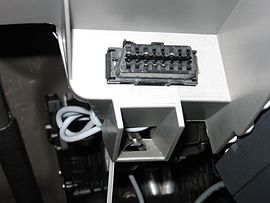
OBD-II Diagnostic connector under dash
The Connector
The OBD-II specification provides for a standardized hardware interface—the female 16-pin (2x8) J1962 connector. Unlike the OBD-I connector, which was sometimes found under the hood of the vehicle, the OBD-II connector is required to be within 2 feet (0.61 m) of the steering wheel (unless an exemption is applied for by the manufacturer, in which case it is still somewhere within reach of the driver).
Last edited by MBRedux; Mar 12, 2011 at 10:55 PM.