When you click on links to various merchants on this site and make a purchase, this can result in this site earning a commission. Affiliate programs and affiliations include, but are not limited to, the eBay Partner Network.
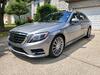
I fill the S550 at 76, Shell, and Mobil only. I use 87 octane. My wife's ML320 turns out to be very obscure. You fill less than half a tank and the car's ride and performance are not that good. The gas is United Oil for ML320 and sometimes 76. United Oil is not special in anyway. If fill less than half a tank and want good performance, I have to go to the stations I fill the S550 with. Never will I take the S550 to United Oil.
I used regular in my E430 for years. I switched to premium a year or so ago and the ride feels smoother. Can't really explain it. Other than that no changes.
2009 S550 AMG sport pckg. 2014 Ford F-150 Lariat Supercrewcab
Using 87 octane you run the chance of ping and pre-detonating your engine. They run a bit higher compression than most american cars and get very hot. At higher rpms that =BOOM!!!!! There goes your 100k dollar car's engine.
Lesson of the day... being a cheap *** will cost you more on the future
I think you have to list what car your talking about. An AMG is a horse of a different color and needs 101 or better. Check with a engine mechanic on the other engines.(Not a Dealer) You may find that the later years run fine on 87. The engine will adjust by itself. Now take it easy. I'm not a mechanic I just talk to them.
An AMG is a horse of a different color and needs 101 or better.
What exactly are you referring to when you say 101 or better? If you're talking about octane, then pass that pipe over here. 101 is racing gas. You'll blow up any passenger car motor if you run that stuff too long.
running regular gas will result in pulled timing and reduced performance... However some engines respond well to retarded timing and will provide better mpg. Others will be the opposite- there is no hard and fast rule.
The problem with regular gas is that it does not have the needed detergents to prevent carbon deposits which are the bane of most mb engines. Thus i imagine if you use 87 stateside (93 in Europe) and you use periodically chevron techron additive it should work alright.
Said that- if anybody puts regular in their modern Benzes they should not be allowed to own such vehicles.
2 yrs ago I switched to unleaded 87 octane on my S550 and the only thing that happened is my milage increased 2 to 3 mpg..
i know this is an old post but higher octane burns more efficiently thus getting more mpg with 93. I filled up my fiat abarth with 87 and checked mileage. Did it all thevway till i got to 93 octane and with 93 octane i got well over 30 more miles. So if you got 2 to 3 mpg more with 87 i think you may have made a mistake.
What exactly are you referring to when you say 101 or better? If you're talking about octane, then pass that pipe over here. 101 is racing gas. You'll blow up any passenger car motor if you run that stuff too long.
Goodness. Old thread.
Replying to correct a wives tale.
Running higher octane in an engine not designed for it does two things.... ensures the engine will not knock and burns a lot more dollars.
High octane will NOT damage an engine.
LOW octane can and does result in engine damage when engine management is unable to control knock.
High Octane fuel ignites at higher temperatures - in an engine not designed / tuned to use it - the mix burning at its optimal rate now occurs when the piston is now lower down the bore (as it starts later) so it will make LESS power - and the later burn also raises exhaust valve temps making it more likely to wear a valve and its seat
But remember other factors come in to play - where its often better fuel, so the loss (in an engine not meant to have high octane fuel) MIGHT be mitigated by other benefits in the fuel - plus all the extra cost additives could help - and then of course in today's messed up world - usually High Octane Premium Fuels gets a much lower / no Ethanol death content - so it will be a more energy dense fuel 10% ethanol content = 6% less GO !!!!!
Originally Posted by JohnLane
Goodness. Old thread.
Replying to correct a wives tale.
Running higher octane in an engine not designed for it does two things.... ensures the engine will not knock and burns a lot more dollars.
High octane will NOT damage an engine.
LOW octane can and does result in engine damage when engine management is unable to control knock.
Post # 25 above has incorrect info. Premium 93 does not burn faster.. it burns slower ...and tolerates higher temperatures and compression better than 87 octane. Thus it is less prone to pre-ignite ( detonation). If your car specifies 93 and you choose to run 87 octane , in fact although the modern ecu can reduce timing advance and / or disable variable valve lift reducing the amount of fuel/air mix to the cylinders, the car may still knock as the 87 will burn faster and doesnt tolerate high compression. Unless the ecu can somehow reduce the compression of the engine ( highly doubtful) that knock on 87 octane will always be there. If you drive slowly and dont use the throttle much, YES , it will still have mild knock but not be detectable via your ear. Mild detonation or "ping" is tolerable but NOT optimal for performance.
Also contrary to most internet fiction, 87 and 93 top tier gas both have excellent additive packages to the base fuel.
Detonation is an uncontrolled combustion event which occurs after the spark event.
Pre-ignition is an uncontrolled combustion event which occurs before the spark event.
Knock (pinging) is the actual noise that can be audibly heard if detonation is bad enough. Most OEM knock sensors are basically microphones tuned to listen for a specific frequency to detect this noise. When someone is describing knock, they are generally referring to detonation.
last bit from me - Merc in germany sold cars to the east - where it was normal to have petrol that was only ever really low octane
AKA Euroland units - 92 Octane - when normal western leaded fuel from 1960 to 1980s was always 98 Octane - so the engine's cope no problem so long as the ignition is retarded - in the old days - up to 1995 there was an 1.5" round black electrical plug under the bonnet and you moved pins to re-tune to low octane fuels
with alloy heads, modern materials and engineering tolerances, modern combustion chamber design, modern cooling systems with electrical fans, electronic engine management, reliable fuel quality, good oils, etc. there is little likelihood of knock - unless you didn't turn that ignition adjuster on 1970 to 1990 cars - and after year 2000 or so, its all done for you, managed by electronic knock sensors - all that really changes in today's world is tiny performance and fuel consumption drop - but unless racing a mate in an identical car (but with different fuels) whilst towing a heavy trailer up a 8500 ft high mountain you'll not really notice it....
Mercedes SLR McLaren 722 S Is Extremely Rare Example Modified by McLaren
Slideshow: A one-of-one U.S.-spec Mercedes-Benz SLR McLaren Roadster became even rarer after a factory-backed transformation at McLaren's headquarters.