





**Vibration when braking**

Thread Starter
Junior Member

Joined: Dec 2008
Posts: 26
Likes: 6
2008 BMW M6
**Vibration when braking**
Hello everyone, I purchased a 2015 S550 sedan about a month. Everything is great except for one thing. When I'm driving between 45mph-55mph and when I brake to slow down I feel vibration coming from the brake pedal. Today my wife was riding in the passenger seat and she also felt the vibration so it's coming from front end of the car. It's only a month old I'm not sure this is happening because the brakes are new. Should I take it to the dealer? Any help would be great!!
MBWorld Fanatic!


Joined: Feb 2010
Posts: 1,525
Likes: 395
'25 S63 AMG E Performance, '26 CLE 53 AMG
Hello everyone, I purchased a 2015 S550 sedan about a month. Everything is great except for one thing. When I'm driving between 45mph-55mph and when I brake to slow down I feel vibration coming from the brake pedal. Today my wife was riding in the passenger seat and she also felt the vibration so it's coming from front end of the car. It's only a month old I'm not sure this is happening because the brakes are new. Should I take it to the dealer? Any help would be great!!
By chance do your breaks squeal at all when you are backing up first thing in the morning (usually if it is cold outside it really squeals)?
Here is my experience on my 2014 S550 4matic. When I would back up in the morning my brakes would screech so bad people two blocks away probably could hear the brakes There is a warranty replacement for this issue. I had all four sets of brake pads replaced under warranty. Before I had the brake pads replaced, I had pulsating like you are referring to. Once they replaced my brake pads under warranty the pulsating went away.
So I believe these are somehow tied together since my pulsating went away after the warranty brake pad replacement.
Thread Starter
Junior Member
Joined: Dec 2008
Posts: 26
Likes: 6
2008 BMW M6
By chance do your breaks squeal at all when you are backing up first thing in the morning (usually if it is cold outside it really squeals)?
Here is my experience on my 2014 S550 4matic. When I would back up in the morning my brakes would screech so bad people two blocks away probably could hear the brakes There is a warranty replacement for this issue. I had all four sets of brake pads replaced under warranty. Before I had the brake pads replaced, I had pulsating like you are referring to. Once they replaced my brake pads under warranty the pulsating went away.
So I believe these are somehow tied together since my pulsating went away after the warranty brake pad replacement.
Here is my experience on my 2014 S550 4matic. When I would back up in the morning my brakes would screech so bad people two blocks away probably could hear the brakes There is a warranty replacement for this issue. I had all four sets of brake pads replaced under warranty. Before I had the brake pads replaced, I had pulsating like you are referring to. Once they replaced my brake pads under warranty the pulsating went away.
So I believe these are somehow tied together since my pulsating went away after the warranty brake pad replacement.

Senior Member
Joined: Nov 2013
Posts: 263
Likes: 0
S 550
On our 2014 we had the pads swapped out due to the squeaking issue and also changed out the front rotors due to the slight pulsing. This was done right around the 1 yr mark for us. They quickly took care of it.

Newbie
Joined: Mar 2015
Posts: 6
Likes: 0
From: Knoxville TN
2018 SL65 AMG, 2019 AMG S63, 2020 GLS580
Warped Rotors
Yes, I have a 2015 S550 and the front rotors and pads were replaced at 9K miles due to warped rotors. Technician identified the problem on a test drive for another issue (heavy downshift from 5 to 4), I had not even notice the brake problem.
Trending Topics

Newbie
Joined: Oct 2015
Posts: 1
Likes: 0
2015 S550 4MATIC
Vibration When Braking!!
I have my 2015 S550 4matic in the shop right now for a second time due to the same issue of vibration when braking. I bought this car on June the 26th 2015 with 40 miles. On the 11th of September 2015 at 5471 miles all the brakes and rotors were replaced because they were "warped". Now the car is in the shop again just 3000 miles after the first replacement for the same issue and I have been told the brakes and rotors have to be replaced again. Imagine that!! changing brakes and rotors every 5000 miles on a six figure car and there is no recall!!. I understand it is covered under a 12000 mile waranty but MB should please put good brakes and rotors in the S class. Except MB is saying brakes and rotors are only good of 5kmiles on the new S class. I was given another S class loaner this morning but I had to turn it down and opt for an E class because I can't stand those vibrations! If there is a permanent solution to this problem I will be glad to know
MB World Stories
The Best of Mercedes & AMG

8 Oddball Mercedes Ideas That Actually Made it to Production
Verdad Gallardo
Dubai Tuner Gives the Mercedes G-Class An Entirely New Look
Verdad Gallardo
Six Gift Ideas Your AMG Loving Dad or Grad Will Cherish

7 Craziest Things AMG Gas Ever Built
Verdad Gallardo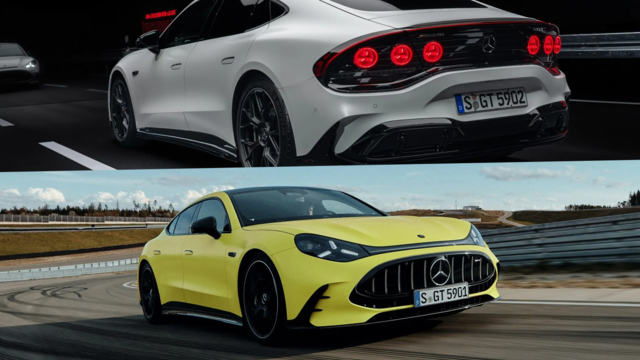
New Electric Mercedes-AMG GT 4-Door Coupe Unveiled: 10 Things You Need to Know
Verdad Gallardo
6 Mercedes Models That Did NOT Age Well (But Are Somehow Still Cool)
Verdad Gallardo
Manual Mercedes? 6 Times Sindelfingen Let Drivers Have All The Fun
Verdad Gallardo
Mercedes SLR McLaren 722 S Is Extremely Rare Example Modified by McLaren
Verdad Gallardo
8 Classic Boxy Mercedes Designs That Have Aged Like Fine Wine
Verdad Gallardo
Junior Member
Joined: Apr 2015
Posts: 57
Likes: 4
2 X S600
I have a 2015 S600 (8500 kms) which developed a vibration upon braking. Dealer replaced front brake pads, (supposedly) tested the car, and advised me that the problem had been fixed. I drove the car and found no change whatsoever! Dealer then replaced the rear brakes (not sure what specifically) and problem was fixed.

MBWorld Fanatic!
Joined: Feb 2002
Posts: 6,061
Likes: 326
From: 2000 ft over the FL coast in a B-17
Various
I have a 2015 S600 (8500 kms) which developed a vibration upon braking. Dealer replaced front brake pads, (supposedly) tested the car, and advised me that the problem had been fixed. I drove the car and found no change whatsoever! Dealer then replaced the rear brakes (not sure what specifically) and problem was fixed.

Newbie
Joined: Apr 2016
Posts: 3
Likes: 0
Mercedes S550 2015
S550 rotor issue not breaks
Hello everyone, I purchased a 2015 S550 sedan about a month. Everything is great except for one thing. When I'm driving between 45mph-55mph and when I brake to slow down I feel vibration coming from the brake pedal. Today my wife was riding in the passenger seat and she also felt the vibration so it's coming from front end of the car. It's only a month old I'm not sure this is happening because the brakes are new. Should I take it to the dealer? Any help would be great!!
It's not a breaking issue its the rotors. I've had my 2015 s550 for a year and have had my rotors and breaks repaired every 3-4K miles amongst my tires are only lasting 4 months. 😬 It is in on its 5th repair and Germany as of today has recognized the issue. I hope this helps.
Senior Member
Joined: Jan 2014
Posts: 251
Likes: 48
From: Kalispell, MT
2016 E63 S AMG
My 2014 E550 warped two sets of rotors in 30k miles. Heavy braking from high speeds seems to be the cause. My solution was to get a 2016 E63 S AMG. The AMG cars have much better brakes and seem to be impervious to the continually re-occurring warped rotors that plagues the non-AMG cars. Frankly, I find it inexcusable that the non-AMG cars have this problem. The calipers and rotors look impressive, but with any kind of repeated high speed braking they eventually warp.
Newbie
Joined: Apr 2016
Posts: 3
Likes: 0
Mercedes S550 2015
My 2014 E550 warped two sets of rotors in 30k miles. Heavy braking from high speeds seems to be the cause. My solution was to get a 2016 E63 S AMG. The AMG cars have much better brakes and seem to be impervious to the continually re-occurring warped rotors that plagues the non-AMG cars. Frankly, I find it inexcusable that the non-AMG cars have this problem. The calipers and rotors look impressive, but with any kind of repeated high speed braking they eventually warp.

MBWorld Fanatic!
Joined: Oct 2010
Posts: 8,199
Likes: 4,426
From: Corona Del Mar, CA
2019 SL450, 2019 E450 Luxury Trim Wagon, 2024 BMW I7 xDrive60
I just returned from an approx. 900 mile, round trip in my 2015 S550. I used the Distronoc extensively and I believe that on down grade roads, the system engages the brakes almost constantly, resulting in warped rotors, which produced a vibration when braking at highway speeds. The car has 15K miles on it and the dealer replaced the front pads & rotors under warranty, no questions asked.
It is amazing to me, that a company like MB could find themselves with a weak link, in the way of easily warped brake rotors, on their flagship sedan, after so many years of producing similar systems. Does every single system need to completely change with each new model? One would think that you get brakes engineered to perfection and then LEAVE THEM THEM BE! Why fix something that isn't broken? Oh well.
It is amazing to me, that a company like MB could find themselves with a weak link, in the way of easily warped brake rotors, on their flagship sedan, after so many years of producing similar systems. Does every single system need to completely change with each new model? One would think that you get brakes engineered to perfection and then LEAVE THEM THEM BE! Why fix something that isn't broken? Oh well.
Member
Joined: Apr 2016
Posts: 172
Likes: 11
From: Los Angeles, CA
2014 W222 S550 / 2008 E90 328i
I just returned from an approx. 900 mile, round trip in my 2015 S550. I used the Distronoc extensively and I believe that on down grade roads, the system engages the brakes almost constantly, resulting in warped rotors, which produced a vibration when braking at highway speeds. The car has 15K miles on it and the dealer replaced the front pads & rotors under warranty, no questions asked.
It is amazing to me, that a company like MB could find themselves with a weak link, in the way of easily warped brake rotors, on their flagship sedan, after so many years of producing similar systems. Does every single system need to completely change with each new model? One would think that you get brakes engineered to perfection and then LEAVE THEM THEM BE! Why fix something that isn't broken? Oh well.
It is amazing to me, that a company like MB could find themselves with a weak link, in the way of easily warped brake rotors, on their flagship sedan, after so many years of producing similar systems. Does every single system need to completely change with each new model? One would think that you get brakes engineered to perfection and then LEAVE THEM THEM BE! Why fix something that isn't broken? Oh well.

Member
Joined: Apr 2016
Posts: 172
Likes: 11
From: Los Angeles, CA
2014 W222 S550 / 2008 E90 328i
Just checked my carfax and noticed that the previous owner never had to replace any of the braking components throughout their ownership, so looks like the car has been okay till now lol.

MBWorld Fanatic!


Joined: Sep 2014
Posts: 1,173
Likes: 431
S600
Driver is the culprit 99% of the time.
And hard stop where you end up at 0MPH and have to stay there for more than 10 seconds can warp rotors--check that, what happens is that the pads being clamped on a hot rotor allow the rest of the rotor to cool while the clamped part heat soaks. The difference between the cooling rotor and the hot rotor is what causes the distortion.
There are several solutions:
a) If you have to brake hard, take the car out of gear so you can release the brakes without going forward.
b) 6-8 stops from 90MPH-30MPH as hard as you can brake and as hard as the car will accelerate as fast as the car will accelerate will unwarp most rotors. (diesels not applicable--lack of acceleration, Don't do this within 20 miles of any city, watch for constabulary forces.)
c) drive in such a manner that you don't have to stop all that hard.
And hard stop where you end up at 0MPH and have to stay there for more than 10 seconds can warp rotors--check that, what happens is that the pads being clamped on a hot rotor allow the rest of the rotor to cool while the clamped part heat soaks. The difference between the cooling rotor and the hot rotor is what causes the distortion.
There are several solutions:
a) If you have to brake hard, take the car out of gear so you can release the brakes without going forward.
b) 6-8 stops from 90MPH-30MPH as hard as you can brake and as hard as the car will accelerate as fast as the car will accelerate will unwarp most rotors. (diesels not applicable--lack of acceleration, Don't do this within 20 miles of any city, watch for constabulary forces.)
c) drive in such a manner that you don't have to stop all that hard.

Junior Member
Joined: Jan 2016
Posts: 19
Likes: 3
Mercedes Benz 2015 S350 Bluetec
what I was told was that the American market has a completely different rotor to the European. Yes the AMG's have the perforated calipers to allow for faster cooling, why they don't put them on all cars who knows. My car only has 29k miles and had been through 4 sets of rotors, 3 tires and two sets of breaks.
Interestingly I notice in the German Price list an option U29 - Brake system with larger front brake discs for the fairly modest price of Euro 297. The catch however is "Not in conjunction with AMG line (950)", which option I believe is very common in the US.
Junior Member
Joined: Jan 2016
Posts: 19
Likes: 3
Mercedes Benz 2015 S350 Bluetec
I have recently noticed a grinding noise during the last few feet of braking, just before the car stops. This happens after about ten minutes of in town driving with lots of stops at fairly low speed. It is a similar sound to what you would get when braking with worn brake pads, but they all have at least a quarter inch of pad material left. This only happens when the brakes are warmed up. At times it feels like this is accompanied by a bit of brake fade as it feels like the car struggles to stop. There is no noise when reversing and only occasional noise when braking whilst driving forward. I do not really sense any vibration. Does this perhaps sound familiar to any of you? I have the car booked in next week but it will be helpful if anyone has experienced a similar issue and knows what caused it
Member
Joined: May 2013
Posts: 77
Likes: 6
From: Easton, MD
2019 Maybach S560
Stop the ‘Warped’ Rotors Myth!
Myths take hold *because either A) they seem completely logical or B) they are so often repeated that they just become common knowledge. The warped rotor myth is a little bit of both. A rotor that contributed to a pulsation condition certainly appears “warped.” Plus, everyone says it — even technicians that know the rotor isn’t *really warped will say it as shorthand.Rotors are cast in extreme heat — three to five times greater than the most aggressive braking situation. Physically “warping” a rotor would require a similar application of extreme heat, which is impossible.
Obviously rotors aren’t invincible. They can crack, break and develop irregularities that lead to pulsation, but all of those problems start to develop in other ways that need a technician’s touch.
Starting today, remove “warped rotor” from your vocabulary. Instead, you should be both looking for and educating yourself about these terms:
Lateral Run-out:
Run-out is a measurement of the difference between the high and low spots in the hub and on the rotor. On each revolution of the wheel, as the high spot of the rotor scrapes unevenly with the hub or applies friction unevenly with the pad, the results for the rotor’s face are just that — uneven.
Root causes of run-out include:• Run-out from the hub mounting face;
• Run-out from the wheel bearing;
• Sloppy resurfacing/machining procedures;
• A build-up of rust and corrosion between the rotor, hub and wheel;
• Uneven torque on the lug nuts;
• Wheel loading distortions; and
• Variations in manufacturing tolerances.
Other vehicle components can exacerbate the problems with run-out. For example, if a vehicle’s floating or sliding calipers aren’t sliding as they should, that will prevent the caliper housing from moving, and any run-out can cause pulsation. The caliper piston will move in and out as the rotor rotates resulting in fluid movement and pedal pulsation. Fixed-caliper vehicles are sensitive to run-out induced pedal pulsations as well. Fixed calipers have pistons on both sides of the rotor due to the stationary caliper housing. Excessive run-out will cause piston movement and can result in pedal pulsation. Over the past 30-years, factory run-out specification have fallen from as high as .015″ to .000″ (or no detectable run-out) for some vehicles. These tightening of the tolerances is due to changes in suspension design, friction formulations and caliper designs. When run-out moves beyond specification set by the manufacturer, the uneven application against the pad will lead to disc thickness variation (DTV).
Root causes of run-out include:• Run-out from the hub mounting face;
• Run-out from the wheel bearing;
• Sloppy resurfacing/machining procedures;
• A build-up of rust and corrosion between the rotor, hub and wheel;
• Uneven torque on the lug nuts;
• Wheel loading distortions; and
• Variations in manufacturing tolerances.
Other vehicle components can exacerbate the problems with run-out. For example, if a vehicle’s floating or sliding calipers aren’t sliding as they should, that will prevent the caliper housing from moving, and any run-out can cause pulsation. The caliper piston will move in and out as the rotor rotates resulting in fluid movement and pedal pulsation. Fixed-caliper vehicles are sensitive to run-out induced pedal pulsations as well. Fixed calipers have pistons on both sides of the rotor due to the stationary caliper housing. Excessive run-out will cause piston movement and can result in pedal pulsation. Over the past 30-years, factory run-out specification have fallen from as high as .015″ to .000″ (or no detectable run-out) for some vehicles. These tightening of the tolerances is due to changes in suspension design, friction formulations and caliper designs. When run-out moves beyond specification set by the manufacturer, the uneven application against the pad will lead to disc thickness variation (DTV).
Disc Thickness Variation (DTV):
This is the REAL culprit behind most of the “warped rotor” claims. A normal braking event requires a brake pad to be applied squarely against the rotor. Each time this happens, a tiny layer of friction is removed from the pad and is deposited on the face of the rotor. A rotor with run-out beyond the specs cannot receive that even application of friction, which means it starts to receive an uneven deposit of friction on its surface. Disc thickness variation is just that — the rotor is now thicker in some spots thanks to the extra layers of friction, which all started because of lateral run-out. The DTV is the thickest area minus the thinnest area of the rotor.
The thickness variation is subtle, but all of these details add-up. When the thick part of the rotor is forcing itself through the caliper, the torque of the brake and the pressure in the caliper rise. When the thin spot passes through, the torque drops and pressure drops. Very small amounts of DTV can create a significant problem. More late-model vehicles are built with a thickness variation of less than 0.00078”. Thickness variations in excess of 15-microns (0.00059”) can easily generate driver complaints of pulsation/vibration.
Factors to take into account:
• The suspension. Unibody vehicles with strut suspensions are more sensitive than those with a separate frame and body.
• Wheel bearings. Unitized bearings, in particular, are pre-loaded and have zero play, which means there is no wiggle room for run-out. Any high and low spots will scrape the brake pads with every revolution of the rotor — braking and non-braking.
• Calipers. Some have lower running clearance and higher initial mounted lateral runout.
• Abrasive lining materials.
The rotor can also show friction variation around its circumference. Any spot that has more slip or stick to it relative to the rest of the rotor will result in different levels of torque. Variations in friction will generally be the result of corrosive or contamination effects. There will most likely also be DTV, but the friction variation is possible without DTV. Friction variations can occur when a vehicle has sat un-driven for extended periods of time...especially when subjected to excessive moisture which can be noticed as a build-up of an oxidized (rust) surface on the rotor's face.
The thickness variation is subtle, but all of these details add-up. When the thick part of the rotor is forcing itself through the caliper, the torque of the brake and the pressure in the caliper rise. When the thin spot passes through, the torque drops and pressure drops. Very small amounts of DTV can create a significant problem. More late-model vehicles are built with a thickness variation of less than 0.00078”. Thickness variations in excess of 15-microns (0.00059”) can easily generate driver complaints of pulsation/vibration.
Factors to take into account:
• The suspension. Unibody vehicles with strut suspensions are more sensitive than those with a separate frame and body.
• Wheel bearings. Unitized bearings, in particular, are pre-loaded and have zero play, which means there is no wiggle room for run-out. Any high and low spots will scrape the brake pads with every revolution of the rotor — braking and non-braking.
• Calipers. Some have lower running clearance and higher initial mounted lateral runout.
• Abrasive lining materials.
The rotor can also show friction variation around its circumference. Any spot that has more slip or stick to it relative to the rest of the rotor will result in different levels of torque. Variations in friction will generally be the result of corrosive or contamination effects. There will most likely also be DTV, but the friction variation is possible without DTV. Friction variations can occur when a vehicle has sat un-driven for extended periods of time...especially when subjected to excessive moisture which can be noticed as a build-up of an oxidized (rust) surface on the rotor's face.
Cold Brake Roughness:
Cold brake roughness manifests in a similar feel of pedal pulsation or steering wheel vibration, and in severe cases, there will be speed-related surges in deceleration felt during normal driving and light braking. This phenomenon is caused by lateral run-out that exists when the rotors are initially mounted on the car. Over time, this gradually turns into disc thickness variation due to inconsistencies in the lining only touching the higher spots of the rotor during off-brake driving.
The problem with myths is that are convenient. Assuming you need to wear a hat in winter to avoid catching a cold because your grandmother told you that a thousand times is much easier than actually researching the science behind it. Just put a hat on and hope for the best.That mentality is troublesome when it comes to brakes — saying a rotor is warped easily puts the blame on an ineffective part that needs to be replaced when that isn’t the case. Understanding that a warped rotor is a myth is to understand that there are other causes for the braking condition and additional work is needed to do the job right. This may seem like a matter of semantics, but mis-characterizing the root problems of pulsation just perpetuates the myth.
Now that you fully UNDERSTAND these terms and have read all the way down to this point, you can understand that the symptoms here are ALL related to lateral run-out (uneven wear on the rotor surfaces) and has been caused/perpetuated by rotor-hub misalignment. I can't begin to relay to you the number of multiple-decades-experienced professionals that have yet to understand these terms and effect the proper remedy, which leaves the consumer coming back to the repair shop after 3-6 months/5K-10K miles for the SAME problem/symptom. Replacing the rotors will effectively restart the uneven wear process, but in so many thousand miles, it will return and perpetuate itself. You'll find yourself going through this over and over and over and over and over and over again, until the car is out-of-warranty and you are either paying out of your own pocket or you end-up trading the car out of frustration and/or economics.
The reality of the matter is that if you hit a curb, pothole, etc. an ever so slight (recall above about minute thicknesses and measurements) change in the geometry of the suspension and/or steering, but mainly the axle hub. With a new set of rotors the thickness of the rotor is uniform on the surface, but as the minute difference in the hub mated against the rotor, the rotor is ever so minutely rotating squarely within the caliper, and over time this repeated process wears the rotor surface unevenly. You follow me so far? So, as the difference in wear across the surface of the rotor continues, you will end-up with a disc thickness variation (DTV). The reason that this keeps coming back over and over again is that the cause of the problem is not a bad rotor, but rather a misalignment between the hub and the rotor. In older cars, this minute run-out was relatively unnoticeable until the run-out was excessive. But on today's cars and their advanced braking systems and suspensions, it's infinitely more noticeable. The automotive industry has a solution, it's called an 'on-the-car brake lathe' and the process is called "rotor matching". Now, before you go screaming "Mercedes-Benz rotors can NOT be lathed!!!"...hear me out. What these specialized lathes do is match the rotor to the hub of the car to insure that the assembly of the two has no or 'within-tolerance' run-out. A lot of shops are adopting this technology and most dealerships now have these in their arsenal. The machine attaches to the hub/rotor assembly and shaves whatever number of microns off of the rotor to insure that the entire assembly is true and does not run-out/vibrate within the caliper, causing uneven wear resulting in DTV. This newer technology is being applied when new brakes are installed with new rotors to vehicles now to insure there is no consumer returns/complaints.
I'm not sure I have effectively relayed exactly what all is going on with this process, but I did find a video which briefly describes the cause of the problem and how rotor matching works
This hub-rotor alignment process solved the drive-ability/braking pulsation problems with the W222's in our fleet and NONE, ZERO, ZILCH of the vehicles has had a recurrence of these braking pulsation symptoms between brake jobs.
Last edited by ChesapeakeLimo; Aug 8, 2018 at 05:11 PM. Reason: adding video link

Newbie
Joined: Jul 2011
Posts: 7
Likes: 0
S55 AMg Mercedes
Please allow me to add my 2 cents and some sound advice on the W222. I'm 100% certain that driving habits and heavy breaking will cause the rotors to warp from the friction and excessive heat from pad to rotor. The real culprit is the bad engineering issue with the Mercedes W222 is: The DISTRONIC PLUS with lane assist and LANE KEEPING ASSIST PLUS as well as adaptive cruise control. (EXCESSIVE, EXCESSIVE, EXCESSIVE, UNECCESSARY BRAKING!) is able to accelerate automatically and apply up to 50% braking power depending on the traffic flow. If the system detects additional braking power is necessary to avoid a collision, it will warn the driver to brake more sharply. They say it's a safety feature, I say its not needed and causes premature wear. When you have these features enabled, it applies breaks more than normal driving would and this results in excessive and unnecessary braking which causes more friction, heat etc. The result: premature wear and warping. (Lateral run-out)
You proud owners of the W222 have obviously raved, enjoyed and shown people the tech features of your beautiful Mercedes and feel good about the technology. Guess what? If you know how to drive, you don't need these features. Turn that crap off immediately! In other words DISABLE the features altogether!, as you have options on your steering wheel settings and controls to do so. You do not need to have them enabled. I guarantee this will minimize the brake issues and prolong the life of your pads and rotors. (I will bet every dollar I have on this fact.)
You proud owners of the W222 have obviously raved, enjoyed and shown people the tech features of your beautiful Mercedes and feel good about the technology. Guess what? If you know how to drive, you don't need these features. Turn that crap off immediately! In other words DISABLE the features altogether!, as you have options on your steering wheel settings and controls to do so. You do not need to have them enabled. I guarantee this will minimize the brake issues and prolong the life of your pads and rotors. (I will bet every dollar I have on this fact.)
Last edited by jagwaar; Jul 6, 2020 at 03:03 PM.
Newbie
Joined: Jul 2011
Posts: 7
Likes: 0
S55 AMg Mercedes
 Brake vibration issues W222
Please allow me to add my 2 cents and some sound advice on the W222. I'm 100% certain that driving habits and heavy breaking will cause the rotors to warp from the friction and excessive heat from pad to rotor. The real culprit is the bad engineering issue with the Mercedes W222 is: The DISTRONIC PLUS with lane assist and LANE KEEPING ASSIST PLUS as well as adaptive cruise control. (EXCESSIVE, EXCESSIVE, EXCESSIVE, UNECCESSARY BRAKING!) is able to accelerate automatically and apply up to 50% braking power depending on the traffic flow. If the system detects additional braking power is necessary to avoid a collision, it will warn the driver to brake more sharply. They say it's a safety feature, I say its not needed and causes premature wear. When you have these features enabled, it applies breaks more than normal driving would and this results in excessive and unnecessary braking which causes more friction, heat etc. The result: premature wear and warping. (Lateral run-out)
Us proud owners of the W222 have obviously raved, enjoyed and shown people the tech features of your beautiful Mercedes and feel good about the technology. Guess what? If you know how to drive, you don't need these features. Turn that crap off immediately! In other words DISABLE the features altogether!, as you have options on your steering wheel settings and controls to do so. You do not need to have them enabled. I guarantee this will minimize the brake issues and prolong the life of your pads and rotors. (I will bet every dollar I have on this fact.)
Us proud owners of the W222 have obviously raved, enjoyed and shown people the tech features of your beautiful Mercedes and feel good about the technology. Guess what? If you know how to drive, you don't need these features. Turn that crap off immediately! In other words DISABLE the features altogether!, as you have options on your steering wheel settings and controls to do so. You do not need to have them enabled. I guarantee this will minimize the brake issues and prolong the life of your pads and rotors. (I will bet every dollar I have on this fact.)
Last edited by jagwaar; Jul 6, 2020 at 04:30 PM.


