When you click on links to various merchants on this site and make a purchase, this can result in this site earning a commission. Affiliate programs and affiliations include, but are not limited to, the eBay Partner Network.
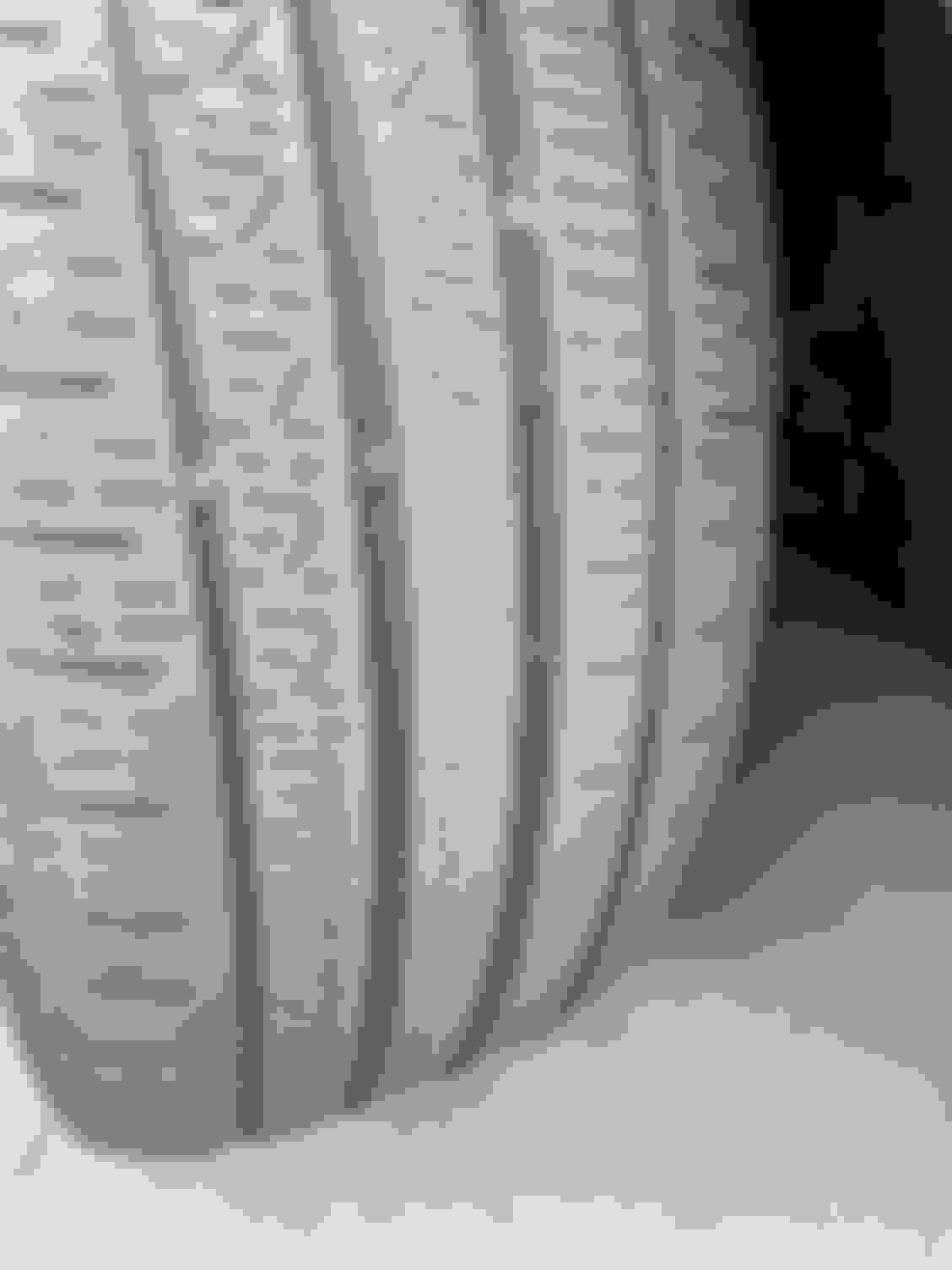
This car eats front tires like I've never seen before. Inside edge just wears down to the cords. Had it aligned twice.
I just chalk it up to brakes and front tires at the maintenance interval. ...
This car eats front tires like I've never seen before. Inside edge just wears down to the cords. Had it aligned twice.
I just chalk it up to brakes and front tires at the maintenance interval. ...
That isn't normal at all. Were your alignments done by a Mercedes dealer? Inside wear is toe-in or camber. Good luck getting it corrected.
Very odd, my CPO came with a new set of the Michelin MXM's MOE and I have put 10k on them in 4 years, they still look brand new, while I would like to swap to non-runflats I cannot take myself to throwing away tires with tons of life on them. I am not even at 70% wear so something is very wrong.
Definitely not normal. My front tires are Continental Run Flats (Pro Contact GX) They were put on the car when I bought it used 3 years ago and now have 50K miles on them, I think I can get another 20K miles out of them, to me they look only about half worn and the outsides and insides of the tires are wearing evenly. The rear tires only seem to be good for around 25K miles as my car is RWD and I'm not the easiest on the Throttle. Have a Benz dealer do a good alignment. Something is off.
My 222 S65 wears front and rear tires even across the tread. Almost two pair of rears to a pair of fronts. No fault of the car. Michelins are lasting better then the General flavor that were new when I purchased the car.
OP look for worn out front suspension arms and have a competent mechanic perform the alignment. Perhaps at MB once you know all the front end parts are healthy and happy.
Mine also goes through front tires much more quickly than rear tires. Its been looked over and all is normal. I just replaced my fronts after 14k miles and the rears are still fine and I left them on there.
Mine also goes through front tires much more quickly than rear tires. Its been looked over and all is normal. I just replaced my fronts after 14k miles and the rears are still fine and I left them on there.
Exactly, drives fine, handles nice, I run it over 100 MPH. Tracks perfectly straight. Been doing this since new. I'm on my 3rd set of front tires. Rears are original, but done.
This car eats front tires like I've never seen before. Inside edge just wears down to the cords. Had it aligned twice.
I just chalk it up to brakes and front tires at the maintenance interval. ...
MB front ends are not rocket science to a pro. You either have a camber issue or a toe-out issue. Find a reputable alignment shop who can analyze your entire front suspension which is Step 1.
Exactly, drives fine, handles nice, I run it over 100 MPH. Tracks perfectly straight. Been doing this since new. I'm on my 3rd set of front tires. Rears are original, but done.
Not knowing the roads you are fortunate enough to run on, a stop at a reputable alignment shop definitely is in order.
MB front ends are not rocket science to a pro. You either have a camber issue or a toe-out issue. Find a reputable alignment shop who can analyze your entire front suspension which is Step 1.
Good luck.
Toe in kills tires esp on the inside. Camber not so much. Your toe in is way off. Get to a competent shop and request all the readings as is and after they tweak it. .Then post that up here so we can help...
Toe in kills tires esp on the inside. Camber not so much. Your toe in is way off. Get to a competent shop and request all the readings as is and after they tweak it. .Then post that up here so we can help...
You got that exactly bass ackwards there friend.
Excessive toe in will wear the outside edge more as well as just plain wear the pair of front tires.
Excessive negative camber (a non adjustable angle in our cars without an eccentric bolt) will tear up the inside shoulder of a front tire.
Lowered cars will have more negative camber.
OP do post up before and after measurements provided by the alignment shop. Be sure you are clear that you expect a printout going into it.
If if the printer is busted you can expect the alignment machine to not have been calibrated lately.
Mercedes still wants the spring loaded spreader used at the front of the tires when performing an alignment.... At least according to the alignment machine I have access to (latest Hunter machine). Angles change with it applied.
Last edited by JohnLane; Oct 29, 2023 at 12:16 PM.
You got that exactly bass ackwards there friend. Excessive toe in will wear the outside edge more as well as just plain wear the pair of front tires. <snip>
Don't you think that he was referring to "Toe in" as more of a general term meaning the adjustment for toe in or toe out? That's what I meant when I originally said that inside edge wear is due to "toe in or camber adjustment." No doubt he most likely has a toe out issue as even a camber issue would have to be really excessive to cause that kind of wear. And, as you say, our cars don't have a camber adjustment.
Don't you think that he was referring to "Toe in" as more of a general term meaning the adjustment for toe in or toe out? That's what I meant when I originally said that inside edge wear is due to "toe in or camber adjustment." No doubt he most likely has a toe out issue as even a camber issue would have to be really excessive to cause that kind of wear. And, as you say, our cars don't have a camber adjustment.
I’m unable to read his mind or infer intent here on the internet where there is zero tone, inflection or body language to go along with what I read.
Therefore I go with what he (or she) has typed... words have meanings.
Toe in has a specific meaning as does Camber. I assume the poster is referring to negative camber as ‘not so much’ for wearing tires as to see any Mercedes S Class with positive camber is to see one with severely bent front suspension parts. No axe to grind.
Car is lowered 20mm. Didn't expect tire wear like this. The next alignment will be done while vehicle is at it's lowered state.
I bought 2 new tires from Tire Rack for $126 each. I figured with the tire wear issue I'm going to figure it out before putting expensive tires on it. Plus these have the same load rating and higher speed and wear ratings than OEM's.
Kumho 245/45 R19 102W
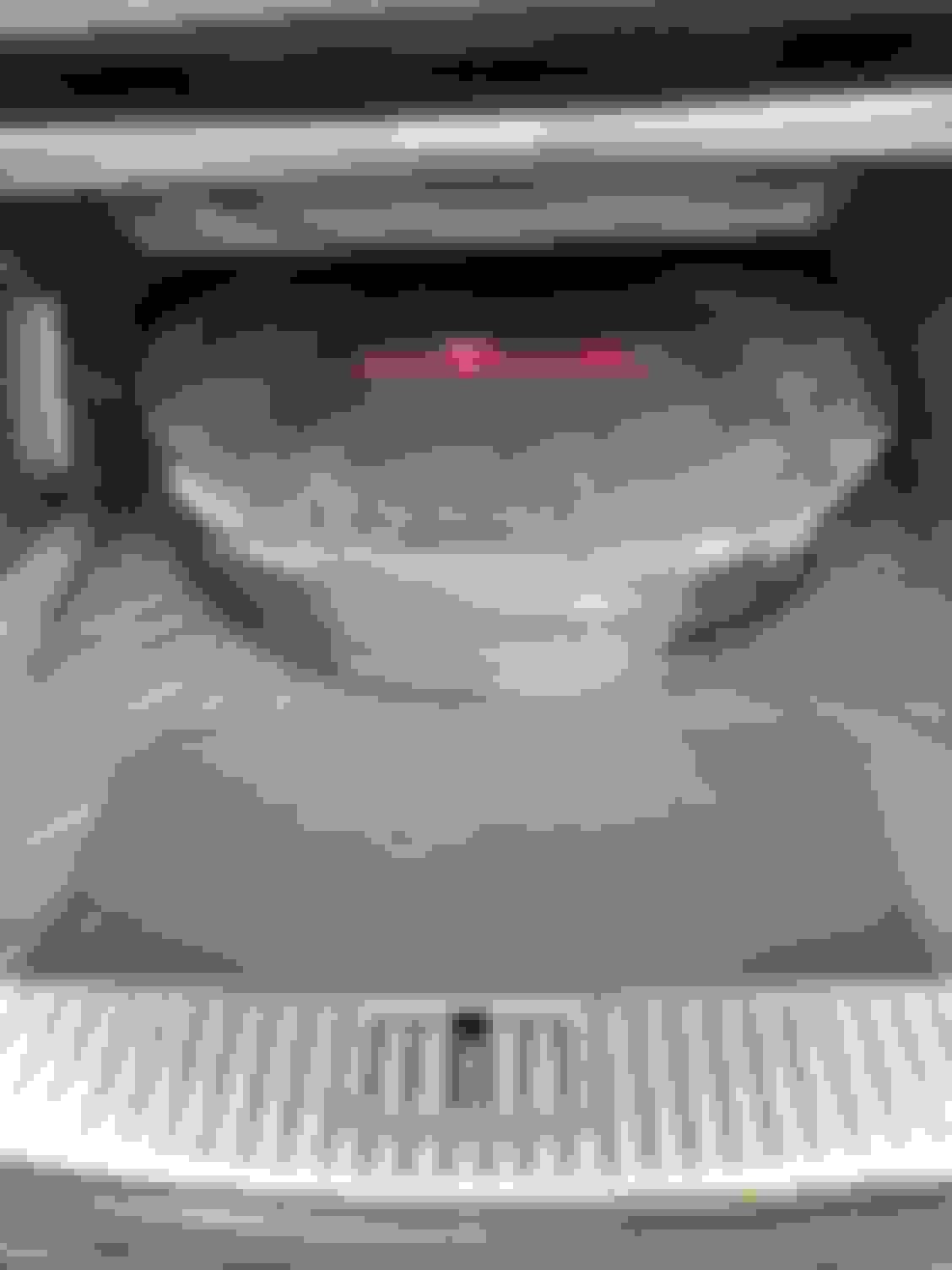
. LF tire LF tire RF tire Ready to install, won't fit in trunk LOL Of course now I have to have a spare because these are not run flat tires.
So sometime this week I get new tires and another alignment.
Last edited by MBGuy2022; Oct 29, 2023 at 03:48 PM.
Edit: MbGuy2022... You have solved the puzzle. Your car is lowered. Thus; more negative camber for inside tire wear. Get the eccentric bolts for the lower arm and get them installed to adjust as much of the excess negative camber out of the equation. This will help a lot.
OP I hope you have got somewhere exploring tire wear in your car.
Last edited by JohnLane; Oct 30, 2023 at 12:14 AM.
MB front ends are not rocket science to a pro. You either have a camber issue or a toe-out issue. Find a reputable alignment shop who can analyze your entire front suspension which is Step 1.Good luck.
Most people can't read. The car is 100% factory stock. Alignment was done by a shop with the latest Hunter machine. All specs are within the green.
#2) Most dealers don't do alignments or tire work. They sub it out. I know the Long Island dealer subbed out tire work when I had to replace 2 cracked wheels. They also send out alignments too. If fact, I'd rather deal with a guy that does alignments all day long, than a guy that does alignments once a week, or once a month.
#3) Eating the inside edge is negative camber or toe out.
I replace tires with the original equipment MB tires from tire rack. In fact, I need to other another front.
Edit: MbGuy2022... You have solved the puzzle. Your car is lowered. Thus; more negative camber for inside tire wear. Get the eccentric bolts for the lower arm and get them installed to adjust as much of the excess negative camber out of the equation. This will help a lot.
OP I hope you have got somewhere exploring tire wear in your car.
pics do help dont they as well as the correct info. 20mm is ~ 3/4 inch...not much of a drop be interesting to see the actual existing alignement spec when he posts back ..if the steering arm link is on the rear side of the wheel, when he lowered the car, i would think he would have gotten more toe in as well as more neg camber...I m gonna go on a limb here and say he has 1/8" total toe in and -2 degrees neg camber......but we will see when and if he posts up
For me I would set it to as a tiny bit of total toe in ( 1/64" ) for stability and 0.5 degree neg camber. Tires do tend to spread a tiny bit as the car is going forward. Setting to zero toe can introduce a slight wandering. The 1/2 degree neg camber is to enhance the cornering ability and would be well within specs without causing undue wear....
I am not a fan of eccentric bolts esp the ones that allow 360 degree freedom of adjustment. Tehy are difficult to torque properly and easily move during the process and In my experience they can come loose at the most inopportune time ( im an ex racer and have seen and felt this happen on a road track.) If you are gonna use eccentric bolts then find the ones that allow one or two positions only with a proper shoulder flat that wont allow move ment and can be tightened down correctly.
@John Lane i respect your experience and wish I had some of your machinery..i am just sharing my experience. Hopefully the guy posts back and get the situation in hand properly
Most people can't read. The car is 100% factory stock. Alignment was done by a shop with the latest Hunter machine. All specs are within the green.
#2) Most dealers don't do alignments or tire work. They sub it out. I know the Long Island dealer subbed out tire work when I had to replace 2 cracked wheels. They also send out alignments too. If fact, I'd rather deal with a guy that does alignments all day long, than a guy that does alignments once a week, or once a month.
#3) Eating the inside edge is negative camber or toe out.
I replace tires with the original equipment MB tires from tire rack. In fact, I need to other another front.
My car is also stock and alignment is within spec per MB, goes through front tires faster than rear.
1) Camber changes the lateral dynamic load on the tire surface. A car with a lot of static negative camber puts more load on the inside edges of the tire. In extreme cases with a wide tire, a lot of static negative can even lift the outside edge clear of the ground.
The increased load on one part of the tire when compared to another increases wear marginally. If we use the extreme example, if the outer part of the tire isn't touching the ground, it can't wear, can it?
But the total wear rate isn't really accelerated. If we assume the same compound, and we make a rough assumption that a tire of X width at a large camber angle produces the same ground pressure ad a non-cambered tire of half the width, we'd assume that both tires would wear out at roughly the same time. In other words, the tire will wear out a little faster than a non-cambered tire of the same width, but not outragously so.
2) Toe physically scrubs the face of the tire across the road. (actually, it sets up a permenent slip angle which may or may not involve physical slip... but we can treat it as a scrubbing action) Any degree of DYNAMIC toe (which relates to any static toe in excess of the factory specs) will result in HIGHLY accelerated wear. Toe is a tire killer.
3) A combination of a lot of static negative camber plus a lot of dynamic toe results in a lot of tire scrub confined to a smaller area of the tire. This combination can kill tires in very short order.
If you are lowering a car, toe is an immediate priority. The tire wear characteristics of toe are such that the only time you want to drive the car with the toe out of spec is on the way to the alignment rack.
The tire wear characteristics of camber, however, are much much smaller, and need not be worried about all that much. For reasonable amounts of static negative, the extra camber might even be a good thing, as you can expect better maximum-roll cornering force.
If the concern is strictly maximizing tire life, then yes, camber is worth correcting. But it is nowhere near as important as toe.
Fewer still can do calculus problems in their heads.........
The car is 100% factory stock. Alignment was done by a shop with the latest Hunter machine. All specs are within the green.
There is an inexpensive device that can be used to measure IF the Alignment is WORKING. Its name is a probe tip Pyrometer.
It can MEASURE if your camber is right and tell you which way your driving style should move away from the factory settings.
It can MEASURE if your Toe is right, and tell you which way your driving style should move away from the factory settings.
AND all you have to do is find a section (say 20 miles) of road that is "like" the roads you want the maximum tire life--then drive that road--get out immediately and take 3 readings on all 4 tires.
When I bought mine is was about $100 and will save you thousands or tens of thousands of tire dollars over your driving career.
{{Also NOTE WELL:: alignment does nothing, if there is a corner-weight misbalance already in the car. If you get a car too far out of "factory settings*" you go back to ride-height and corner weighting before going on into alignment.}}
(*) Yes I saw you claim your car is factory stock. BUT something is going on and we need measurements to get at the root cause.
#2) Most dealers don't do alignments or tire work. They sub it out. I know the Long Island dealer subbed out tire work when I had to replace 2 cracked wheels. They also send out alignments too. If fact, I'd rather deal with a guy that does alignments all day long, than a guy that does alignments once a week, or once a month.
I agree with the sentiment, but apparently a visit to that shop did not get the job done. {{I had a similar problem with my F355 until I took it to a race car preparation shop with the equipment to setup the suspension correctly. One trip and it is still in spec 18 years later.}}
#3) Eating the inside edge is negative camber or toe out.
Too much dynamic caster change (with steering angle:: with some influence by king pin inclination) can also cause "funny" tire wear too. That is one reason we need to see what the machine "read".
When you take the car to the alignment shop, you want ½ a tank of gasoline, your weight in lead to be put in the front seat, the tire at the pressures you MEASURE while driving around*, so the car is sitting on the alignment machine as if you were driving down the road.
(*) This is typically 6-10 PSI higher than sitting cold in your garage. You have direct access to tire pressure through the COMMAND system--take a look after the car has driving 30 miles in some normal fashion.
I had to take my car to the dealer twice for their $250 alignment. The first time the provided a page with all the corrections and everything was within spec. Guess what? When I took it on the highway, it was still not aligned and the steering wheel was still off centered. Took it back, they aligned it again and this time didn't provide me with the specs, but the car now drives straight and steering is centered. I've put on 13k miles on the new tires (opted for non run flats) and so far the tires still look brand new. I have the factory 18 inchers though. I don't see how the car eating front tires before two oil changes is considered normal... something is definitely wrong with the car. That is, unless you drive the car aggressively every time you're in the car.
FWIW.... When I’m a savage (aggressive through turns etc) my tires wore as they should in the 221 S65. If I drove gently I got inside tire wear.
The 222 car wears tires normally being a savage or being gentle.
I do my own alignments and keep it set right. They can be a PITA to get right.... though the 221 and 222 car are much easier then 116,126. Those took multiple efforts every time.
It’s worth the effort. Contrary to an opinion served above... most dealership guys are performing alignments daily and take pride in their work.
I feel for those if you served by small dealerships who don’t do their own alignments or tire work. There are certain benefits to living in the concrete jungle.
Mercedes SLR McLaren 722 S Is Extremely Rare Example Modified by McLaren
Slideshow: A one-of-one U.S.-spec Mercedes-Benz SLR McLaren Roadster became even rarer after a factory-backed transformation at McLaren's headquarters.