Obnoxious Headlights


Thread Starter
Junior Member


Joined: Aug 2014
Posts: 56
Likes: 6
From: Sarasota, FL
2011 E350
Obnoxious Headlights
https://blog.bestride.com/news/techn...-so-obnoxious/
Posted by Craig FitzgeraldIf you’ve operated an automobile over the last decade or so, you’ve probably been aware that headlights have become exceedingly obnoxious. Ford Super Duty drivers, in particular, must spend half their nighttime driving flashing oncoming drivers that, no, their high beams aren’t on, but their low beams are so blinding that it makes the high beams irrelevant.
The answer why everyone’s headlights are so blindingly obnoxious is: Because you live in the United States.
The United States — the most technologically advanced nation on the face of planet Earth — has been historically backwards in lighting technology for the last 50 years, and that’s only starting to change in 2018.
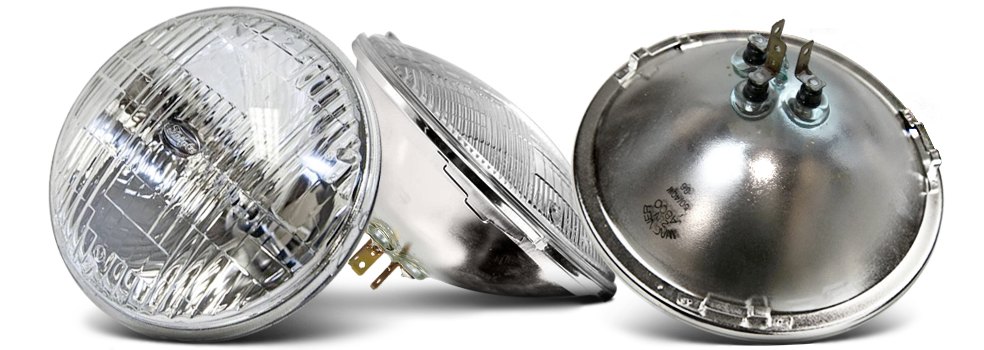
To give you an idea of the inertia surrounding headlamp technology, cars in the United States went from 1939 all the way to about 1986 — 45 years — with exactly the same headlamp design, with the exception of the shape and the bulb type. They were called Sealed Beams and they were the bane of the automotive designer’s existence.
Sealed Beams
A sealed beam headlamp is a light comprised of a parabolic reflector, a filament (or filaments) and a glass lens all permanently sealed together as a unit. When two seven-inch sealed beam headlamps — with both high- and low-beam filaments — were required by federal law in 1939, they were definitely an advancement, not just in terms of lighting, but reliability.
In the earliest days of automotive history, acetylene lights were the standard, long before electrical systems were powerful enough to operate headlamps. Electric headlamps wouldn’t become required standard equipment until 1911, and then the sealed beam, which made headlamps much more reliable and long-lasting was fairly quickly adopted as the standard in 1939.
That standard remained barely unchanged for the next half century. There were a few isolated changes. Between 1939 and 1956, every car in the U.S. had to have two, round, seven-inch sealed beams with high and low beams. In 1957, manufacturers were allowed to separate the high and low beams into individual lamps, allowing designers to use four 5 3/4″ round headlamps rather than two.

For the next 15 years, the only advancement in lighting technology allowed in the United States regarded the shape of the sealed beam. In 1974, NHTSA allowed the introduction of four rectangular headlamps, 4-inches by 6 1/2-inches in size. A year later, two-bulb rectangular headlamps were authorized.
Yet the technology inside those lamps didn’t change at all. By the mid-1960s, Europe had recognized the superior lighting advantage of halogen gas and had incorporated it into headlamp designs immediately upon is successful testing in automotive applications.
WHY ARE EVERYONE’S HEADLIGHTS SO OBNOXIOUS?
4 YEARS AGO • NEWS, TECHNOLOGY NEWSPosted by Craig FitzgeraldIf you’ve operated an automobile over the last decade or so, you’ve probably been aware that headlights have become exceedingly obnoxious. Ford Super Duty drivers, in particular, must spend half their nighttime driving flashing oncoming drivers that, no, their high beams aren’t on, but their low beams are so blinding that it makes the high beams irrelevant.
The answer why everyone’s headlights are so blindingly obnoxious is: Because you live in the United States.
The United States — the most technologically advanced nation on the face of planet Earth — has been historically backwards in lighting technology for the last 50 years, and that’s only starting to change in 2018.
To give you an idea of the inertia surrounding headlamp technology, cars in the United States went from 1939 all the way to about 1986 — 45 years — with exactly the same headlamp design, with the exception of the shape and the bulb type. They were called Sealed Beams and they were the bane of the automotive designer’s existence.
Sealed Beams
A sealed beam headlamp is a light comprised of a parabolic reflector, a filament (or filaments) and a glass lens all permanently sealed together as a unit. When two seven-inch sealed beam headlamps — with both high- and low-beam filaments — were required by federal law in 1939, they were definitely an advancement, not just in terms of lighting, but reliability.
In the earliest days of automotive history, acetylene lights were the standard, long before electrical systems were powerful enough to operate headlamps. Electric headlamps wouldn’t become required standard equipment until 1911, and then the sealed beam, which made headlamps much more reliable and long-lasting was fairly quickly adopted as the standard in 1939.
That standard remained barely unchanged for the next half century. There were a few isolated changes. Between 1939 and 1956, every car in the U.S. had to have two, round, seven-inch sealed beams with high and low beams. In 1957, manufacturers were allowed to separate the high and low beams into individual lamps, allowing designers to use four 5 3/4″ round headlamps rather than two.
For the next 15 years, the only advancement in lighting technology allowed in the United States regarded the shape of the sealed beam. In 1974, NHTSA allowed the introduction of four rectangular headlamps, 4-inches by 6 1/2-inches in size. A year later, two-bulb rectangular headlamps were authorized.
Yet the technology inside those lamps didn’t change at all. By the mid-1960s, Europe had recognized the superior lighting advantage of halogen gas and had incorporated it into headlamp designs immediately upon is successful testing in automotive applications.
Thread Starter
Junior Member
Joined: Aug 2014
Posts: 56
Likes: 6
From: Sarasota, FL
2011 E350
from an eye doctor's point of view
Vehicle LED lights can hamper night vision
Kyle Morel NorthJersey.com USA TODAY NETWORK – NEW JERSEY
Have you recently noticed more vision problems passing other cars while driving at night?
It is likely not your imagination or simply your eyesight worsening with age.
Many Americans have reported similar issues, and factors such as larger vehicles and headlight misalignment are partially to blame.
But the most significant aspect is a change in the headlights themselves causing eye discomfort and pain for other drivers.
In some sense, nighttime driving has always been difficult for some people. The reasoning has to do with a person’s pupils, the round openings in the center of each eye, said Dr. Joseph Allen, an optometrist and host of the Doctor Eye Health YouTube channel with more than 1 million subscribers.
Pupils widen in the dark, a feature Allen compared to a “survival mechanism” that allows a person to detect movement more easily. The downside, he explained in one video, is it causes a loss of “depth of focus,” meaning an object’s edges will be slightly blurred even if the item itself is clear.
A sudden burst of headlights from an oncoming car can cause the pupils to rapidly constrict, leading to a brief but painful sensation. And while an unexpected flash of light is never particularly pleasant, modern cars are often equipped with lights that result in even more discomfort for drivers.
Older car headlights generally contained halogen lightbulbs that produced a yellowish color before switching to LED lights that give off white or blue hues in the past 20 years or so.
According to Allen, research has shown that the newer headlight colors are more triggering to our neurological system even when the brightness between them and the halogen bulbs is the same.
“I think personally they should probably be made illegal in some way,” the optometrist said of the LED lights. “When I see them, they not only are bothersome visually, like I can’t see, but they cause almost a physical pain inside my eye.”
The technology to improve car headlights without blinding others already exists and is used in several countries. But the U.S. is not among them, and experts say it could be a while before that changes.
The beams, known as adaptive driving beam, or ADB, headlights, continuously adjust the amount of emanating light to shine less on occupied parts of the road and more on unoccupied parts. They have been used in Europe since 2012 and are sold today in every major auto market in the world besides the U.S., according to NBC.
According to a CBS story from February, the various red tape laws and regulations make it difficult to add the feature.
Another key factor contributing to the headlight problem is the increasing size of cars. A Business Insider story, citing data from J.D. Power, said the number of new SUVs and trucks sold in the U.S. jumped from 53% in 2010 to 79% in 2021. The larger vehicles mean headlights are set higher, often shining directly in drivers’ faces as opposed to older models set below eye level.
When I see them, they not only are bothersome visually, like I can’t see, but they cause almost a physical pain inside my eye.” Dr. Joseph Allen
An optometrist and host of the Doctor Eye Health YouTube channel
Kyle Morel NorthJersey.com USA TODAY NETWORK – NEW JERSEY
Have you recently noticed more vision problems passing other cars while driving at night?
It is likely not your imagination or simply your eyesight worsening with age.
Many Americans have reported similar issues, and factors such as larger vehicles and headlight misalignment are partially to blame.
But the most significant aspect is a change in the headlights themselves causing eye discomfort and pain for other drivers.
In some sense, nighttime driving has always been difficult for some people. The reasoning has to do with a person’s pupils, the round openings in the center of each eye, said Dr. Joseph Allen, an optometrist and host of the Doctor Eye Health YouTube channel with more than 1 million subscribers.
Pupils widen in the dark, a feature Allen compared to a “survival mechanism” that allows a person to detect movement more easily. The downside, he explained in one video, is it causes a loss of “depth of focus,” meaning an object’s edges will be slightly blurred even if the item itself is clear.
A sudden burst of headlights from an oncoming car can cause the pupils to rapidly constrict, leading to a brief but painful sensation. And while an unexpected flash of light is never particularly pleasant, modern cars are often equipped with lights that result in even more discomfort for drivers.
Older car headlights generally contained halogen lightbulbs that produced a yellowish color before switching to LED lights that give off white or blue hues in the past 20 years or so.
According to Allen, research has shown that the newer headlight colors are more triggering to our neurological system even when the brightness between them and the halogen bulbs is the same.
“I think personally they should probably be made illegal in some way,” the optometrist said of the LED lights. “When I see them, they not only are bothersome visually, like I can’t see, but they cause almost a physical pain inside my eye.”
The technology to improve car headlights without blinding others already exists and is used in several countries. But the U.S. is not among them, and experts say it could be a while before that changes.
The beams, known as adaptive driving beam, or ADB, headlights, continuously adjust the amount of emanating light to shine less on occupied parts of the road and more on unoccupied parts. They have been used in Europe since 2012 and are sold today in every major auto market in the world besides the U.S., according to NBC.
According to a CBS story from February, the various red tape laws and regulations make it difficult to add the feature.
Another key factor contributing to the headlight problem is the increasing size of cars. A Business Insider story, citing data from J.D. Power, said the number of new SUVs and trucks sold in the U.S. jumped from 53% in 2010 to 79% in 2021. The larger vehicles mean headlights are set higher, often shining directly in drivers’ faces as opposed to older models set below eye level.
When I see them, they not only are bothersome visually, like I can’t see, but they cause almost a physical pain inside my eye.” Dr. Joseph Allen
An optometrist and host of the Doctor Eye Health YouTube channel