






Reminder to check your tire's air pressure

Thread Starter
MBWorld Fanatic!
Joined: Apr 2006
Posts: 8,137
Likes: 26
From: Maryland
Eurocharged 2004 E500, Eurocharged ECU/TCU 2005 SL600, 2010 Caddy SwaggerWagon
Reminder to check your tire's air pressure
The SL felt pretty sloppy the other day, so when I got home I checked all the tire's pressure. I normally check once a month or so, so you can imagine how shocked I was when I found this:
RF - 12 lbs
LF - 23 lbs
RR - 24lbs
LR - 18 lbs
Now, I normally run 38lbs up front and 40lbs in the rear on these super low profile 20" tires.
For the life of me, I have no idea why the pressures were all over the map, and I'm certain I'm not leaking anywhere.
Anyway, I corrected the pressure and left her in the garage. I don't drive the car that often, but on Friday when I took her out, I felt a bad vibration up front. CRAP! Here we go, another bent rim, most likely caused by the super low tire pressure, right? Wrong.
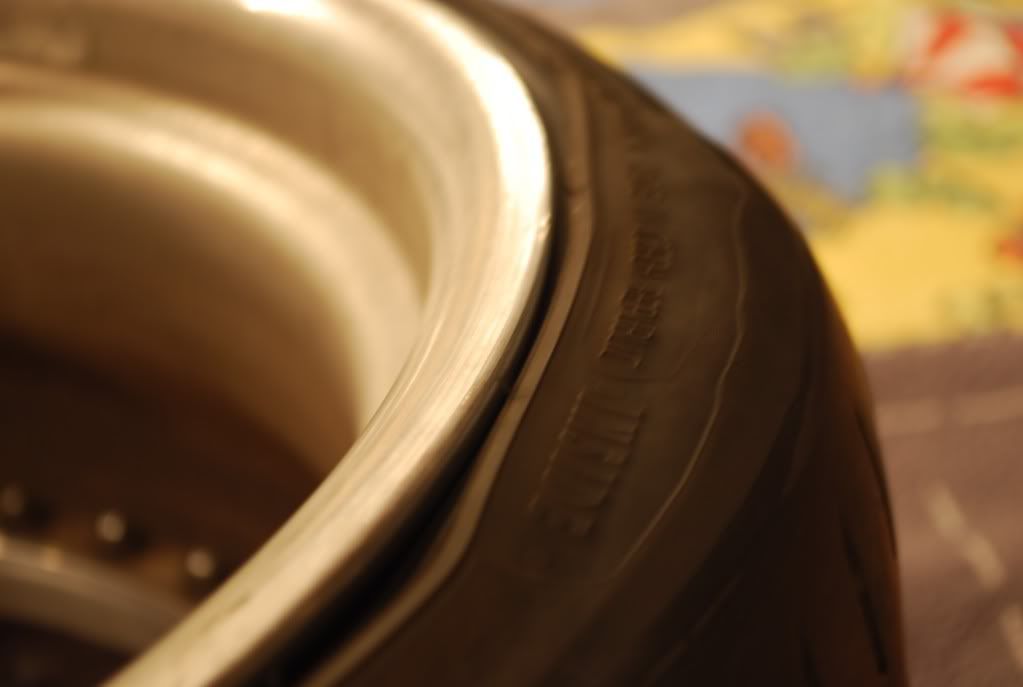
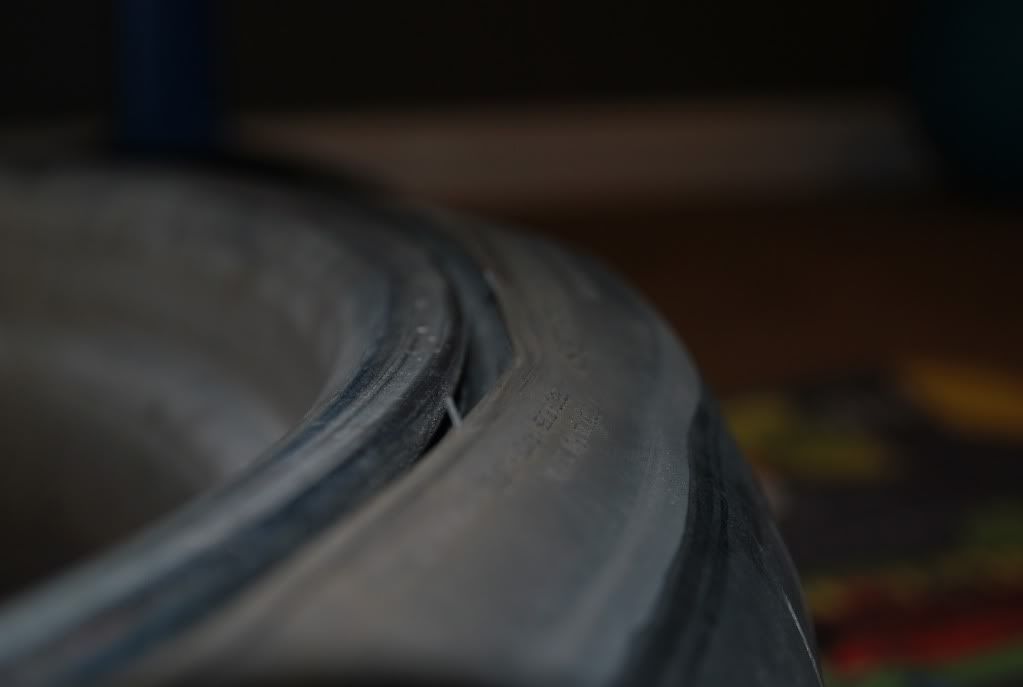
I took all the wheels off today, full prepared to see bends. But what I found was that the RF inner sidewall had failed in two places. I'm guessing its from driving the car with super low air pressure. With these low profile tires, sometimes it's hard to recognize low pressure. The sidewall is so damn short anyway, plus it's very sturdy, so there's not much sagging.
Anyway, with the temps rapidly dropping, so will your air pressure if you park outside or your garage is not climate controlled. This is a reminder to all of you, to keep an eye on your pressure. Here's what happened to mine:
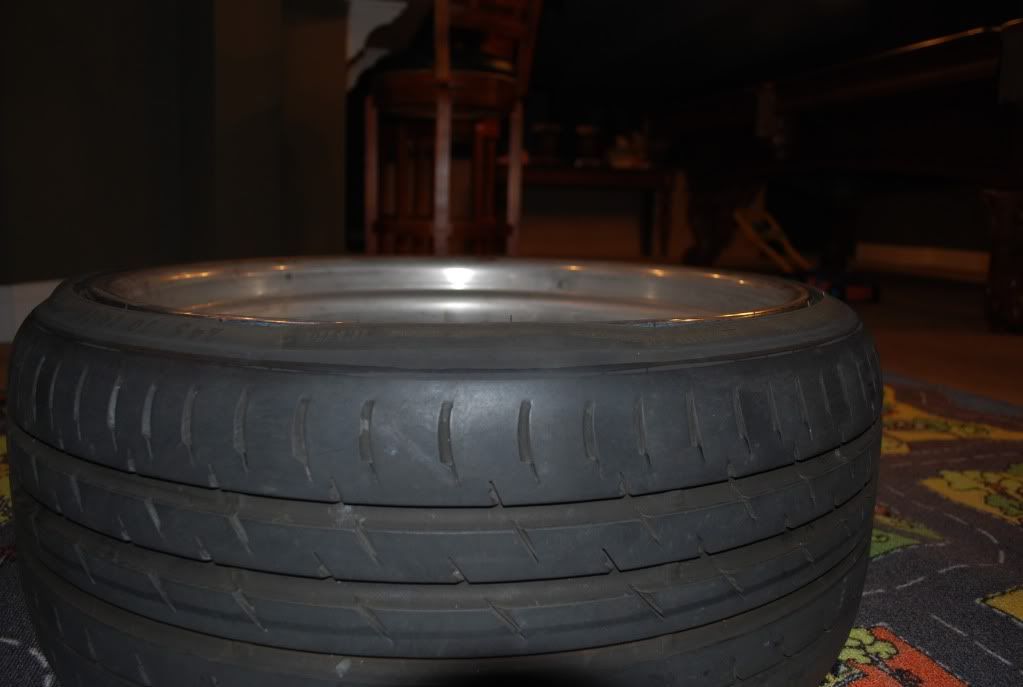
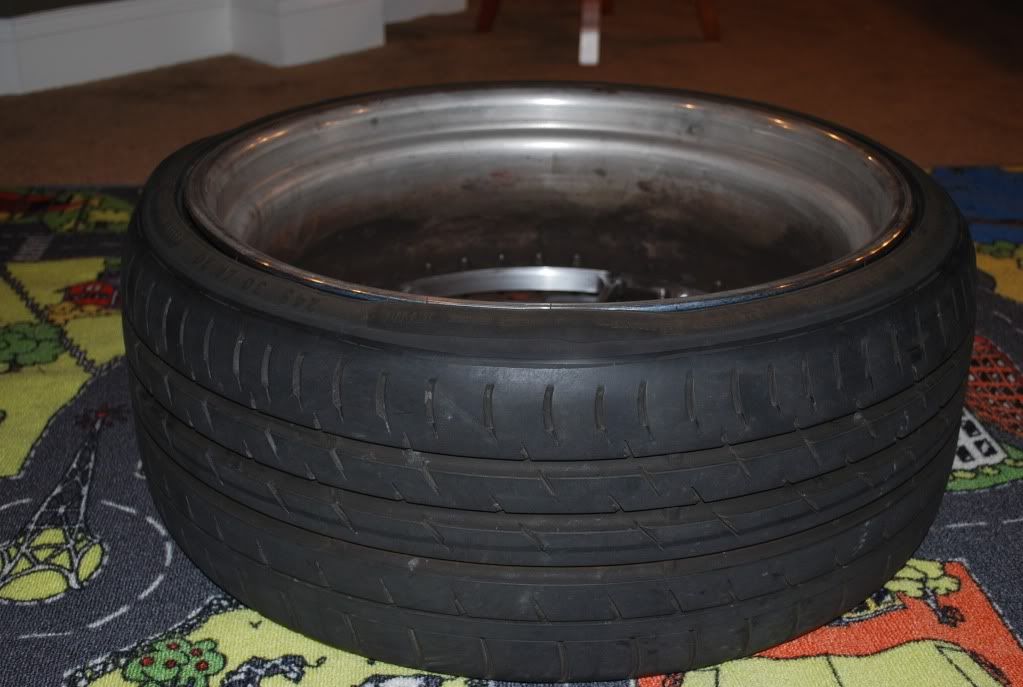
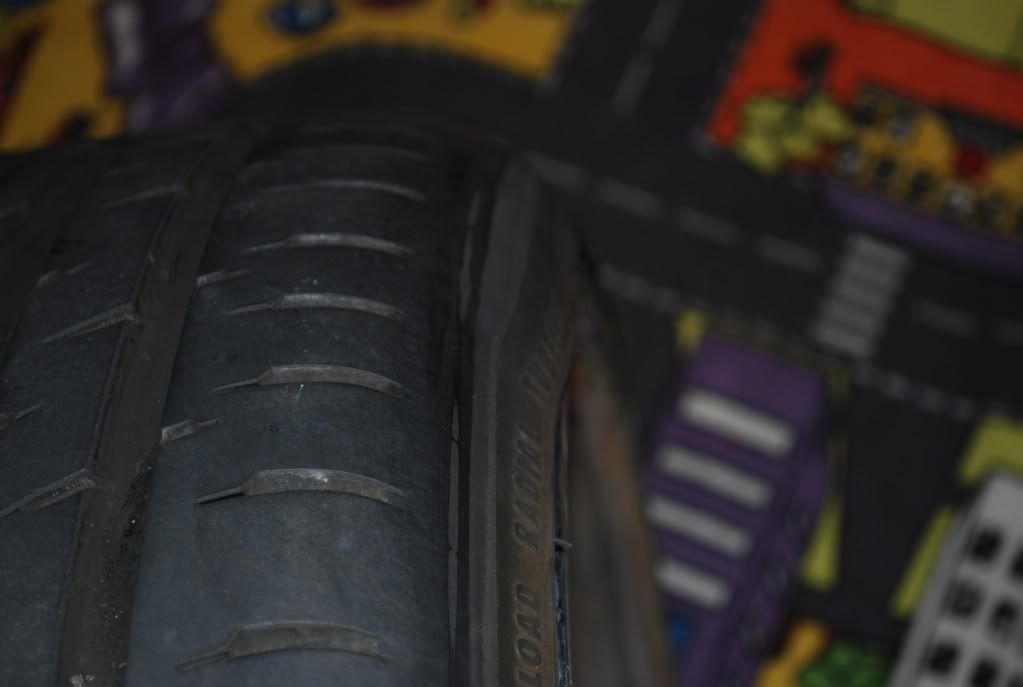
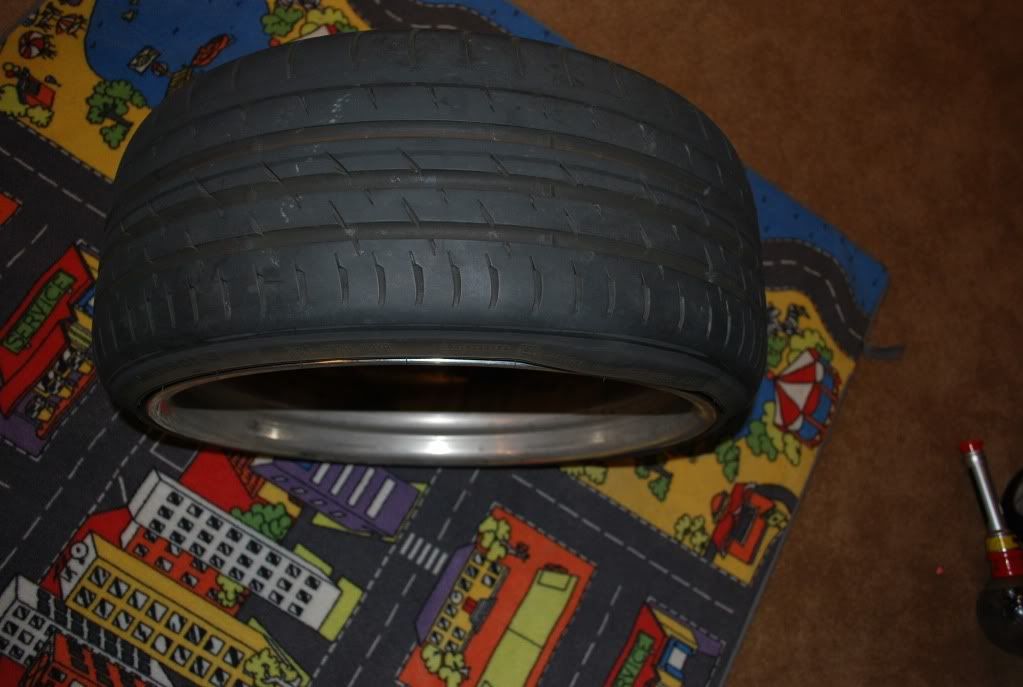
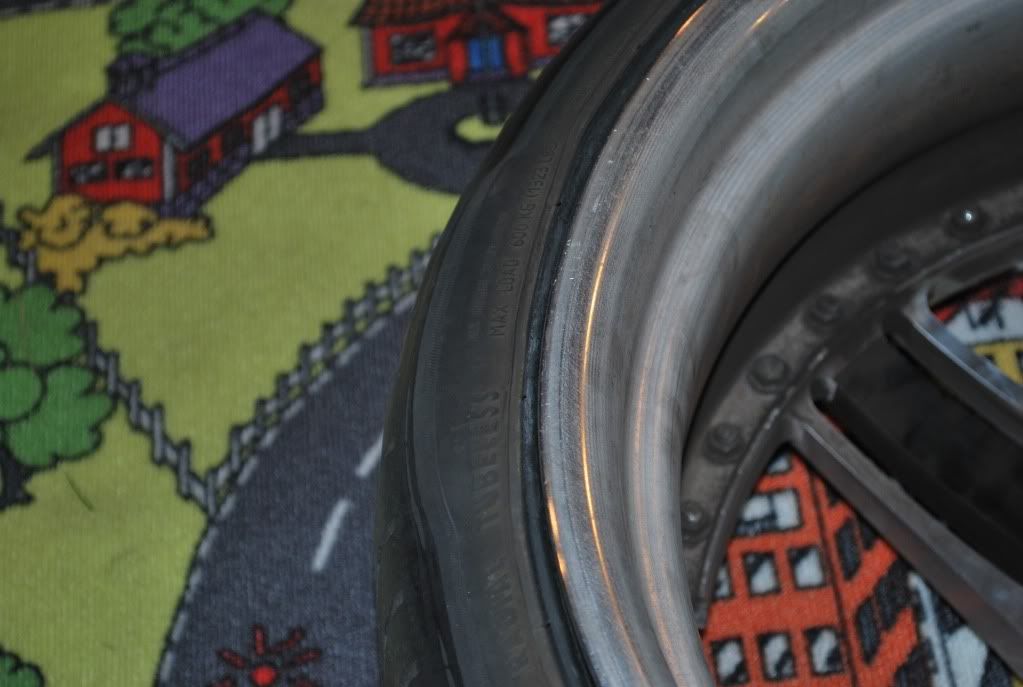
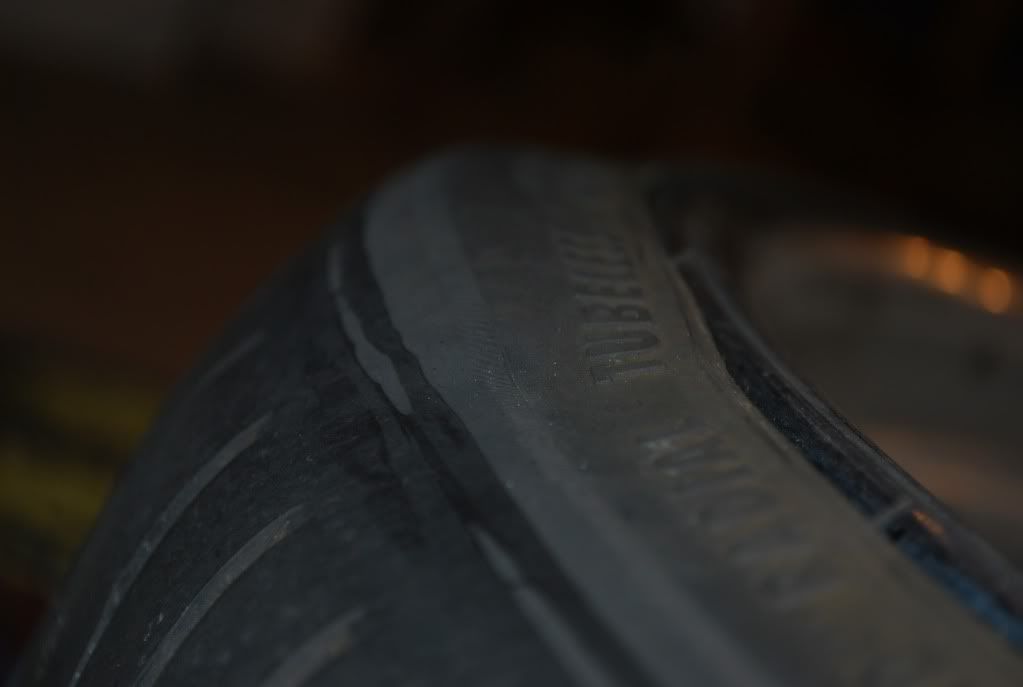
The car looks so sad now, rolling on stock wheels. But oh man, how smooth the ride is...
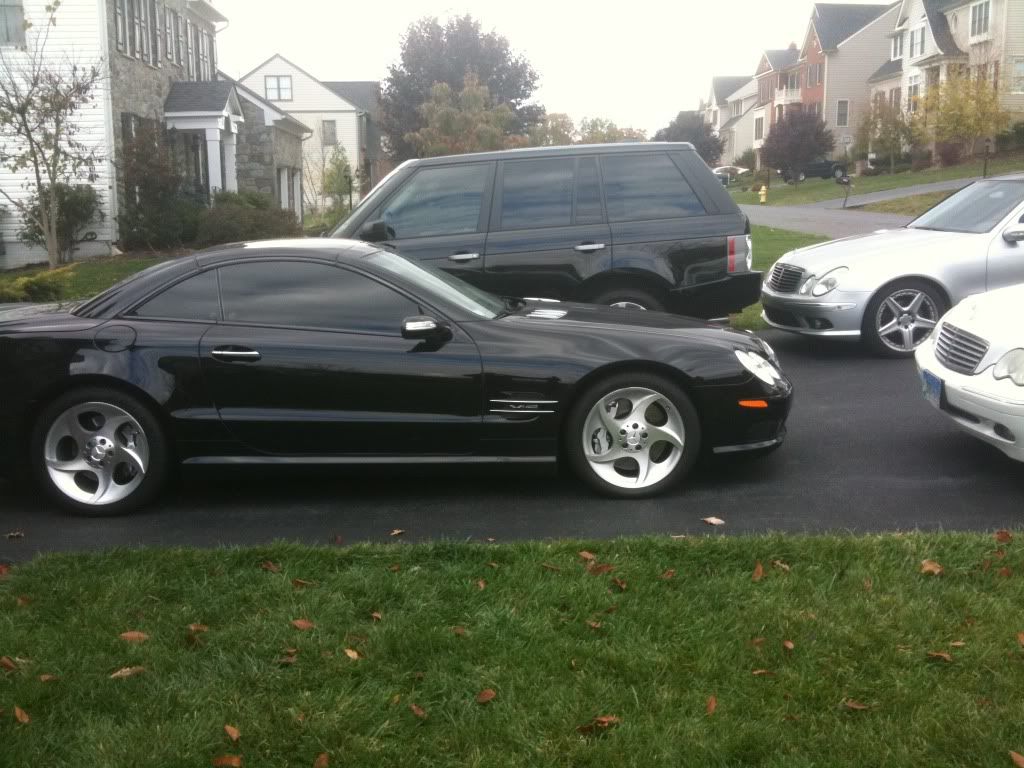
RF - 12 lbs
LF - 23 lbs
RR - 24lbs
LR - 18 lbs
Now, I normally run 38lbs up front and 40lbs in the rear on these super low profile 20" tires.
For the life of me, I have no idea why the pressures were all over the map, and I'm certain I'm not leaking anywhere.
Anyway, I corrected the pressure and left her in the garage. I don't drive the car that often, but on Friday when I took her out, I felt a bad vibration up front. CRAP! Here we go, another bent rim, most likely caused by the super low tire pressure, right? Wrong.
I took all the wheels off today, full prepared to see bends. But what I found was that the RF inner sidewall had failed in two places. I'm guessing its from driving the car with super low air pressure. With these low profile tires, sometimes it's hard to recognize low pressure. The sidewall is so damn short anyway, plus it's very sturdy, so there's not much sagging.
Anyway, with the temps rapidly dropping, so will your air pressure if you park outside or your garage is not climate controlled. This is a reminder to all of you, to keep an eye on your pressure. Here's what happened to mine:
The car looks so sad now, rolling on stock wheels. But oh man, how smooth the ride is...
Last edited by Benz-O-Rama; Nov 6, 2010 at 11:51 PM.

MBWorld Fanatic!
Joined: Oct 2009
Posts: 2,771
Likes: 0
From: San Diego, CA
'13 GT-R AMS Alpha 9+, CLA45, E55
 Glad to see nothing negative other than those bubbles came out of that man! Stockers sure aren't as blingy but certainly don't look bad
*Edit: Just checked mine 28 on both fronts 30 on both rears.... looks like I'm a little low, thanks for the reminder Clay!
Last edited by tgoss; Nov 6, 2010 at 09:43 PM.
Thread Starter
MBWorld Fanatic!
Joined: Apr 2006
Posts: 8,137
Likes: 26
From: Maryland
Eurocharged 2004 E500, Eurocharged ECU/TCU 2005 SL600, 2010 Caddy SwaggerWagon
Yeah, the good news is, I'm in no hurry to replace it. It's only a couple hundred bucks, but since these wheels won't go back on the car until spring, I have time to dig for change in the couch. 
This is when I wished I had a set of SL65 wheels laying around. These wheels and tires barely fill the fenders wells. Oh well, rolling on 18's with all-season tires makes it feel like a lexus, compared to the 20's.
Not equipped.
Not equipped.
Trending Topics
MB World Stories
The Best of Mercedes & AMG

6 Mercedes Models That Did NOT Age Well (But Are Somehow Still Cool)
Verdad Gallardo
Manual Mercedes? 6 Times Sindelfingen Let Drivers Have All The Fun
Verdad Gallardo
Mercedes SLR McLaren 722 S Is Extremely Rare Example Modified by McLaren
Verdad Gallardo
8 Classic Boxy Mercedes Designs That Have Aged Like Fine Wine
Verdad Gallardo
Flawlessly Restored Mercedes 190E Evo II Heads to Auction
Verdad Gallardo
Electric Mercedes C-Class Unveiled: 11 Things You Need to Know
Verdad Gallardo
Mercedes EQS Gets A Major Update: Everything You Need to Know
Verdad Gallardo
5 Underrated Mercedes-Benz Models That Don't Get the Love They Deserve
Verdad Gallardo
Mercedes 300D Has Pushed Well Past 1 Million Miles and It Ain't Stopping
Verdad Gallardo
MBWorld Fanatic!
Joined: Sep 2008
Posts: 4,336
Likes: 8
Porsche 991S, Cayenne S, 1972 BMW 3.0CS E9 Coupe
Yeah, this puzzles me too. I've stored my P-cars for over a year in the past and never had pressure fluctuations, both cold and hot weather. I pump them up to 50 psi just to avoid flat spotting, but they always remain at 50 psi after sitting a long time (which is the whole point of pumping them up to 50 psi in the first place.)
The only time I ever had low pressure on any tire was due to one tire with a tiny puncture issue (had a very slow leak that I couldn't detect until 5 months)


MBWorld Fanatic!


Joined: Jan 2007
Posts: 3,342
Likes: 11
From: PA
S600, GL450, GLC 43
My favorite equation for cars is
PV=NRT
So when T temperature drops, P, pressure MOST also drop as the V, Volume of the tire stays constant.
Most of the time this occurs from people NOT checking their tires frequently, read this as EVER. So back in March when they went for their first joy ride they get air in the tires. 8 months later they are low
Okay sorry guys, its the engineer me.
Back to business.
PS: NEVER trust your eyeballs for pressure guys, espically with LOW profile tires. Most people can NOT tell 20 psi from 40.


MBWorld Fanatic!
Joined: Dec 2009
Posts: 1,046
Likes: 28
From: SOCAL
2004 E55
Then I guess you failed physics my friend.
My favorite equation for cars is
PV=NRT
So when T temperature drops, P, pressure MOST also drop as the V, Volume of the tire stays constant.
Most of the time this occurs from people NOT checking their tires frequently, read this as EVER. So back in March when they went for their first joy ride they get air in the tires. 8 months later they are low
Okay sorry guys, its the engineer me.
Back to business.
PS: NEVER trust your eyeballs for pressure guys, espically with LOW profile tires. Most people can NOT tell 20 psi from 40.
My favorite equation for cars is
PV=NRT
So when T temperature drops, P, pressure MOST also drop as the V, Volume of the tire stays constant.
Most of the time this occurs from people NOT checking their tires frequently, read this as EVER. So back in March when they went for their first joy ride they get air in the tires. 8 months later they are low
Okay sorry guys, its the engineer me.
Back to business.
PS: NEVER trust your eyeballs for pressure guys, espically with LOW profile tires. Most people can NOT tell 20 psi from 40.
While yes you can use that equation. it still doesn't support the claim of deflation, the tire will still have the same VOLUME of air. (in our case aprox 7.5 cubic feet @32psi and that will weigh 32 grams.
A 68F temp change will change the pressure only 22% not the 69% observed by the OP. 22% of 38 is 8.36psi and 22% of 40psi is 8.8psi
you would need ~ 212F change in temp to affect the pressures observed
Nice try mr. engineer
MBWorld Fanatic!
Joined: Jan 2007
Posts: 3,342
Likes: 11
From: PA
S600, GL450, GLC 43
While yes you can use that equation. it still doesn't support the claim of deflation, the tire will still have the same VOLUME of air. (in our case aprox 7.5 cubic feet @32psi and that will weigh 32 grams.
A 68F temp change will change the pressure only 22% not the 69% observed by the OP. 22% of 38 is 8.36psi and 22% of 40psi is 8.8psi
you would need ~ 212F change in temp to affect the pressures observed
Nice try mr. engineer
A 68F temp change will change the pressure only 22% not the 69% observed by the OP. 22% of 38 is 8.36psi and 22% of 40psi is 8.8psi
you would need ~ 212F change in temp to affect the pressures observed
Nice try mr. engineer
I simply stated that your statement was incorrect, which it is.
Don't get your undies in a bunch over it my friend.
As far as his loss, it would probably be from lack of checking, as I stated above, valve stem leakage as they always do leak a Little, and of course the plain leakage through the rubber itself. AND YES the temps helped it to become lower to
, as you pointed out above with your math.

MBWorld Fanatic!
Joined: Jan 2007
Posts: 3,342
Likes: 11
From: PA
S600, GL450, GLC 43
No matter what gas you would use, helium, nitrogen, acetylene, air, CO2, argon, etc, etc. The pressure drop would be the same for all of them
Talking ONLY about temperature changes.
Different gases DO have different sizes, and as such would leak out at different rates over time.

MBWorld Fanatic!
Joined: Apr 2003
Posts: 1,907
Likes: 2
From: Bay Area
E500 Sport
My car didn't come with TPMS either. Like Clayton, I drove on low pressures, ruining my tire. I've since installed this Hella TPMS. It's great. It gives real-time individual tire pressures and individual tire temps. I have the gauge installed in the ashtray compartment.
http://www.tirerack.com/accessories/detail.jsp?ID=51
http://www.tirerack.com/accessories/detail.jsp?ID=51
Super Member
Joined: Apr 2006
Posts: 796
Likes: 0
From: Raleigh NC
2007 E63, 2006 C55
Re: Tire Pressures
My experience has shown that tires tend to lose about 1 pound of inflation for every 10 degree Fahrenheit drop in ambient temp.
I'm picky about tire pressure, had to top everything twice this week as temps dropped outside.
Clayton, for what it's worth I have found 28 front/29 rear cold to optimal on my SL with the stock size OEM rubber.
I'm picky about tire pressure, had to top everything twice this week as temps dropped outside.
Clayton, for what it's worth I have found 28 front/29 rear cold to optimal on my SL with the stock size OEM rubber.
Thread Starter
MBWorld Fanatic!
Joined: Apr 2006
Posts: 8,137
Likes: 26
From: Maryland
Eurocharged 2004 E500, Eurocharged ECU/TCU 2005 SL600, 2010 Caddy SwaggerWagon
My experience has shown that tires tend to lose about 1 pound of inflation for every 10 degree Fahrenheit drop in ambient temp.
I'm picky about tire pressure, had to top everything twice this week as temps dropped outside.
Clayton, for what it's worth I have found 28 front/29 rear cold to optimal on my SL with the stock size OEM rubber.
I'm picky about tire pressure, had to top everything twice this week as temps dropped outside.
Clayton, for what it's worth I have found 28 front/29 rear cold to optimal on my SL with the stock size OEM rubber.

The car feels sooooooooo much smoother on the stock wheels. 20's look great, but they introduce so much road feedback into the cockpit.

MBWorld Fanatic!
Joined: Nov 2008
Posts: 1,670
Likes: 13
2006 E55, 2012 Bentley Continental Supersports Convertible, 2014 Kia Sorento SXL AWD
Had this happen to me on the way to work a few weeks ago. Found out that the wheel did not have the TPM sensor installed!!!
MBWorld Fanatic!
Joined: Sep 2008
Posts: 4,336
Likes: 8
Porsche 991S, Cayenne S, 1972 BMW 3.0CS E9 Coupe
Like everybody says the rule of thumb is around 1 lb per 10 degree drop. And don't forget that proper tire pressure is based on the ambient temperature at any given time (which is what mfgs mean by "cold temp") So just measure the pressure before heating up tires on the road. Pretty obvious.
But these huge differences in each tire don't have anything to do with temp changes. Something else is going on. Like I said I've stored cars (with low profile tires) over a long time and tire pressure always remains even.
But these huge differences in each tire don't have anything to do with temp changes. Something else is going on. Like I said I've stored cars (with low profile tires) over a long time and tire pressure always remains even.

Thread Starter
MBWorld Fanatic!
Joined: Apr 2006
Posts: 8,137
Likes: 26
From: Maryland
Eurocharged 2004 E500, Eurocharged ECU/TCU 2005 SL600, 2010 Caddy SwaggerWagon
Like everybody says the rule of thumb is around 1 lb per 10 degree drop. And don't forget that proper tire pressure is based on the ambient temperature at any given time (which is what mfgs mean by "cold temp") So just measure the pressure before heating up tires on the road. Pretty obvious.
But these huge differences in each tire don't have anything to do with temp changes. Something else is going on. Like I said I've stored cars (with low profile tires) over a long time and tire pressure always remains even.
But these huge differences in each tire don't have anything to do with temp changes. Something else is going on. Like I said I've stored cars (with low profile tires) over a long time and tire pressure always remains even.
I'm pretty good about checking pressure, and I'm confident that there's no leaks in any of the tires. I think I checked the week of last the MIR rental. I wonder if some teenagers were having a bit of fun when the car was parked somewhere.

MBWorld Fanatic!
Joined: Jan 2007
Posts: 3,342
Likes: 11
From: PA
S600, GL450, GLC 43
Just a little reminder to everyone.
My S which sits in a heated garage at 68F, and ALWAYS has it tires at 35F and 30R, happen to spend the night outside.
Well, at 28F here in Pittsburgh, my TPMS went off like the fourth of July in the morning. The rears dipped down to 24PSI.
Guess what guys, that is a delta of ONLY 40F and it caused a 6PSI drop or a 20% change.
AS I said before, CHECK your tires during the cold months.
PS: The above posted had his math wrong, aka you have to use ALL of the correct inputs, aka proper measurements/values
My S which sits in a heated garage at 68F, and ALWAYS has it tires at 35F and 30R, happen to spend the night outside.
Well, at 28F here in Pittsburgh, my TPMS went off like the fourth of July in the morning. The rears dipped down to 24PSI.
Guess what guys, that is a delta of ONLY 40F and it caused a 6PSI drop or a 20% change.
AS I said before, CHECK your tires during the cold months.
PS: The above posted had his math wrong, aka you have to use ALL of the correct inputs, aka proper measurements/values
Last edited by MRAMG1; Nov 14, 2010 at 04:29 PM.

MBWorld Fanatic!


Joined: Apr 2009
Posts: 6,020
Likes: 532
From: Alexandria, VA
07 E63 AMG, 10 C63 AMG, 07 E63 Designo, 07 E350, 09 C300, 07 C230
I checked the air pressures in both ym E63 and C63 and they were both low the C63 TPMS were going off, but my E63 doesn't have them, and my rears were at 28 PSI. So this was a good thread to remind me to check them.


