


Alignment, what do you think?

Thread Starter
Senior Member


Joined: Mar 2014
Posts: 339
Likes: 35
From: Nevada
2014 E63S, 2018 GLC 300
Alignment, what do you think?
I got an alignment done a few months back to try to get rid of a right pull. The Mercedes service rep told me the pull is designed into the car incase a drive falls asleep. I then asked him do they reverse the "design" for countries who drive on the opposite side of the road? He did not have an answer and I am not in belief.
The car still pulls to the right and the steering has always been very heavy at speed. Do you think the caster is causing the heavy steering?
Also, the pull is not from radial pull as it pulled to the right with my old Pilot Sports and also my new Continentals.
Link:
https://drive.google.com/file/d/0B1Q...ew?usp=sharing
or
https://www.dropbox.com/s/kmwwzylxv9...82%29.pdf?dl=0
The car still pulls to the right and the steering has always been very heavy at speed. Do you think the caster is causing the heavy steering?
Also, the pull is not from radial pull as it pulled to the right with my old Pilot Sports and also my new Continentals.
Link:
https://drive.google.com/file/d/0B1Q...ew?usp=sharing
or
https://www.dropbox.com/s/kmwwzylxv9...82%29.pdf?dl=0
Last edited by Sugar_Mouth; Jan 4, 2015 at 11:58 AM.

MBWorld Fanatic!
Joined: Nov 2014
Posts: 1,139
Likes: 77
E55
Appears as though they didn't really check the ride height with the romess gauge. A lot of people just guess the ride height and manually enter the value and you can see in this case they are all the same values and have been entered manually. The correct ride height is critical in setting up the rest of the measurements.
As for the caster readings the car should be going left with those numbers. I would try cross rotating the front tires first just to be sure it's not the new tires. You could have them install a left camber bolt more positive. Looks like it already has 2 caster bolts installed.
If you go back make sure they actually check ride height as even a lean in one direction too much will also cause a pull.
As for the caster readings the car should be going left with those numbers. I would try cross rotating the front tires first just to be sure it's not the new tires. You could have them install a left camber bolt more positive. Looks like it already has 2 caster bolts installed.
If you go back make sure they actually check ride height as even a lean in one direction too much will also cause a pull.
Thread Starter
Senior Member
Joined: Mar 2014
Posts: 339
Likes: 35
From: Nevada
2014 E63S, 2018 GLC 300
Appears as though they didn't really check the ride height with the romess gauge. A lot of people just guess the ride height and manually enter the value and you can see in this case they are all the same values and have been entered manually. The correct ride height is critical in setting up the rest of the measurements.
As for the caster readings the car should be going left with those numbers. I would try cross rotating the front tires first just to be sure it's not the new tires. You could have them install a left camber bolt more positive. Looks like it already has 2 caster bolts installed.
If you go back make sure they actually check ride height as even a lean in one direction too much will also cause a pull.
As for the caster readings the car should be going left with those numbers. I would try cross rotating the front tires first just to be sure it's not the new tires. You could have them install a left camber bolt more positive. Looks like it already has 2 caster bolts installed.
If you go back make sure they actually check ride height as even a lean in one direction too much will also cause a pull.
MBWorld Fanatic!
Joined: Nov 2014
Posts: 1,139
Likes: 77
E55
It is a large caster split side to side but it won't cause you tire wear. The car will want to go the direction where there is the most negative caster and the most positive camber. So with the caster split it should be going left. My caster will have a decent split as well since I can't stand how it drifts right.
Trending Topics
MB World Stories
The Best of Mercedes & AMG

8 Oddball Mercedes Ideas That Actually Made it to Production
Verdad Gallardo
Dubai Tuner Gives the Mercedes G-Class An Entirely New Look
Verdad Gallardo
Six Gift Ideas Your AMG Loving Dad or Grad Will Cherish

7 Craziest Things AMG Gas Ever Built
Verdad Gallardo
New Electric Mercedes-AMG GT 4-Door Coupe Unveiled: 10 Things You Need to Know
Verdad Gallardo
6 Mercedes Models That Did NOT Age Well (But Are Somehow Still Cool)
Verdad Gallardo
Manual Mercedes? 6 Times Sindelfingen Let Drivers Have All The Fun
Verdad Gallardo
Mercedes SLR McLaren 722 S Is Extremely Rare Example Modified by McLaren
Verdad Gallardo
8 Classic Boxy Mercedes Designs That Have Aged Like Fine Wine
Verdad Gallardo
MBWorld Fanatic!
Joined: Nov 2014
Posts: 1,139
Likes: 77
E55
Quote:
Originally Posted by Sugar_Mouth View Post
The Mercedes service rep told me the pull is designed into the car incase a drive falls asleep.
................
yeah thats the most ridiculous thing I've heard. Benz are know for always having a slight drift to the right but mostly due to road crown along with a lot of caster.
Originally Posted by Sugar_Mouth View Post
The Mercedes service rep told me the pull is designed into the car incase a drive falls asleep.
................
yeah thats the most ridiculous thing I've heard. Benz are know for always having a slight drift to the right but mostly due to road crown along with a lot of caster.
Super Member
Joined: Jun 2012
Posts: 714
Likes: 7
From: Atlanta, GA
2005- E55, 2007 GL450, 94 B3000
A full degree of caster split is used to compensate for road crown. This is not a concern as this is not a tire wearing angle. Yet, as Rockman8 stated they manually entered your ride height measurements. There are many ways to manipulate all alignment numbers to avoid doing the job right. ie ...tire pressures will adjust camber and toe settings with lean. This in turn will affect caster.
The feel that a lot of positive caster gives at speed is firm steering. This is a built in factor for almost all MB vehicles. This provides stability at high speeds. If you look at most other manufacturers the caster will be in the 5 degree range. This aids in a very light feel, and subdued stability due to the touchiness at high speed. Our vehicles were born on the Autobahn, and built to make grandmothers superlative drivers on it.
A proper alignment will yield you your desired results. If your vehicle is lowered you may have to move to the aftermarket to be able to compensate for this though.
Tire pull is usually dramatic. The fact that you have a different set of tires, and still have the same driving characteristics would probably lean me towards an alignment issue. Do you drive in sport 2? Did they align the vehicle at normal height? There are a lot of factors that can cause a drift, or pull.
The feel that a lot of positive caster gives at speed is firm steering. This is a built in factor for almost all MB vehicles. This provides stability at high speeds. If you look at most other manufacturers the caster will be in the 5 degree range. This aids in a very light feel, and subdued stability due to the touchiness at high speed. Our vehicles were born on the Autobahn, and built to make grandmothers superlative drivers on it.
A proper alignment will yield you your desired results. If your vehicle is lowered you may have to move to the aftermarket to be able to compensate for this though.
Tire pull is usually dramatic. The fact that you have a different set of tires, and still have the same driving characteristics would probably lean me towards an alignment issue. Do you drive in sport 2? Did they align the vehicle at normal height? There are a lot of factors that can cause a drift, or pull.

SPONSOR


Joined: Apr 2013
Posts: 1,784
Likes: 183
Mercedes-Benz CLK 550
I got an alignment done a few months back to try to get rid of a right pull. The Mercedes service rep told me the pull is designed into the car incase a drive falls asleep. I then asked him do they reverse the "design" for countries who drive on the opposite side of the road? He did not have an answer and I am not in belief.
The car still pulls to the right and the steering has always been very heavy at speed. Do you think the caster is causing the heavy steering?
Also, the pull is not from radial pull as it pulled to the right with my old Pilot Sports and also my new Continentals.
The car still pulls to the right and the steering has always been very heavy at speed. Do you think the caster is causing the heavy steering?
Also, the pull is not from radial pull as it pulled to the right with my old Pilot Sports and also my new Continentals.
Fact is “Full front and rear wheel alignment” is no more!
Since the mid ‘90 model’s, with the ever increasing speed of vehicle assembly lines there has been no front or rear Camber (or front Caster) adjustment facility fitted OEM
Only current adjustment is front and rear Toe and situations where there is still insufficient rear Toe once the issue of lack of Camber adjustment is overcome!
To attempt to return vehicle to factory specs to resolve costly premature inner edge tire wear, improve traction, and fix steering pull the only current alternative for Camber and Caster is to fit offset, slotted bolts (for the front only). But these are inaccurate - one only position bolts - offering a minimal .3 of one degree adjustment (3mm / 1/8”).
It’s no wonder many owners continually change tire brands or go from one MB Dealer or alignment shop to another trying to get it right/fix the problem!
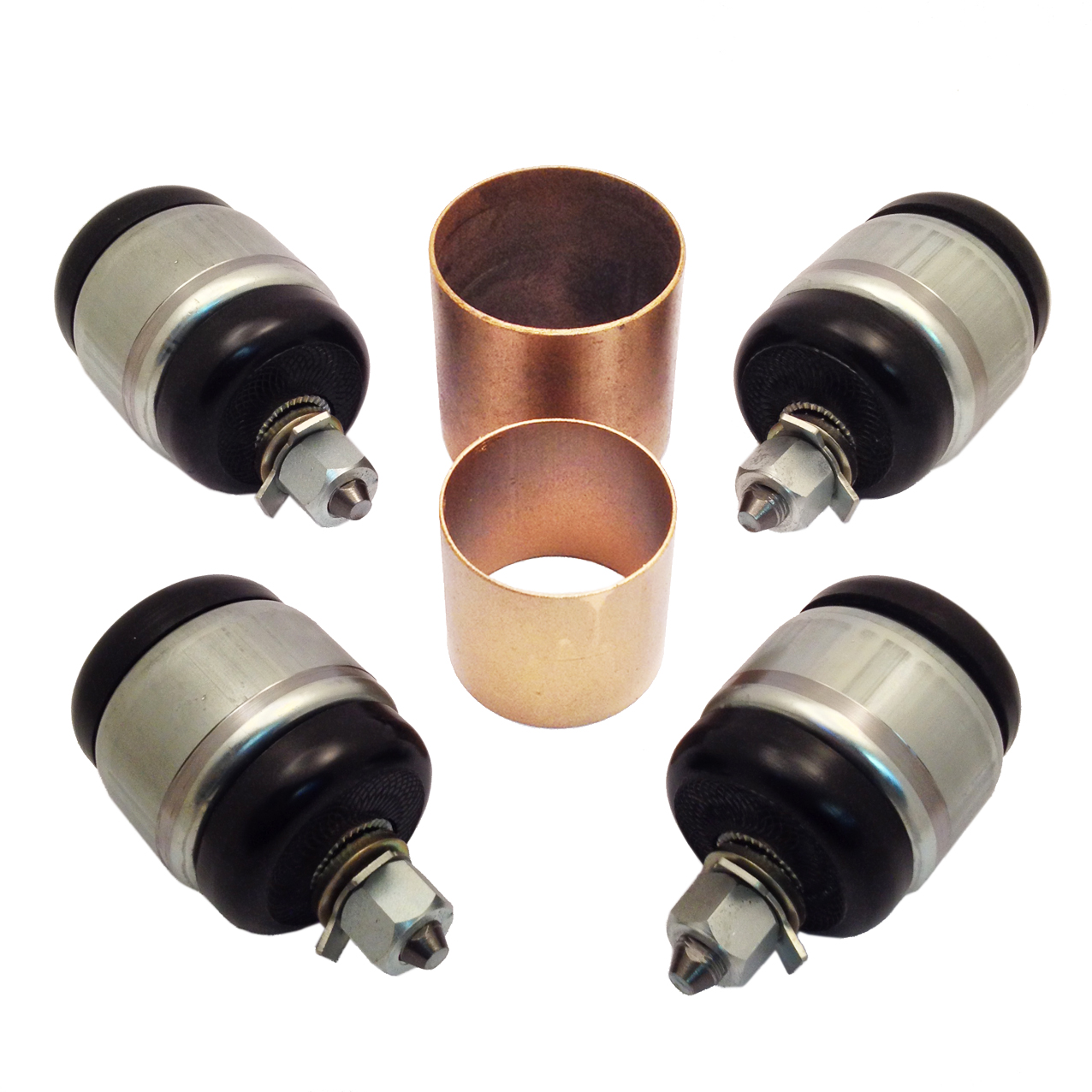
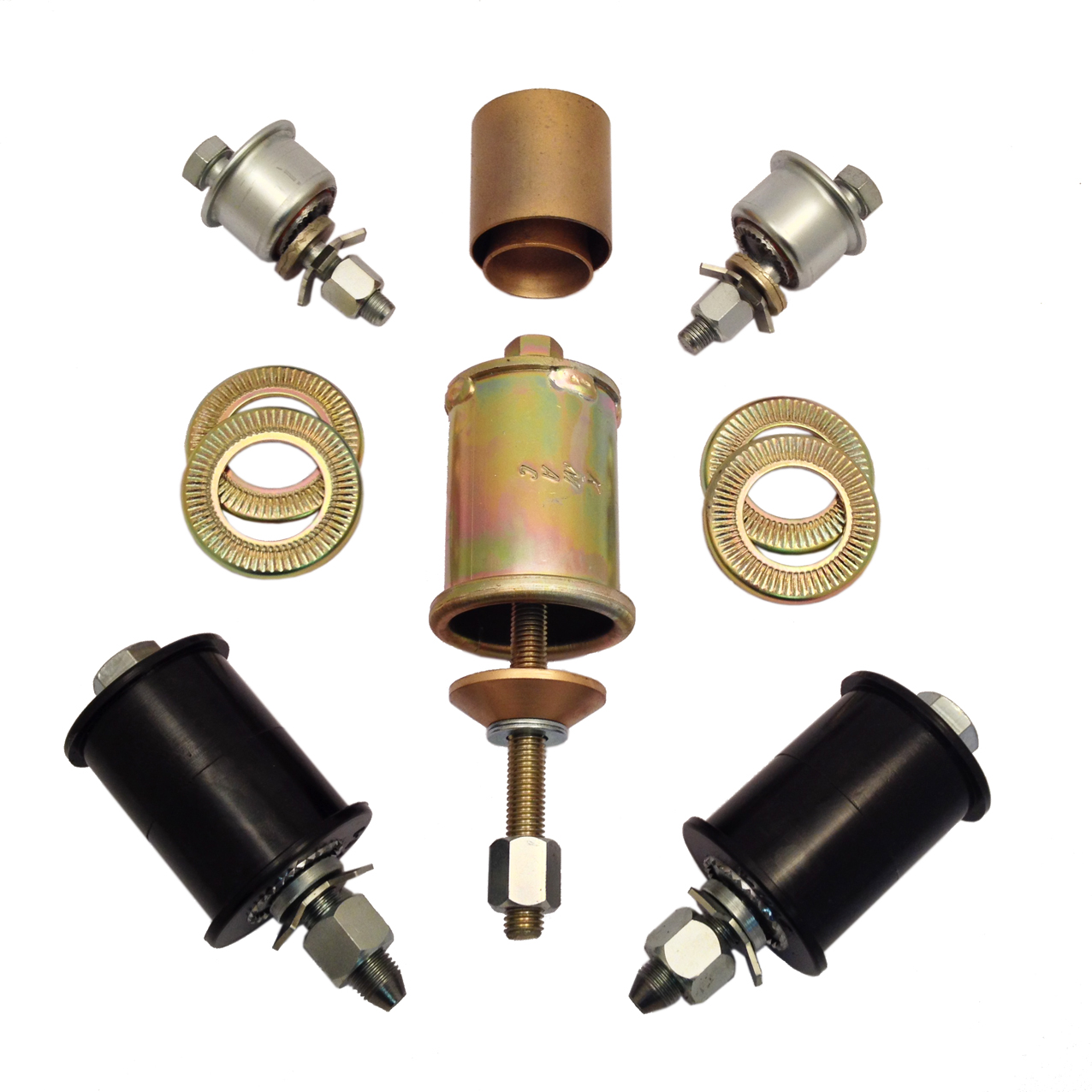
We saw the need therefore "to fix it right the first time" by designing, developing, patenting (and re-instating from the 1990's) fully adjustable front (and rear) suspension for virtually all models.
The current K-MAC kits have up to 4 times the adjustment of these one only position offset bolts (both Positive or Negative). And unlike these one position bolts that require labour intensive jacking and disassembly each time to alter. K-MAC kits only require use of a single wrench to accurately adjust on car (under load) direct on alignment rack.
Providing “ongoing” full, precise adjustment of both Camber and Caster settings if altering suspension height, fitting wide profile tires/wheels, curb knock damage or being able to quickly fine tune/change specs on race days (extra Negative/plus track width to go deeper into the corners/lower lap times). The unique K-MAC patented design only requires use of the single wrench/no disassembly.
For the rear, similar kits are manufactured for precise Camber adjustment (with additional Toe to compensate for the new Camber facility). Importantly unlike the alternative rear adjustable Camber control arms available K-MAC kits do not move top of tire outwards - this reducing essential clearance top of tire to outer fender when adjusting to fix premature inner edge tire wear/improve rear traction.
Also instead of spherical bearings as used on control arms which prematurely pound out allowing metal to metal contact, at K-MAC we have developed long life elastomer bushings.
Bonus with the four front and four rear bushes is that they are also designed with twice the load bearing area and replace the highest wearing suspension bushings. And with K-MAC no special tools are required to fit.
Note (Product background re bushings): Majority OEM bushes have air voids to allow 2 axis movement. So control arms can travel through their required arcs without binding, locking up.
Essential with today’s modern designs of “multi-link” arms with different angle mount points!
Yet most “aftermarket” replacement bushes the industry standard is to eliminate these air voids in an attempt to improve both steering response and reduce wheel hop, loss of traction under brake and acceleration.
The opposite is often the case – the elimination of the air voids causes even more severe wheel hop, loss of traction through binding, locking up of arms.
K-MAC bushes – with 50 years now of bush technology are designed without the air voids but where needed with “full 2 axis movement”. Result is power to the ground – maximum traction/acceleration/braking - along with noticeably improved directional control and steering response for highway driving, lane changing.