When you click on links to various merchants on this site and make a purchase, this can result in this site earning a commission. Affiliate programs and affiliations include, but are not limited to, the eBay Partner Network.
Hello all, new user here, but long time lurker/AMG owner. I have an issue I am struggling to figure out, and have not found anyone else with this issue in my search of this forum, or others.
I have a 2014 E63s Wagon, with 82k miles on it. I am the second owner. I’ve had the car about 6 months now, and over the past week or so, it has started to make a oily/combustion smell that enters the cabin under medium to heavy acceleration. It seems to be more pronounced at higher speeds.
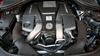
So far, I have removed the intake tubes, engine covers, air boxes, and insulation blocks over the DI system and do not see any indicators of oil.
I have also put the car up on ramps and do not see any indications in the underside either.
There is no oil in the water, or vice-versa.
The turbos spool fine, no oil out the exhaust, no light, misfires, loss of power, etc. runs fine, I just get a combustion smell in the cabin after a good pull.
No smoke behind the car either that I can tell.
I am assuming there might be something going on with the PCV system, but, I am just guessing there. The dipstick was ever so slightly unseated from the top of the tube, but, that could have been me too the last time I checked the oil, if I didn’t push it firmly all the way back down.
I did swap the car over from whatever oil was in it to liqui-moly 5W-40, but, that was back shortly after I bought it, and this problem is recent.
Any ideas or assistance would be appreciated!
EDIT: Two other things I should mention: the intake tubes are torn, they’re starting to come unraveled, and the motor mounts are on their way out. I’ve ordered new parts for both.
on the motor mounts, can the motor be picked up a few inches to allow the mounts to be changed, like on the W211/203/204 classes, or does the subframe have to be dropped?
Last edited by Wagon_mafia; Jan 22, 2021 at 04:16 PM.
RWD W212 M157 Mounts
Yes, you can raise the engine either from top (pull) or bottom (push). You need 1-1.5 inches (2.5-3.5 cm) to clear the bottom protrusions and remove. I prefer an under hoist. Make sure the engine is raised evenly and without touching the walls or fittings on the back firewall. For the left engine mount, you need to disconnect the steering coupling, remove mounts to rear. Torque values are:
.
Bolt, mount to axle carrier, M8 28 Nm
Bolt, mount to engine support, M10 50 Nm (or M12 Stage 1 85 Nm, Stage 2 90-degrees)
4MATIC W212 M157 to remove/install front engine mounts (AR22.10-P-4330ELB):
.
Raise engine slightly to relieve tension
Remove the front axle carrier (AR33.10-P-0001EW)
Remove mount bolts
Remove steering coupling (AR46.10-P-8000EW)
Remove heat shields on engine support
Lift engine
Remove engine mounts to rear
Regarding the issue of burnt oil smell, this means that oil smokes somewhere. Oil smokes only on exhaust components. It does not smoke (and does not stink) on engine block - not hot enough. Therefore, you shall examine the turbo manifold, turbocharger, bridge pipes, shields, and downpipes. With age the M157 motor begins to sip oil from (a) vacuum pump or (b) rear camshaft plug. Both of these are located very close together by the left back corner. Oil can drip on the left downpipe and burn. You would rarely see this from the bottom because oil droplets burn off on the top side of the downpipe, hidden away. Oil drops land around the top oxygen sensor. You can see this from top with a $30 snake camera or from bottom on a lift and a good light.
Another symptom is visible smoke coming from the back of the engine left side. After you begin to smell burnt oil, open the hood. Smoke will be visible especially well with a flashlight in dim ambient.
Thanks for your reply. I’m very happy to hear the mounts are possible with just lifting the motor. I have a couple of top side motor hoists so, I think that is the route I will go.
that makes sense on the cam seals. I’ll order a fiber optic camera and take a look on the back side of the motor.
I didn’t see any oil anywhere on or around the turbos, so, I’m guessing it’s at the back.
my C63 and E55 before this car leaked oil everywhere so, I’ve gotten pretty good at finding them, but this one has me stumped.
It sounds that you are no stranger to DIY. The engine can be successfully lifted by a floor jack with vehicle on jack stands or ramps. Yes, the head cover gaskets on previous AMG motors are notorious. The M157 has its own leaks, but the head covers are much more integrated and sealed off pretty well. Let us know what you find on the oil leak. Good luck to you.
You may want to check to see if they just spilled some oil. Possibly on the port side between the oil dipstick/turbo exhaust. I could imagine someone pulled some oil out and got dripped some there. Don't ask me how I came up with that theory (whistles).
I have not identified a cause on the motor itself. I crawled all over the engine bay, dropped the pans underneath, snaked my fiber optic camera into places I couldn’t reach, etc.
However, with that being said, the problem has gone away in the past couple weeks, and I have what I think is a sound theory as to why.
As I said in my original post, it smells like oil crankcase vapor, not burning oil. I have been around engines long enough to know the difference between the two smells. One is acrid and the other has a slight fuel smell to it.
It has warmed up here the last week and a half or so; I think this is key. One thing I have never really liked about the car is that it seems like the oil stays cold far too long. I know why that is, it’s all the humongous coolers on the front end to keep the oil under critical temp when you’re pushing the car hard. However, as a result, in the winter it takes forever to get warm. I have a 33 mile one way highway commute and, sometimes this winter my oil never got over 165 degrees, which is too cold, especially on a turbo engine.
I think what is happening is, when it’s cold, the oil never reaches full temp, so the PCV system is just barely managing the vapors, then when you put your foot down, you slug the system with a bunch of vapor due to the moving parts moving faster, and Crankcase vacuum dropping under boost, and it just can’t keep up. You’re smelling the vapor in the engine bay as a result. Both my suction tubes into the airbox are shredded right now, I need to order new ones, so I am thinking that probably contributes to the problem by not forming a tight seal for the air that’s in the combustion path.
Next time it gets cold (which at this point for my area will probably be November) I am going to see if it comes back, and, if it does, I’m going to cover my oil coolers to coax the temp up higher faster to see if the problem goes away. If it does, that will confirm my theory. The next step at that point will be to determine how big a deal it is...
I have not identified a cause on the motor itself. I crawled all over the engine bay, dropped the pans underneath, snaked my fiber optic camera into places I couldn’t reach, etc.
However, with that being said, the problem has gone away in the past couple weeks, and I have what I think is a sound theory as to why.
As I said in my original post, it smells like oil crankcase vapor, not burning oil. I have been around engines long enough to know the difference between the two smells. One is acrid and the other has a slight fuel smell to it.
It has warmed up here the last week and a half or so; I think this is key. One thing I have never really liked about the car is that it seems like the oil stays cold far too long. I know why that is, it’s all the humongous coolers on the front end to keep the oil under critical temp when you’re pushing the car hard. However, as a result, in the winter it takes forever to get warm. I have a 33 mile one way highway commute and, sometimes this winter my oil never got over 165 degrees, which is too cold, especially on a turbo engine.
I think what is happening is, when it’s cold, the oil never reaches full temp, so the PCV system is just barely managing the vapors, then when you put your foot down, you slug the system with a bunch of vapor due to the moving parts moving faster, and Crankcase vacuum dropping under boost, and it just can’t keep up. You’re smelling the vapor in the engine bay as a result. Both my suction tubes into the airbox are shredded right now, I need to order new ones, so I am thinking that probably contributes to the problem by not forming a tight seal for the air that’s in the combustion path.
Next time it gets cold (which at this point for my area will probably be November) I am going to see if it comes back, and, if it does, I’m going to cover my oil coolers to coax the temp up higher faster to see if the problem goes away. If it does, that will confirm my theory. The next step at that point will be to determine how big a deal it is...
Excellent observation! I too have an M157 (2014 ML63 PP) and have noticed my PCV open more than closed. My emissions are right at spec indicating I do not have a faulty PCV. But with that being said - in the Michigan winters - my car would rarely reach operating temp unless I was taking a long drive. This might also explain the my engine often has residue on it (I wipe it down and examine it weekly) from the PCV sludging in cooler weather.
Update on this. The smell did get better when it got warm, but, didn’t go away, then, it started to get significantly worse, to the point where any throttle input at all, even the slightest bit would generate a smell in the cabin.
I popped the hood last week to do an oil change and the intake tubes, both of them had fully collapsed!!!
fawk.
I ordered Lostar aftermarket replacement tubes off Amazon, and, while they’re a bit more finicky than the OEM tubes to install, they’re half price, and my initial impressions are that they’re much higher quality.
I installed them, took it for a rip and HOLY SMOKES was I losing power. I wouldn’t be surprised if the car gained 100 HP back.
The best part however is the smell is 100% gone!! It took a couple days, but, it cleared up a little bit more each time I ripped a pull.
I also noticed that my oil now heats up much faster as well too.
My theory now is that the tubes, when they start to come apart create a restriction. With the car being turbo, the turbos will suck harder against the restriction and start pulling excess air through the PCV system. This generates extra vapor the system has to handle, as well as in the winter especially, pulling cold air through the crankcase, making it that much longer for the oil to heat up.
My next question is this:
I wonder if people who are tuned that have had their motors up and grenade out of the blue, if their tubes were on the way out? If you’re tuned and pushing the car harder, and you start sucking more oil vapor in, oil is well known to lower the detonation threshold. It might explain why some motors out there that have run fine for a couple years tuned all the sudden decide to grenade.
bottom line: CHANGE YOUR INTAKE TUBES IF THEY'RE RIPPED. At the minimum, you’ll have a smell in your cabin, at worst I could see it contributing to a popped motor.
Welcome to the forum. Easy thing first. Yes, you can raise the engine either from top (pull) or bottom (push). You need 1-1.5 inches (2.5-3.5 cm) to clear the bottom protrusions and remove. I prefer an under hoist. Make sure the engine is raised evenly and without touching the walls or fittings on the back firewall. For the left engine mount, you need to disconnect the steering coupling, remove mounts to rear.
Originally Posted by Wagon_mafia
Thanks for your reply. I’m very happy to hear the mounts are possible with just lifting the motor.
Unfortunately the info given to you by maxusa is incorrect for your car. The info is true for RWD mercedes like his, but for the 4matic versions, like your wagon, you have to either drop the subframe and associated parts out, or you have to drop out the drivetrain to replace the motor mounts. Just thought you should know that before attempting the DIY approach...
RWD W212 M157 Mounts
Yes, you can raise the engine either from top (pull) or bottom (push). You need 1-1.5 inches (2.5-3.5 cm) to clear the bottom protrusions and remove. I prefer an under hoist. Make sure the engine is raised evenly and without touching the walls or fittings on the back firewall. For the left engine mount, you need to disconnect the steering coupling, remove mounts to rear. Torque values are:
.
Bolt, mount to axle carrier, M8 28 Nm
Bolt, mount to engine support, M10 50 Nm (or M12 Stage 1 85 Nm, Stage 2 90-degrees)
4MATIC W212 M157 to remove/install front engine mounts (AR22.10-P-4330ELB):
.
Raise engine slightly to relieve tension
Remove the front axle carrier (AR33.10-P-0001EW)
Remove mount bolts
Remove steering coupling (AR46.10-P-8000EW)
Remove heat shields on engine support
Lift engine
Remove engine mounts to rear
Regarding the issue of burnt oil smell, this means that oil smokes somewhere. Oil smokes only on exhaust components. It does not smoke (and does not stink) on engine block - not hot enough. Therefore, you shall examine the turbo manifold, turbocharger, bridge pipes, shields, and downpipes. With age the M157 motor begins to sip oil from (a) vacuum pump or (b) rear camshaft plug. Both of these are located very close together by the left back corner. Oil can drip on the left downpipe and burn. You would rarely see this from the bottom because oil droplets burn off on the top side of the downpipe, hidden away. Oil drops land around the top oxygen sensor. You can see this from top with a $30 snake camera or from bottom on a lift and a good light.
Another symptom is visible smoke coming from the back of the engine left side. After you begin to smell burnt oil, open the hood. Smoke will be visible especially well with a flashlight in dim ambient.
Hope this helps.
Hi all - resurrecting an old thread as I was browsing the forums trying to find the source of an oil leak in my G63. Noticed oil dripping on the left exhaust manifold from somewhere on the back of the engine, left side. Tried to inspect the back of the engine and took the following videos.
Max, could you please have a quick look at the videos below?
Is this the oil leak at the back of the engine you were referring to above? How difficult would it be to fix it? Trying to understand what the issue is first and what the cost could be before deciding where to take the car.
Mercedes SLR McLaren 722 S Is Extremely Rare Example Modified by McLaren
Slideshow: A one-of-one U.S.-spec Mercedes-Benz SLR McLaren Roadster became even rarer after a factory-backed transformation at McLaren's headquarters.