




Which tire pressure is right?

Thread Starter
Junior Member
Joined: Feb 2011
Posts: 18
Likes: 0
e350
Which tire pressure is right?
I noticed today that there is a tire pressure sticker inside the gas filler door that recommends 30 psi front/35 psi rear.
This seems to contradict another sticker inside the driver's door well that recommends 33 psi front/43 psi rear.
Anyone know how to reconcile this?
Thanks.
This seems to contradict another sticker inside the driver's door well that recommends 33 psi front/43 psi rear.
Anyone know how to reconcile this?
Thanks.

Super Member
Joined: May 2010
Posts: 672
Likes: 4
From: So. Cal.
Current: 2011 W212 Previous: 2008 W211 2006 550 2001 Rover 1997 W210
I noticed today that there is a tire pressure sticker inside the gas filler door that recommends 30 psi front/35 psi rear.
This seems to contradict another sticker inside the driver's door well that recommends 33 psi front/43 psi rear.
Anyone know how to reconcile this?
Thanks.
This seems to contradict another sticker inside the driver's door well that recommends 33 psi front/43 psi rear.
Anyone know how to reconcile this?
Thanks.
I ride 30/35 when cold and have zero problems. You will find others drive with lower and higher pressure amounts. As long as you are close, there is very little difference.

Member
Joined: Oct 2009
Posts: 78
Likes: 15
Seat Alhambra

The sticker in your door is probably one they replaced, the 42 behind is the maximum presure of the tire, and the 35 in the fillercap is what you can use up to mostly 99m/160km/h ( depending on the speedcodeletter on your tire), for maximum load of the tire, but probably calculated for your car for maximum speed and Gross Axle Weight Rating
This 35 psi is the reference-pressure of the tire, and not the maximum pressure as is put on the sidewall for normal car tires ( A-load, SL).
Tirepressure advice is all about load on the tire and speed you drive with.
Somethimes the alignment in the form of the camber-angle needs highening up, but seldomly needed.
To my opinion , these diferences are all because of the Ford/Firestone-affaire. Bridgestone got the blame for bad tires from sertain factory's.
But fact is that the American TRA used before the FF-affaire a different power in the universal formula to calculate the advice-pressures, wich lead to lower advices and so more deflection of the tire, and at the end tire-damage when you ride with maximum loads and high speed.
More then 100 people died because of roll-over accidents with the Ford Exolorer, many courced by tires that blew.
Only in 2006 the American TRA swiched for SL and XL to the , in practice prooved to be save power of 0,8 in the formula, that the European ETRTO already used for decades for every kind of tire, from SL to truck tires.
They sayd it was because of worldwide harmonisation, but draw your own conclusions.
I made spreadsheets with this European formula, wich I got hold of in 2007 and worked it out. Translated a few to English to go worldwide with it, and placed them on my public map of skydrive /hotmail.
Yust look around there and if you want it calculated , and you cant work it out , give me more details, and I will do it for you.
But mind that I am now busy with finding the ideal formula , wich even the European isnt. Also article about a new way . and my idea about it can be found.
https://skydrive.live.com/?cid=a526e...E092E6DC%21235
This 35 psi is the reference-pressure of the tire, and not the maximum pressure as is put on the sidewall for normal car tires ( A-load, SL).
Tirepressure advice is all about load on the tire and speed you drive with.
Somethimes the alignment in the form of the camber-angle needs highening up, but seldomly needed.
To my opinion , these diferences are all because of the Ford/Firestone-affaire. Bridgestone got the blame for bad tires from sertain factory's.
But fact is that the American TRA used before the FF-affaire a different power in the universal formula to calculate the advice-pressures, wich lead to lower advices and so more deflection of the tire, and at the end tire-damage when you ride with maximum loads and high speed.
More then 100 people died because of roll-over accidents with the Ford Exolorer, many courced by tires that blew.
Only in 2006 the American TRA swiched for SL and XL to the , in practice prooved to be save power of 0,8 in the formula, that the European ETRTO already used for decades for every kind of tire, from SL to truck tires.
They sayd it was because of worldwide harmonisation, but draw your own conclusions.
I made spreadsheets with this European formula, wich I got hold of in 2007 and worked it out. Translated a few to English to go worldwide with it, and placed them on my public map of skydrive /hotmail.
Yust look around there and if you want it calculated , and you cant work it out , give me more details, and I will do it for you.
But mind that I am now busy with finding the ideal formula , wich even the European isnt. Also article about a new way . and my idea about it can be found.
https://skydrive.live.com/?cid=a526e...E092E6DC%21235
MBWorld Fanatic!


Joined: Oct 2010
Posts: 5,123
Likes: 1,288
From: Southern US
2010 E550, 273 Engine: 2012 S550, 278 Engine
I noticed today that there is a tire pressure sticker inside the gas filler door that recommends 30 psi front/35 psi rear.
This seems to contradict another sticker inside the driver's door well that recommends 33 psi front/43 psi rear.
Anyone know how to reconcile this?
Thanks.
This seems to contradict another sticker inside the driver's door well that recommends 33 psi front/43 psi rear.
Anyone know how to reconcile this?
Thanks.
Pressure in tires depends on what load you have in your car. I have seen a post saying the driving speed has something to do with it but I disagree with this. Speed has a lot to do with the tires if they are not inflated high enough, i.e. too low pressure makes tires to heat up and this will get worse with higher speeds.
My tires are 245/40 R18 in front and 265/35 R18 in rear. I use 32 psi in front and 34 psi in rear and they seem to wear nice and evenly. Also not too harsh ride. Load in the car is just me and a suit case.
Look at your tire wear. If you wear at edges more than middle you need more pressure and if wear more in middle you need less pressure.
Also, if tires get noticeably warm during drive you probably need more pressure.
Only the tire maker itself knows what air pressure the tire should be used with. I don't know if they in general publish or give out a table explaining pressure need for load but i'm certain they all have this info.
We consumers just need to learn what the pressure needs to be by looking at tire wear. Pressure readings in the car are just a guide line where to start.
Member
Joined: Oct 2009
Posts: 78
Likes: 15
Seat Alhambra
Pressure in tires depends on what load you have in your car. I have seen a post saying the driving speed has something to do with it but I disagree with this. Speed has a lot to do with the tires if they are not inflated high enough, i.e. too low pressure makes tires to heat up and this will get worse with higher speeds.
My tires are 245/40 R18 in front and 265/35 R18 in rear. I use 32 psi in front and 34 psi in rear and they seem to wear nice and evenly. Also not too harsh ride. Load in the car is just me and a suit case.
Look at your tire wear. If you wear at edges more than middle you need more pressure and if wear more in middle you need less pressure.
Also, if tires get noticeably warm during drive you probably need more pressure.
Only the tire maker itself knows what air pressure the tire should be used with. I don't know if they in general publish or give out a table explaining pressure need for load but i'm certain they all have this info.
We consumers just need to learn what the pressure needs to be by looking at tire wear. Pressure readings in the car are just a guide line where to start.
My tires are 245/40 R18 in front and 265/35 R18 in rear. I use 32 psi in front and 34 psi in rear and they seem to wear nice and evenly. Also not too harsh ride. Load in the car is just me and a suit case.
Look at your tire wear. If you wear at edges more than middle you need more pressure and if wear more in middle you need less pressure.
Also, if tires get noticeably warm during drive you probably need more pressure.
Only the tire maker itself knows what air pressure the tire should be used with. I don't know if they in general publish or give out a table explaining pressure need for load but i'm certain they all have this info.
We consumers just need to learn what the pressure needs to be by looking at tire wear. Pressure readings in the car are just a guide line where to start.
The tire wear story only did go for diagonal tires, but is often used on the internet for radial tires. For radial tires there is a wider aria in wich the tire stays at its wide to the ground so uneven tirewear only happens when the pressure is much to high or low. This wide aria can be used to influence under- or over-steer. The only thing the tire-makers interests when advising tire pressure, is that the tires dont get damaged by driving.
And the higher pressure back then front is only to cover overloading of the back-axle. If you know the real weights on the wheels, you can calculate the ideal tire pressure with maximum gripp and comfort.
But this is dangerous, because weight and pressure are never measured exact. So you always have to take a reserve, but if you go to far , you loose gripp and comfort, tire-wear within the limits stays even .
If you calculate the pressures for your situation , so only driver and a sutcase, You probably can use 32 all around or even behind lower.
Mayby you should calculate with a higher referencepressure for tires with low aspec ratio ( 265/35), but this is my conclusion , tire makers still use the old formula.

Junior Member
Joined: Aug 2011
Posts: 23
Likes: 0
Iridium Silver E350
I noticed today that there is a tire pressure sticker inside the gas filler door that recommends 30 psi front/35 psi rear.
This seems to contradict another sticker inside the driver's door well that recommends 33 psi front/43 psi rear.
Anyone know how to reconcile this?
Thanks.
This seems to contradict another sticker inside the driver's door well that recommends 33 psi front/43 psi rear.
Anyone know how to reconcile this?
Thanks.
This is the sort of thing that makes me glad most of my cars are ancient. Back when they were new, you had exactly two states:
Inflated
Deflated
Trending Topics
MBWorld God!

Joined: Jul 2010
Posts: 31,272
Likes: 3,915
From: on my way
2012 CLS63
I was speaking with a tech yesterday while having a R&B on my 550....
I asked him if it's better to have low cold pressure, and let them warm to the 'correct' pressure, OR fill them to recommened specs, THEN, watch as they swell past the RTP....
I personally like the feeling of the A option: cold, (under pressure) then warming to the
RTP......the tires feel better like this to ME........
in my R.E. it feels very comfortable, and in my S.E. it feels a bit rougher.... (overinflated)
thoughts??
I asked him if it's better to have low cold pressure, and let them warm to the 'correct' pressure, OR fill them to recommened specs, THEN, watch as they swell past the RTP....
I personally like the feeling of the A option: cold, (under pressure) then warming to the
RTP......the tires feel better like this to ME........
in my R.E. it feels very comfortable, and in my S.E. it feels a bit rougher.... (overinflated)
thoughts??
MB World Stories
The Best of Mercedes & AMG

Flawlessly Restored Mercedes 190E Evo II Heads to Auction
Verdad Gallardo
Electric Mercedes C-Class Unveiled: 11 Things You Need to Know
Verdad Gallardo
Mercedes EQS Gets A Major Update: Everything You Need to Know
Verdad Gallardo
5 Underrated Mercedes-Benz Models That Don't Get the Love They Deserve
Verdad Gallardo
Mercedes 300D Has Pushed Well Past 1 Million Miles and It Ain't Stopping
Verdad Gallardo
10 Most Reliable Mercedes-Benz Models You Can Buy Used
Verdad Gallardo
Mercedes Teases Updated EQS With Steer-By-Wire and a Yoke
Verdad Gallardo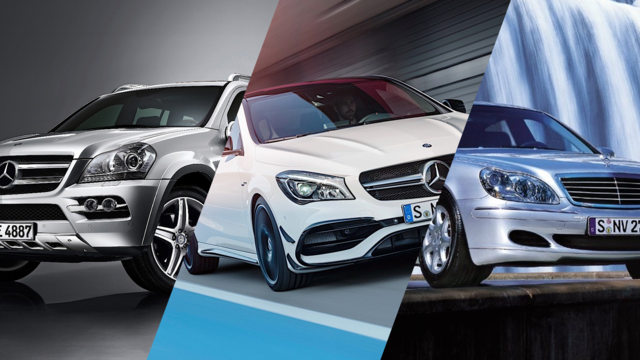
8 Mercedes Models With Poor Reliability Records
Verdad Gallardo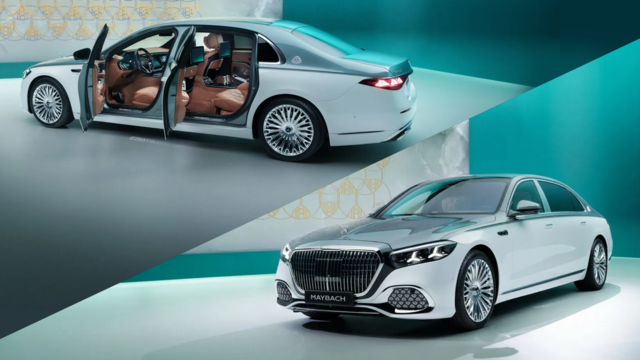
Magnificent New Mercedes-Maybach S-Class Revealed: 12 Things to Know
Verdad Gallardo
Newbie
Joined: Jul 2011
Posts: 13
Likes: 0
.
The recommended tire pressure should be indicated on the tire sidewall. I would not follow what is on the stickers on the vehicle.
The very small amount of moisture in compressed air does fluctuate at temperatures but I don't think this should be much of an issues unless your weather changes are great (over 100 degrees).
If a consistent air pressure is important (or your live in a desert with extreme hot days and cold nights), you might look into nitrogen gas like those used by racing teams.
The very small amount of moisture in compressed air does fluctuate at temperatures but I don't think this should be much of an issues unless your weather changes are great (over 100 degrees).
If a consistent air pressure is important (or your live in a desert with extreme hot days and cold nights), you might look into nitrogen gas like those used by racing teams.

MBWorld Fanatic!
Joined: Oct 2007
Posts: 1,717
Likes: 17
From: San Jose, CA
2007 E63 w/P30 and Eurotech CF Diffuser
Interesting. Those tracking their cars usually run higher in the front because of the loading. Of course the filler door numbers on my car are 36/36 cold.

Administrator


Joined: Sep 2002
Posts: 15,762
Likes: 36
From: www.Traben-Trarbach.de
MPG+ ROLFCOPTER

Newbie
Joined: Jul 2011
Posts: 13
Likes: 0
.
Is that a peanut gallery icon or a passive aggressive response? ...and your professional recommendation to the point regarding various tire pressures?
Last edited by ryip49238; Aug 28, 2011 at 01:42 PM.
Administrator
Joined: Sep 2002
Posts: 15,762
Likes: 36
From: www.Traben-Trarbach.de
MPG+ ROLFCOPTER
Several members have already posted very good info regarding tire pressure. You might want to reread those.
But go ahead. Prove me, and the membership, wrong by taking pictures of the tires on your car that show the correct tire pressures for your vehicle.
Newbie
Joined: Jul 2011
Posts: 13
Likes: 0
.
Yes, it is very ironic that you quoted me from my other thread. I think that point stands very solid with your responses.
Okay, so let me think how I can response to you..... You are correct, the side of the tires are for maximum pressure. I made a mistake but my intent was to be helpful. People do that and the great thing about these boards is that others can come in with facts and be helpful....yes?
Anyway, I was hoping for your professional recommendation to the question in this thread...and not turn it into a war as you're doing. Clearly, I do not have the correct answer, and you are driving me very hard with that point.
What else do you want from me? Can we be mature now?
Okay, so let me think how I can response to you..... You are correct, the side of the tires are for maximum pressure. I made a mistake but my intent was to be helpful. People do that and the great thing about these boards is that others can come in with facts and be helpful....yes?
Anyway, I was hoping for your professional recommendation to the question in this thread...and not turn it into a war as you're doing. Clearly, I do not have the correct answer, and you are driving me very hard with that point.
What else do you want from me? Can we be mature now?
Administrator
Joined: Sep 2002
Posts: 15,762
Likes: 36
From: www.Traben-Trarbach.de
MPG+ ROLFCOPTER
Yes, it is very ironic that you quoted me from my other thread. I think that point stands very solid with your responses.
Okay, so let me think how I can response to you..... You are correct, the side of the tires are for maximum pressure. I made a mistake but my intent was to be helpful. People do that and the great thing about these boards is that others can come in with facts and be helpful....yes?
Anyway, I was hoping for your professional recommendation to the question in this thread...and not turn it into a war as you're doing. Clearly, I do not have the correct answer, and you are driving me very hard with that point.
What else do you want from me? Can we be mature now?
Okay, so let me think how I can response to you..... You are correct, the side of the tires are for maximum pressure. I made a mistake but my intent was to be helpful. People do that and the great thing about these boards is that others can come in with facts and be helpful....yes?
Anyway, I was hoping for your professional recommendation to the question in this thread...and not turn it into a war as you're doing. Clearly, I do not have the correct answer, and you are driving me very hard with that point.
What else do you want from me? Can we be mature now?
No war. Just reminding you that things come back at you.
You are correct. This board is about factual info.
Now, if you want to know how to adjust your tire pressure when you are at an autocross, high speed driving event, fully loaded (passengers and luggage), etc. ask away. The membership will answer. All you have to do is to weed through the multitude of info and apply those that are applicable to your particular situation. But remember; there is fact, there is myth and then there is believe. Remember to weigh those against the post question.
Newbie
Joined: Jul 2011
Posts: 13
Likes: 0
.
No war. Just reminding you that things come back at you.
You are correct. This board is about factual info.
Now, if you want to know how to adjust your tire pressure when you are at an autocross, high speed driving event, fully loaded (passengers and luggage), etc. ask away. The membership will answer. All you have to do is to weed through the multitude of info and apply those that are applicable to your particular situation. But remember; there is fact, there is myth and then there is believe. Remember to weigh those against the post question.
You are correct. This board is about factual info.
Now, if you want to know how to adjust your tire pressure when you are at an autocross, high speed driving event, fully loaded (passengers and luggage), etc. ask away. The membership will answer. All you have to do is to weed through the multitude of info and apply those that are applicable to your particular situation. But remember; there is fact, there is myth and then there is believe. Remember to weigh those against the post question.


Newbie
Joined: Jul 2011
Posts: 13
Likes: 0
.
Its only sarcasm if you feel that my points were not true and the opposite.... that is you were neither friendly nor informative.
On the contrary, this has been very informative and an eye-opener about the moderation on these boards and the quality of the post. It has set my expectations for the super moderator. Others can judge for themselves.
On the contrary, this has been very informative and an eye-opener about the moderation on these boards and the quality of the post. It has set my expectations for the super moderator. Others can judge for themselves.

Super Member
Joined: Dec 2010
Posts: 908
Likes: 19
From: New Jersey
2016 Audi S8 Plus/ 2011 Mercedes e550 4Matic//Gone:1985 500SEL/2000 e320 4Matic/ 2001 e55 Kleeman
I'm staying out of this one, preferring the teachings of Ghandi and the concept of Kharma. I do like the BS flag, cute!!! Regards. Ned.
MBWorld Fanatic!
Joined: Sep 2008
Posts: 4,336
Likes: 8
Porsche 991S, Cayenne S, 1972 BMW 3.0CS E9 Coupe
Amdeutsch is a cool moderator and has been around since the dawn of time. He just says it like it is with a wry sense of humor. A very Euro sort of guy: always to the point and with no fluff. I like that about him. 
Back to tire pressure: pump them up or deflate them according to your use and preferences (autocross, street, freeway, track, heavy load, using the numbers off the gas tank lid, etc., there is never one universal pressure to fit all.) But keep an eye on wear patterns. And yeah, don't use any numbers off the tire itself. The tires aren't car brand and model specific, that size tire/brand could be used on any lightweight sports car or any heavy weight sedan and each with different suspensions. It's clearly listing only the max pressure so you don't explode the thing.
Back to tire pressure: pump them up or deflate them according to your use and preferences (autocross, street, freeway, track, heavy load, using the numbers off the gas tank lid, etc., there is never one universal pressure to fit all.) But keep an eye on wear patterns. And yeah, don't use any numbers off the tire itself. The tires aren't car brand and model specific, that size tire/brand could be used on any lightweight sports car or any heavy weight sedan and each with different suspensions. It's clearly listing only the max pressure so you don't explode the thing.

Member
Joined: Jan 2010
Posts: 181
Likes: 0
From: Canada
2011 E350 4Matic Estate in Mystic Red
I noticed today that there is a tire pressure sticker inside the gas filler door that recommends 30 psi front/35 psi rear.
This seems to contradict another sticker inside the driver's door well that recommends 33 psi front/43 psi rear.
Anyone know how to reconcile this?
Thanks.
This seems to contradict another sticker inside the driver's door well that recommends 33 psi front/43 psi rear.
Anyone know how to reconcile this?
Thanks.
It appears the ones on the driver door are for full-loading. In any case, I do not like a hard ride, so I prefer softer tires. The suspension set-up in Canada (we only have the sports model) is just too hard in my view.
MBWorld God!
Joined: Jul 2010
Posts: 31,272
Likes: 3,915
From: on my way
2012 CLS63
Amdeutsch is a cool moderator and has been around since the dawn of time. He just says it like it is with a wry sense of humor. A very Euro sort of guy: always to the point and with no fluff. I like that about him.
Back to tire pressure: pump them up or deflate them according to your use and preferences (autocross, street, freeway, track, heavy load, using the numbers off the gas tank lid, etc., there is never one universal pressure to fit all.) But keep an eye on wear patterns. And yeah, don't use any numbers off the tire itself. The tires aren't car brand and model specific, that size tire/brand could be used on any lightweight sports car or any heavy weight sedan and each with different suspensions. It's clearly listing only the max pressure so you don't explode the thing.
Back to tire pressure: pump them up or deflate them according to your use and preferences (autocross, street, freeway, track, heavy load, using the numbers off the gas tank lid, etc., there is never one universal pressure to fit all.) But keep an eye on wear patterns. And yeah, don't use any numbers off the tire itself. The tires aren't car brand and model specific, that size tire/brand could be used on any lightweight sports car or any heavy weight sedan and each with different suspensions. It's clearly listing only the max pressure so you don't explode the thing.

what does that say about the community??

Back to tire pressure: 34 F 36 R for the S.E.

MBWorld Fanatic!


Joined: Nov 2009
Posts: 2,616
Likes: 160
From: Southeastern USA
2010 E350 Luxury Sedan, Engine 272 (V6)
For more confusion, read the Operators Manual
My filler door says 30F/35R for NORMAL driving. Higher TP's on filler door are for driving 100 MPH or higher per manual.
Manual says use the Tire and Loading Information Placard on the "B" pillar in the door. Door placard says 33/42, but that is for MAXIMUM LOADED weight per manual.
TP should be checked in AM when tires are cold, preferably before direct sunlight has hit them.
My dealer sets the TP's at 30/35 when they rotate them. I inflate them to 32/37 the next morning.
Higher TP's increase MPG and treadwear life, but also affect safety as less tire is in contact with the road.
Lower TP's will lower MPG and treadlife.
Had a Toyota Camry and dealer insisted on inflating it to 5 lbs. over manufacturer recommendations. He was right, got better MPG and tread lasted longer-and just as safe.
Mfg.'s often recommend a lower TP because it makes the vehicle ride "softer."
The TP on the sidewall is for maximum pressure for all vehicles that tire may be mounted on. Car manufacturer determines actual best TP for each vehicle.
Incidentally, I use a hand pump to add air to my tires on all my vehicles. A little more effort, but a much more precise method than filling at gas stations, etc.
Manual says use the Tire and Loading Information Placard on the "B" pillar in the door. Door placard says 33/42, but that is for MAXIMUM LOADED weight per manual.
TP should be checked in AM when tires are cold, preferably before direct sunlight has hit them.
My dealer sets the TP's at 30/35 when they rotate them. I inflate them to 32/37 the next morning.
Higher TP's increase MPG and treadwear life, but also affect safety as less tire is in contact with the road.
Lower TP's will lower MPG and treadlife.
Had a Toyota Camry and dealer insisted on inflating it to 5 lbs. over manufacturer recommendations. He was right, got better MPG and tread lasted longer-and just as safe.
Mfg.'s often recommend a lower TP because it makes the vehicle ride "softer."
The TP on the sidewall is for maximum pressure for all vehicles that tire may be mounted on. Car manufacturer determines actual best TP for each vehicle.
Incidentally, I use a hand pump to add air to my tires on all my vehicles. A little more effort, but a much more precise method than filling at gas stations, etc.


