When you click on links to various merchants on this site and make a purchase, this can result in this site earning a commission. Affiliate programs and affiliations include, but are not limited to, the eBay Partner Network.
As I remember I reused the control arm bolts, I don't remember if I had replacement lock nuts for them or just used loctite on the existing nuts.
For the strut mount there is a bolt kit that replaces those, and I think it was recommended to replace those and not reuse them. When I bought the struts I got those bolt kits for $25 per side.
When I started doing DIYs on my car I bought blue Loctite right away and have been using it on all bolts that don't appear to have some already on them ... it may not be critical but it's a small price to pay for an additional piece of mind.
As I remember I reused the control arm bolts, I don't remember if I had replacement lock nuts for them or just used loctite on the existing nuts.
For the strut mount there is a bolt kit that replaces those, and I think it was recommended to replace those and not reuse them. When I bought the struts I got those bolt kits for $25 per side.
When I started doing DIYs on my car I bought blue Loctite right away and have been using it on all bolts that don't appear to have some already on them ... it may not be critical but it's a small price to pay for an additional piece of mind.
Got replacement bolts for the control arms and the strut mount kits just to be on the safe side. Getting ready to do the job tomorrow at a DIY garage. Not sure if my car has alignment bolts in there or not. If so, do you recommend putting them back into the same position? Or just centering the regular bolts in the bushings since I am replacing all the front arms? Would the car still be driveable for a day or two until I have it aligned?
My Lemfoerder control arms actually didn't have the multi-position bolt hole in the bushings ... they just had a simple round hole that would allow for no adjustment. Not sure why -- they just came that way. On the uppers I left the bolt in the center. I aligned the toe-in and steering wheel centering myself using a tape measure across the tire treads front and back, and did a handful of iterations of test drive and toe-in adjust for feel and steering wheel centering. After 6 years my alignment still feels perfect and my tires have always worn perfectly evenly. So I would suggest that these cars aren't hard to DIY align.
From what I've heard few alignment shops will touch those eccentric bolts, so the $$ you pay for alignment service will likely be toe-in only.
My Lemfoerder control arms actually didn't have the multi-position bolt hole in the bushings ... they just had a simple round hole that would allow for no adjustment. Not sure why -- they just came that way. On the uppers I left the bolt in the center. I aligned the toe-in and steering wheel centering myself using a tape measure across the tire treads front and back, and did a handful of iterations of test drive and toe-in adjust for feel and steering wheel centering. After 6 years my alignment still feels perfect and my tires have always worn perfectly evenly. So I would suggest that these cars aren't hard to DIY align.
From what I've heard few alignment shops will touch those eccentric bolts, so the $$ you pay for alignment service will likely be toe-in only.
-- John
Installed all 4 control arms and new sway bar bushings/end-links on Monday. The bushings and ball joints were definitely shot. I did find a fluted bolt in one of the torque arms, but just replaced it with the standard one. Car handles like new again, squeaking noises are gone, and it no longer shakes/bounces on uneven surfaces. It even still drives straight without having taken it in for an alignment! My only remaining concern with the suspension is that the wheel to fender clearance in the rear is about 2 inches lower than at the front. I did torque the arms at ride height, and the front clearance has not changed before/after. Should I go ahead and replace the rear springs?
On my car (c230 Sport) it's about 6" from the ground to the bottom face of the jack pads, both front and rear. I also measured the vertical gap from the top of the tire to the fender opening ... 1" rear, 1 5/8" front. If you have the non-sport model your stock height could be 3/4" more.
On my car (c230 Sport) it's about 6" from the ground to the bottom face of the jack pads, both front and rear. I also measured the vertical gap from the top of the tire to the fender opening ... 1" rear, 1 5/8" front. If you have the non-sport model your stock height could be 3/4" more.
-- John
I have the stock sport suspension as well on my C230 sedan. Clearance to the jack pads is about 7.5” rear at 8” front. Tire to fender is approximately 2 4/8” rear and 3 7/8” front. Center hub to fender (bit easier to measure) 14” rear and 15 4/8” front. Looking at an old picture the clearances front and back seemed about equal. The crazy thing is that it seems to vary plus or minus an inch day to day, even on level surface. I hope the final torquing of the control arms is not too sensitive to the exact ride height (then measured at 16” hub to fender), as long as the suspension was under compression. I would hate to have damaged all my new bushings...
I have the stock sport suspension as well on my C230 sedan. Clearance to the jack pads is about 7.5” rear at 8” front. Tire to fender is approximately 2 4/8” rear and 3 7/8” front. Center hub to fender (bit easier to measure) 14” rear and 15 4/8” front. Looking at an old picture the clearances front and back seemed about equal. The crazy thing is that it seems to vary plus or minus an inch day to day, even on level surface. I hope the final torquing of the control arms is not too sensitive to the exact ride height (then measured at 16” hub to fender), as long as the suspension was under compression. I would hate to have damaged all my new bushings...
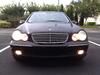
My center hub to fender clearances are 13 1/4" rear and 14" front. It sounds like you don't have the sport suspension ...? Fyi here is a profile pic of my car so you can see the ride height ...
Hey everyone I’m new to this forum. I drive a 2001 C270 CDI. Im hearing squeaking noise from behind (right)..but only when I’m turning left..
and I’m currently 3hours away from my place..is it safe to drive back?
Is it speed dependent, like a wheel bearing? Or does it change when applying the brakes?
With a C270 I am assuming you are not in the US ... If I thought it was a wheel bearing I would drive pretty carefully so as not to seize up the hub (I did this on an old VM Beetle, not pretty), and I would try to get roadside service to pick up the car once I get closer to home. Others can comment on how long you can run with a bad wheel bearing ...
My center hub to fender clearances are 13 1/4" rear and 14" front. It sounds like you don't have the sport suspension ...? Fyi here is a profile pic of my car so you can see the ride height ...
2005 c230 Sport
John, I did confirm through the original window sticker that I do have the sport suspension (code 486), although mine is a pre-face lift 2003 model with the standard sway bar links etc. I can understand how the rear springs might settle after a couple of years, but find it strange that the front clearance is more than an inch higher than yours... Here are some before (about 4 years ago) and after (last week after I changed the control arms) pictures for comparison.
Picture from about 4 years ago, front and rear looks pretty close to level.
Picture from this week. The front clearance looks quite higher than the rear.
Your car in general just seems higher. Here, I drew some trace lines across the bottom door seam to see where it hits the hubs ...
I didn't get them exactly on line, but it looks like your before and after pics are about the same, possibly slightly higher. And both your pics show your car noticably higher than mine.
Fyi, I've attached a pic from the original 2005 brochure when I bought the car ... you can see the line hits low on the hub here as well ...
How did you torque your bolts under suspension load? I drove my car up on ramps, then loosened and retighted the bolts, which pretty much ensured it was at ride height.
Your car in general just seems higher. Here, I drew some trace lines across the bottom door seam to see where it hits the hubs ...
I didn't get them exactly on line, but it looks like your before and after pics are about the same, possibly slightly higher. And both your pics show your car noticably higher than mine.
Fyi, I've attached a pic from the original 2005 brochure when I bought the car ... you can see the line hits low on the hub here as well ...
How did you torque your bolts under suspension load? I drove my car up on ramps, then loosened and retighted the bolts, which pretty much ensured it was at ride height.
You may be right, there is not much difference between the 2 pictures. I will probably leave it alone and change the springs/shocks further down the road as needed. I used a screw jack to raise-up the steering knuckle instead of a ramp. I was about half-an inch off on the front wheels clearance for the final control arms torque. Close enough?
You may be right, there is not much difference between the 2 pictures. I will probably leave it alone and change the springs/shocks further down the road as needed. I used a screw jack to raise-up the steering knuckle instead of a ramp. I was about half-an inch off on the front wheels clearance for the final control arms torque. Close enough?
I don't remember the exact geometry --- but if the control arms are 12" long and the total vertical wheel travel of the front suspension is around 4", that's 1/3 ... sin(1/3) = ~20 degrees. So if you tighten your bolts while the suspension is fully hanging you are potentially twisting those bushings by 20 degrees ... probably not a good idea to subject the rubber to that level of twisting long term. (Keeping in mind when you raise the car on a lift, that's what happens, but not permanently.)
However if you are only 1/2" off when you tighten, that's sin(1/24) = ~3 degrees ... I don't think the rubber will notice or put up any resistance for that little of a twist.
Short answer -- yes IMHO it seems close enough to not worry about it.
Has anyone replaced all the REAR suspension links, and if so at what mileage? Mine has about 180,000 miles on it. I have some noise most likely coming from the lower spring arm, which I am planning on replacing next week. From the other posts on this thread, this link seems to be a weak point. I am debating whether to replace the other links (thrust/camber/track) at the same time. All except for the radius rod which would require lowering the subframe /drivertrain, which is well beyond my patience and abilities... Thank-you.
I can't answer to the longevity of the specific bushings, but my two cents is to replace everything back there if you plan to keep the car for a while longer ... I think it's worth an extra few hundred dollars worth of parts for a service that you will do once every 10+ years.
Has anyone replaced all the REAR suspension links, and if so at what mileage? Mine has about 180,000 miles on it. I have some noise most likely coming from the lower spring arm, which I am planning on replacing next week. From the other posts on this thread, this link seems to be a weak point. I am debating whether to replace the other links (thrust/camber/track) at the same time. All except for the radius rod which would require lowering the subframe /drivertrain, which is well beyond my patience and abilities... Thank-you.
Ok so I had annoying squeek from my rear suspension I jacked up car removed tire and disconnected rear control arm at both ends and found worn bushing at the knuckle where arm attached to. all other bushing were good, but that one was a pain to replace ( used threaded rod and some sockets, washers and a lotsa elbow grease ) I think this one takes most of the load of car. You can get it online for around 25$ + or dealer .My mileage was around 150K. I got a youtube link but it's in russian but you'll get the idea. Good luck.
I agree with everything on the video except for the oiling of the threads. The blue color on the threads is Loctite and it should be used. This will make sure that the nut does not loosen up over time, oiling it is the last thing you should do. There are 2 kinds of Loctite, red and blue. Use the blue one as the red is used for a more "permanent" lock, unless you're not ever going to loosen that nut again for any reason then by all means use the red one.
Alan.
Ended up replacing the entire spring arms for simplicity. The MB parts cost only $61 each, with the bushing already mounted. Did not replace any other arms in the rear (other than the stabilizer bar bushings and links). And the suspension is finally completely silent again
My 2005 C230 Sport Sedan has about 129,000 miles on it. I bought it used and didn't receive any maintenance records, but I was able to find a few on CarFax. Many of the CarFax records simply state that the car was serviced, so I don't know whether any suspension work was done other than a vague reference to work done at 80,664 miles stating, "Steering/suspension checked."
I recently had the opportunity to put the car on a lift in order to change the transmission and differential lubricants. (That made the job much easier and also allowed me to have the car level while training the old fluids. It felt like a luxury compared to my usual practice of crawling under a car suspended on ramps.)
While I was waiting for the fluids to drain, I took the opportunity to look at the suspension components. Most of the bushings appeared to be pretty well worn. I'm no expert on this subject and I'm basing my assessment on what I've seen on auto repair shows such as Wheeler Dealers. I think that if Ed China looked at my bushings he would say they were "perished." I don't know how the car felt when it was new, but it does seem to vibrate quite a bit on irregular road surfaces and it is not well damped on big bumps.
I've been researching suspension issues on this and other forums and looking at videos on YouTube. I would like some feedback on the following questions so that I can develop a strategy for addressing suspension problems.
1. I have the opportunity to buy a set of OEM struts, shocks and springs that were removed from another care for a suspension upgrade at 37,000 miles. Will these items have a good service life? My goal is to keep the car for at least another 70,000 miles.
2. If I replace shocks and struts, do I need to replace the springs? For example, if I bought new Bilstein shocks and struts instead of the used OEM components, would I need a set of springs too?
3. If I take the car to a shop, am I correct to assume they will have the equipment to replace bushings rather than entire components such as control arms? If I can replace just the bushings is there a trade off for the cost savings in terms of performance or durability?
4. If I take the car to a suspension shop and ask them what I need done, I'm concerned that it would be like asking a barber whether I need a haircut. Can anyone suggest a strategy for keeping costs down if I decide to use a shop? One of the shops I'm considering previously allowed me to supply my own parts, so I could shop for good prices.
5. I've replaced shocks in the past, but that was on an old Toyota and I have not used spring compressors. Is this a good learning opportunity? I have access to a lift, but I am a very slow worker and the lift rental cost is $12 per hour. There are videos on YouTube that show how to do the work, but they don't show the problems that may crop up such as corroded bolts and unexpectedly broken components.
6. Are there efficiencies or economies from doing all the work at once, i.e. replace shocks, struts and bushings in one session?
7. Any other suggestions or issues I need to consider?
I have the same model and year as you, 135k on my car now, at ~100k I replaced the shocks/struts all around (with Bilstein TC/B4) and all front control arms (Lemfoerder) and upper strut mounts (Corteco). I have not replaced tie rod ends yet, or any control arms or bushings in the rear.
From what I understand the front rubber takes the biggest beating and goes out much earlier than the rears ... and if you haven't replacing anything yet then I recommend you start with what I did (shocks/struts and front control arms) ... just make sure when you replace the upper strut mounts that you get the mount assembly with the bearings in them.
My 2005 C230 Sport Sedan has about 129,000 miles on it. I bought it used and didn't receive any maintenance records, but I was able to find a few on CarFax. Many of the CarFax records simply state that the car was serviced, so I don't know whether any suspension work was done other than a vague reference to work done at 80,664 miles stating, "Steering/suspension checked."
I recently had the opportunity to put the car on a lift in order to change the transmission and differential lubricants. (That made the job much easier and also allowed me to have the car level while training the old fluids. It felt like a luxury compared to my usual practice of crawling under a car suspended on ramps.)
While I was waiting for the fluids to drain, I took the opportunity to look at the suspension components. Most of the bushings appeared to be pretty well worn. I'm no expert on this subject and I'm basing my assessment on what I've seen on auto repair shows such as Wheeler Dealers. I think that if Ed China looked at my bushings he would say they were "perished." I don't know how the car felt when it was new, but it does seem to vibrate quite a bit on irregular road surfaces and it is not well damped on big bumps.
I've been researching suspension issues on this and other forums and looking at videos on YouTube. I would like some feedback on the following questions so that I can develop a strategy for addressing suspension problems.
1. I have the opportunity to buy a set of OEM struts, shocks and springs that were removed from another care for a suspension upgrade at 37,000 miles. Will these items have a good service life? My goal is to keep the car for at least another 70,000 miles.
2. If I replace shocks and struts, do I need to replace the springs? For example, if I bought new Bilstein shocks and struts instead of the used OEM components, would I need a set of springs too?
3. If I take the car to a shop, am I correct to assume they will have the equipment to replace bushings rather than entire components such as control arms? If I can replace just the bushings is there a trade off for the cost savings in terms of performance or durability?
4. If I take the car to a suspension shop and ask them what I need done, I'm concerned that it would be like asking a barber whether I need a haircut. Can anyone suggest a strategy for keeping costs down if I decide to use a shop? One of the shops I'm considering previously allowed me to supply my own parts, so I could shop for good prices.
5. I've replaced shocks in the past, but that was on an old Toyota and I have not used spring compressors. Is this a good learning opportunity? I have access to a lift, but I am a very slow worker and the lift rental cost is $12 per hour. There are videos on YouTube that show how to do the work, but they don't show the problems that may crop up such as corroded bolts and unexpectedly broken components.
6. Are there efficiencies or economies from doing all the work at once, i.e. replace shocks, struts and bushings in one session?
7. Any other suggestions or issues I need to consider?
Thanks in advance.
I agree with John's comments. I would first change the front control arms. At your mileage, I would replace the entire arms (Lemforder or MB) and not just the bushings. The ball joint end is probably going to be very loose and these cannot be refurbished. It took me about 6 hours on a lift with zero prior experience. I purchased a ball joint removal tool which made removing the control arms very easy. If you do decide to replace the struts/springs, make sure you get the exact fit for your VIN number. MB has 3 different types of springs for this model depending on what options your car is loaded with (such as sunroof, amplifier etc.)
I am now having a problem with my 03 coupe's front suspension. The front left wheel at times feels like it's hopping. When making left turns or applying the brakes. Going straight down the road, it feels fine. My front end has had no problems until this. The car has 134,000 miles. Any thoughts?
I have a 2014 e350 red and have the same problems on both sides of my front suspension. Lmk if u find the fix.
W208 CLK here. Perplexed about getting conflicting information from two repair shops. Hoping to clarify things a bit.
Problem: fairly loud squeak from rear suspension, seemed to start almost overnight. Any speed, any bump, even getting in and out of car, "SQUEAK!"
Repair shop #1: Tech states "rear bushings [both sides] on the wheel knuckle is blown and noisy. These bushings actually the support joint for the wheels. Recommend replace both bushings and align the vehicle when completed." The Service Manager says this is an 8-hour job plus alignment, and $285 in parts. Well over $1500.
Problem is, he hands me a rear suspension parts blow-up, and he says it's Part 20 in the following diagram (or the W208 equivalent): https://mbworld.org/forums/attachmen...uspension1.gif
Changing the "20" bushings is supposed to be an EASY job, as seen in the YouTube video which kessel posted a few posts above. Is he quoting me for replacing the "70" bushings, which according to OP is the super time-consuming job that we do only as a last resort? He did say that you have to remove the knuckle to get to these bushings, so I'm thinking it's the latter.
Repair shop #2: It rained the next few days and the squeak largely went away (like 70%-80% better). Then I took the car to Shop #2. He said he couldn't find problems with any bushings. He performed an alignment and I haven't heard a single squeak since.
My question to this forum: Normally I'd be happy that the squeak is gone and I wouldn't waste your time. However, shop #1 said that if I don't repair the bushings, eventually they'll fail completely and the wheel could come off. This sounds a bit drastic, if not fishy. How much of a safety issue are we talking about here, potentially, and how do I figure out which shop was correct about my suspension? (Note: suspensions are my weakest area of car knowledge, otherwise I'd look into it myself).
Last edited by KyleKaiser; May 24, 2022 at 08:27 PM.
Reason: formatting
W208 CLK here. Perplexed about getting conflicting information from two repair shops. Hoping to clarify things a bit.
Problem: fairly loud squeak from rear suspension, seemed to start almost overnight. Any speed, any bump, even getting in and out of car, "SQUEAK!"
Repair shop #1: Tech states "rear bushings [both sides] on the wheel knuckle is blown and noisy. These bushings actually the support joint for the wheels. Recommend replace both bushings and align the vehicle when completed." The Service Manager says this is an 8-hour job plus alignment, and $285 in parts. Well over $1500.
Problem is, he hands me a rear suspension parts blow-up, and he says it's Part 20 in the following diagram (or the W208 equivalent): https://mbworld.org/forums/attachmen...uspension1.gif
Changing the "20" bushings is supposed to be an EASY job, as seen in the YouTube video which kessel posted a few posts above. Is he quoting me for replacing the "70" bushings, which according to OP is the super time-consuming job that we do only as a last resort? He did say that you have to remove the knuckle to get to these bushings, so I'm thinking it's the latter.
Repair shop #2: It rained the next few days and the squeak largely went away (like 70%-80% better). Then I took the car to Shop #2. He said he couldn't find problems with any bushings. He performed an alignment and I haven't heard a single squeak since.
My question to this forum: Normally I'd be happy that the squeak is gone and I wouldn't waste your time. However, shop #1 said that if I don't repair the bushings, eventually they'll fail completely and the wheel could come off. This sounds a bit drastic, if not fishy. How much of a safety issue are we talking about here, potentially, and how do I figure out which shop was correct about my suspension? (Note: suspensions are my weakest area of car knowledge, otherwise I'd look into it myself).
When I replaced my front sway bar (with molded on bushings) it was because those rubber bushings had become very noisy twisting in their holding brackets. They were not loose ... just hardened enough with age that they didn't flex as well as new ones. They would creak over speed bumps in the shopping center parking lot at 5mph ... how embarrassing ...! Replacing them eliminated the squeak completely. Absolutely no change in driving, handling, etc ... it was only the noise.
It's possible you are in the same situation, with a hardening rear bushing that isn't going to go out, but will squeak when dry. If the repair shop said they tested okay, that usually means no play in the joints, so my suggestion is that you try to figure out which one is squeaking and then keep it lubricated with something that won't dry out immediately, figure on doing it periodically (monthly?) like you used to have to grease the bushings in older cars.
Mercedes SLR McLaren 722 S Is Extremely Rare Example Modified by McLaren
Slideshow: A one-of-one U.S.-spec Mercedes-Benz SLR McLaren Roadster became even rarer after a factory-backed transformation at McLaren's headquarters.





 May 21, 2015, 06:22 PM