



2010 C350 with the new engine (292hp) ???

MBWorld Fanatic!
Joined: Feb 2004
Posts: 3,986
Likes: 6
From: SEATTLE WASHINGTON USA
'08 C300 Lux Barolo Red Beige Leather P2 MM 18" wheels '84 944
Sulfur
The article above is correct. That engine can't run on high sulphur petrol. It won't be coming to SA for the same reason. Our fuel will only be compliant by 2011. Australia are ready for it as is Europe obviously.
Porsche's latest engines will not tolerate high sulphur fuel either.
Porsche's latest engines will not tolerate high sulphur fuel either.
And even lowly Isuzu is selling DI vehicles here.
Senior Member
Joined: Dec 2003
Posts: 336
Likes: 19
So who is selling this high sulphur fuel? Not here in the US. The Cayenne went to DI at least two years ago and all 2009 models have DI engines for all markets. Porsche is quoting the usual advantages, more horsepower and torque, and lower emissions including CO2. Their six cylinder DI engines are heavily redesigned.
And even lowly Isuzu is selling DI vehicles here.
And even lowly Isuzu is selling DI vehicles here.
In the Audi RS4 side, there are also long discussions about the DFI carbon-built-up issue.
Similar discussion on DFI engine can be found in Mazda forums.
Sulphur or not, I think in general the DFI gasoline engine design still have some improvement to go, and I am glad that Mercedes is sticking with the traditional fuel injection in the W204 for now.
Regards,
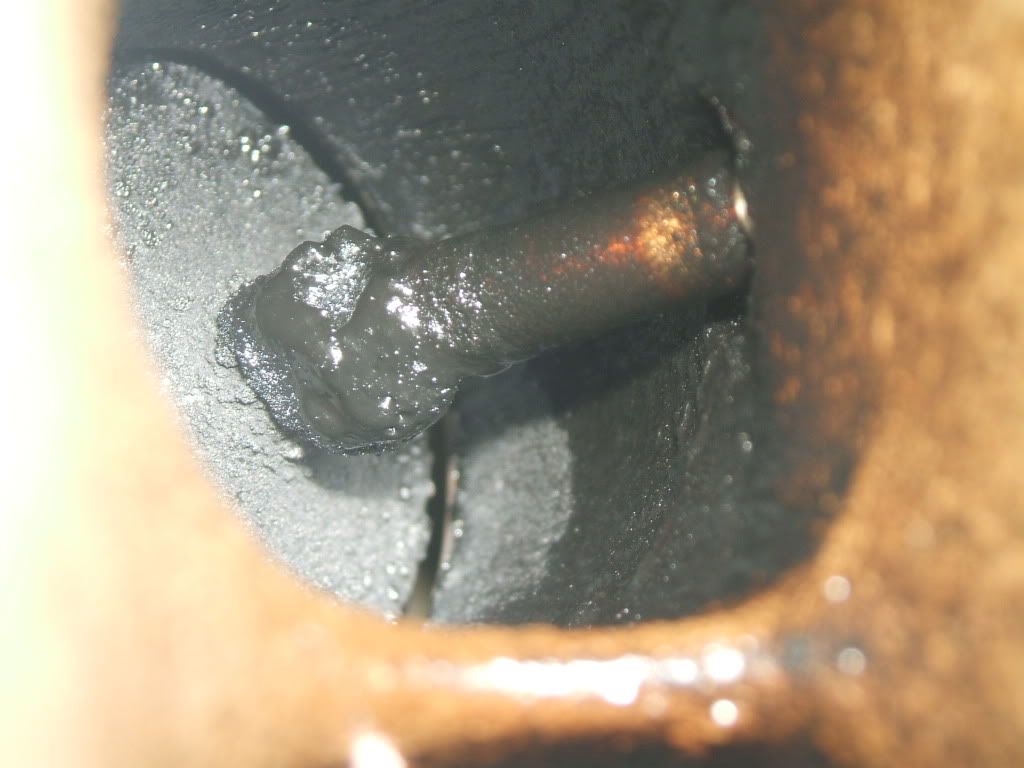
2008 Cayenne Turbo DFI engine intake-valve:
Last edited by axhoaxho; Apr 23, 2009 at 04:38 AM.

MBWorld Fanatic!
Joined: Dec 2002
Posts: 1,398
Likes: 7
Yes, I've been reading this stuff about the audi/vw FSI engines. Since there is no fuel (with its additives) in the intake rail on a DFI engine, there is nothing to clean the intake valves. The motors rely on an oil mist separator to clean the oil that is a normal part of the atmosphere in the sealed crankcase, fed back to the intake for emissions reasons. And did you see the threads on the audi forums showing how much fuel the DFI engines push into the oil? When these people do oil changes, they have photographed the drained out oil, the amount of fuel in it is unreal.
Lots of talk on such forums of mandatory intake rail cleaning maintenance programs, or some kind of PCV catch can application.
Some serious questions about DFI applications right now - my post above about waiting for the DFI engines might not be such good advice.
Lots of talk on such forums of mandatory intake rail cleaning maintenance programs, or some kind of PCV catch can application.
Some serious questions about DFI applications right now - my post above about waiting for the DFI engines might not be such good advice.
MBWorld Fanatic!
Joined: Feb 2004
Posts: 3,986
Likes: 6
From: SEATTLE WASHINGTON USA
'08 C300 Lux Barolo Red Beige Leather P2 MM 18" wheels '84 944
Carbon
There is a long discussion in the Porsche forums about the Cayenne DFI intake-valve-carbon-built-up engine issue.
In the Audi RS4 side, there are also long discussions about the DFI carbon-built-up issue.
Similar discussion on DFI engine can be found in Mazda forums.
Sulphur or not, I think in general the DFI gasoline engine design still have some improvement to go, and I am glad that Mercedes is sticking with the traditional fuel injection in the W204 for now.
Regards,
2008 Cayenne Turbo DFI engine intake-valve:
In the Audi RS4 side, there are also long discussions about the DFI carbon-built-up issue.
Similar discussion on DFI engine can be found in Mazda forums.
Sulphur or not, I think in general the DFI gasoline engine design still have some improvement to go, and I am glad that Mercedes is sticking with the traditional fuel injection in the W204 for now.
Regards,
2008 Cayenne Turbo DFI engine intake-valve:
My 1985 190E 2.3's carboned up valves were blasted clean by my dealer, paid for by MB. Naturally, Porsche denied knowledge of the situation so I paid to have it done by an independent on my 4-year old 944. It felt like it gained 15hp overnight. Audi and BMW were doing the same thing on a one-time basis.
The DI 997s and Boxster/Caymans haven't been around long enough for this to be a problem yet, seems to me. And, with sales down 42%, they haven't moved many cars.
MBWorld Fanatic!
Joined: Dec 2002
Posts: 1,398
Likes: 7
It's oil vapor deposits. Since the crankcase can't be ventilated to the atmosphere for emissions reasons, there is always oil vapor in suspension. In an EFI car, the fuel and its additives mix in with that vapor and it all gets reburned in combustion - the fuel is the "juice" that stops the oil vapor from gunking up. Without fuel in the intake rail for DFI, the air needs to be very clean. And if its not - well, look at that valve.
http://www.bobistheoilguy.com/forums...325647&fpart=1
http://www.bobistheoilguy.com/forums...325647&fpart=1

Super Moderator

Joined: Jun 2008
Posts: 19,942
Likes: 192
From: Llandudno, Cape Town, South Africa
late 2009 CLK 350 Coupe Elegance, '65 Jaguar S Type wires
So who is selling this high sulphur fuel? Not here in the US. The Cayenne went to DI at least two years ago and all 2009 models have DI engines for all markets. Porsche is quoting the usual advantages, more horsepower and torque, and lower emissions including CO2. Their six cylinder DI engines are heavily redesigned.
And even lowly Isuzu is selling DI vehicles here.
And even lowly Isuzu is selling DI vehicles here.
So your statement "MB's story about sulfur is stupid" is wrong. Stop shooting from the hip.
To make the new engine compatible with the US & many other countries fuel situation would require the fitment of old generation Cat's & retuning of the entire system which would be retrogressive in an ultra low emissions vehicle.

Senior Member
Joined: Mar 2009
Posts: 451
Likes: 1
From: S.F. Bay Area
2008 C300 Sport, 2010 RX350 AWD
If the new DFI engines can't run on fuels here in the States, how can MBUSA bring 2010 E350 CGI coupe which runs on 3.5L V6 DFI engine??
Did MB made some modification to the engine?? If they did, why can't the same modifed engine been used on C350 sedan and E350 sedan?
Did MB made some modification to the engine?? If they did, why can't the same modifed engine been used on C350 sedan and E350 sedan?

MBworld Guru


Joined: Apr 2002
Posts: 22,058
Likes: 18
From: Diamond Bar, CA
W206 PHEV AMG
The entire industry in the US is still above 10 ppm. You won't do any damage to engine components on the higher sulphur fuel (well ultra slight if you want to knit pick - nothing of significance- higher sulphur means higher acid production in the combustion process). You will damage the Cat converters & you won't pass emissions with the 3 way Cat. The 3 way Cat results in high benzene (nasty carcinogen) levels in the exhaust emission if sulphur is present in the fuel. To be able to meet Euro emission standards you need the 3 way Cat & ultra low sulphur fuel. Sulphur also has a deleterious effect on new generation O2 sensors
So your statement "MB's story about sulfur is stupid" is wrong. Stop shooting from the hip.
To make the new engine compatible with the US & many other countries fuel situation would require the fitment of old generation Cat's & retuning of the entire system which would be retrogressive in an ultra low emissions vehicle.
So your statement "MB's story about sulfur is stupid" is wrong. Stop shooting from the hip.
To make the new engine compatible with the US & many other countries fuel situation would require the fitment of old generation Cat's & retuning of the entire system which would be retrogressive in an ultra low emissions vehicle.
 to read
MB World Stories
The Best of Mercedes & AMG

Manual Mercedes? 6 Times Sindelfingen Let Drivers Have All The Fun
Verdad Gallardo
Mercedes SLR McLaren 722 S Is Extremely Rare Example Modified by McLaren
Verdad Gallardo
8 Classic Boxy Mercedes Designs That Have Aged Like Fine Wine
Verdad Gallardo
Flawlessly Restored Mercedes 190E Evo II Heads to Auction
Verdad Gallardo
Electric Mercedes C-Class Unveiled: 11 Things You Need to Know
Verdad Gallardo
Mercedes EQS Gets A Major Update: Everything You Need to Know
Verdad Gallardo
5 Underrated Mercedes-Benz Models That Don't Get the Love They Deserve
Verdad Gallardo
Mercedes 300D Has Pushed Well Past 1 Million Miles and It Ain't Stopping
Verdad Gallardo
10 Most Reliable Mercedes-Benz Models You Can Buy Used
Verdad Gallardo
Super Moderator
Joined: Jun 2008
Posts: 19,942
Likes: 192
From: Llandudno, Cape Town, South Africa
late 2009 CLK 350 Coupe Elegance, '65 Jaguar S Type wires
If the new DFI engines can't run on fuels here in the States, how can MBUSA bring 2010 E350 CGI coupe which runs on 3.5L V6 DFI engine??
Did MB made some modification to the engine?? If they did, why can't the same modifed engine been used on C350 sedan and E350 sedan?
Did MB made some modification to the engine?? If they did, why can't the same modifed engine been used on C350 sedan and E350 sedan?
If I was Benz I would not produce a special for America of the sedan & wagon??? or Coupe I presume you mean? They have a perfectly serviceable engine to launch the new car with. They know the US will have to come in line with fuel or enjoy a lot of obsolete models being sold in the market. All countries are moving to cleaner fuels. The only reason it's taking so long is that the US market wants to continue with it's ultra cheap fuel by world standards. The cost of modifying refineries to produce ultra low suphur fuels is high & will have to be passed on to consumers.
Super Moderator
Joined: Jun 2008
Posts: 19,942
Likes: 192
From: Llandudno, Cape Town, South Africa
late 2009 CLK 350 Coupe Elegance, '65 Jaguar S Type wires
There is a long discussion in the Porsche forums about the Cayenne DFI intake-valve-carbon-built-up engine issue.
In the Audi RS4 side, there are also long discussions about the DFI carbon-built-up issue.
Similar discussion on DFI engine can be found in Mazda forums.
Sulphur or not, I think in general the DFI gasoline engine design still have some improvement to go, and I am glad that Mercedes is sticking with the traditional fuel injection in the W204 for now.
Regards,
2008 Cayenne Turbo DFI engine intake-valve:
In the Audi RS4 side, there are also long discussions about the DFI carbon-built-up issue.
Similar discussion on DFI engine can be found in Mazda forums.
Sulphur or not, I think in general the DFI gasoline engine design still have some improvement to go, and I am glad that Mercedes is sticking with the traditional fuel injection in the W204 for now.
Regards,
2008 Cayenne Turbo DFI engine intake-valve:
Last edited by Glyn M Ruck; Apr 24, 2009 at 09:18 PM.

Junior Member
Joined: Mar 2009
Posts: 31
Likes: 0
w204 c230
I don't think CGI engines will have the same intake valve problem as those DFI. MB has long been producing reliable good Diesel engines which are all direct injection. MB knows the proper ways to oil and cool the intake valves.
Super Moderator
Joined: Jun 2008
Posts: 19,942
Likes: 192
From: Llandudno, Cape Town, South Africa
late 2009 CLK 350 Coupe Elegance, '65 Jaguar S Type wires
+1 - Good comment & diesels - esp turbo diesels - run at higher temperatures which would exacerbate the burn on.

Senior Member


Joined: May 2008
Posts: 325
Likes: 18
From: Canada
W213, C238
There is a lot of speculation about whether or not Mercedes will bring the direct injection CGI engines to North America.
There was also a report about a year ago that Mercedes would be making turbocharged gasoline engines available in all their models by the end of 2010.
Is there any news on this?
There was also a report about a year ago that Mercedes would be making turbocharged gasoline engines available in all their models by the end of 2010.
Is there any news on this?
Super Moderator
Joined: Jun 2008
Posts: 19,942
Likes: 192
From: Llandudno, Cape Town, South Africa
late 2009 CLK 350 Coupe Elegance, '65 Jaguar S Type wires
There is a lot of speculation about whether or not Mercedes will bring the direct injection CGI engines to North America.
There was also a report about a year ago that Mercedes would be making turbocharged gasoline engines available in all their models by the end of 2010.
Is there any news on this?
There was also a report about a year ago that Mercedes would be making turbocharged gasoline engines available in all their models by the end of 2010.
Is there any news on this?
"Daimler R&D chief Thomas Weber confirmed that all Mercedes vehicles will feature turbocharged engines in series production by the end of 2010 at the latest. This will allow engineers to use smaller and lighter engines without sacrificing performance.
Mercedes has already showcased its new DiesOtto engine, which delivers an amazing 238hp (175kW) and 400Nm of torque from its 1.8L displacement. Initial tests have seen fuel consumption at around 39mpg (6L/100km), and this was in a large S-class saloon." unquote
They have also recently launched an 80Kw turbocharged Smart ForTwo
MBworld Guru
Joined: Apr 2002
Posts: 22,058
Likes: 18
From: Diamond Bar, CA
W206 PHEV AMG
Yes & I quote Benz recent statement:
"Daimler R&D chief Thomas Weber confirmed that all Mercedes vehicles will feature turbocharged engines in series production by the end of 2010 at the latest. This will allow engineers to use smaller and lighter engines without sacrificing performance.
Mercedes has already showcased its new DiesOtto engine, which delivers an amazing 238hp (175kW) and 400Nm of torque from its 1.8L displacement. Initial tests have seen fuel consumption at around 39mpg (6L/100km), and this was in a large S-class saloon." unquote
They have also recently launched an 80Kw turbocharged Smart ForTwo
"Daimler R&D chief Thomas Weber confirmed that all Mercedes vehicles will feature turbocharged engines in series production by the end of 2010 at the latest. This will allow engineers to use smaller and lighter engines without sacrificing performance.
Mercedes has already showcased its new DiesOtto engine, which delivers an amazing 238hp (175kW) and 400Nm of torque from its 1.8L displacement. Initial tests have seen fuel consumption at around 39mpg (6L/100km), and this was in a large S-class saloon." unquote
They have also recently launched an 80Kw turbocharged Smart ForTwo
this means M272 Turbo...

MBWorld Fanatic!
Joined: Feb 2004
Posts: 3,986
Likes: 6
From: SEATTLE WASHINGTON USA
'08 C300 Lux Barolo Red Beige Leather P2 MM 18" wheels '84 944
Diesels
The only passenger car DI diesels MB makes are the ones with piezo injectors such as the Bluetecs (previously CDI) sold here since '06. All the older ones are prechamber types. I owned one (300D) for seven years and it was noisy and smoky due to it's ancient technology. Today's V-6 Bluetec is a joy to drive.
Last edited by RLE; Apr 26, 2009 at 07:35 PM.
MBWorld Fanatic!
Joined: Feb 2004
Posts: 3,986
Likes: 6
From: SEATTLE WASHINGTON USA
'08 C300 Lux Barolo Red Beige Leather P2 MM 18" wheels '84 944
Goop build up
There is a long discussion in the Porsche forums about the Cayenne DFI intake-valve-carbon-built-up engine issue.
In the Audi RS4 side, there are also long discussions about the DFI carbon-built-up issue.
Similar discussion on DFI engine can be found in Mazda forums.
Sulphur or not, I think in general the DFI gasoline engine design still have some improvement to go, and I am glad that Mercedes is sticking with the traditional fuel injection in the W204 for now.
In the Audi RS4 side, there are also long discussions about the DFI carbon-built-up issue.
Similar discussion on DFI engine can be found in Mazda forums.
Sulphur or not, I think in general the DFI gasoline engine design still have some improvement to go, and I am glad that Mercedes is sticking with the traditional fuel injection in the W204 for now.
This subject was in fact new to me since my Porsche interests do not extend to the Cayenne. So, I sent an inquiry to a friend who has been a nationally known Porsche expert for decades although I won't be mentioning his name. BTW, which Porsche forums are you referring to? I see three daily and this has not been mentioned.
Here is his reply:
"I checked with some of my friends in the fuel business and Porsche repair business and they said that aside from seeing some unsightly gum build up on the face and lower stem of the Intake Valves, when the manifold has been off for an unrelated reason. I have checked around and can't say that I have actually heard of a running issue from this problem yet. Some form of top engine cleaner drawn into the intake through a vacuum connection should cure this. It's just oil vapor from crankcase ventilation that condenses on the valves and does not get washed off because there is no manifold injected fuel. These deposits are not like the hard carbon deposits we got from bad fuel before good detergent gasolines became the mandated standard in the industry. GM experienced with the early port injection systems where the crankcase blow-by was introduced right at the throttle body leaving deposits to build up on the throttle blade and throttle bore. Maintenance with carburetor cleaner and a rag was required every 5000 miles or so depending on the type of driving. For other more modern GM engines they have used GM Top End Cleaner to cure such problems. Other top end cleaners are available such as Techron, BG Products and others are available for similar applications.
It also has to do with extended oil change intervals as well as the use of very low viscosity oils which may also contribute to the intake runner and valve gunking because they are more prone to vaporizing more readily than the higher viscosity oils. The chemical impurities in fuels that wind up in the oil contribute to breakdown of the oil, and add to the deposits. This is a DFI problem across all manufacturers I would recommend using GM top engine cleaner drawn into the intake via a vacuum port in your car about every 15,000 miles - (not an approved process by Porsche or any manufacturers except GM, but I would do it anyhow). You should change the oil after performing these cleaning procedures as they tend to contaminate the oil. I expect that with so many cars now using DFI that between the engine manufactures and the additive suppliers, a solution will be developed for Future DFI engines."
Another data point.
MBWorld Fanatic!
Joined: Dec 2002
Posts: 1,398
Likes: 7
rennlist is where I have been following this, with links there to Audi and VW sites. The audi and VW sites have more information and more reports from owners, since they sell more DFI engine then Porsche. How many 997.2 DFI engines have had their heads removed at dealers, the car is out only for 6+ months.
Yes, some form of top engine cleaner sucked into the intake can cure this. But who wants to do that as periodic maintenance on a DFI engine?
They need some kind of catch can or replaceable filter element attached to the PCV system, dumping that vapor back into the intake rail isn't going to cut it.
I hope MB is working on solving this problem, this is going to be a time bomb for audi/vw as their cars sold with these engines accumulate more miles. And on the turbo issue, let's hope the MB turbo engines deal effectively with the cooling issue - that BMW turbo 335 engine is getting a reputation as running very hot, and when combined with their very long oil change interval, I can't imagine what the oil coming out of it looks like at 15K miles.
Yes, some form of top engine cleaner sucked into the intake can cure this. But who wants to do that as periodic maintenance on a DFI engine?
They need some kind of catch can or replaceable filter element attached to the PCV system, dumping that vapor back into the intake rail isn't going to cut it.
I hope MB is working on solving this problem, this is going to be a time bomb for audi/vw as their cars sold with these engines accumulate more miles. And on the turbo issue, let's hope the MB turbo engines deal effectively with the cooling issue - that BMW turbo 335 engine is getting a reputation as running very hot, and when combined with their very long oil change interval, I can't imagine what the oil coming out of it looks like at 15K miles.
Last edited by nyca; Apr 26, 2009 at 09:21 PM.
Super Moderator
Joined: Jun 2008
Posts: 19,942
Likes: 192
From: Llandudno, Cape Town, South Africa
late 2009 CLK 350 Coupe Elegance, '65 Jaguar S Type wires
rennlist is where I have been following this, with links there to Audi and VW sites. The audi and VW sites have more information and more reports from owners, since they sell more DFI engine then Porsche. How many 997.2 DFI engines have had their heads removed at dealers, the car is out only for 6+ months.
Yes, some form of top engine cleaner sucked into the intake can cure this. But who wants to do that as periodic maintenance on a DFI engine?
They need some kind of catch can or replaceable filter element attached to the PCV system, dumping that vapor back into the intake rail isn't going to cut it.
I hope MB is working on solving this problem, this is going to be a time bomb for audi/vw as their cars sold with these engines accumulate more miles. And on the turbo issue, let's hope the MB turbo engines deal effectively with the cooling issue - that BMW turbo 335 engine is getting a reputation as running very hot, and when combined with their very long oil change interval, I can't imagine what the oil coming out of it looks like at 15K miles.
Yes, some form of top engine cleaner sucked into the intake can cure this. But who wants to do that as periodic maintenance on a DFI engine?
They need some kind of catch can or replaceable filter element attached to the PCV system, dumping that vapor back into the intake rail isn't going to cut it.
I hope MB is working on solving this problem, this is going to be a time bomb for audi/vw as their cars sold with these engines accumulate more miles. And on the turbo issue, let's hope the MB turbo engines deal effectively with the cooling issue - that BMW turbo 335 engine is getting a reputation as running very hot, and when combined with their very long oil change interval, I can't imagine what the oil coming out of it looks like at 15K miles.
We have two mechanisms at play - the crankcase mist which makes everything grubby & gummy & the thick deposit you see on the valve stem & some blobs on the tulip which is burnt on viscosity index improver from the multigrade oil. This is milled polymer so that is effectively burnt on plastic goo.
Coming from the purveyors of Techron we are more than accustomed to analysing these deposits in a forensic level lab at our Technology Centres around the globe.
If the fuel with Techron could get there then the valve stem & tulip would look like this example photo of a M271 motor inlet. Note in this picture you can clearly see where the fuel cannot get & you have the build up from the crankcase ventilation system & guide oil.


Super Moderator
Joined: Jun 2008
Posts: 19,942
Likes: 192
From: Llandudno, Cape Town, South Africa
late 2009 CLK 350 Coupe Elegance, '65 Jaguar S Type wires


