For the true carbon fiber junky


Thread Starter
MBWorld Fanatic!

Joined: Apr 2010
Posts: 4,437
Likes: 43
From: PDX
1999 C43, 2008 P30 E63, 2014 SQ5, 2024 Model Y Performance
This is REALLY for the true carbon fiber junky!!!
One of our good friends, Rory Craig, who is a student at the Art Center College of Design, has designed a sweet carbon fiber baby car seat prototype. He developed the prototype as a Sparco product (and is trying to pitch the concept to them), with the idea of a race-inspired child seat for those car enthusiast fathers that want to get their kid a really unique baby seat.

 The entire body is carbon fiber that was done with a wet layup over a cnc’d foam core. The seat is not only extremely lightweight strong, but suits the needs of all three stages a child goes through when using a carseat. The first is a rear facing infant seat, the second and upright forward facing toddler seat, and third a youth booster seat. This carseat achieves this by having a central pivot that is not only adjustable but also removable to allow for these three different configurations. By combining all these stages it allows the buyer to not have to purchase three different carseats throughout the childs carseat years. Note that this design is purely conceptual and does not fully function.

 All straps are Sparco race harnesses and all plastic insert and parts were made using rapid prototyping machines. Interior is fully padded and snaps out of carbon shell for washing. The many holes down the back of the seat allow for harness adjustment as the child grows.
 The project was done for a fourth term product design class where the assignment was to design a softgood product (Rory based this on the interior). Here’s some info from Rory regarding the development and cost:
 I was in Monte Carlo a few months back and caught this mom in her Ferrari F430 with the baby in the passenger seat…what a perfect product this would have been!

One of our good friends, Rory Craig, who is a student at the Art Center College of Design, has designed a sweet carbon fiber baby car seat prototype. He developed the prototype as a Sparco product (and is trying to pitch the concept to them), with the idea of a race-inspired child seat for those car enthusiast fathers that want to get their kid a really unique baby seat.


The class is 14 weeks long, however when we walk into the class we have no idea what we are going to design, I actually didn’t know i was going to design a carseat until about the 5th week of class. I did lots of ideation and computer models for the next 2-3 weeks and then came up with a final design. Once I had completed the design on the computer I sent out the files to be cnc’d, by a local company. It cost $2300 just for the machining. I then met someone at cerritos college in LA to help me do a wet layup over the foam parts. Him and I worked solid for the next 2-3 weeks, fiber glassing first then bondo, sanding making sure the surface was smooth. Then we applied the carbon, which was donated to me by cerritos college. We finished the carbon with a acrylic urethane. I have never done more sanding in my life. I had concepts for the interior and took it to a local car interiors place, called henkel’s upholstery in pasadena. The grand total of the seat was around $4K, alot more than i wanted to spend, but the resulting presentation piece was well worth it.
Rory branded the prioduct as a Sparco Wingman seat, he even created a poster to help the overall package:
Thread Starter
MBWorld Fanatic!
Joined: Apr 2010
Posts: 4,437
Likes: 43
From: PDX
1999 C43, 2008 P30 E63, 2014 SQ5, 2024 Model Y Performance
Looks like everybody is jumping on the carbon fiber rim band wagon.....
In the past we’ve written about Weds 100% carbon fiber wheel, but this is not something that is used in production at this time. Currently, the only real option I know about for a real carbon fiber production wheel is from Dymag, which features a carbon fiber outer rim, and a regular wheel face with magnesium hub. That’s about to change.
 Among the manufactures that we met at SEMA this year, HRE announced a partnership with Dymag to create their own set of partially carbon fiber wheels. Dymag has an exclusive partnership with HRE to produce the outer wheel, so you will only see this with them for now.

 For those that don’t know of HRE, they are one of the highest end wheel manufacturers in the world. You’ll find their wheels on anything from a BMW M3 to a Lamborghini Murcielago. They are known for making multi-piece forged custom forged wheels with many options to fit your application.
The new carbon fiber wheel is in the final stages of development, and expected to hit the streets in January of 2009. You’ll be able to find them in both the 590R and 890R styles, which feature forged aluminum centers with titanium hardware. They will initially be available in both a 19″ and 20″ wheel, and can be expected to cost $2,500-$4,000/wheel ($10,000-$16,000/set), although final price is yet to be determined.
 We spoke with Alan Peltier, HRE’s COO to ask him a few questions about the wheels. The main reason it’s available in only two styles is because of the way they are pre-cut to fit the wheel spoke pattern. They don’t want to start offering carbon wheels across the board due to the cost, so this is sort of considered an initial test of the market. On top of that, using the wheel styles with a lot of spokes offers a good amount of structural integrity. The 20 inch wheel is expected to weigh in at just 21lbs.
 When we originally wrote about Weds wheels, we saw a lot of people commenting about worries of carbon fiber bursting under some sort of pressure. Alan posted on a thread at 6SpeedOnline regarding this:
 We’re looking forward to seeing the final version of the wheels, especially installed on some cars. While the wheels from SEMA were aluminum, I’d love to see them in a gunmetal color to better match the carbon fiber. We’ll surely post any updates as we get them.
In the past we’ve written about Weds 100% carbon fiber wheel, but this is not something that is used in production at this time. Currently, the only real option I know about for a real carbon fiber production wheel is from Dymag, which features a carbon fiber outer rim, and a regular wheel face with magnesium hub. That’s about to change.
The new carbon fiber wheel is in the final stages of development, and expected to hit the streets in January of 2009. You’ll be able to find them in both the 590R and 890R styles, which feature forged aluminum centers with titanium hardware. They will initially be available in both a 19″ and 20″ wheel, and can be expected to cost $2,500-$4,000/wheel ($10,000-$16,000/set), although final price is yet to be determined.
So on to carbon. It turns out that the stiffness of the carbon barrel is actually much higher than the stiffness of the aluminum barrel. In fact, in fatigue, the barrels are load rated MUCH higher than the aluminum center simply because you have to design the rim around impact. Okay… so is it brittle and is it going to shatter into a million pieces under impact. Nope. If you hit a curb or something you’ll definitely damage it, but you’ll have a localized failure which is what you want and should expect.
The way Alan explained it to me at SEMA is that there should be no concerns about the type of damage people where the wheel would basically burst. The wheels are meant for a street/show application, but Alan also said that there were no problems with taking them onto a track if desired.
Thread Starter
MBWorld Fanatic!
Joined: Apr 2010
Posts: 4,437
Likes: 43
From: PDX
1999 C43, 2008 P30 E63, 2014 SQ5, 2024 Model Y Performance
Wet vs Dry carbon fiber
I found this article explaining the difference between wet and dry carbon fiber and thought I would post it...
Wet Carbon Fiber vs Dry Carbon Fiber


Carbon fiber parts are very popular nowadays. There are carbon fiber hoods, carbon fiber trunks, carbon fiber tops, carbon fiber mirror covers, etc. Moreover, there are a lot of brands manufacturer carbon fiber parts, for instance, SEIBON, VIS, NRG, Carbon Creations, etc. If you are getting carbon fiber parts for your car, you might get confused by so many options on the market, as well as so many brands. In fact, it is good if you can read this article to learn more about carbon fiber before you do your purchase.

First of all, we should learn about what exactly Carbon Fiber is. Carbon Fiber, also known as Carbon Fibre, gets its name because it is actually consist of very thin (about 0.005 – 0.01 mm in diameter) carbon atom fibers which bond together in microscopic crystal aligned parallel to the long axis of the fiber. This crystal structure makes carbon fiber very strong, yet carbon fiber has a lower density than steel. Carbon fiber is very strong when stretched or bent, but weak when compressed or exposed to high shock (eg. a carbon fiber bar is extremely difficult to bend, but will crack easily if hit with a hammer). With this properties, we can apply carbon fiber to make car parts that is strong yet light weighted. However, the cost for carbon fiber is much expensive than materials we are using for car parts, i.e. fiberglass, plastic or steel; therefore, carbon fiber parts are consider as a high end product in auto industry.

Now, after explaining what carbon fiber is, we will tell you the two kinds of carbon fiber products on the market – Wet carbon fiber and Dry carbon fiber. Wet and dry carbon fiber are manufactured in different process. Generally speaking, dry carbon fiber is better but it is 3-4 times more expensive than wet carbon fiber.
Dry carbon fiber is made in a pre-preg and dry process which consists of vacuum forming sheet of carbon fiber into a mold at temperatures around 350 Kelvin. This process allows carbon fiber to form into a strong and lightweight composite. Moreover, since dry carbon fiber consists of vacuum forming carbon fiber sheet, dry carbon fiber surfaces are smooth and show no air bubble pockets.
Wet carbon fiber is formed by using hand laid carbon fiber sheets into a mold then mixed with resin (30% carbon fiber, 70%resin). This process may allow air bubble form inside, then makes the wet carbon fiber structure weak and also is susceptible to changes in temperature.
In conclusion, the weaves and quality for dry carbon fiber are more consistent but they are 3-4 times more expensive than wet carbon fiber. In contrast, wet carbon fiber might has little defects like wavy weaves and tiny bubbles, however, they will be selling at a more affordable price. Most aftermarket carbon fiber parts like SEIBON, VIS, etc are using wet carbon fiber.
Although dry carbon fiber is a better production, it might be expensive to get all dry carbon fiber parts for your vehicle; moreover, if you are getting brand name carbon fiber parts, the wet carbon is in very good quality actually. Therefore, based on your budget, you should pay attention to what you are getting.
 Dry carbon fiber trunk picture
 Dry carbon fiber grille picture
 Dry carbon fiber engine cover picture
 Dry carbon fiber roof picture
 Dry carbon fiber picture
 Wet carbon fiber hood picture
 Wet carbon fiber parts picture
 Wet carbon fiber hood picture
 Wet carbon fiber console picture

Wet Carbon Fiber vs Dry Carbon Fiber


Carbon fiber parts are very popular nowadays. There are carbon fiber hoods, carbon fiber trunks, carbon fiber tops, carbon fiber mirror covers, etc. Moreover, there are a lot of brands manufacturer carbon fiber parts, for instance, SEIBON, VIS, NRG, Carbon Creations, etc. If you are getting carbon fiber parts for your car, you might get confused by so many options on the market, as well as so many brands. In fact, it is good if you can read this article to learn more about carbon fiber before you do your purchase.

First of all, we should learn about what exactly Carbon Fiber is. Carbon Fiber, also known as Carbon Fibre, gets its name because it is actually consist of very thin (about 0.005 – 0.01 mm in diameter) carbon atom fibers which bond together in microscopic crystal aligned parallel to the long axis of the fiber. This crystal structure makes carbon fiber very strong, yet carbon fiber has a lower density than steel. Carbon fiber is very strong when stretched or bent, but weak when compressed or exposed to high shock (eg. a carbon fiber bar is extremely difficult to bend, but will crack easily if hit with a hammer). With this properties, we can apply carbon fiber to make car parts that is strong yet light weighted. However, the cost for carbon fiber is much expensive than materials we are using for car parts, i.e. fiberglass, plastic or steel; therefore, carbon fiber parts are consider as a high end product in auto industry.

Now, after explaining what carbon fiber is, we will tell you the two kinds of carbon fiber products on the market – Wet carbon fiber and Dry carbon fiber. Wet and dry carbon fiber are manufactured in different process. Generally speaking, dry carbon fiber is better but it is 3-4 times more expensive than wet carbon fiber.
Dry carbon fiber is made in a pre-preg and dry process which consists of vacuum forming sheet of carbon fiber into a mold at temperatures around 350 Kelvin. This process allows carbon fiber to form into a strong and lightweight composite. Moreover, since dry carbon fiber consists of vacuum forming carbon fiber sheet, dry carbon fiber surfaces are smooth and show no air bubble pockets.
Wet carbon fiber is formed by using hand laid carbon fiber sheets into a mold then mixed with resin (30% carbon fiber, 70%resin). This process may allow air bubble form inside, then makes the wet carbon fiber structure weak and also is susceptible to changes in temperature.
In conclusion, the weaves and quality for dry carbon fiber are more consistent but they are 3-4 times more expensive than wet carbon fiber. In contrast, wet carbon fiber might has little defects like wavy weaves and tiny bubbles, however, they will be selling at a more affordable price. Most aftermarket carbon fiber parts like SEIBON, VIS, etc are using wet carbon fiber.
Although dry carbon fiber is a better production, it might be expensive to get all dry carbon fiber parts for your vehicle; moreover, if you are getting brand name carbon fiber parts, the wet carbon is in very good quality actually. Therefore, based on your budget, you should pay attention to what you are getting.
 Dry carbon fiber trunk picture
 Dry carbon fiber grille picture
 Dry carbon fiber engine cover picture
 Dry carbon fiber roof picture Dry carbon fiber picture
 Wet carbon fiber hood picture
 Wet carbon fiber parts picture
 Wet carbon fiber hood picture
 Wet carbon fiber console picture
Thread Starter
MBWorld Fanatic!
Joined: Apr 2010
Posts: 4,437
Likes: 43
From: PDX
1999 C43, 2008 P30 E63, 2014 SQ5, 2024 Model Y Performance
Saw this and thought of appatula immediately 
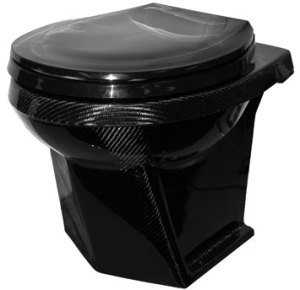
Carbon Fiber at home New technologies in Your home! If You can’t afford a supercar with carbon fiber seats, buy something what can bring You even more fun – carbon fiber toilet boil! Stylish **** for only 1k$.
more
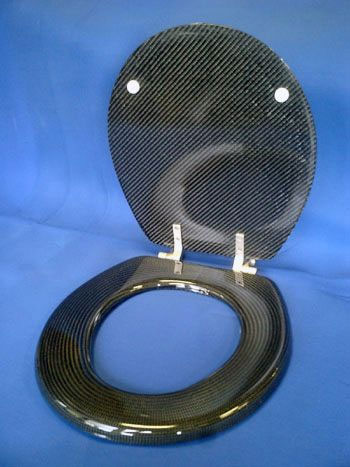
But if 1k$ for the toilet boil is too much for You, take the cabon fiber toilet seat. Costs only 229$ and is avaliable at dynamiccomposites.com.
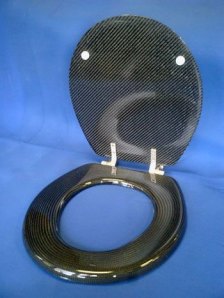
Carbon Fiber at home New technologies in Your home! If You can’t afford a supercar with carbon fiber seats, buy something what can bring You even more fun – carbon fiber toilet boil! Stylish **** for only 1k$.

more
But if 1k$ for the toilet boil is too much for You, take the cabon fiber toilet seat. Costs only 229$ and is avaliable at dynamiccomposites.com.